National Geographic once called the Osa Peninsula "the most biologically intense place on Earth," and for a wildlife photographer it lives up to it. Scarlet macaws cross the sky in pairs, tapirs and peccaries move through Corcovado's primary forest, dolphins work the Golfo Dulce, and the coastline is as wild as anywhere in Central America. This nine-day expedition is built to fill a serious portfolio — and it does not pretend to be easy.
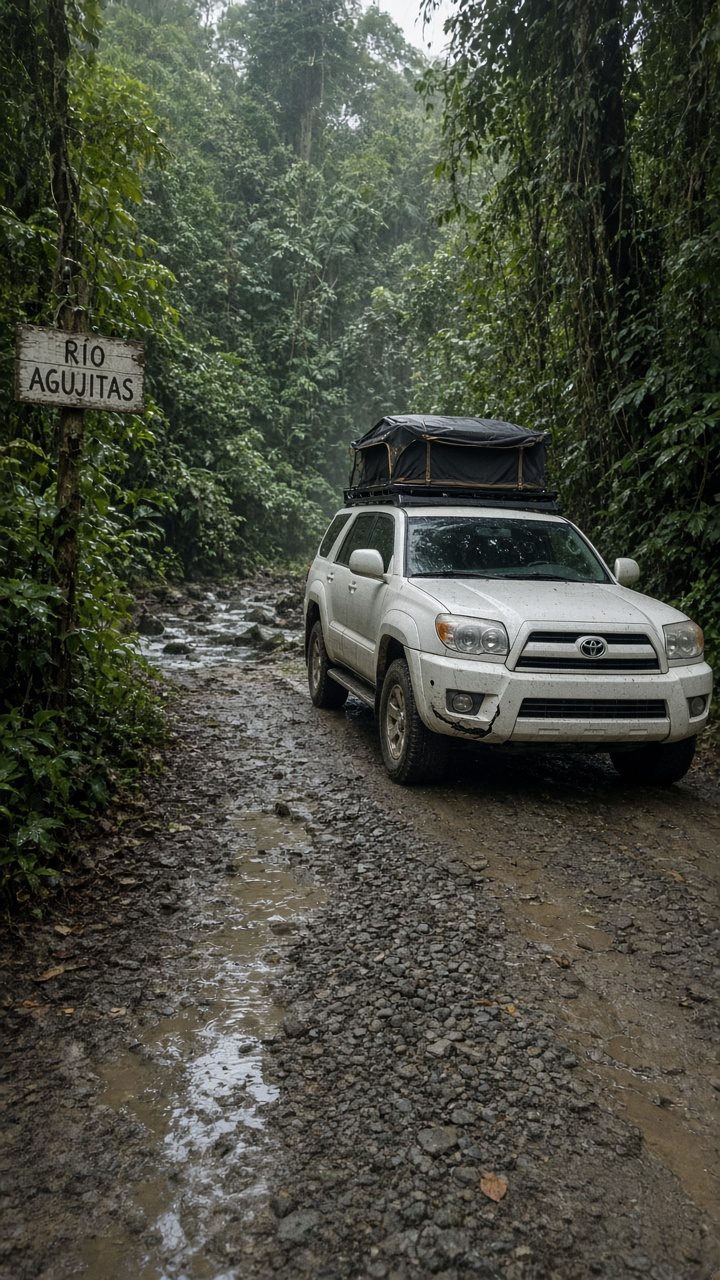
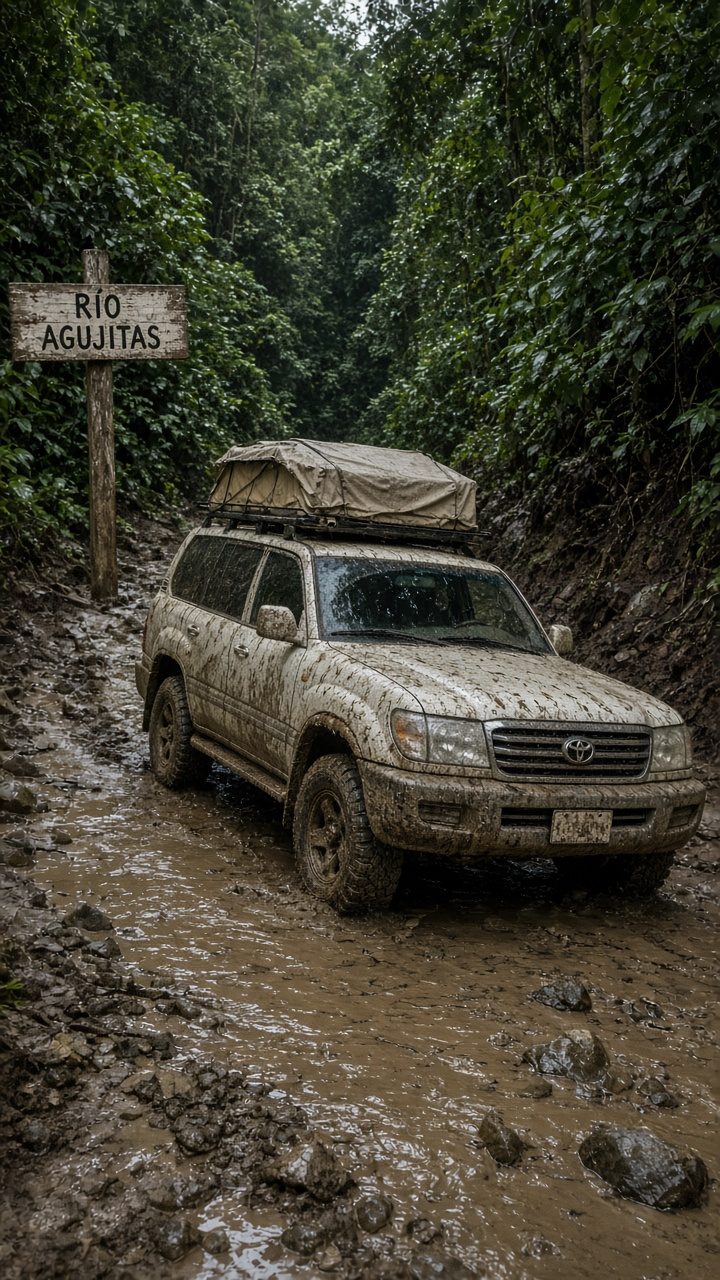
This is an unambiguous 🔴 trip. The Osa is the country's off-grid extreme: fuel and cash are scarce, some roads are tide-gated with unbridged river crossings, and Drake Bay has no ATM or gas station. The Land Cruiser + rooftop tent tier isn't a luxury here, it's the requirement — you need the clearance, the range, offline maps, and the self-sufficiency to sleep where lodging runs out. Come in the dry season (Dec–Apr); the roads are at their worst September–November.
The single non-negotiable: Corcovado National Park requires an advance SINAC permit (about US$18 per person per day) AND a certified, ICT-registered guide — no exceptions. You cannot enter alone, and the ranger stations (especially Sirena) have daily quotas. Book both, well ahead.
Day-by-Day
Days 1–2 — Getting to Puerto Jiménez (SJO to Puerto Jiménez ~6–7 hr, mostly paved then rough; or route via the coast). A long haul south down the Interamericana and out onto the peninsula. Break the drive on the Costa Ballena (Uvita) coast the first night to shoot a Pacific sunset. Arrive Puerto Jiménez — the last reliable fuel, ATM, and provisioning — on day 2. Top up everything. Camp near town and confirm your Corcovado permit + guide for the coming days.
Days 3–4 — Corcovado day hikes (⚠️ permit + certified guide MANDATORY; 4x4 to trailheads). Enter Corcovado with your certified guide via an accessible sector (the La Leona/Carate side is the classic self-drive approach; Sirena is the wildlife jackpot but is boat- or trek-accessed and quota-limited). Shoot at first light when the forest is active — macaws, spider monkeys, coatis, peccaries, and if fortune smiles, tapir. Heavy, humid, low-light forest work: fast glass and high ISO discipline. Camp near Carate/Matapalo (confirm private-land permission for the rooftop tent).
Day 5 — Cabo Matapalo dawn macaws (rough coast road, 4x4; ⚠️ tide-gated fords). Matapalo's beach-almond trees are a reliable scarlet-macaw feeding spot at dawn — one of the best places in Costa Rica to photograph them low and close. The point breaks and jungle-meets-sea coves add landscape frames. ⚠️ The coast road involves fords that are tide-dependent — check the tide and never enter a river you can't read. Camp Matapalo.
Day 6 — Caño Island (boat day from Puerto Jiménez/Drake; marine reserve). Caño Island Biological Reserve offers clear water, rays, turtles and reef — snorkel/dive and topside seascapes. ⚠️ It's a protected marine reserve: no fishing, no touching, follow the guide's rules. Boat back and reposition toward the Drake side, or return to a Golfo Dulce base.
Day 7 — Drake Bay coastal trail (⚠️ no ATM/gas — arrive fueled and with cash). Hike the wild coastal path from Drake toward San Josecito/Cocalito for rainforest-meets-ocean frames, waterfalls onto the beach, and abundant birds. Drake has no gas and no ATM, so arrive self-sufficient. Camp or take a simple cabina in Drake.
Day 8 — Golfo Dulce dolphins (boat day). The Golfo Dulce is one of only a few tropical fjords in the world; a morning boat finds spotted and bottlenose dolphins, and the inner shore's off-grid rainforest lodges and botanical gardens make lush subjects. Golden-hour water and reflections on the calm gulf. Last night on the peninsula.
Day 9 — Return to SJO (~6–7 hr, rough then paved). The long drive back north, ideally starting at dawn to bank the daylight and beat the heat.
Signature Stops (why go)
- Corcovado — the densest wildlife in the country: macaws, tapir, peccary, monkeys, in primary forest.
- Cabo Matapalo — arguably the best dawn scarlet-macaw photography in Costa Rica.
- Caño Island — clear-water marine life and dramatic seascapes.
- Golfo Dulce — a rare tropical fjord with dolphins and mirror-calm golden-hour water.
Where to Camp / Stay (named)
- Puerto Jiménez: your provisioning hub — campsites and cabinas in and near town; verify current sites on iOverlander and confirm rooftop-tent permission.
- Carate/Matapalo: off-grid camps and eco-lodges near the Corcovado La Leona entrance — book direct; some are private-land only.
- Drake Bay: simple cabinas and campsites (bring cash — no ATM/gas).
- Golfo Dulce inner shore: solar off-grid lodges (boat-access; book well ahead) for a splurge night.
Logistics & Road Reality
- Fuel: 🔴 Puerto Jiménez is the last reliable fuel — carry range/jerry cans; Drake has none.
- Cash: 🔴 Drake Bay has no ATM — bring enough colones/dollars for the whole leg.
- 4x4: 🔴 essential; tide-gated unbridged river crossings on the Matapalo/Carate coast road.
- Permits/guides: 🔴 Corcovado permit + certified ICT guide mandatory, Sirena quota-limited — book ahead.
- Season: Dec–Apr strongly preferred; roads are worst Sept–Nov.
- Connectivity: 🔴 minimal off the main town — carry offline maps and ideally a satellite messenger.
- Safety: read every ford against the tide; heat, humidity and remoteness are real — self-sufficiency is not optional.
Photography Guidance (macaws, forest light, ethics)
Shoot the edges of the day: macaws feed at dawn at Matapalo, forest wildlife is active at first light, and the Golfo Dulce is glass-calm at golden hour. Corcovado's interior is dark and humid — bring fast lenses, expect high ISO, and protect gear from moisture. Carry a long lens (400mm+) for macaws and canopy birds, and a polarizer for the gulf and Caño's water. Ethics are strict on the Osa: no baiting wildlife, no flash on nocturnal or nesting animals, keep distance, follow your Corcovado guide's lead, and respect Caño Island's marine-reserve rules. The peninsula's magic depends on visitors who leave it untouched.
Insider Tips
- Book the Corcovado permit + guide first, then build the trip around your entry day — quotas fill.
- Top off fuel and cash in Puerto Jiménez; Drake and the coast have neither.
- Shoot Matapalo macaws at first light in the beach-almond trees — the reliable window.
- Time the coast-road fords to the tide and scout each on foot; never force one.
- Carry a satellite messenger and full offline maps — you will lose signal for days.
Reserve Your Rig
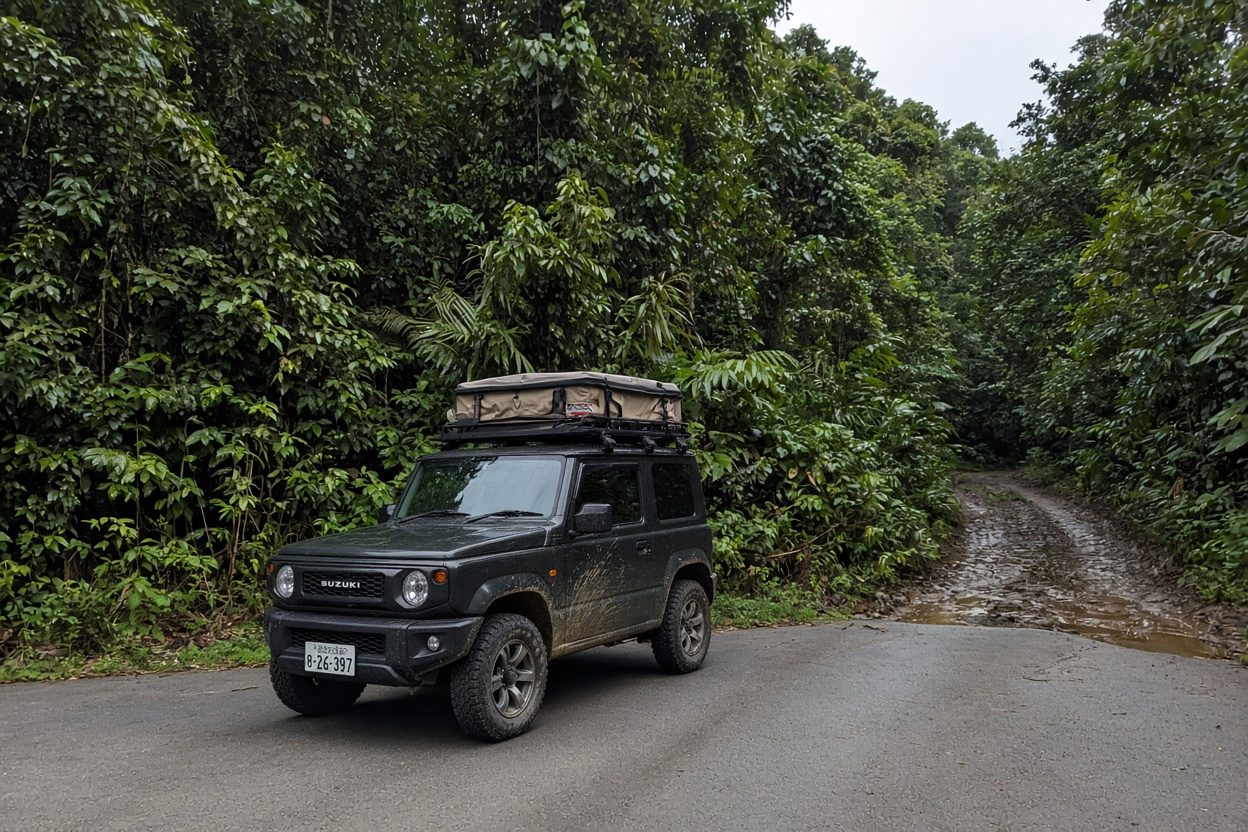
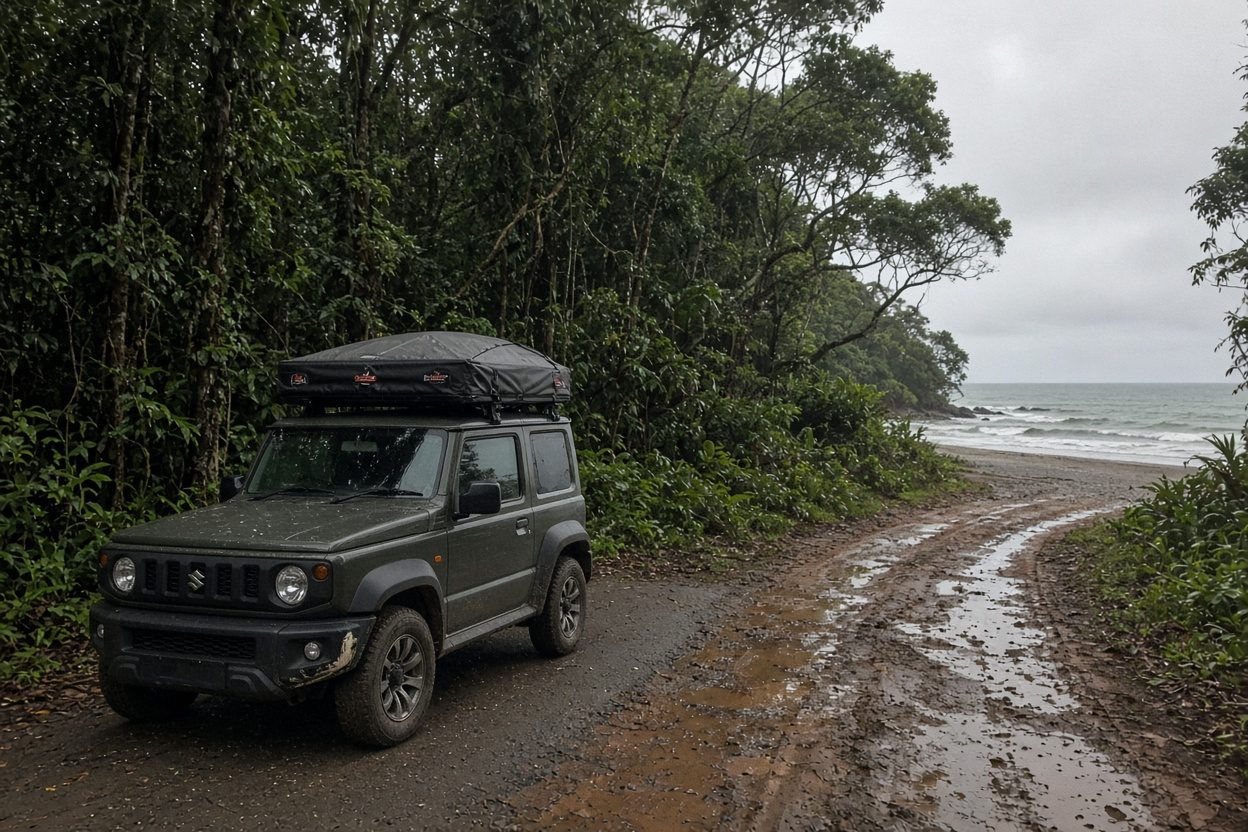
The Osa is exactly what a Land Cruiser with a rooftop tent exists for — clearance and range for the tide-gated fords, self-sufficiency where fuel, cash and lodging run out. VerifiedCR outfits your expedition with Corcovado permit + guide booking, river-crossing/tide alerts, macaw-roost GPS points, and a loaner satellite messenger for the dead zones. Reserve your rig and shoot the most biologically intense place on Earth.
Before you go
Do you need a 4x4?
seasonal river ford — 4x4 advised
Best window to fly
Dec–Apr (dry — Osa roads at their most passable)
Offline first
Download your route and offline maps before you leave the lot — signal drops on the best stretches.
Golden rule
Never drive at night — plan arrivals before dark, and use Waze like the locals do.
VerifiedCR · No counter surprises
What a Costa Rica rental actually costs
The number one thing that rattles first-timers is the price jumping at the counter. Here is the honest math, before you get there.
- Advertised daily rate$12–40 / day
- What the booking sites show. It is real — but it is not the whole price. Nobody pays only this.
- Mandatory liability (TPL / SLI)+$15–25 / day
- Required by Costa Rican law on every rental. Cannot be waived. This is the line the cheap ads leave off — it roughly doubles the sticker price. Budget for it.
- Collision damage (CDW)waivable
- Often $20–40/day — but you can usually decline it if your credit card includes rental coverage (Amex, Visa Signature, Chase Sapphire and others). Call your card, ask for a coverage letter, and bring it printed.
- Security hold on your card$1,000–2,500
- A hold, not a charge — released after you return the car clean. Some agencies hold more. Make sure your card has the headroom before you fly.
The verified-rig promise: when you reserve through VerifiedCR, the rig is inspection-checked and the operator is vetted — the price you are quoted is the price you pay. No mystery line items at pickup.