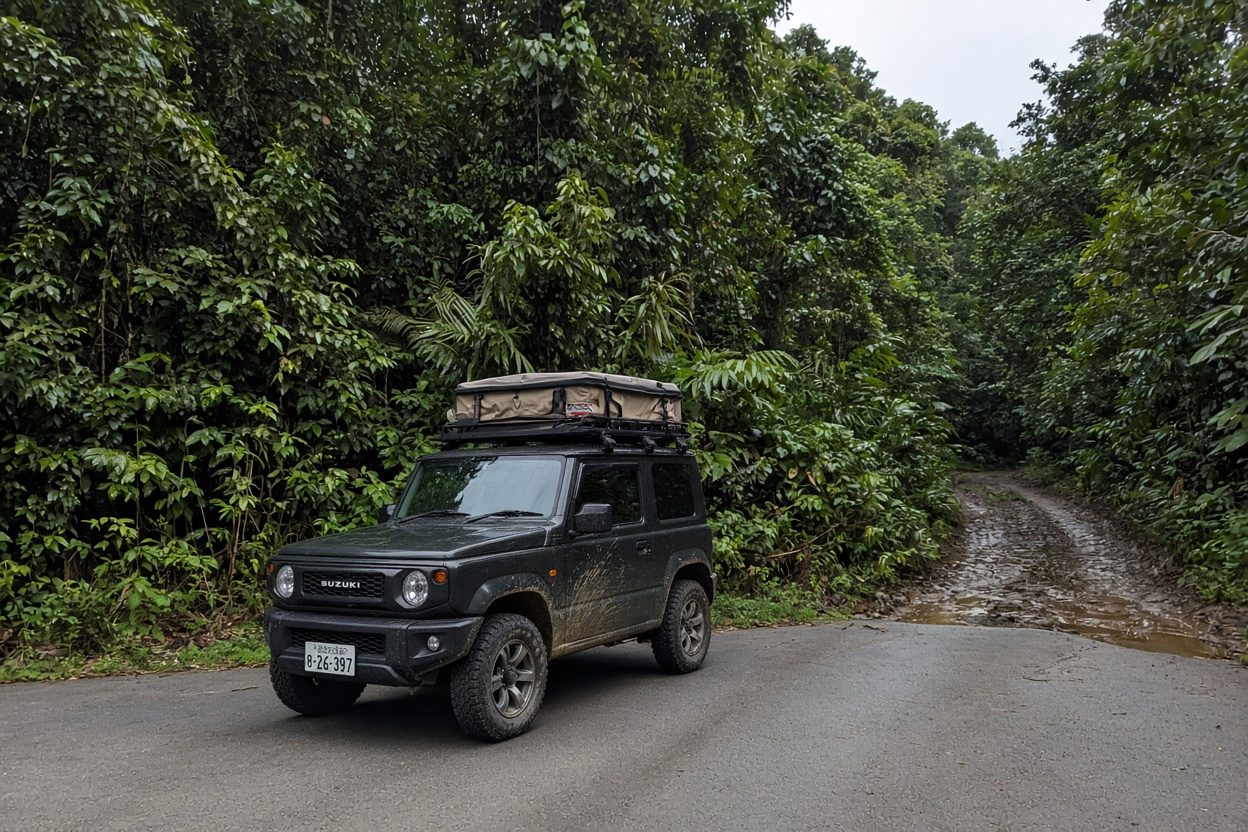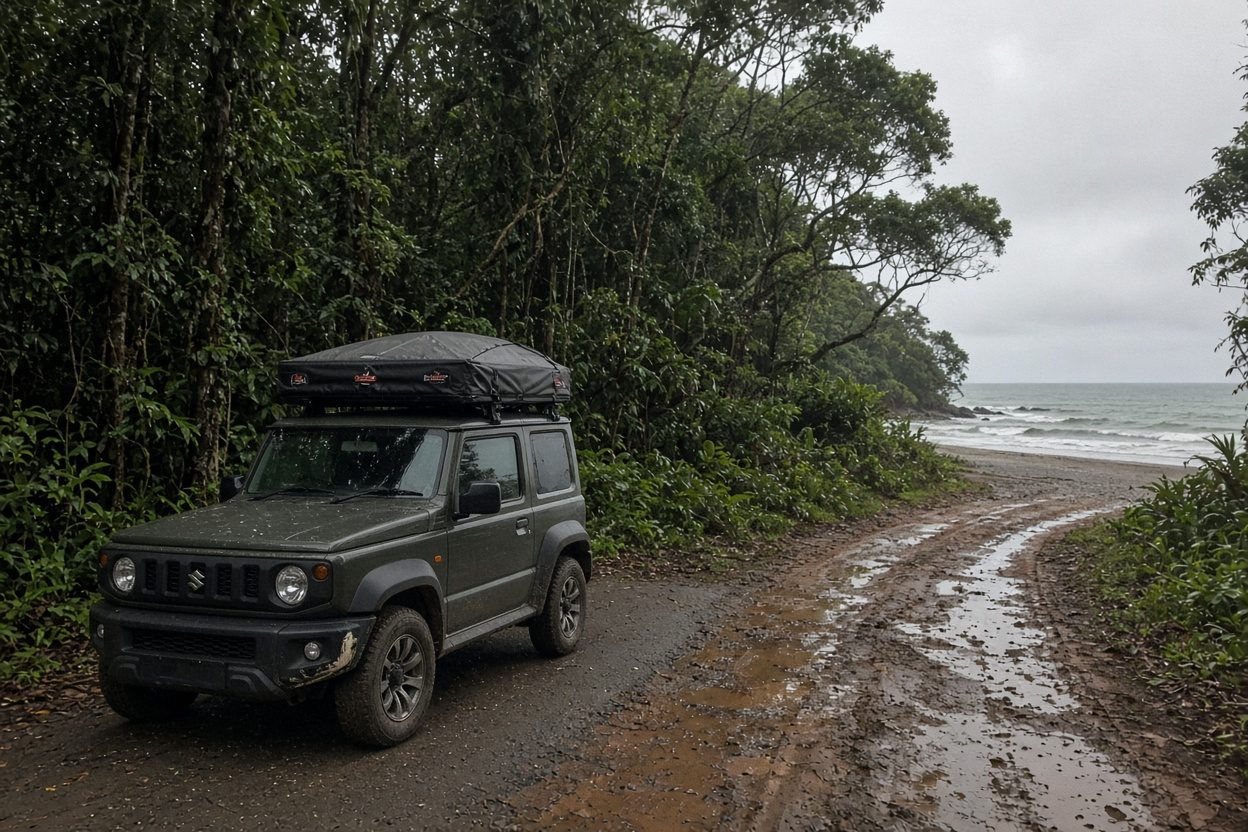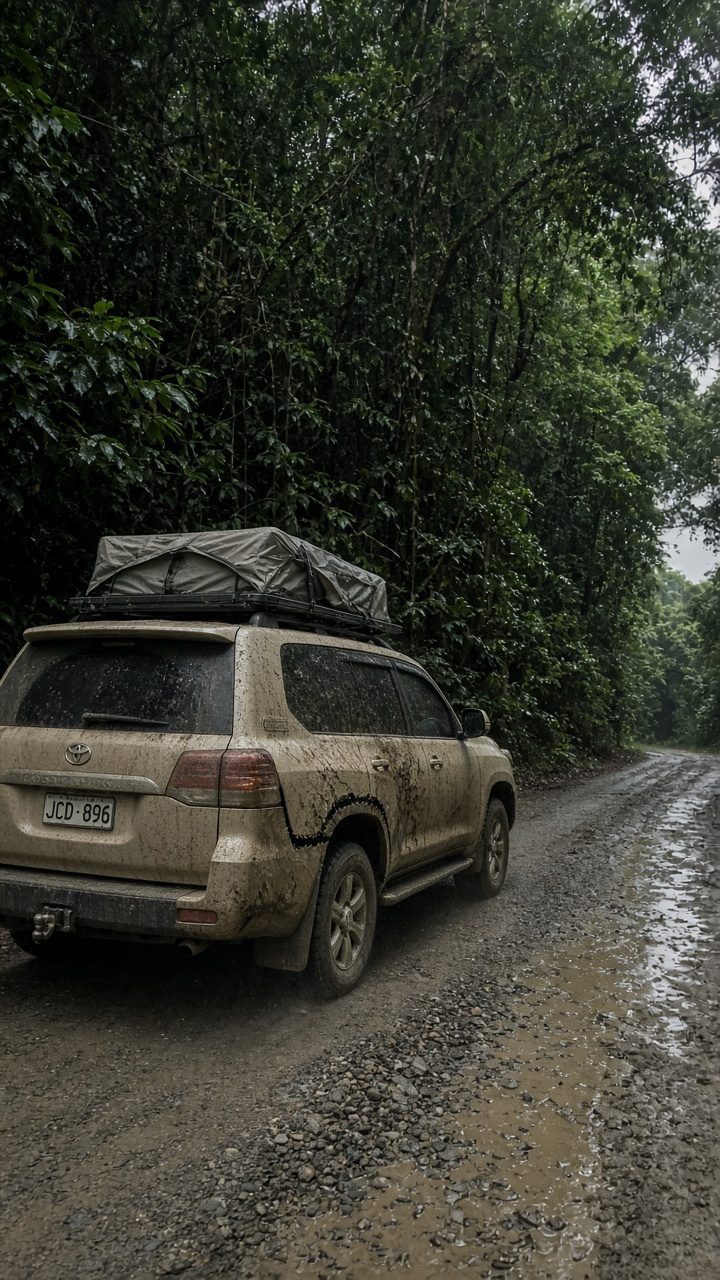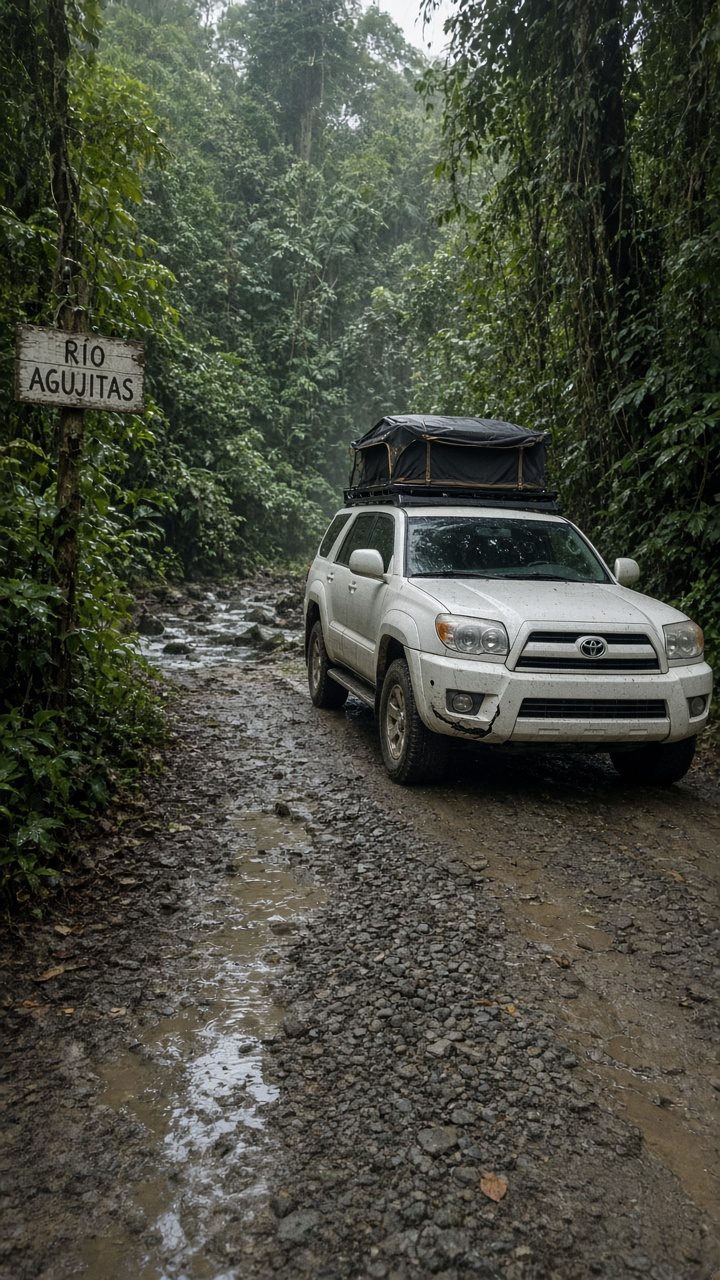
Everyone tells you to visit Costa Rica in the dry season. For waterfalls, they're wrong. From September to November, the green-season rains swell the rivers of the southern hills to their thundering peak — the falls are fullest, greenest, and most spectacular precisely when the guidebooks say to stay home. The trade-off is real: these are also the muddiest, slickest roads of the year. But if you've got a mid 4x4, a sense of adventure, and a budget mindset, this three-day chaser through the hills above Dominical delivers the region's cascades at full roar for a fraction of high-season prices.
We rank it 🟡 — not for terrain difficulty in the technical sense, but because the wet-season mud on the hill roads (especially toward the higher, remoter falls) demands real 4x4 and patience. This is off-grid, budget travel: riverside camping, simple hill cabinas, and a recovery kit in the back. Go in, get gloriously wet, and come out. Just respect the rivers — green-season flash flooding is not a joke, and some of the biggest falls are best admired from the viewpoint, not the plunge pool.
Day-by-Day
Day 1 — Dominical → Poza Azul (Dominicalito). Base in or near Dominical and warm up with Poza Azul, an easy, short-hike waterfall near Dominicalito with a swimming hole and a local rope-swing vibe. In the green season it runs strong and the pool is deep — a fun, low-commitment first fall to gauge how the rivers are behaving. Set up riverside camp or a budget cabina. Use the afternoon to check road and river conditions with locals before venturing higher.
Day 2 — Nauyaca Falls, then the Diamante area. The main event day. Start at Nauyaca Waterfalls near Baru — a spectacular two-tiered cascade with huge plunge pools, reached by a self-guided hike ($10 pp plus a small parking fee) or a horseback ride ($32); gates run roughly 7 a.m.–2:30 p.m., so go early. In the green season Nauyaca is at its most powerful. In the afternoon, if conditions and access allow, push toward the Cataratas Diamante area near Las Tumbas/Tinamaste — a tall, dramatic multi-tier fall often billed as one of Costa Rica's tallest, though access is long, steep, and can be muddy/gated, so verify current access locally before committing (some sections are on private land with fee'd or guided entry, and the road can be impassable after heavy rain). If Diamante isn't feasible, there are plenty of lesser hill cascades to fill the day. Camp or budget cabina in the hills.
Day 3 — Tinamastes market and viewpoints, then out. Wind up to Tinamastes for its Tuesday-morning farmers' market (roughly 8 a.m.–noon) — a beloved eco-feria with organic produce, tropical fruit, and cheap, excellent food, plus sweeping green-hill viewpoints on the drive. (If your Day 3 isn't a Tuesday, the viewpoints and hill villages still make a fine final morning.) Then descend and exit, ideally before the afternoon downpour makes the hill roads greasy.
Signature Stops (why go)
- Nauyaca Waterfalls — a two-tier giant at green-season full power, with massive swimming pools; the highlight of the trip.
- Poza Azul (Dominicalito) — an easy, deep-pooled warm-up fall with a rope swing.
- Cataratas Diamante area — a towering multi-tier fall often called one of Costa Rica's tallest; dramatic but access-dependent (verify locally).
- Tinamastes eco-market & hill viewpoints — a genuine Tuesday feria and green-season vistas.
Where to Stay
This is budget, off-grid country: riverside camping near Dominicalito and simple hill cabinas around Platanillo and Tinamastes. Rates drop in the green season and availability is easy — you can often decide day-of. Dominical below has the fuller services (ATM, fuel, groceries) if you want a base with more amenities and day-trip up into the hills.
Logistics & Road Reality
- The green-season bargain: Sept–Nov means the fullest falls and the lowest prices — and the worst roads. That's the deal.
- Mud & slick hills: A mid 4x4 is essential for the higher/remoter falls; carry a recovery kit and drive the hills in the drier midday window, not after an afternoon storm.
- Verify Diamante access. The tall Diamante-area falls have long, steep, sometimes gated/private access that can be impassable in heavy rain — confirm with locals or an operator before you drive up.
- River safety: Green-season rivers can flash-flood. Admire the biggest falls from viewpoints; don't swim in rising or muddy water.
- Fuel & cash: Fuel and ATM in Dominical/Platanillo; carry cash for entrance fees and cabinas.
- Connectivity: Patchy in the hills; download offline maps.
- Overland 🟢 vs through-land 🔴: 🟡 — moderate, but weather is the real difficulty; mud, not fords.
Insider Tips
- Drive the hills at midday. Roads firm up in the morning sun and turn greasy after the afternoon rain — plan your climbs and descents accordingly.
- Check Diamante access the day before. It's the one stop that regularly closes or becomes undrivable in the wet — have a backup fall ready.
- Do Nauyaca early. Morning means fewer people, better light, and time to reach the higher hill falls before the afternoon storm.
- Bring a dry bag and a recovery strap. You'll get soaked, and a green-season hill road will eventually test your traction.
- Time Day 3 to Tuesday for the Tinamastes feria — cheap, excellent food and the best local produce of the trip.
Reserve Your Rig
Chase the falls at their fullest without getting stuck. Reserve a mid 4x4 with a mud-season recovery kit and dry-bag rental, plus a waterfall-guide connection for the trickier access, and we'll brief you on which hill roads are running the week you travel. [Reserve your waterfall-chaser 4x4 →]
Before you go
Do you need a 4x4?
gravel sections — 2WD ok in dry season
Best window to fly
Sept–Nov (fullest falls, worst roads)
Offline first
Download your route and offline maps before you leave the lot — signal drops on the best stretches.
Golden rule
Never drive at night — plan arrivals before dark, and use Waze like the locals do.
VerifiedCR · No counter surprises
What a Costa Rica rental actually costs
The number one thing that rattles first-timers is the price jumping at the counter. Here is the honest math, before you get there.
- Advertised daily rate$12–40 / day
- What the booking sites show. It is real — but it is not the whole price. Nobody pays only this.
- Mandatory liability (TPL / SLI)+$15–25 / day
- Required by Costa Rican law on every rental. Cannot be waived. This is the line the cheap ads leave off — it roughly doubles the sticker price. Budget for it.
- Collision damage (CDW)waivable
- Often $20–40/day — but you can usually decline it if your credit card includes rental coverage (Amex, Visa Signature, Chase Sapphire and others). Call your card, ask for a coverage letter, and bring it printed.
- Security hold on your card$1,000–2,500
- A hold, not a charge — released after you return the car clean. Some agencies hold more. Make sure your card has the headroom before you fly.
The verified-rig promise: when you reserve through VerifiedCR, the rig is inspection-checked and the operator is vetted — the price you are quoted is the price you pay. No mystery line items at pickup.