Two of Costa Rica's most reliable surf towns sit within a few hours of Liberia airport, and this three-day weekend links them: Tamarindo, the lively, easy-access beach break where half the country learns to surf, and Nosara's Playa Guiones, a long, consistent, sandy-bottom wave wrapped in a barefoot yoga-and-wellness town. It's the ideal itinerary for a surf couple or a solo traveler who wants a proper warm-up session on Friday and a step-up on a world-class beach break by Sunday — with a plate of fish tacos and a Pacific sunset between each.
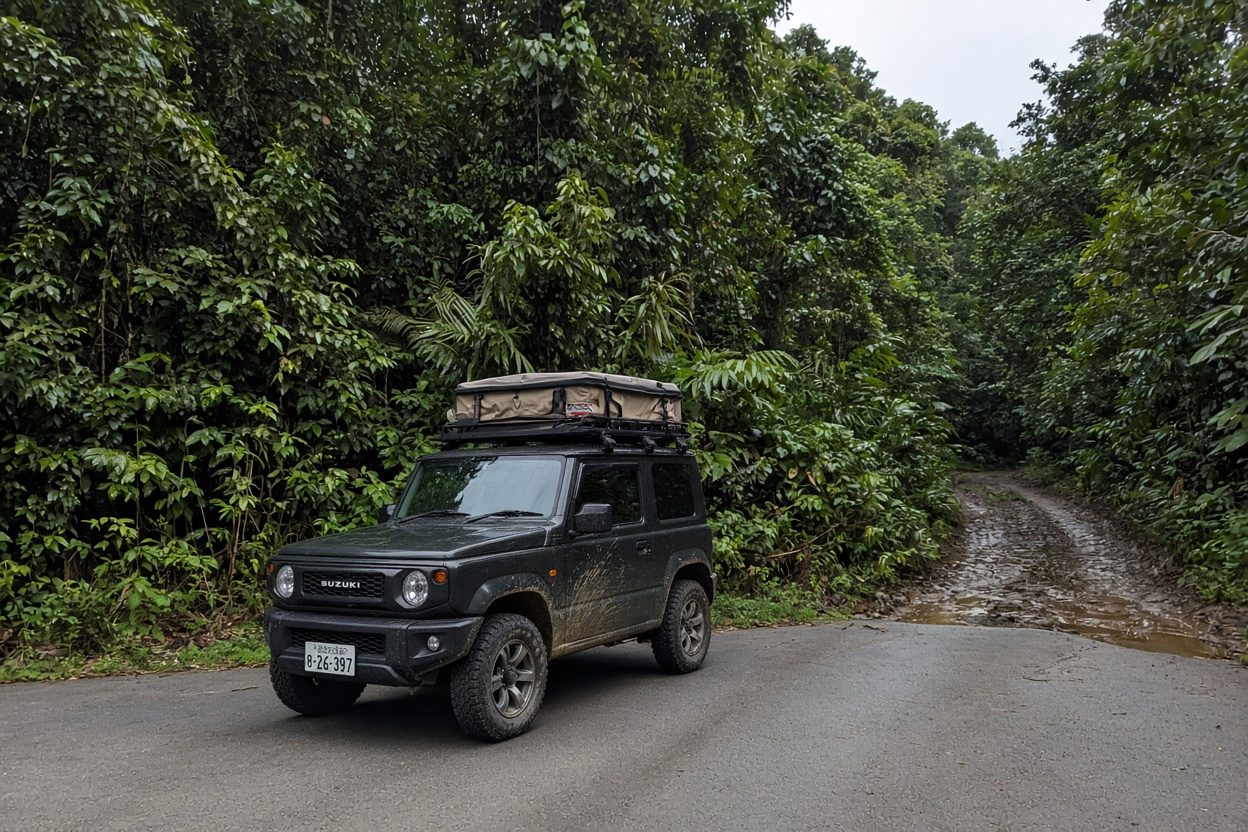
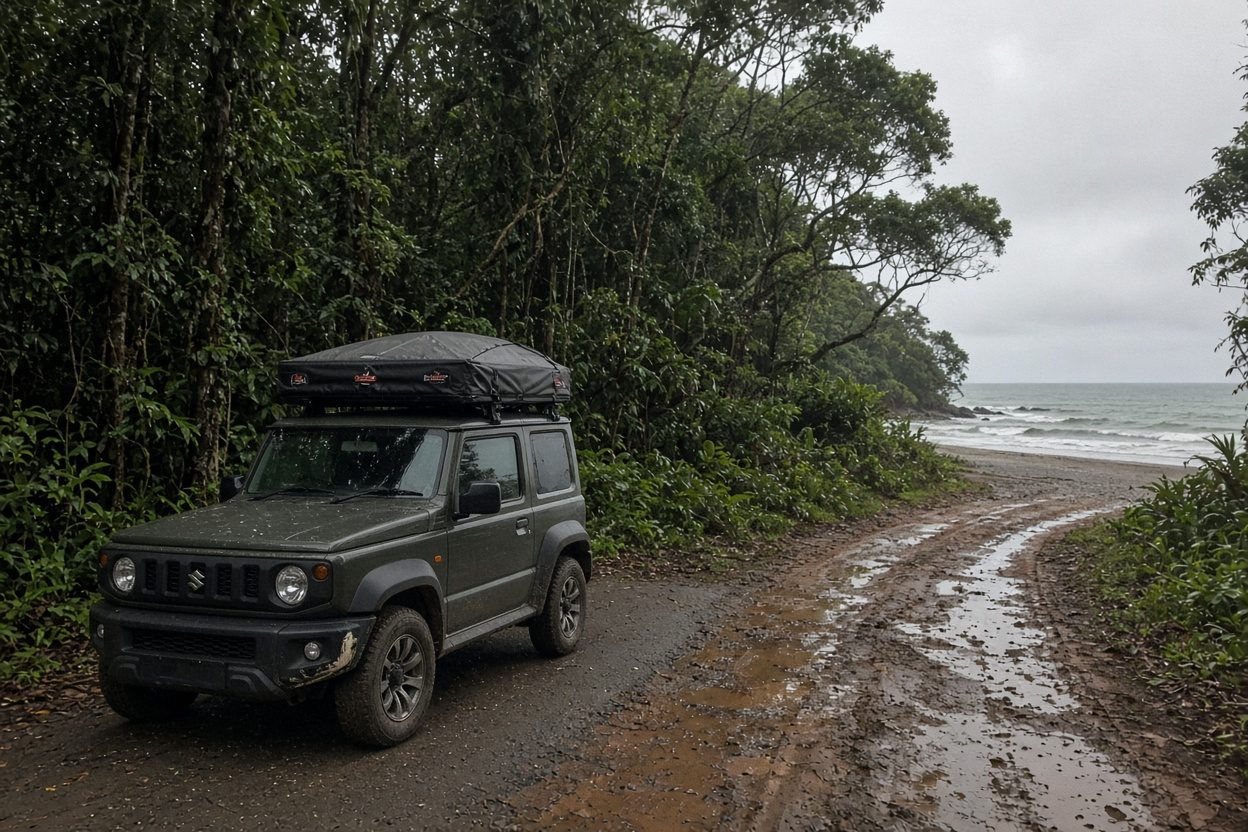
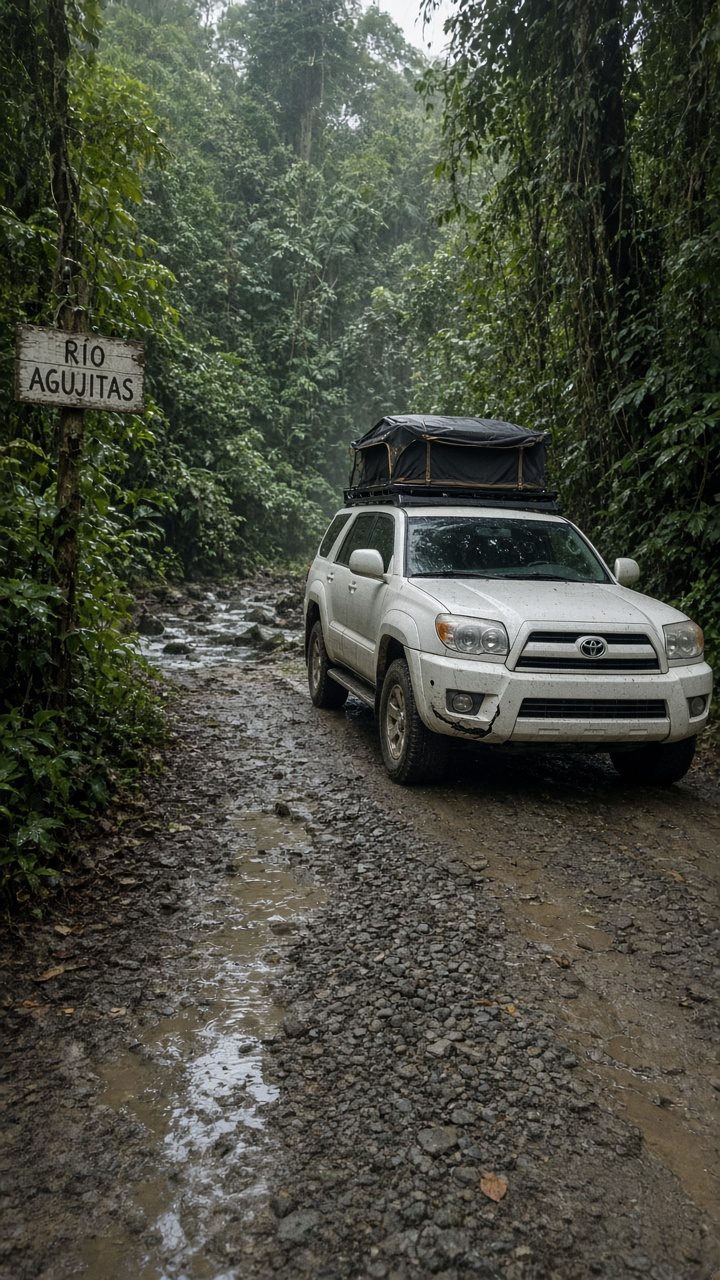
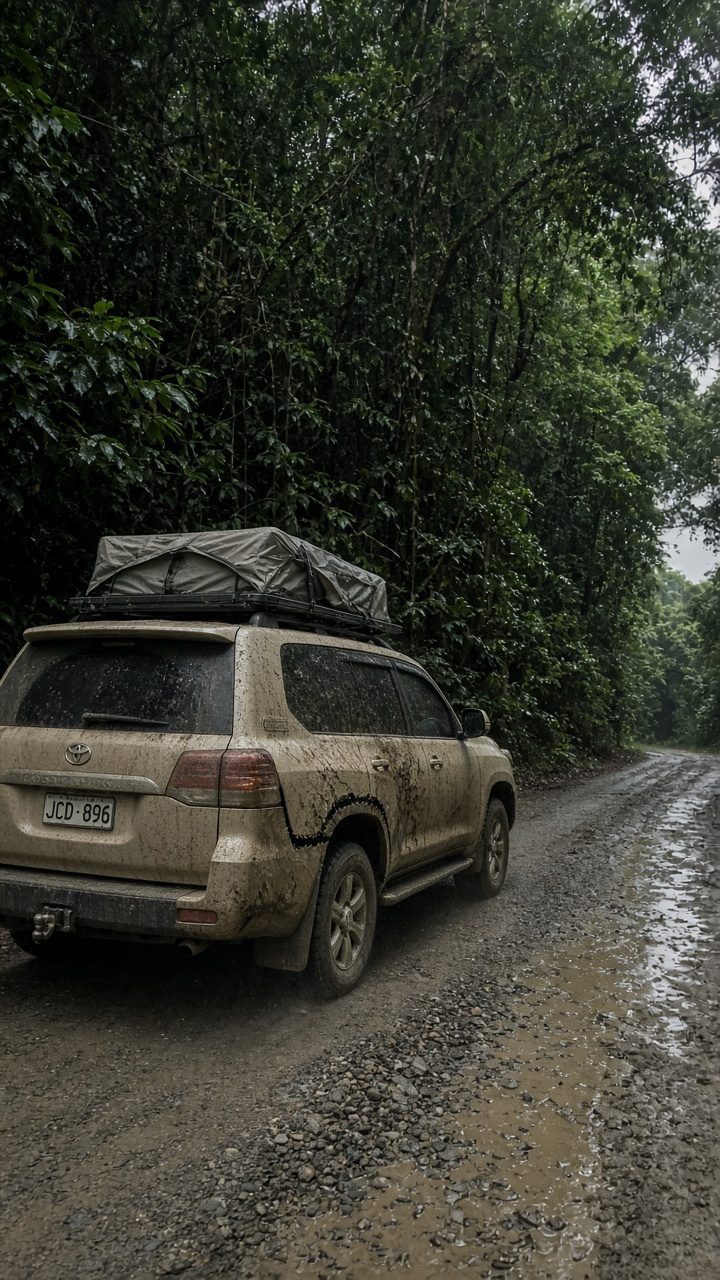
The catch, and the reason this is 🟡 not 🟢, is the road south. The Tamarindo–Nosara corridor is mostly paved now but stitched with rough, pothole-riddled sections, and side routes can be flood-damaged or wash out in the green season — so a mid 4x4 is the floor and a Land Cruiser is smart for wet-season Nosara. This is also fuel-gap country: fill up in Tamarindo before heading south, because stations thin out toward Nosara. Verify road conditions locally before you drive, especially May–November.
Day 1 — Liberia to Tamarindo, first session
From LIR it's about 1 to 1.5 hours on good paved highway to Tamarindo — the shortest airport-to-surf run on this coast. Check in, rent a soft-top, and take a beginner lesson on Tamarindo's forgiving beach break, or paddle out at neighboring Playa Grande (part of Las Baulas National Marine Park, a leatherback nesting beach — a stronger wave and a quieter scene). Wash off and dig into Tamarindo's dense strip of surf shops, sodas, and beachfront bars for sunset. Sleep: Tamarindo has everything from surf hostels (Selina / La Botella de Leche) to mid-range hotels; book direct. Fill the tank before you leave tomorrow.
Day 2 — South to Nosara / Guiones
Point south for Nosara — realistically ~2 to 2.5 hours of mixed paved-and-potholed road (total from Liberia to Nosara is around 3 hours), on Route 160/150 with rough patches and, in the green season, possible flooded fords. 🟡 Drive it in daylight and verify conditions first. Nosara is really two things: Playa Guiones, a ~7 km stretch of beach break that's beginner-friendly at the right tide and genuinely good for intermediates, and a walkable, low-key town built around yoga, wellness, and a strict no-high-rise ethos. Do a dawn or mid-tide session at Guiones, a yoga class, and a sunset at Playa Pelada next door. Sleep: Nosara/Guiones surf-and-yoga lodges and cabinas; book direct — the town books out in high season.
Day 3 — Sámara mellow finish, or Ostional detour, then return
For an easy final morning, drive ~1 hour to Sámara, whose calm, reef-protected bay is the gentlest swim-and-longboard beach in the area — a soft landing before the airport. Alternatively, if your dates line up, detour to the Ostional Wildlife Refuge north of Nosara for the olive-ridley arribada, the mass synchronized nesting event — but 🔴 arribada dates are unpredictable (they cluster near the last-quarter moon), a certified guide is required, and the river-mouth crossing into Ostional can be impassable. Then it's back to LIR — budget ~3 hours from Nosara. 🟡 Same rough road in reverse.
Signature stops (why go)
- Tamarindo beach break — the easiest airport-to-surf lesson on the north Pacific.
- Playa Guiones, Nosara — a long, consistent sandy break in a barefoot wellness town.
- Ostional arribada (seasonal) — one of the planet's great wildlife spectacles, tens of thousands of olive-ridleys nesting at once.
Where to camp / stay
- Tamarindo: Selina / La Botella de Leche (surf hostels) up to beachfront mid-range hotels.
- Nosara / Guiones: surf-and-yoga lodges and cabinas near the beach — book well ahead in dry season.
- Sámara: relaxed beachfront cabinas for a calm final night.
- 🟡 Verify a bookable, legal campervan/rooftop-tent site before relying on one; Nosara's roads and access are rough in the wet.
Logistics & road reality
- Drive from LIR: ~1–1.5 h to Tamarindo; ~3 h to Nosara. 🟡 Tamarindo–Nosara is mostly paved but rough/potholed, with flood-prone side routes — daylight only, verify conditions.
- Fuel: 🔴 fill up in Tamarindo before heading south; stations thin toward Nosara.
- Reservations: no park permits for the surf itself; 🔴 Ostional arribada requires a certified guide and timing is unpredictable — book only through licensed local guides.
- Connectivity: solid in Tamarindo; adequate in Nosara town, patchy on rural stretches — download offline maps.
- Safety: mind rip currents at all three beaches; lock the rig and never leave boards or gear unattended.
Insider tips
- Warm up in Tamarindo, progress at Guiones — and check the tide chart; Guiones is best on a mid-to-low push.
- Top off fuel in Tamarindo — the run south is the classic Nicoya gap.
- In the green season, take the Land Cruiser and drive the Nosara road only in daylight — fords and potholes punish low clearance.
- Nosara books out in dry season — reserve lodging early, especially over holidays.
- Only chase the Ostional arribada with a certified guide; going solo is both illegal and pointless if you can't read the timing.
Reserve your rig
This is a two-break weekend where clearance matters more than horsepower. A mid 4x4 handles the corridor in the dry; step up to a Land Cruiser for wet-season Nosara and its fords. Reserve your rig with VerifiedCR with board racks fitted, an offline route pack for the Tamarindo–Nosara gap, and — if your dates align — a vetted Ostional arribada guide on standby.
Before you go
Do you need a 4x4?
gravel sections — 2WD ok in dry season
Best window to fly
Dry Dec–Apr best (surf year-round; roads rougher in the green season)
Offline first
Download your route and offline maps before you leave the lot — signal drops on the best stretches.
Golden rule
Never drive at night — plan arrivals before dark, and use Waze like the locals do.
VerifiedCR · No counter surprises
What a Costa Rica rental actually costs
The number one thing that rattles first-timers is the price jumping at the counter. Here is the honest math, before you get there.
- Advertised daily rate$12–40 / day
- What the booking sites show. It is real — but it is not the whole price. Nobody pays only this.
- Mandatory liability (TPL / SLI)+$15–25 / day
- Required by Costa Rican law on every rental. Cannot be waived. This is the line the cheap ads leave off — it roughly doubles the sticker price. Budget for it.
- Collision damage (CDW)waivable
- Often $20–40/day — but you can usually decline it if your credit card includes rental coverage (Amex, Visa Signature, Chase Sapphire and others). Call your card, ask for a coverage letter, and bring it printed.
- Security hold on your card$1,000–2,500
- A hold, not a charge — released after you return the car clean. Some agencies hold more. Make sure your card has the headroom before you fly.
The verified-rig promise: when you reserve through VerifiedCR, the rig is inspection-checked and the operator is vetted — the price you are quoted is the price you pay. No mystery line items at pickup.