Most surf trips lock a route months out and hope the ocean shows up. This one does the opposite: you keep the dates flexible, watch the forecast, and let the swell decide where you drive. Costa Rica's Pacific coast gets its biggest, most consistent surf in the green (wet) season, roughly April–October, when long-period south and southwest groundswells fire up from the Southern Hemisphere. The trade-off is rain and softer roads — which is exactly why this trip is built around flexibility and a capable 4x4.
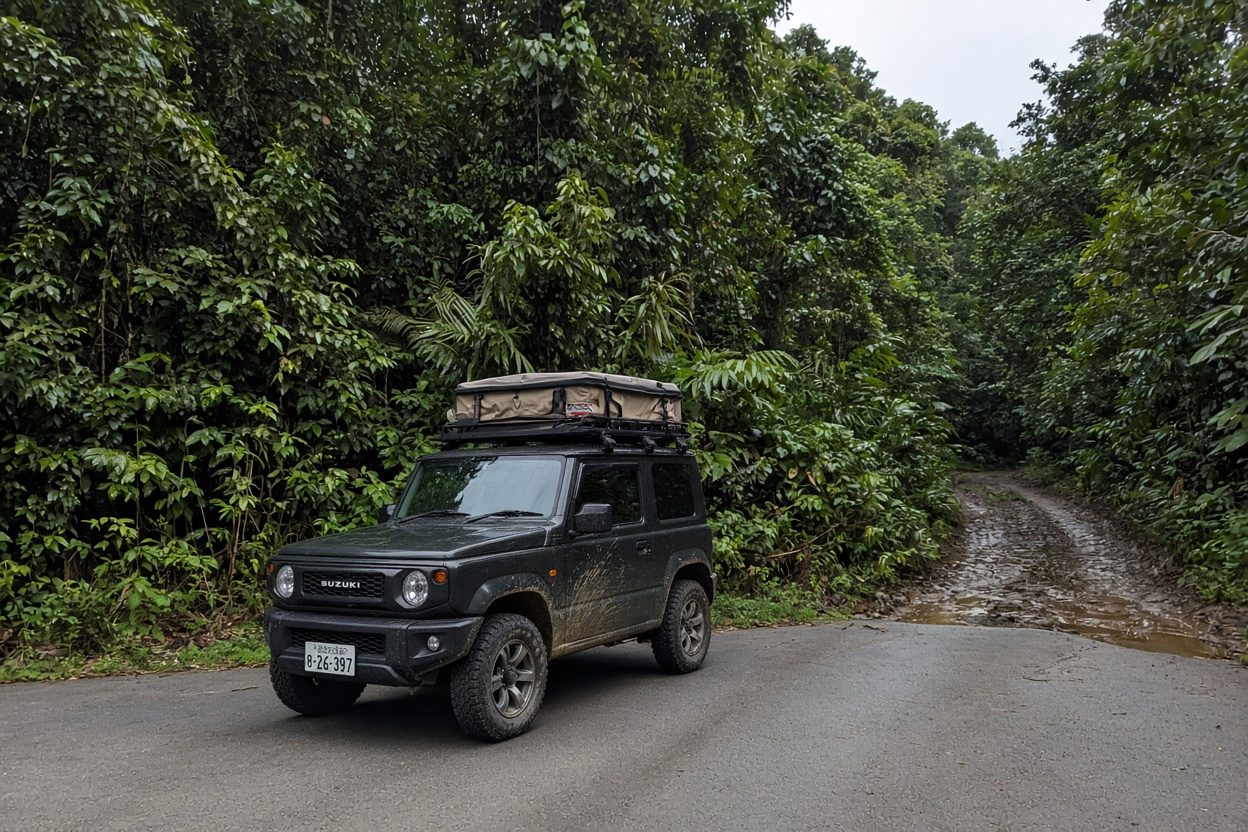
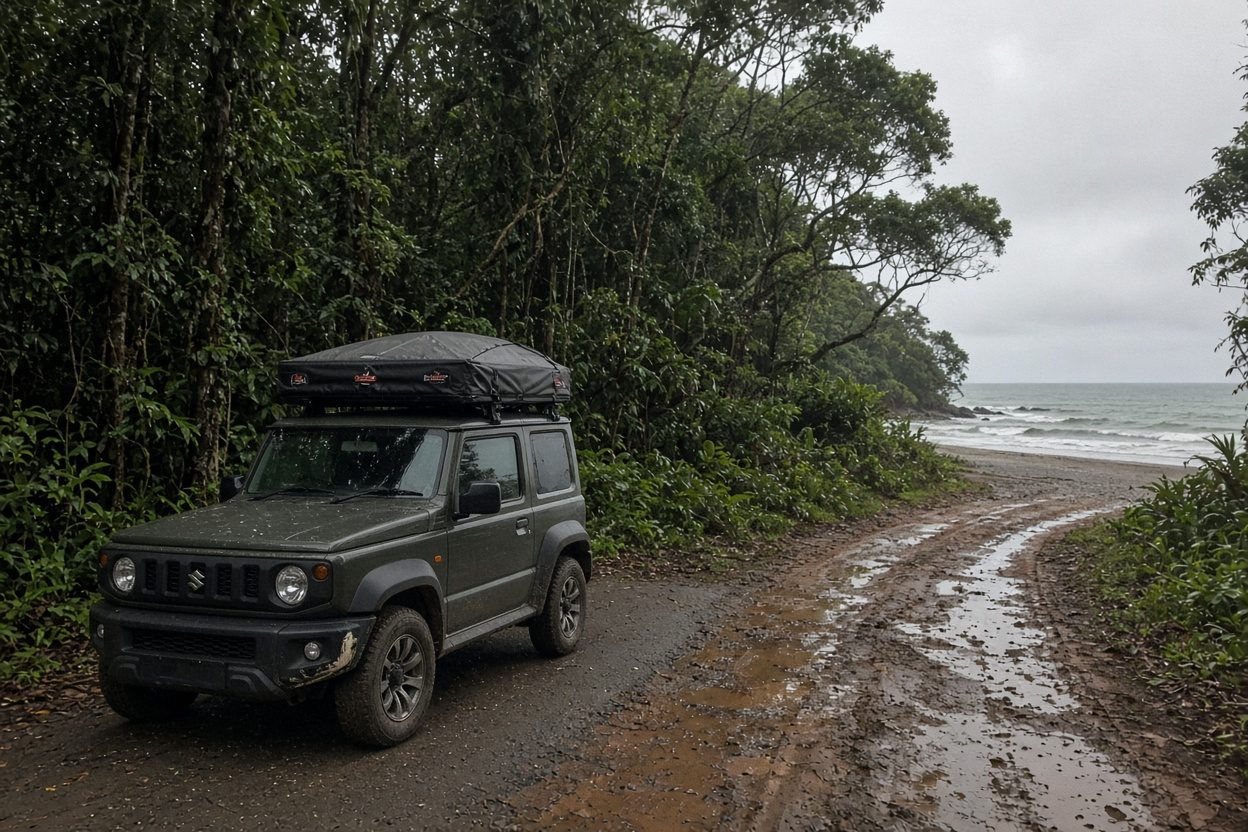
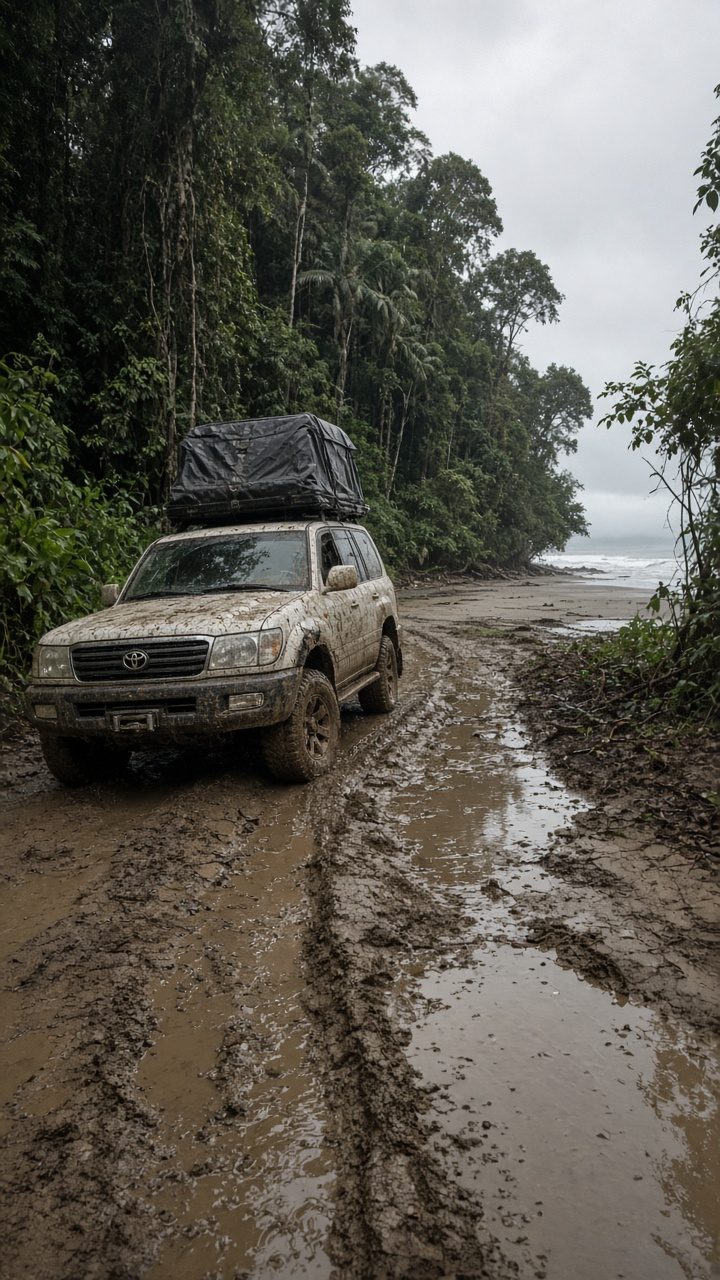
The playbook: base yourself where the swell is landing best, chase the pulse down the coast if it builds, and treat the whole itinerary as a menu, not a schedule. Three anchor zones cover the spectrum — the Central Pacific (Playa Hermosa, Esterillos) for punchy, accessible power; Dominical for river-mouth barrels; and Pavones in the deep south for the marathon left when a proper big south lines up. A mid 4x4 with racks covers most of it; add a Land Cruiser if Pavones is on the cards.
How to route it (forecast-driven)
This is not a fixed day-by-day. Read the swell and pick your play:
- Small-to-medium pulse, short notice: stay Central Pacific — Hermosa and Esterillos are the closest reliable power to San José and work on a wide range of swell.
- Solid S/SW building: move to Dominical, where the river-mouth sandbanks turn on.
- Big, long-period south (16s+, 180–210°): commit to the long haul to Pavones for the wave of the trip.
Central Pacific base — Playa Hermosa & Esterillos
The default landing zone: about 1.5–2 hours from San José, working across most swells.
- Playa Hermosa de Jacó: a heavy, powerful beach break that hosts pro contests — serious, hollow, advanced water on size. Sand bottom, so no reef, but real consequence in the impact zone.
- Esterillos Oeste: just south, marked by the mermaid statue at El Pico — a sand-bottom beach break with far fewer crowds, a good alternative when Hermosa is maxing or packed.
- Jacó itself has mellower beginner beach break and full town amenities for resupply.
- Season: year-round, noticeably bigger and more consistent in the green season.
- Eat & sleep: Jacó town for amenities; camp/cabinas at Esterillos for quiet.
South Pacific — Dominical
When the south swell fills in, drive the Costanera Sur (Route 34) south to Dominical (~2–2.5 hours from the Central Pacific).
- The wave — Playa Dominical: a powerful sand-bottom beach break at the Río Barú mouth, facing a deep offshore canyon, surfable ~95% of the year and firing fast lefts and barreling rights on a lined-up S/SW swell. Best in the wet season. Work the incoming tide toward high; respect the river-mouth rips.
- Warm-down: Dominicalito (sheltered, smaller) and Playa Hermosa (Dominical) / Uvita for mellow alternatives.
- Eat & sleep: Dominical/Uvita — Tribe Boutique Hotel, Hona Beach Hotel, or Uvita cabinas.
Deep South — Pavones (the big-swell payoff)
Only when a big, long-period south is confirmed: the long drive south past Golfito (fuel/logistics hub) to Pavones.
- The wave — Pavones: one of the longest left-hand point breaks on the planet, rides of 800 m to 2 km on a proper south swell. It needs the real thing — a long-period S/SW (roughly 180–210°, 4–8 ft, 14–16s+) to link through; too westerly and it sections. Advanced, goofy-foot heaven.
- Nearby: Punta Banco reef and Zancudo for mellower down-days.
- Eat & sleep: Pavones/Zancudo cabinas; camp en route. Fuel and cash are scarce — provision in Golfito.
The breaks — why surf, and who for
| Break | Zone | Type | Skill | Best swell |
|---|---|---|---|---|
| Playa Hermosa (Jacó) | Central Pacific | Heavy beach break | Advanced | wide range; bigger green season |
| Esterillos Oeste | Central Pacific | Sand beach break | Intermediate–advanced | mid S/SW |
| Playa Dominical | South Pacific | River-mouth beach break | Advanced | S/SW, wet season |
| Pavones | Deep South | Marathon left point | Advanced | big long-period S/SW |
Where to stay
- Central Pacific: Jacó town (amenities); Esterillos cabinas/camping (quiet).
- Dominical/Uvita: Tribe Boutique Hotel (adults-only, yoga); Hona Beach Hotel; Uvita cabinas.
- Deep South: Golfito (logistics); Pavones/Zancudo cabinas; camp en route.
Surf logistics
- Season / swell window: 🟢 April–October delivers the biggest, most consistent S/SW swells. 🔴 September–November is the wettest, with the softest roads — buffer days and verify crossings, especially toward the Osa/deep south.
- Boards: A step-up with hold for Hermosa and Dominical's power; something with drive for Pavones' long walls; a reliable everyday board for the smaller pulses. Bring a ding-repair kit — the south is far from shapers.
- Hazards: 🔴 Playa Hermosa and Dominical are powerful, consequence-heavy beach breaks with strong rips (Dominical's river mouth especially). 🔴 Deep-south remoteness and scarce fuel/cash; 🔴 crocodiles in southern estuaries — never surf river mouths at low light. Green-season rain and flooded/soft dirt roads.
- 4x4, fuel & comms: Provision fuel and cash in Golfito before the deep-south run. Carry recovery gear and, for Pavones, a satellite messenger — cell coverage disappears out there.
- Connectivity: Good in the Central Pacific, patchy-to-none the further south you go. Offline maps + a reliable forecast source (check swell period and direction, not just height) are essential.
- Respect / localism: Pavones has a strong local lineup on a wave everyone travels for — earn your waves and wait your turn. Hermosa's contest-level crowd is competitive on the good days.
Insider tips
- Book the forecast, not the calendar. Keep dates flexible and pull the trigger when a long-period south appears 3–5 days out.
- Read period and direction, not just height. Pavones needs a long-period south from ~180–210°; a big but short-period or too-westerly swell won't link the wall.
- Only commit to Pavones on a confirmed big south. It's a long, remote drive — don't burn the days on a marginal swell; stay Central/South instead.
- Golfito is the last lifeline south — fuel, cash, and provisions before you push to Pavones.
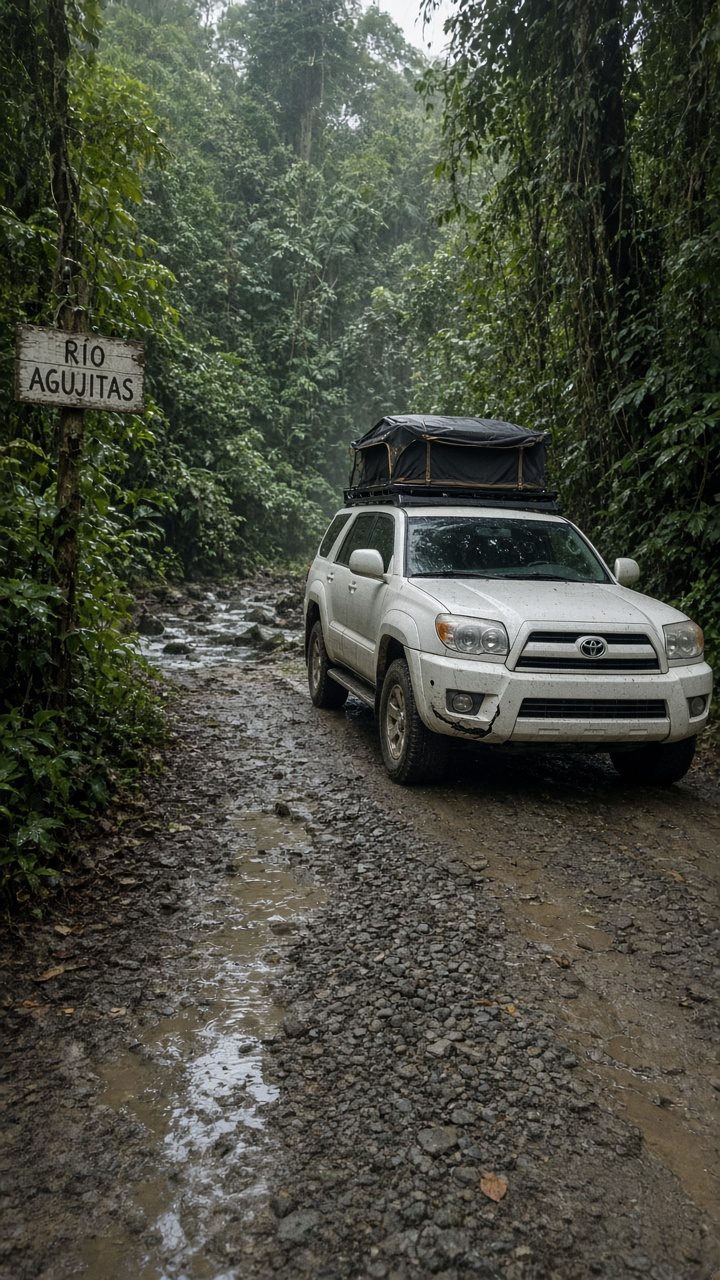
- Buffer for the roads. Green-season rain turns southern dirt to mud, especially Sept–Nov — pad your transit days and verify crossings locally.
Reserve your rig
This is a flexible chase, so you want a rig that can go anywhere the swell lands: a mid 4x4 with racks for the Central and South Pacific, or a Land Cruiser with recovery gear and comms if Pavones is in play. Reserve your VerifiedCR rig with swell-alert flex booking, and we'll spec the recovery/comms package and adjust pickup timing to the forecast.
Before you go
Do you need a 4x4?
4x4 required
Best window to fly
April–October (biggest S/SW swells)
Offline first
Download your route and offline maps before you leave the lot — signal drops on the best stretches.
Golden rule
Never drive at night — plan arrivals before dark, and use Waze like the locals do.
VerifiedCR · No counter surprises
What a Costa Rica rental actually costs
The number one thing that rattles first-timers is the price jumping at the counter. Here is the honest math, before you get there.
- Advertised daily rate$12–40 / day
- What the booking sites show. It is real — but it is not the whole price. Nobody pays only this.
- Mandatory liability (TPL / SLI)+$15–25 / day
- Required by Costa Rican law on every rental. Cannot be waived. This is the line the cheap ads leave off — it roughly doubles the sticker price. Budget for it.
- Collision damage (CDW)waivable
- Often $20–40/day — but you can usually decline it if your credit card includes rental coverage (Amex, Visa Signature, Chase Sapphire and others). Call your card, ask for a coverage letter, and bring it printed.
- Security hold on your card$1,000–2,500
- A hold, not a charge — released after you return the car clean. Some agencies hold more. Make sure your card has the headroom before you fly.
The verified-rig promise: when you reserve through VerifiedCR, the rig is inspection-checked and the operator is vetted — the price you are quoted is the price you pay. No mystery line items at pickup.