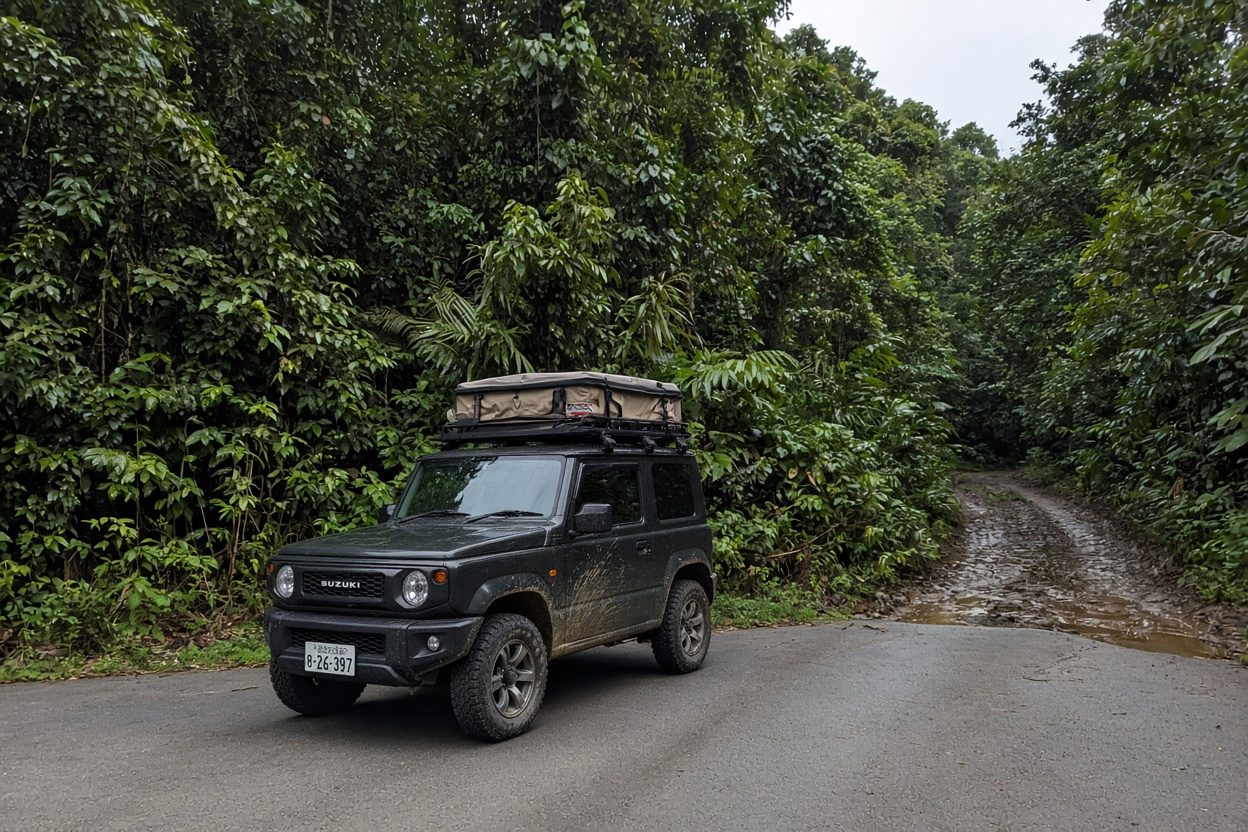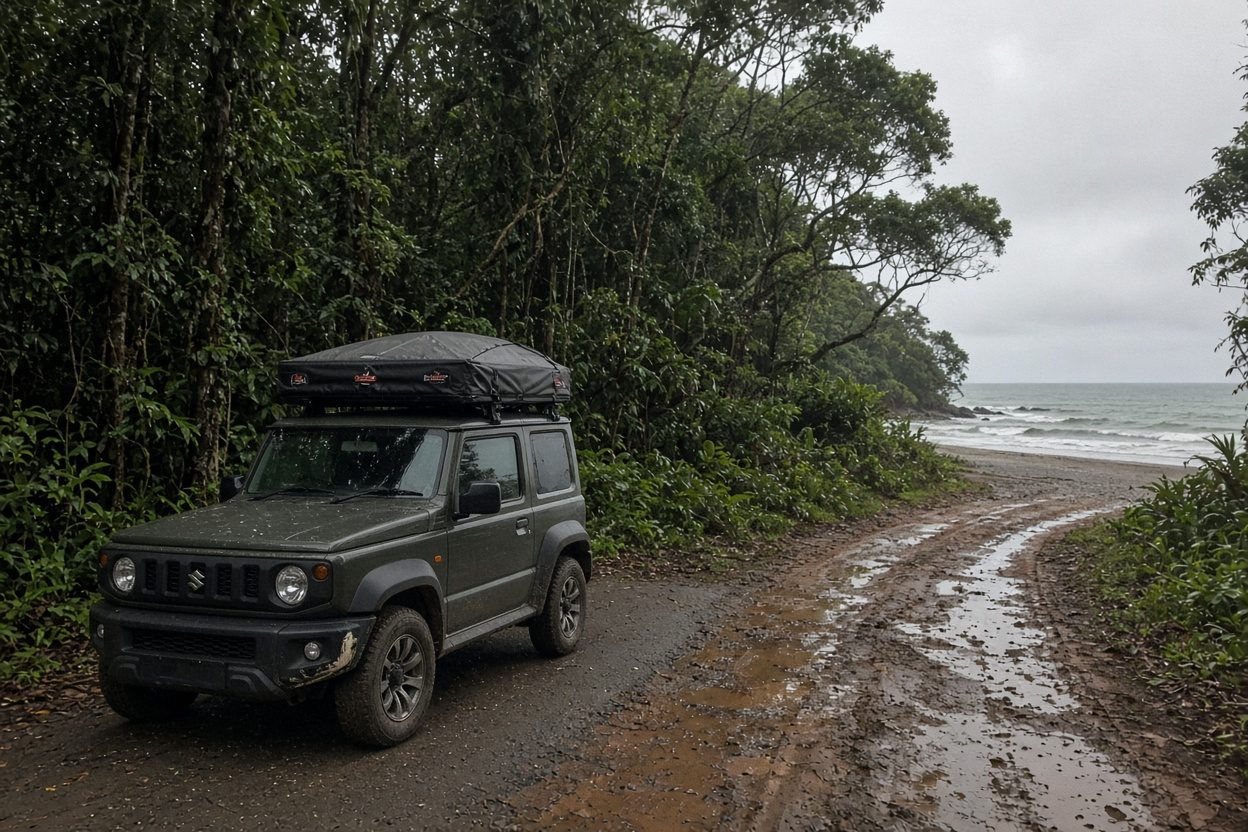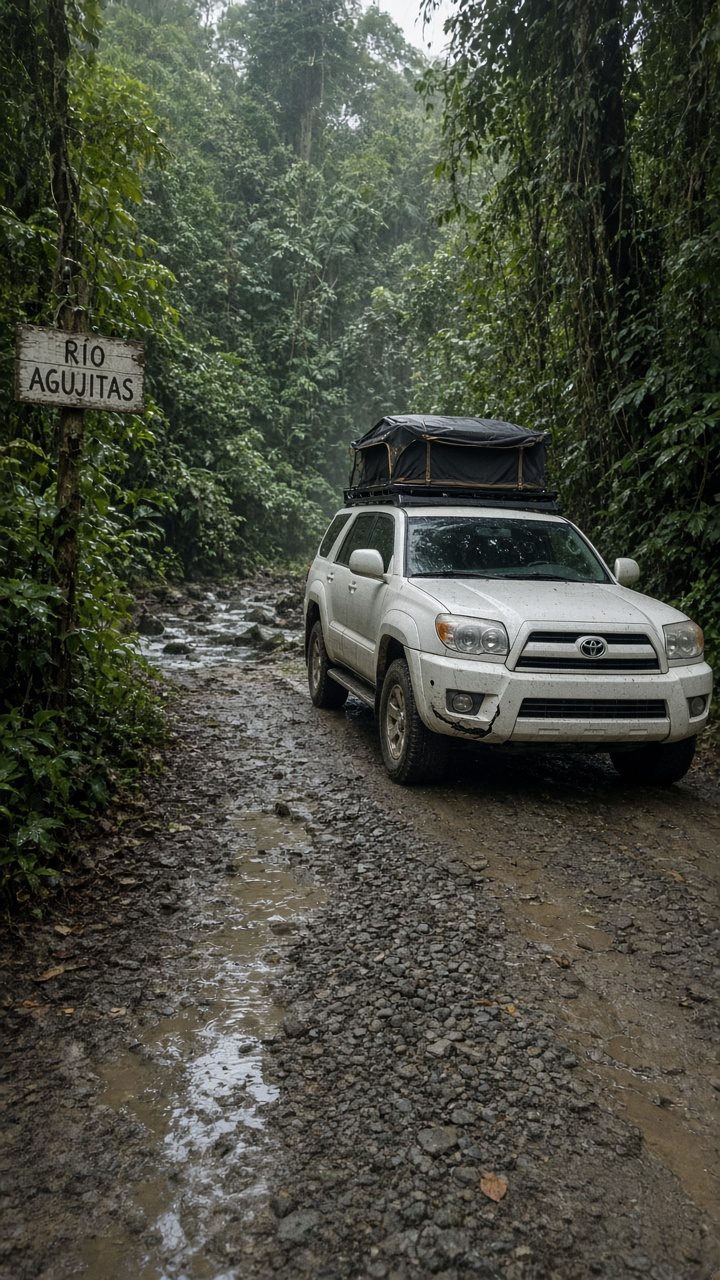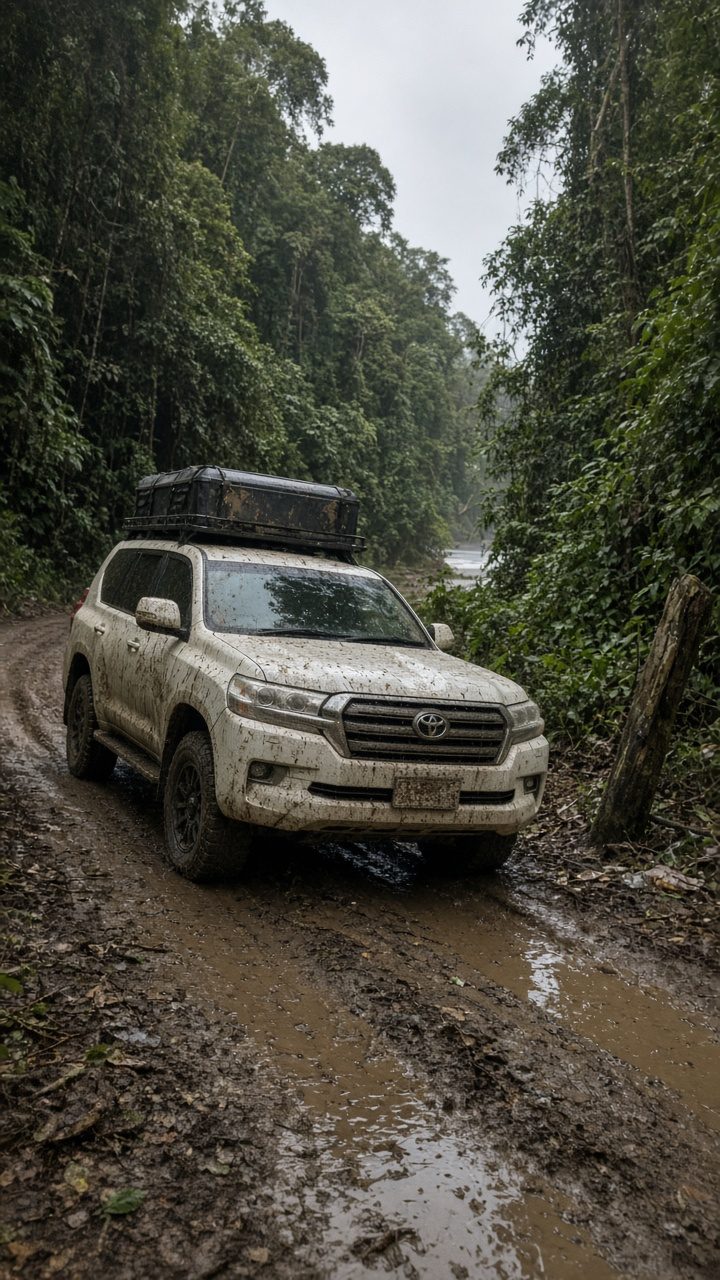
This is the big one — the itinerary that stitches every thread of the Deep South Pacific into a single ten-day expedition. You start on the surf coast at Dominical, work down through the Sierpe mangroves and out to Caño Island, cross by land into Drake Bay, loop around to Puerto Jiménez and into Corcovado, push to the end-of-the-road at Carate, and finish on the serene Golfo Dulce before exiting at Golfito. It's the Osa's greatest hits and deep cuts in one committing arc.
Make no mistake: this is a 🔴 through-land expedition, not a road trip. It demands a Land Cruiser with a rooftop tent, real self-sufficiency, a tide table, offline maps, and satellite comms — and it's dry-season only (Dec–Apr). You'll ford rivers, drive tide-gated coast, sleep off-grid, and pass through villages with no ATM and no fuel. Corcovado requires a mandatory guide; Drake and Carate require cash you bring in. Ten days is the right length to do it without rushing the crossings that punish haste. Do it once and you've seen more of the Osa than most people who live there.
Day-by-Day
Day 1 — Dominical. Provision on the developed coast, dial in the rig, and enjoy a surf-town launch. Load offline maps and buy a paper tide table. Overnight Dominical.
Day 2 — Sierpe mangroves. Drive to Sierpe (paved approach) and take an afternoon/sunset boat into the Térraba-Sierpe wetlands — the largest mangrove in Costa Rica and Central America. Overnight riverside in Sierpe (last comfortable services for a while).
Day 3 — Caño Island. Full-day snorkel or dive at Caño Island Biological Reserve (~60 min by boat from Sierpe): reef sharks, turtles, and walls of fish. Back to Sierpe, then position for the crossing to Drake.
Day 4 — Drake Bay. Move to Drake Bay — either the bridged land route via Rincón or a vehicle-and-boat combination depending on conditions. Remember: Drake has no ATM or gas — arrive with cash and a full tank. Explore the village and Río Agujitas. Overnight Drake.
Day 5 — Drake → Rincón → Puerto Jiménez. A long repositioning day: out of Drake on the bridged road to Rincón (bird the bridge for scarlet macaws and yellow-billed cotinga), then on to Puerto Jiménez — your resupply hub. Fuel, cash, food, and confirm your Corcovado guide. Overnight Jiménez.
Day 6 — Corcovado (La Leona). With your mandatory guide, do a La Leona-sector day hike into Corcovado — "the most biologically intense place on Earth" — for tapir sign, macaws, monkeys, and coastal rainforest. (Serious trekkers can extend to a Sirena overnight; see the dedicated Sirena Traverse itinerary.) Overnight near Carate/Matapalo.
Day 7 — Cabo Matapalo. Surf the points (Pan Dulce, Backwash, King's Wave), climb or rappel the King Louis Waterfall, and camp in the rooftop tent at the peninsula's wild tip. Study tomorrow's tides.
Day 8 — Carate, the end of the road. Push the rough, tide-gated coast road to Carate — the airstrip, the pulpería, the literal end of the road. Croc estuaries en route; time them on the low tide. Camp near Carate; dark skies and nesting-turtle beaches.
Day 9 — Golfo Dulce kayak. Backtrack toward the gulf and reposition to the calm inner Golfo Dulce, where a dawn or afternoon kayak often means dolphins alongside the boat. Overnight gulf-side (rooftop tent or a boat-access lodge, if you've pre-booked one splurge night).
Day 10 — Golfito exit. Close the loop at Golfito — refuel, re-cash, and drive out. Ten days, every corner of the Osa, done under your own power.
Signature Stops (why go)
- Térraba-Sierpe mangroves + Caño Island — the region's marine one-two punch, mangrove labyrinth to reef.
- Drake Bay by land — arriving at the village under your own power with your gear intact.
- Corcovado (La Leona/Sirena) — the biological heart of the Osa, guided.
- Cabo Matapalo & Carate — the surf-and-rainforest tip and the end-of-the-road frontier.
- Golfo Dulce — a tropical-fjord decompression to close the loop.
Where to Stay
A mix by design: riverside lodges (Sierpe), cabinas (Drake — cash only; Puerto Jiménez), rooftop-tent camping (Matapalo, Carate, gulf-side — secure private-land permission), and optionally one boat-access lodge night on the Golfo Dulce to reward yourself. Book the Sierpe and Drake nights and any lodge splurge ahead; camping spots need permission, not reservations.
Logistics & Road Reality
- Fuel & cash strategy: Provision at Dominical/Palmar, top up at Puerto Jiménez and Golfito. Drake and Carate have no ATM or gas — carry jerry cans and all cash needed for those legs.
- Corcovado guide is mandatory and permits are capped — book before you start.
- Tides & fords: The Matapalo–Carate legs are tide-gated with croc estuaries — plan every one on a paper tide table and low water.
- Vehicle: Land Cruiser + rooftop tent, recovery gear, and clearance. No lesser rig completes this.
- Season: Dec–Apr only. This loop is genuinely dangerous in the Sept–Nov peak rains.
- Connectivity: Extensive dead zones. Offline maps and a satellite messenger are mandatory, not optional.
- Overland 🟢 vs through-land 🔴: 🔴 — the definitive through-land expedition of the zone.
Insider Tips
- Book Sirena/guide and any lodge night first, then build the loop around them. Fixed points anchor a flexible expedition.
- Carry a fat cash reserve in colones. Two of your stops (Drake, Carate) have no ATM and multiple legs are cash-only.
- Never skimp on tide buffers. Days 7–8 live and die by the estuary tides; a missed window costs hours, not minutes.
- Split the driving with rest days. The Caño Island and Golfo Dulce days are lighter on purpose — use them to recover before the tide-gated push.
- Satellite messenger, always on. Between Corcovado, Matapalo, and Carate you'll be genuinely out of contact; a check-in device is your safety net.
Reserve Your Rig
This is the flagship expedition — and it needs the flagship rig. Reserve the fully-equipped Land Cruiser with rooftop tent, and we'll build you a GPX-and-tide book, arrange sat comms, and map your fuel-and-cash plan for every leg. [Reserve your expedition Land Cruiser →]
Before you go
Do you need a 4x4?
4x4 required
Best window to fly
Dec–Apr only
Offline first
Download your route and offline maps before you leave the lot — signal drops on the best stretches.
Golden rule
Never drive at night — plan arrivals before dark, and use Waze like the locals do.
VerifiedCR · No counter surprises
What a Costa Rica rental actually costs
The number one thing that rattles first-timers is the price jumping at the counter. Here is the honest math, before you get there.
- Advertised daily rate$12–40 / day
- What the booking sites show. It is real — but it is not the whole price. Nobody pays only this.
- Mandatory liability (TPL / SLI)+$15–25 / day
- Required by Costa Rican law on every rental. Cannot be waived. This is the line the cheap ads leave off — it roughly doubles the sticker price. Budget for it.
- Collision damage (CDW)waivable
- Often $20–40/day — but you can usually decline it if your credit card includes rental coverage (Amex, Visa Signature, Chase Sapphire and others). Call your card, ask for a coverage letter, and bring it printed.
- Security hold on your card$1,000–2,500
- A hold, not a charge — released after you return the car clean. Some agencies hold more. Make sure your card has the headroom before you fly.
The verified-rig promise: when you reserve through VerifiedCR, the rig is inspection-checked and the operator is vetted — the price you are quoted is the price you pay. No mystery line items at pickup.