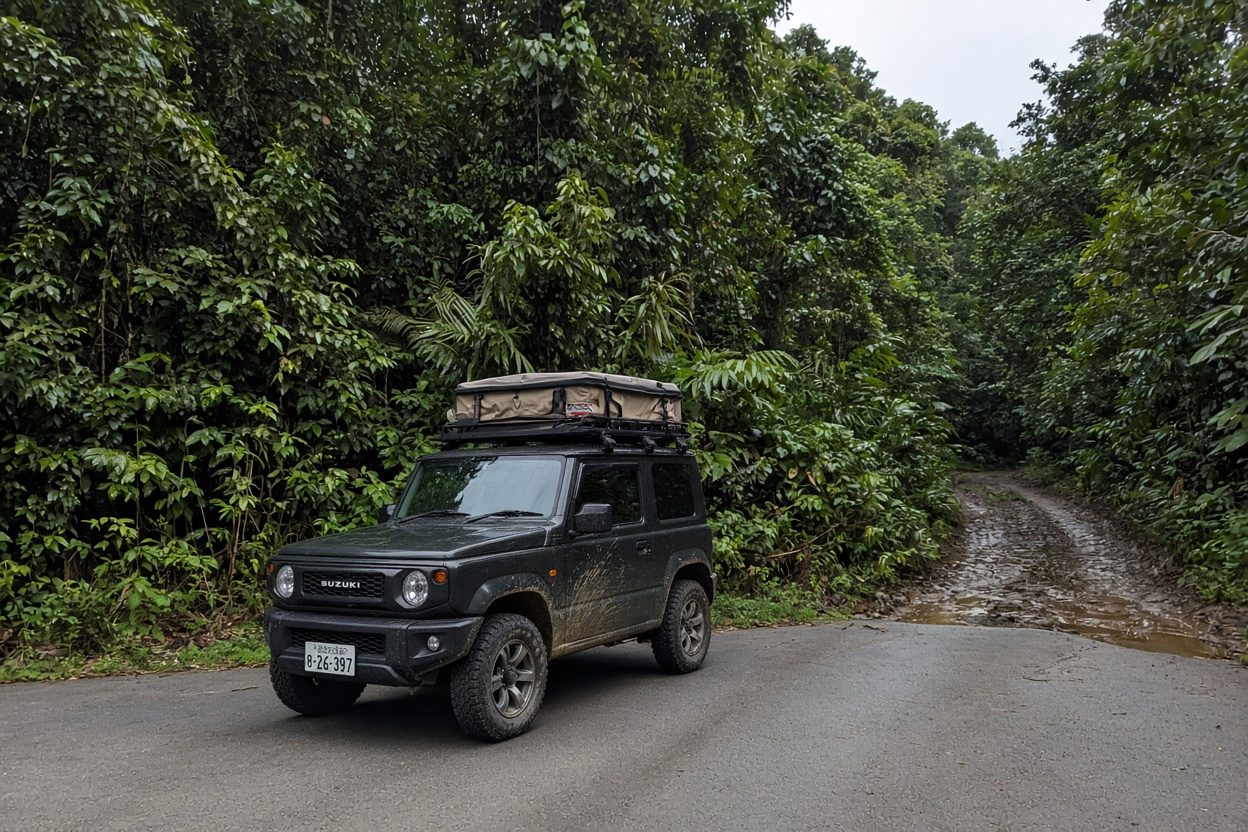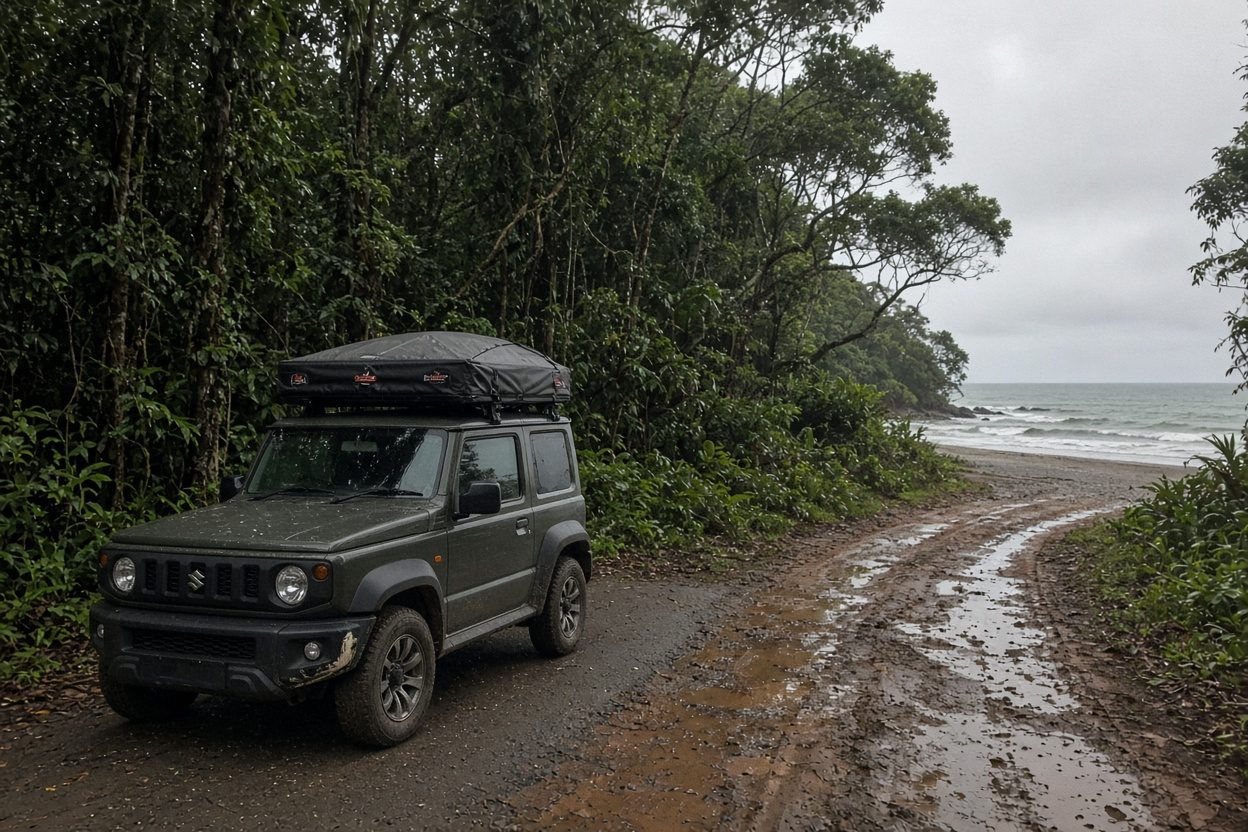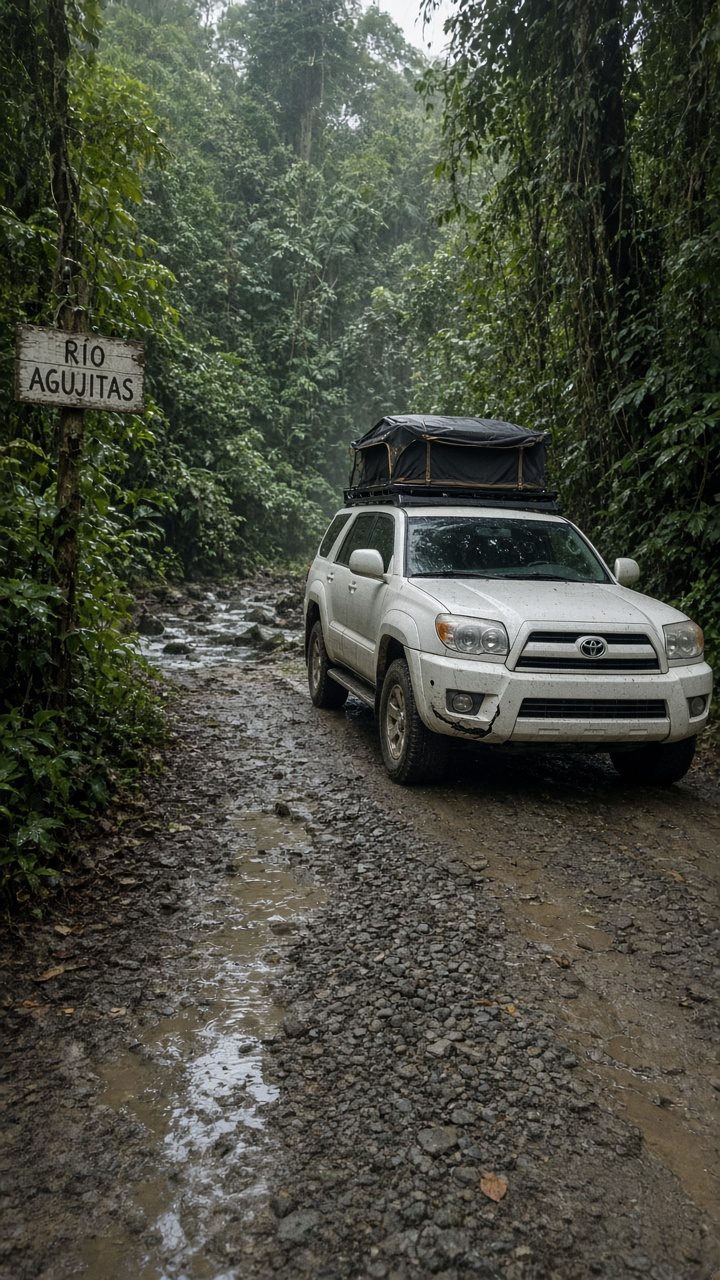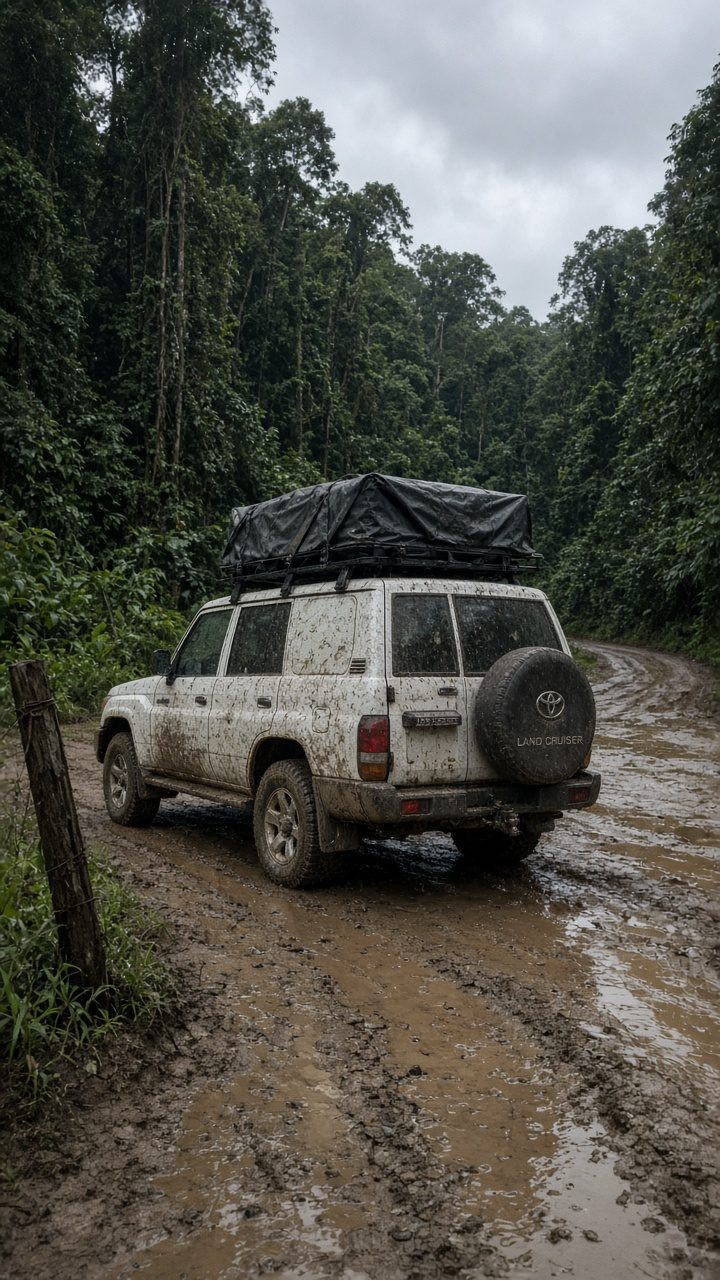
National Geographic famously called the Osa Peninsula "the most biologically intense place on Earth," and ten minutes into Corcovado you understand it is not marketing. This is Costa Rica with the safety rails removed: a peninsula where the last road runs out at a black-sand airstrip, where the ATM and the gas pump are both hours behind you, and where the reward for the planning is scarlet macaws overhead, tapir tracks in the mud, and a coastline almost no one reaches. This ten-day loop is the full wild edge — mangroves, Drake Bay, a guided push deep into Corcovado, and the tide-gated fords out to Carate — done properly, in a rig built for it.
Make no mistake about the rating: this is a 🔴 trip. It requires a real Land Cruiser (not a soft crossover), offline maps because signal disappears for days at a time, a cash-and-fuel discipline more like an expedition than a vacation, and a booked guide for the national park — that is not optional, it's the law. Roads that are merely rough in the dry season become impassable in the September–November peak of the rains, so this itinerary assumes a December–April window.
What you trade for the effort is exclusivity. The Osa filters out the casual, which means the beaches, the rainforest, and the Golfo Dulce fjord feel like they belong to you. Do the homework, respect the tides, hire the guides — and the peninsula opens up.
Day-by-Day
Days 1–2 · Into Sierpe & the mangroves
Drive: San José → Sierpe, roughly 5–6 hours via the Costanera Sur and Palmar Norte (the last stretch Palmar → Sierpe is about 30 minutes). 🟢 mostly paved.
Provision hard in Palmar Norte — it's the last full-service town with banks and big supermarkets. Overnight in Sierpe on the river and take a Térraba–Sierpe mangrove boat at golden hour: one of the largest mangrove systems in Central America, thick with crocodiles, herons, and roosting birds. This is your soft entry before the peninsula turns serious.
Days 3–5 · Drake Bay — end of the grid
Getting there: two options. Take the Sierpe lancha up the Río Sierpe and out through the river mouth to Drake (~1–1.5 hours; the river-mouth crossing is genuinely exciting and tide-dependent), leaving the rig in secured Sierpe parking. Or drive the bridged inland route via Rincón (no river fords if you take the correct road — 🔴 verify the route; the wrong turn hits crossings). 🔴
Drake Bay has no ATM, no bank, and effectively no reliable fuel — bring all the cash you'll need for the whole stay, including guide tips. Base three nights and run day-trips: the San Josecito / Cocalito coastal path, a Caño Island snorkel or dive day (visibility best in the dry season), and a night-jungle tour. This is the classic Osa base for boat access into Corcovado's San Pedrillo and Sirena stations.
Eat: Drake village sodas and small restaurants (some don't take cards). Sleep: Drake cabinas and campsites (book direct; bring cash).
Days 6–7 · Corcovado — guided, into Sirena
The rule: Corcovado can only be entered with a licensed guide, and your park entrance is reserved through a guide on the SINAC-approved list. Book this weeks ahead. 🔴
From Drake, take the boat to Sirena — the interior station and the richest wildlife on the peninsula: Baird's tapir, four monkey species, peccary herds, and, for the lucky, jaguar sign. Serious trekkers overnight in the Sirena ranger bunkhouse (book ahead; meals are limited and must be arranged). A day-visit from Drake to San Pedrillo is the lighter alternative. Either way you leave the rig behind and travel by boat and on foot.
Days 8–9 · The Carate fords — Matapalo & the end of the road
Drive: reposition to Puerto Jiménez (from Drake by land via Rincón, roughly 3+ hours; or return to your Sierpe-parked rig and drive around). Puerto Jiménez is your last fuel, last ATM, last real provisioning. Then the legendary run: Puerto Jiménez → Cabo Matapalo → Carate, about 43 km of dirt with river crossings, 4WD required, roughly 2 hours. 🔴
Time it to low tide — locals will tell you the tide table matters more than the clock, and the crossings that are ankle-deep at low water are impassable at high. The surf points at Matapalo and the jungle behind them are worth a night; then push to Carate, where the road simply ends at an airstrip and a pulpería. From Carate you can walk the coastal trail toward the La Leona station (the Carate trailhead sits on public land — verify current access rules 🔴). Camp with private-land permission.
Day 10 · Puerto Jiménez exit
Backtrack with a tide buffer to Puerto Jiménez, refuel, and begin the long paved haul north — or fly the small strip if you've arranged it.
Signature Stops — Why Go
- Corcovado / Sirena — the densest wildlife in Costa Rica; nowhere else stacks tapir, macaws, and primates like this.
- Caño Island — protected reef and one of the country's best snorkel/dive days off Drake.
- Térraba–Sierpe mangroves — a vast, croc-filled labyrinth best at dusk.
- The Carate road — the tide-gated, unbridged drive to the literal end of the road is the badge of an Osa overland trip.
Where to Stay (named)
- Sierpe: riverside lodges and cabinas (book direct).
- Drake Bay: village cabinas and campsites — cash only in many cases.
- Corcovado: the Sirena ranger bunkhouse (reserve ahead; through your guide/operator).
- Matapalo / Carate: rooftop-tent on private land with permission; small off-grid lodges.
Logistics & Road Reality
- Vehicle: 🔴 A genuine Land Cruiser is the right tool — clearance and water-fording ability are not negotiable on the Carate road.
- Fuel & cash: Puerto Jiménez is the last reliable fuel and ATM before Matapalo/Carate. Drake Bay has neither — carry cash for the whole stay. Consider a jerry can.
- Permits/guides: Corcovado requires a licensed guide and a guide-booked SINAC entry — arrange it well before you arrive. Sirena bunkhouse must be reserved.
- Tides: The Carate crossings are tide-gated. Get the local tide table and go at low water; build a tide buffer into your exit day.
- Season: Dec–Apr only for this full loop. Sept–Nov roads are the worst of the year.
- Comms: Long stretches have no cell signal. Carry a satellite messenger, download offline maps, and leave an itinerary with someone.
Insider Tips
- Book the Corcovado guide first, then plan around it. Sirena space and approved guides are the true bottleneck, not lodging.
- Provision in Palmar Norte and top up cash in Puerto Jiménez — these are your two supply anchors. Assume everything past them is cash-and-carry.
- Let the tide, not Google Maps, set your Carate departure. Ask locally the morning you drive.
- Decide your Drake access early — parking the rig in Sierpe and taking the lancha is often less stressful than the inland drive, and it's the classic way in.
- Pack a satellite messenger. On the Osa, "no signal for two days" is normal, not an emergency — until it is.
Reserve Your Rig
The Osa is the one Costa Rica trip where the vehicle is the difference between an expedition and a rescue. VerifiedCR builds Osa-ready rigs — Land Cruisers with the clearance for the Carate fords, rooftop-tent setups for the end-of-the-road nights, and the expedition extras that matter down here: recovery gear, jerry cans, offline GPX packs with the tide-gated crossings marked, and a satellite-messenger loan. We'll help sequence the guide bookings, the Sierpe parking, and the tide windows so the peninsula works for you. Reserve your Osa rig and drive to the end of the road.
Before you go
Do you need a 4x4?
4x4 required
Best window to fly
Dec–Apr (dry) — roads worst Sept–Nov
Offline first
Download your route and offline maps before you leave the lot — signal drops on the best stretches.
Golden rule
Never drive at night — plan arrivals before dark, and use Waze like the locals do.
VerifiedCR · No counter surprises
What a Costa Rica rental actually costs
The number one thing that rattles first-timers is the price jumping at the counter. Here is the honest math, before you get there.
- Advertised daily rate$12–40 / day
- What the booking sites show. It is real — but it is not the whole price. Nobody pays only this.
- Mandatory liability (TPL / SLI)+$15–25 / day
- Required by Costa Rican law on every rental. Cannot be waived. This is the line the cheap ads leave off — it roughly doubles the sticker price. Budget for it.
- Collision damage (CDW)waivable
- Often $20–40/day — but you can usually decline it if your credit card includes rental coverage (Amex, Visa Signature, Chase Sapphire and others). Call your card, ask for a coverage letter, and bring it printed.
- Security hold on your card$1,000–2,500
- A hold, not a charge — released after you return the car clean. Some agencies hold more. Make sure your card has the headroom before you fly.
The verified-rig promise: when you reserve through VerifiedCR, the rig is inspection-checked and the operator is vetted — the price you are quoted is the price you pay. No mystery line items at pickup.