Long before Corcovado was a national park, the Osa Peninsula was gold country. In the 1980s, thousands of oreros (gold panners) worked the rivers of the interior, and the little village of Dos Brazos de Río Tigre — "two arms of the Tiger River" — sat at the heart of it. Today the miners are largely gone, the forest has reclaimed the claims, and Dos Brazos has quietly reinvented itself as a rural-tourism gateway to the wildest, least-visited corner of Corcovado: the El Tigre sector. This trip braids the two stories together — gold-panning with a real ex-miner and trekking into primary rainforest that sees a fraction of Sirena's foot traffic.
We rank it 🔴 because El Tigre is genuinely remote and the road in from Puerto Jiménez is rough, off-grid country. But it's also one of the most rewarding budget adventures in the zone: community-run, low-cost, and authentic in a way the polished lodges can't touch. You base out of the legendary off-grid Bolita Rainforest Hostel, camp or bunk simply, and let local guides open doors — the El Tigre trail, gold-panning, and night hikes — that you couldn't find alone. Dry season (Dec–Apr) only; the Río Tigre and its crossings are no joke in the rains.
Day-by-Day
Day 1 — Provision in Puerto Jiménez, drive to Dos Brazos. Puerto Jiménez is your last fuel, ATM, and supermarket — provision fully, because Dos Brazos is a tiny village with minimal services. Then drive the rough road up the Río Tigre valley to Dos Brazos and up to Bolita Rainforest Hostel, an off-grid, solar-lit lodge and trail network on the forest edge. Settle in, meet the community tourism folks, and arrange tomorrow's gold-panning and your El Tigre plans. Nights here are pure jungle — no grid, big frog chorus.
Day 2 — Gold-panning with a local miner. The signature cultural experience: head down to the river with a local orero who still knows the old craft, and learn to work a batea (pan) in the Río Tigre gravels. You'll almost certainly find flecks of real gold, and — more valuable — hear firsthand the history of the Osa gold rush, the miners' relationship with the park, and how the community pivoted to conservation and tourism. It's hands-in-the-water, hands-on history. Afternoon: rest and shorter Bolita trails.
Day 3 — Bolita trails / El Tigre edge. Spend the day on the forest. The Bolita trail network climbs into steep primary and secondary rainforest with waterfalls and swimming holes, and the more ambitious can arrange the guided El Tigre hike — a roughly 7 km, medium-to-hard trail that enters a remote flank of Corcovado from the Dos Brazos side (this sector requires a local guide and permit, arranged through the community association). Wildlife here — tapir sign, monkeys, tanagers, and Osa's scarlet macaws — comes with a fraction of the crowds. Return to camp for a night hike listening for owls and frogs.
Day 4 — River day and exit. Take a relaxed final morning on the Río Tigre — a swim, a last pan, a coffee with your hosts — then drive the rough road back down to Puerto Jiménez, refuel, and reintegrate. It's a short trip, but a deep one.
Signature Stops (why go)
- Gold-panning in the Río Tigre — learn the batea from a real ex-miner and pocket a fleck of Osa gold; living history, not a museum.
- Corcovado's El Tigre sector — the wildest, least-trafficked way into the park, guided from the Dos Brazos side.
- Bolita Rainforest Hostel & trails — an off-grid basecamp with its own waterfall-studded trail network on the forest edge.
Where to Stay
Bolita Rainforest Hostel is the classic base — off-grid, solar, simple bunks and camping, set right on the trails above Dos Brazos. There are a handful of other community cabinas and homestays in the village for a more local stay. Everything here is cash-only and off-grid; there is no ATM or fuel in Dos Brazos — handle that in Puerto Jiménez.
Logistics & Road Reality
- Fuel & cash: Puerto Jiménez is your last fuel and ATM. Dos Brazos is cash-only with no services — carry everything you need.
- Guides & permits: The El Tigre Corcovado sector requires a local guide and permit, arranged through the Dos Brazos community tourism association — book on arrival or ahead. Gold-panning is community-guided too.
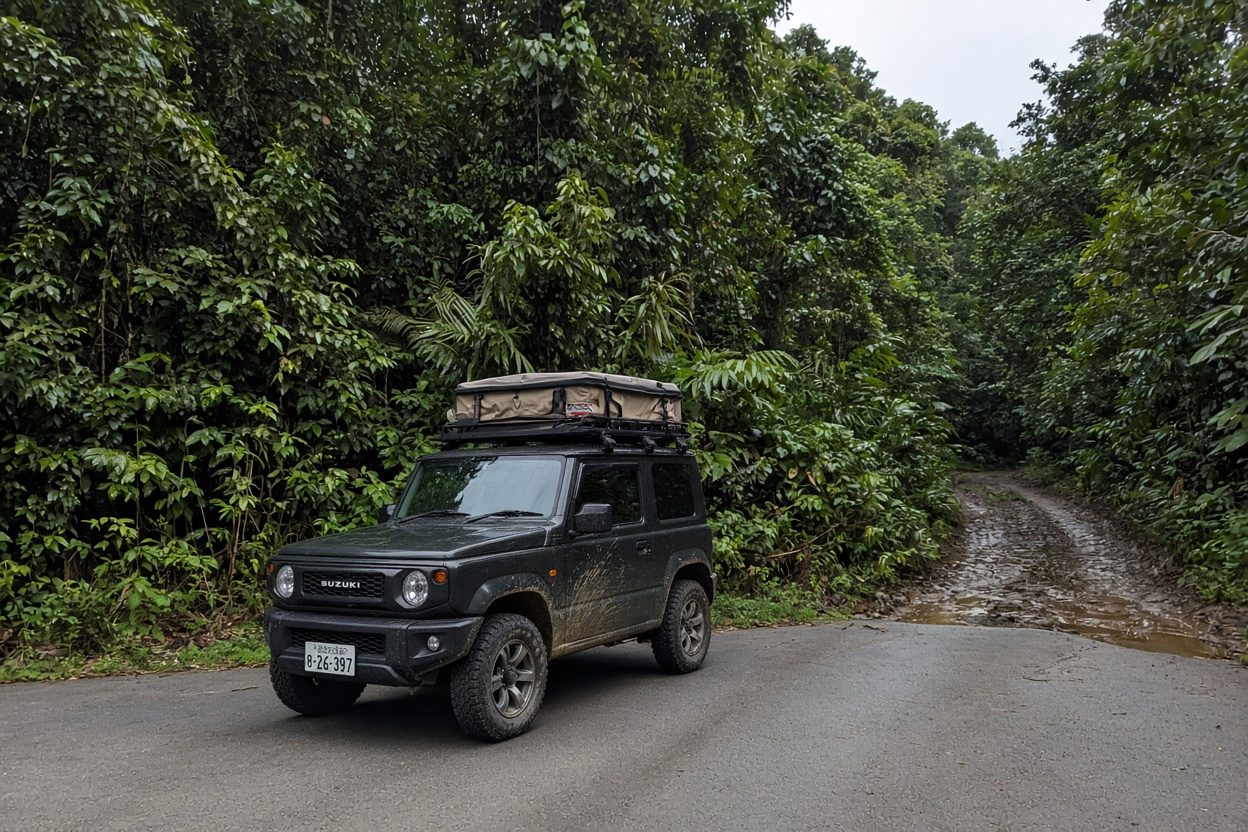
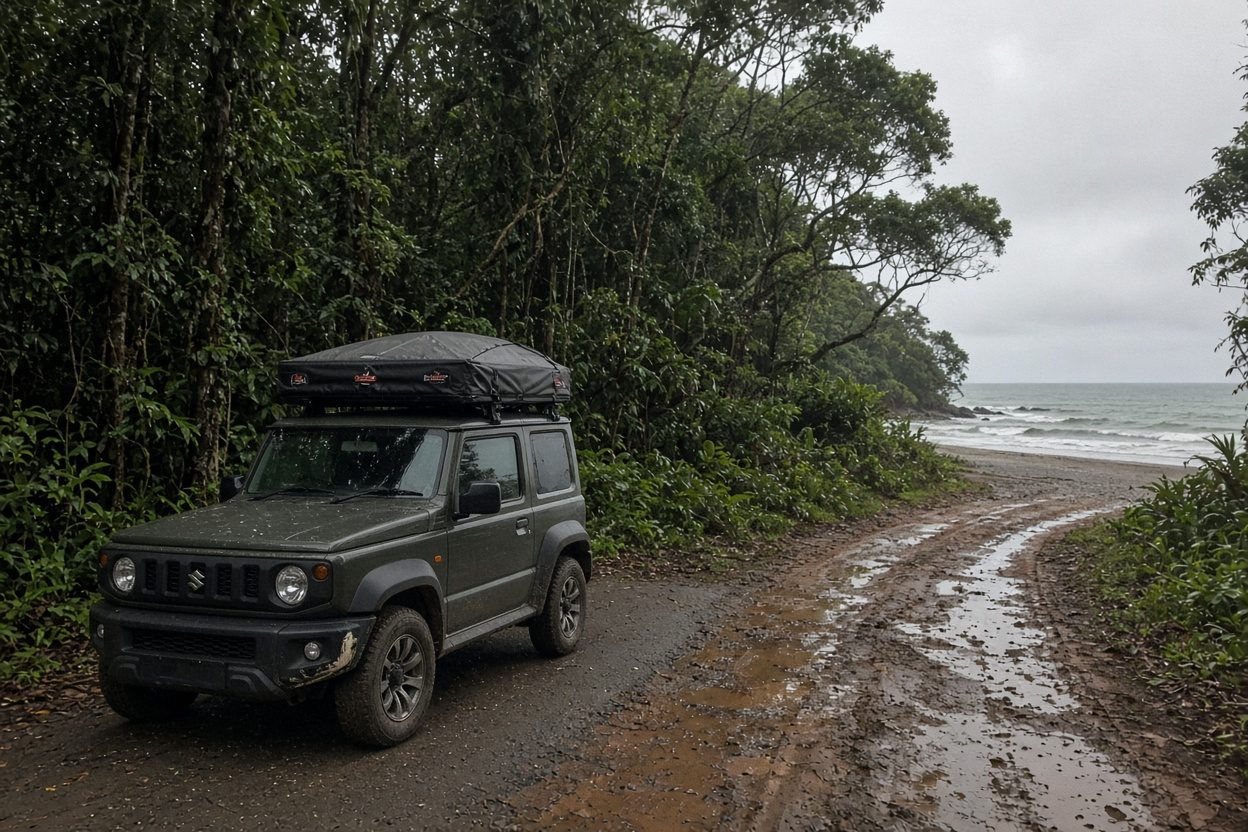
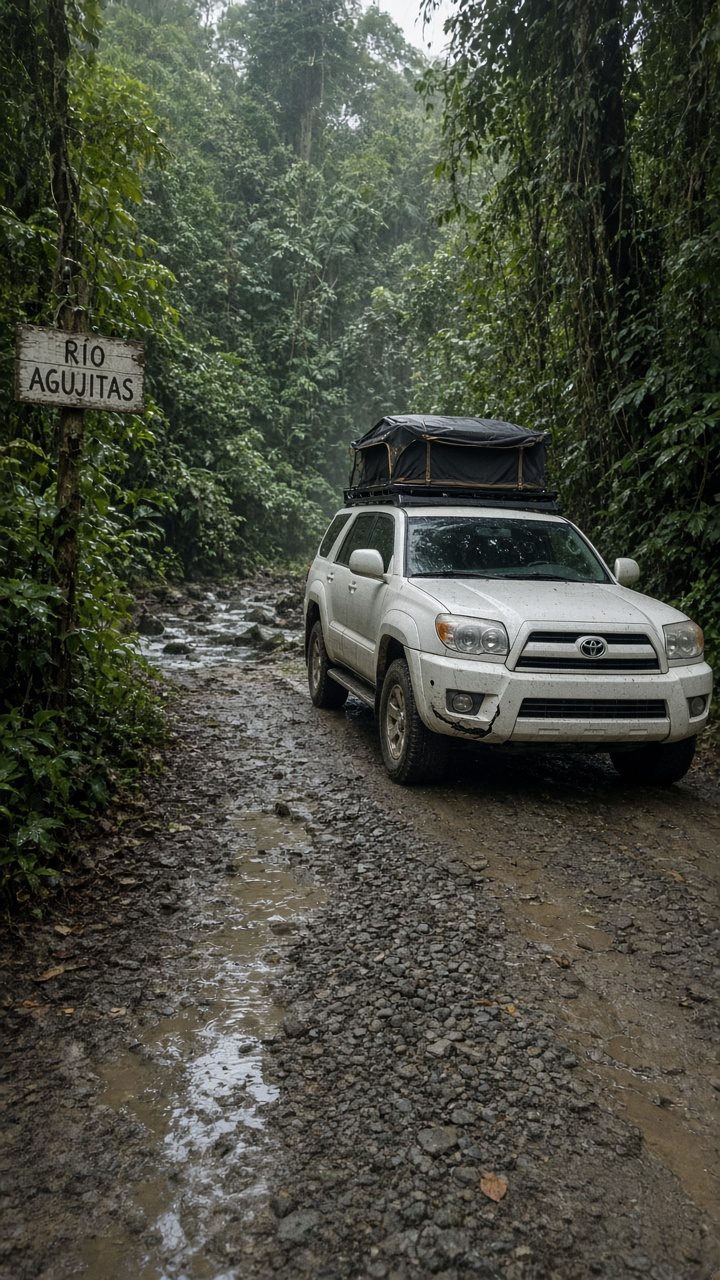
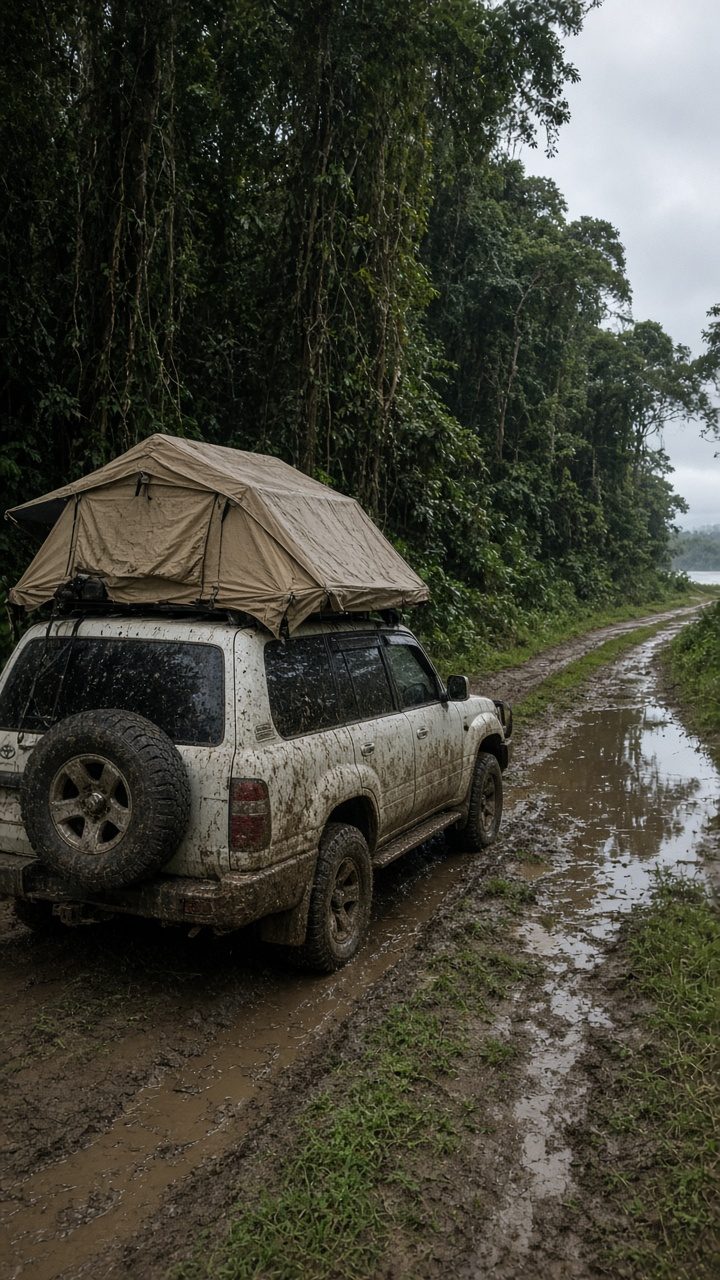
- Vehicle: The road up the Río Tigre valley is rough and off-grid; a Land Cruiser-class rig with clearance is the right tool, especially for the last stretch.
- Season: Dec–Apr. The Río Tigre and its crossings are dangerous in the wet season.
- Connectivity: Off-grid dead zone. Offline maps essential; tell your hosts your hiking plans.
- Overland 🟢 vs through-land 🔴: 🔴 — remote, off-grid, and (for El Tigre) genuinely demanding terrain.
Insider Tips
- Book El Tigre through the community association. It's the legit, guided way in, it supports the village, and it's the only way to enter that sector.
- Bring more cash than seems necessary. Guides, lodging, meals, and panning are all cash, and the nearest ATM is back in Jiménez.
- Pack a headlamp and a power bank. Bolita is solar and off-grid — your devices won't charge on demand, and the night hikes need good light.
- Do the night hike. Dos Brazos' forest edge is superb for red-eyed tree frogs, kinkajous, and owls — arguably better than the daytime.
- Ask your miner for the history, not just the gold. The story of the oreros, the park, and the community's pivot is the real treasure of this trip.
Reserve Your Rig
This is off-grid, gold-country overlanding — bring the Land Cruiser. Reserve yours with an off-grid camping kit and help arranging your El Tigre permit and community gold-panning guide, and we'll brief you on the Río Tigre road. [Reserve your Land Cruiser →]
Before you go
Do you need a 4x4?
4x4 required
Best window to fly
Dec–Apr
Offline first
Download your route and offline maps before you leave the lot — signal drops on the best stretches.
Golden rule
Never drive at night — plan arrivals before dark, and use Waze like the locals do.
VerifiedCR · No counter surprises
What a Costa Rica rental actually costs
The number one thing that rattles first-timers is the price jumping at the counter. Here is the honest math, before you get there.
- Advertised daily rate$12–40 / day
- What the booking sites show. It is real — but it is not the whole price. Nobody pays only this.
- Mandatory liability (TPL / SLI)+$15–25 / day
- Required by Costa Rican law on every rental. Cannot be waived. This is the line the cheap ads leave off — it roughly doubles the sticker price. Budget for it.
- Collision damage (CDW)waivable
- Often $20–40/day — but you can usually decline it if your credit card includes rental coverage (Amex, Visa Signature, Chase Sapphire and others). Call your card, ask for a coverage letter, and bring it printed.
- Security hold on your card$1,000–2,500
- A hold, not a charge — released after you return the car clean. Some agencies hold more. Make sure your card has the headroom before you fly.
The verified-rig promise: when you reserve through VerifiedCR, the rig is inspection-checked and the operator is vetted — the price you are quoted is the price you pay. No mystery line items at pickup.