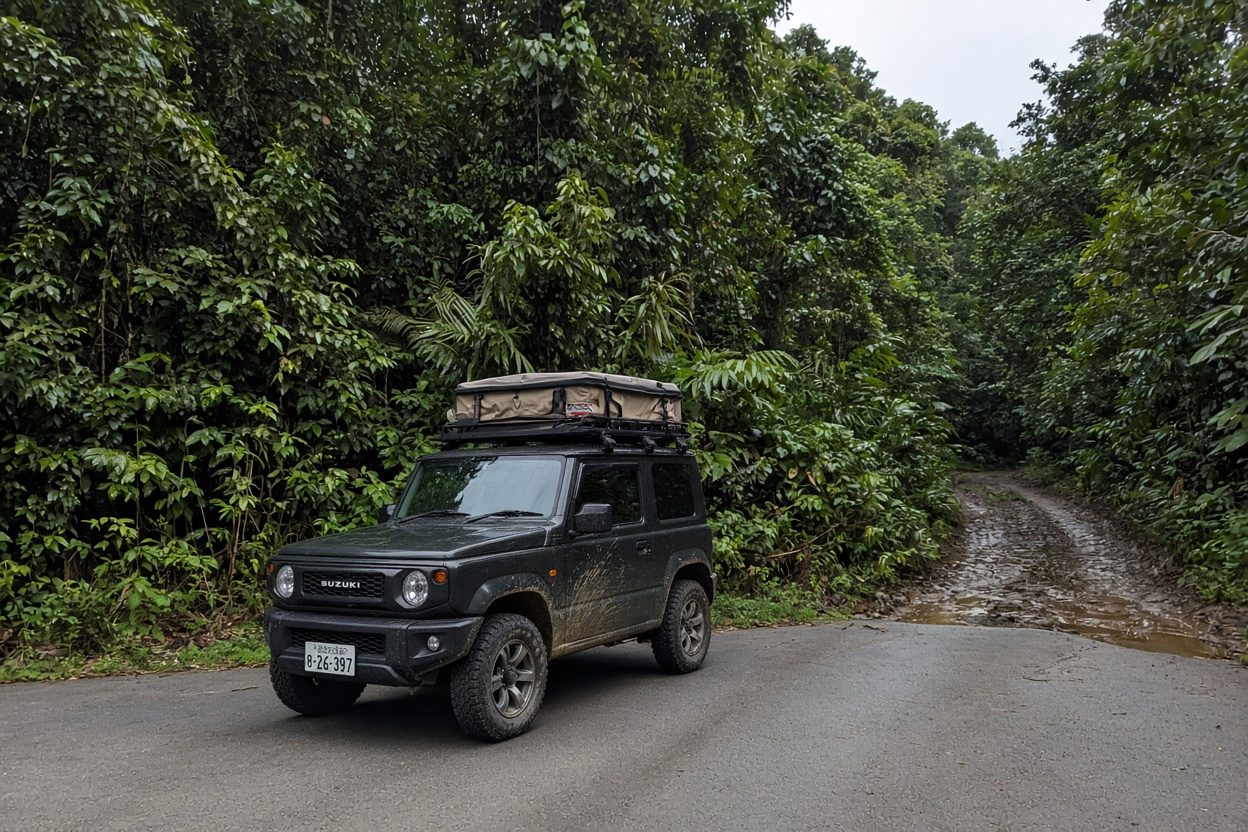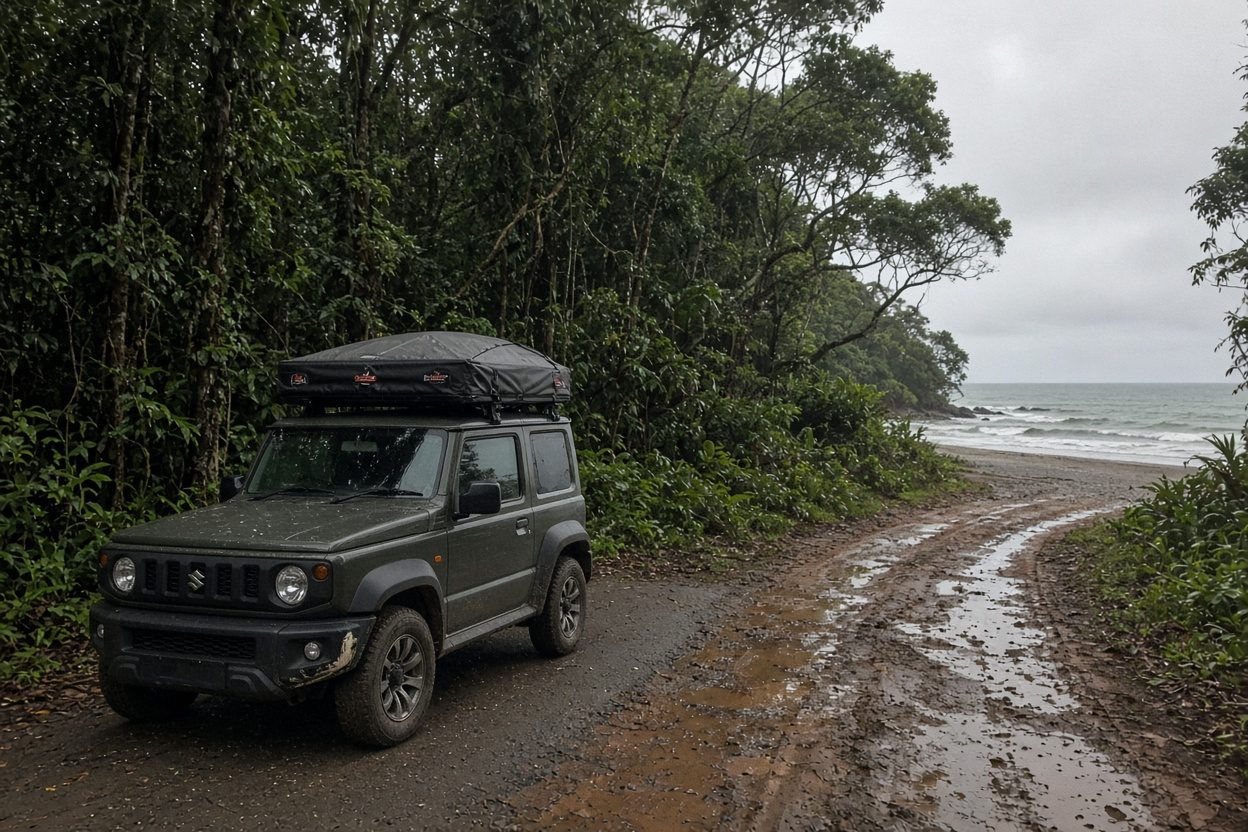
This is a trip for surfers who have graduated past the beginner beaches of Guanacaste and want the two faces of Costa Rica's south-swell coast: the raw, sand-bottom power of Dominical and the wrapping, jungle-fringed right points of Cabo Matapalo on the tip of the Osa Peninsula. Between them lies one of the most beautiful — and longest — coastal drives in the country, down the Costanera Sur and out to the edge of Corcovado.
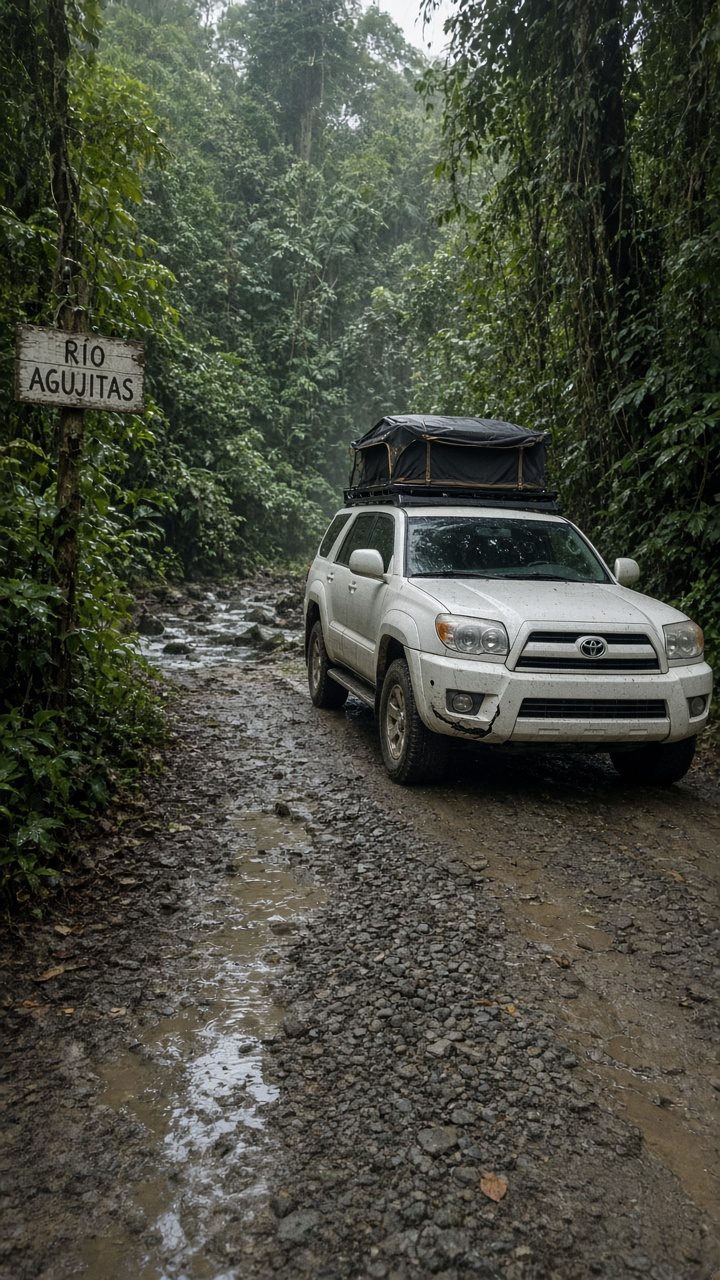
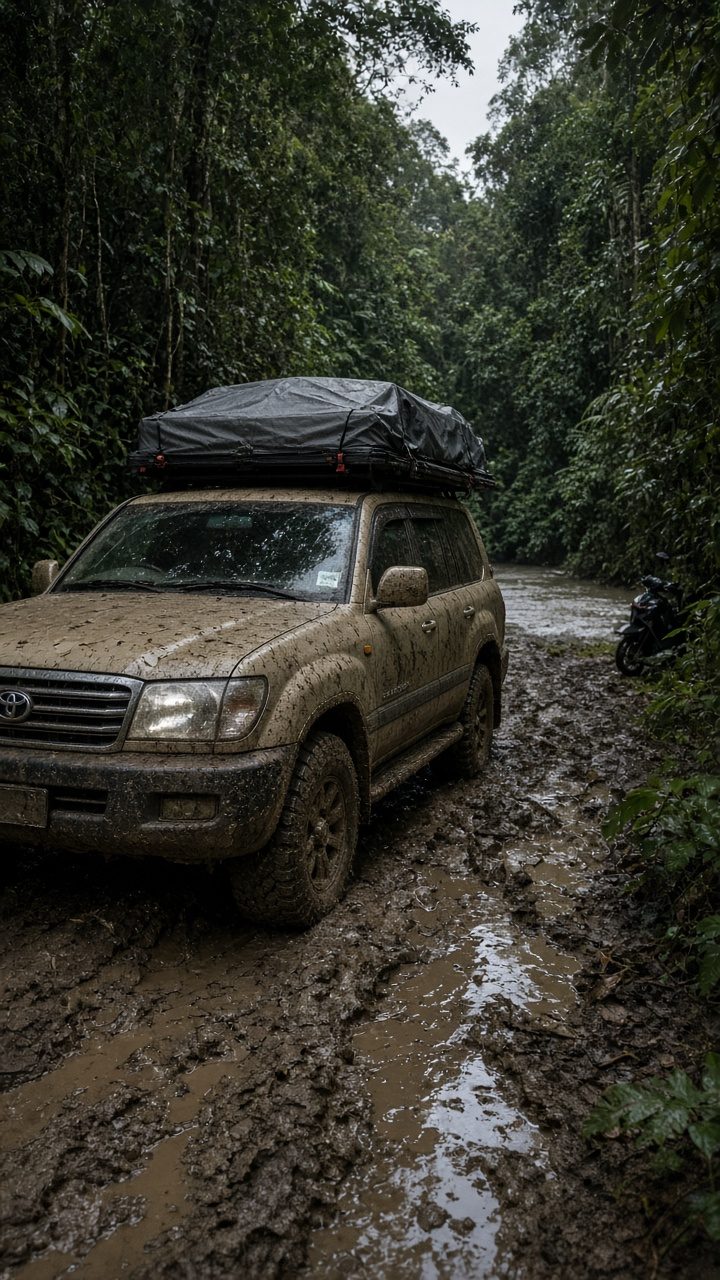
Both zones fire on the same fuel: the long-period south and southwest groundswells that march up from the Southern Hemisphere between roughly April and October. That is the green (wet) season, so build in flex days and expect afternoon rain. It also means the Osa's dirt roads are at their softest, especially September–November, so this run rewards a proper 4x4 and a tide chart you actually read.
A word of honesty on geography: Dominical (in the Costa Ballena) and Cabo Matapalo (the Osa's southern tip) are not neighbors. The drive between them is a full transit day — plan on roughly 4–5 hours, and verify current road and river conditions locally before you commit to the Osa leg.
Day by day
Day 1 — SJO to Dominical
Fly into San José and point the rig south on Route 34, the Costanera Sur. It is mostly paved and well-marked, and runs about 3.5–4 hours (longer with traffic through Jacó). Roll into Dominical by afternoon, set up your quiver, and paddle out for a sunset check at the town beach.
- Eat: the sodas and open-air kitchens along the Dominical beach road; fish tacos and casados.
- Sleep: Tribe Boutique Hotel (adults-only, in-house yoga, walking distance to the beach) for comfort, or Hona Beach Hotel for a solid mid-range option near the sand.
Day 2 — Playa Dominical
The wave: Playa Dominical is a powerful sand-bottom beach break at the mouth of the Río Barú. It picks up swell across the S-to-W window and faces a deep offshore canyon ~23 miles out, which is why locals claim it is surfable something like 95% of the year. On a lined-up south swell it throws fast, pitching lefts and barreling rights that feel more like a point than a beachie. Best swell: S/SW, wet season. Wind: dawn glass before the onshore builds. Tide: work the incoming push toward high; sandbanks shift, so watch a set before choosing your peak. Skill: advanced on size — the shorebreak has real power and current near the river mouth.
- Warm-up option: Playa Dominicalito just south sits behind Punta Dominical with a slight NW tilt, so it runs 3–4 ft smaller and friendlier — the region's learner/longboard bay, with no localism.
- Eat & sleep: stay based in Dominical.
Day 3 — Dominical dawn + Uvita/Playa Hermosa
Dawn patrol Dominical again, then explore south. Playa Hermosa (the Dominical one, between Dominical and Uvita — not the Jacó break of the same name) is a deserted, mushy, peely wave good for logging turns. Uvita adds south-facing peaks and the iconic Punta Uvita whale's-tail sand tombolo — worth a low-tide walk even if it is flat.
- Eat: Uvita's expanding food scene; smoothie bowls and Tico sodas.
- Sleep: Dominical or Uvita cabinas.
Day 4 — Transit to the Osa (Puerto Jiménez)
The big driving day. Continue south on Route 34, cut inland at Chacarita onto Route 245, and drive out to Puerto Jiménez — roughly 4–5 hours from the Costa Ballena (verify locally; conditions vary in the wet season). Puerto Jiménez is your last real fuel, ATM, and grocery stop before Matapalo, so top up everything. From PJ, the road to Cabo Matapalo is about 21 km / 40 minutes of rocky dirt — 4x4 required, no river snorkel needed in normal conditions.
- Sleep: Encanta La Vida (classic Matapalo surf lodge with meals and guided sessions), Lapa Rios (eco-luxury), or an off-grid jungle cabina. Book ahead — there is no walk-up town.
Day 5 — Cabo Matapalo points
Matapalo faces nearly due west and catches the full brunt of South Pacific swell while staying clean. Three right-hand points, howler monkeys for an alarm clock, and almost no crowd:
- Pan Dulce — the friendly one. A right that peels off a cobblestone point over mostly sand-covered reef for 150–200 m. Best on 3–5 ft S/SW, mid-to-high tide. Beginner-to-intermediate on small days; pack booties for the rock-shelf entry.
- Backwash — more powerful and hollow, breaking near the rocky outcrop between the bays. 4–6 ft SW, best around mid tide, more current, walls up fast. Intermediate-to-advanced.
- Matapalo Point ("The Point") — the crown jewel. A long, wrapping right that can run 300 m+, with a steep punchy takeoff and rippable walls. Best 5–8 ft SW with a N/E offshore wind; watch the boils on the inside at lower tides. Solid intermediate-to-advanced.
- Get out early: offshore winds usually blow in the morning before the jungle heat kicks in.
- Eat & sleep: lodge meals; there are no restaurants to speak of.
Day 6 — Dawn session + exit
One more dawn point session, then reverse the dirt road to Puerto Jiménez and begin the drive out (or fly out of PJ's airstrip if you arranged a one-way). Buffer time for the Costanera in the wet season.
The breaks — why surf, and who for
| Break | Type | Skill | Best swell |
|---|---|---|---|
| Playa Dominical | Sand-bottom beach break, river-mouth barrels | Advanced on size | S/SW, wet season |
| Dominicalito | Sheltered bay, mellow | Beginner/longboard | any S/W |
| Playa Hermosa (Dominical) | Peely beach break | Intermediate | mid S/SW |
| Pan Dulce | Right point over cobble/sand | Beginner–intermediate | 3–5 ft S/SW |
| Backwash | Hollow right reef/point | Intermediate–advanced | 4–6 ft SW |
| Matapalo Point | Long wrapping right point | Intermediate–advanced | 5–8 ft SW |
Where to stay
- Dominical: Tribe Boutique Hotel (adults-only, yoga); Hona Beach Hotel (mid-range near beach); Tropical Sands Inn (all-inclusive surf-camp packages).
- Cabo Matapalo: Encanta La Vida (surf lodge + guided trips); Lapa Rios (eco-luxury); off-grid jungle cabinas. Reserve in advance — no walk-up options.
Surf logistics
- Season / swell window: 🟢 Best April–October for consistent S/SW groundswell. 🔴 September–November is the wettest and the Osa roads are worst — buffer days and verify crossings.
- Boards: Bring a step-up or your everyday shortboard for Dominical's power; a fuller shortbord or mid-length suits the mellow Pan Dulce days. Pack a ding-repair kit — you are far from a shaper.
- Hazards: 🔴 Dominical river-mouth rips and heavy shorebreak; 🔴 Matapalo's rocky/cobble entries (booties), inside boils at low tide, and current at Backwash. 🔴 Osa estuaries hold crocodiles — do not surf river mouths at dusk or wade estuaries. Snakes and no cell signal in the jungle.
- 4x4 & fuel: Puerto Jiménez is the last fuel/ATM. Matapalo road is rocky dirt — 4x4 essential; conditions worsen in heavy rain.
- Connectivity: Patchy-to-none around Matapalo. Download offline maps and tide charts before you leave PJ.
- Respect / localism: Matapalo is low-key and friendly; Dominical's town-beach lineup can be busy on a good swell — wait your turn.
Insider tips
- Read the tide before the surf report. Both Dominical's sandbanks and Matapalo's rock shelves change character hour to hour — the incoming push is your friend at both.
- Fuel and cash in Puerto Jiménez, always. There is nothing between PJ and the end of the road. Fill the tank, draw cash, and buy provisions.
- Dawn is the whole game at Matapalo. The morning offshore cleans up the points before the sea breeze and jungle heat arrive.
- Crocs are real on the Osa. Never surf or wade near estuary mouths at low light. Ask your lodge which entries are safe.
- Treat the transit day as part of the trip, not an obstacle — the Costanera and the drive onto the Osa are spectacular. Don't try to surf both zones in one day.
Reserve your rig
This run needs a capable 4x4 with board racks, real ground clearance for the Osa dirt, and a ding kit in the back. Reserve your VerifiedCR rig for the south-swell window — tell us your target swell dates and we'll spec the vehicle, racks, and recovery gear for the Dominical-to-Matapalo run.
Before you go
Do you need a 4x4?
4x4 required
Best window to fly
April–October (south-swell season; road buffer Sept–Nov)
Offline first
Download your route and offline maps before you leave the lot — signal drops on the best stretches.
Golden rule
Never drive at night — plan arrivals before dark, and use Waze like the locals do.
VerifiedCR · No counter surprises
What a Costa Rica rental actually costs
The number one thing that rattles first-timers is the price jumping at the counter. Here is the honest math, before you get there.
- Advertised daily rate$12–40 / day
- What the booking sites show. It is real — but it is not the whole price. Nobody pays only this.
- Mandatory liability (TPL / SLI)+$15–25 / day
- Required by Costa Rican law on every rental. Cannot be waived. This is the line the cheap ads leave off — it roughly doubles the sticker price. Budget for it.
- Collision damage (CDW)waivable
- Often $20–40/day — but you can usually decline it if your credit card includes rental coverage (Amex, Visa Signature, Chase Sapphire and others). Call your card, ask for a coverage letter, and bring it printed.
- Security hold on your card$1,000–2,500
- A hold, not a charge — released after you return the car clean. Some agencies hold more. Make sure your card has the headroom before you fly.
The verified-rig promise: when you reserve through VerifiedCR, the rig is inspection-checked and the operator is vetted — the price you are quoted is the price you pay. No mystery line items at pickup.