National Geographic once called Corcovado "the most biologically intense place on Earth," and after a week on the Osa Peninsula you will understand why nobody argues with the line. This is primary rainforest that has never been meaningfully logged — 60-meter emergent trees, four species of monkey overhead, tapirs grazing an airstrip at dusk, and scarlet macaws crossing the beach in loud red pairs. It is also Costa Rica at its most remote: the Osa is a peninsula at the far southern Pacific corner of the country, and getting there is half the commitment.
This is a 🔴 serious-traveler route built around a rented 4x4 and a base at Drake Bay. You will not "drive into" Corcovado — the park is entered only by boat-and-foot with a certified guide — so the rig's job is to get you to the edge of the wild, carry your gear and cash, and give you the freedom to explore Matapalo and Puerto Jiménez on your own schedule. Plan it for the December–April dry season. The green season (especially September–November) turns Osa's back roads to soup and cancels boats.
A note before you pack: Drake Bay has no bank, no ATM, and no gas station. Draw all the cash you'll need and fill the tank before you leave the Sierpe/Palmar area (verify current fuel stops locally). Cards are accepted at some lodges but nothing beats cash on the Osa.
Day-by-day
Day 1 — SJO → Sierpe (approx. 5–6 hrs driving). Collect the 4x4 near San José and point south on the Costanera. Budget a full travel day: the drive to Sierpe runs about 5 to 6 hours before stops, and the village is where the pavement ends and the mangrove river begins. Overnight in or near Sierpe (several small riverside hotels; book ahead) so you can make the morning boat. Fuel up and hit an ATM in Palmar/Sierpe — your last reliable chance.
Day 2 — Sierpe → Drake Bay by boat (approx. 1–1.5 hrs). Leave the vehicle in secured parking in Sierpe (arrange through your lodge or the boat operator) and take the lancha down the Río Sierpe and out along the coast to Drake Bay — roughly 1 to 1.5 hours of mangrove tunnels, crocodiles and coastline. Settle into your Drake Bay base. Afternoon is for a first guided night walk in the rainforest fringe — glass frogs, kinkajous and the peninsula's astonishing insect life.
Days 3–4 — Corcovado guided (Sirena or San Pedrillo). These are the marquee days. From Drake Bay, boats run to Sirena Ranger Station (30–40 min crossing — the richest sector, tapirs and jaguar activity) and San Pedrillo Station (about 45 min — waterfalls and superb birding, a gentler introduction). Day tours depart around 6:00–7:00 a.m. to hit peak wildlife hours. Consider a Sirena overnight on one of the two days: dawn and dusk in the park, with the day-trippers gone, is the sighting window nobody forgets. Book the certified guide and SINAC permits well in advance — Sirena's daily quota sells out weeks ahead in high season.
Day 5 — Caño Island snorkel or dive (approx. 45 min boat). Trade jungle for reef. Isla del Caño is a protected marine reserve about 45 minutes to an hour off Drake by boat — clear water, reef fish, rays, turtles and (seasonally) whales on the crossing. Half-day snorkel or two-tank dive, back to Drake Bay by afternoon.
Day 6 — Boat out, drive to Puerto Jiménez / Matapalo. Return by boat to Sierpe, reclaim the rig, and drive around the Golfo Dulce side to Puerto Jiménez and out to Matapalo at the peninsula's tip (mixed paved and rough road — 4x4 earns its keep here). Matapalo's forest holds scarlet macaws feeding in the beach almonds at dawn and dusk, plus monkeys and, if you're lucky, a squirrel monkey troop. Camp or lodge near Matapalo.
Day 7 — Exit. Long drive back to San José (plan a full day). Fuel and cash sorted before you leave the peninsula.
Signature stops (why go)
- Sirena Ranger Station — the single best wildlife walk in Costa Rica. Tapirs near-daily, all four monkeys, coatis, agoutis, macaws; jaguar and harpy eagle are the long-shot dreams.
- San Pedrillo — waterfalls and top-tier birding, less punishing than Sirena.
- Caño Island — marine-reserve snorkeling and diving in genuinely clear Pacific water.
- Matapalo — do-it-yourself macaw and monkey watching from the beach forest.
Where to camp / stay
- Drake Bay: La Paloma Lodge (boutique, family-run, hilltop views), Aguíla de Osa (upscale rainforest-and-marine lodge), Drake Bay Getaway Resort, and Copa de Árbol are established options — all book direct and fill fast in dry season.
- Sierpe: small riverside hotels for the pre-boat night (verify current options locally).
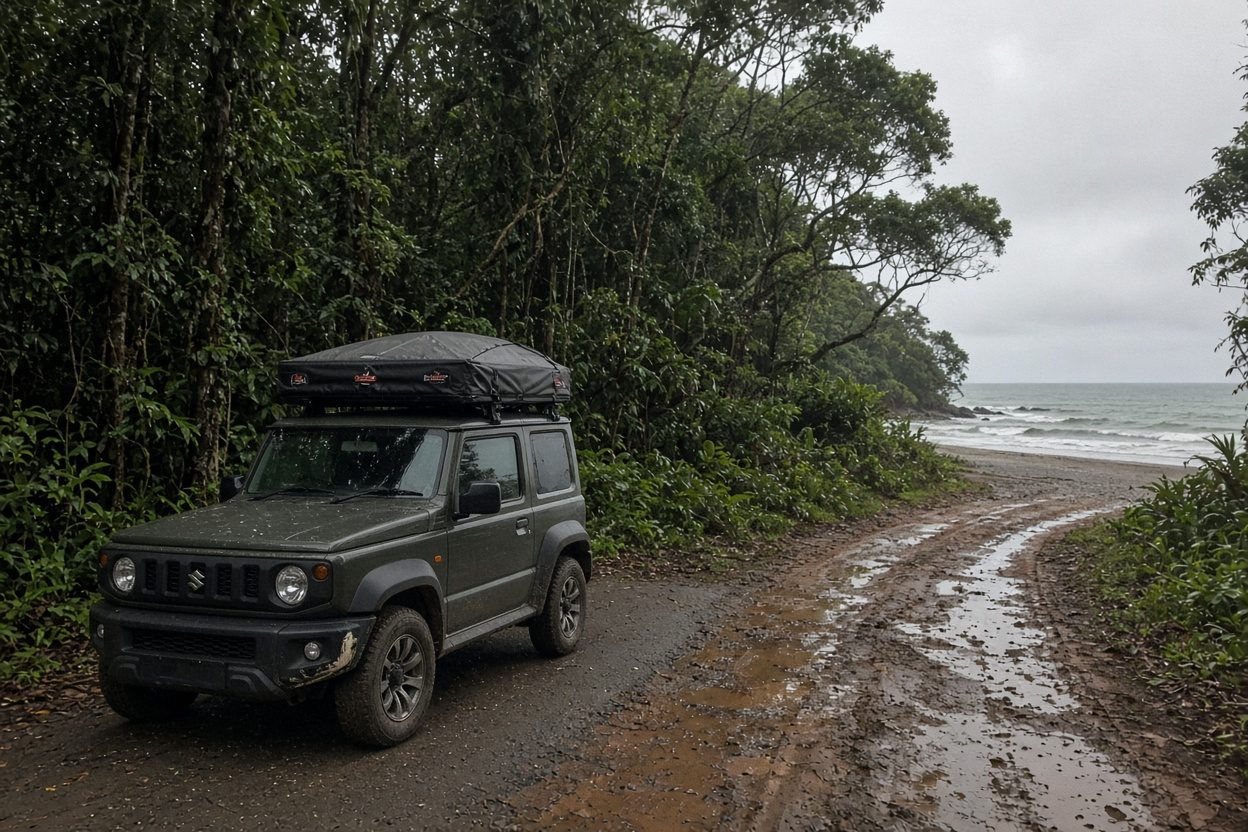
- Matapalo / Puerto Jiménez: eco-lodges and camping near the tip; the roof-top tent shines here.
Logistics & road reality
- 🔴 Corcovado requires a certified naturalist guide (mandatory since 2014) plus a SINAC permit (about $18 per person per day). You cannot walk in alone. Book guide + permit weeks ahead for Sirena in high season.
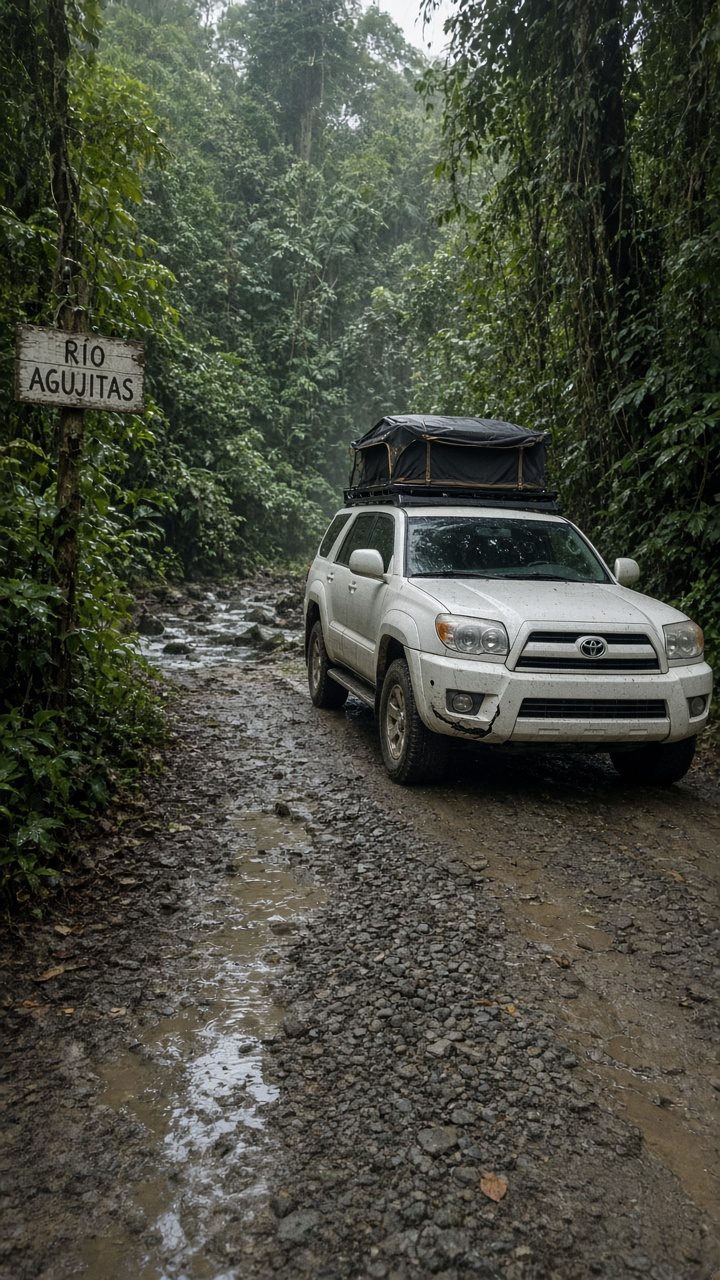
- 🔴 Tortuguero-style access: you park the vehicle in Sierpe and enter Drake Bay by boat. Coordinate secure parking and the boat transfer in advance.
- 🔴 No ATM, bank or gas in Drake Bay — cash and a full tank before you leave Palmar/Sierpe.
- 🟢 Caño Island is a marine reserve — go with a licensed dive/snorkel operator; marine permit and fees are handled through them.
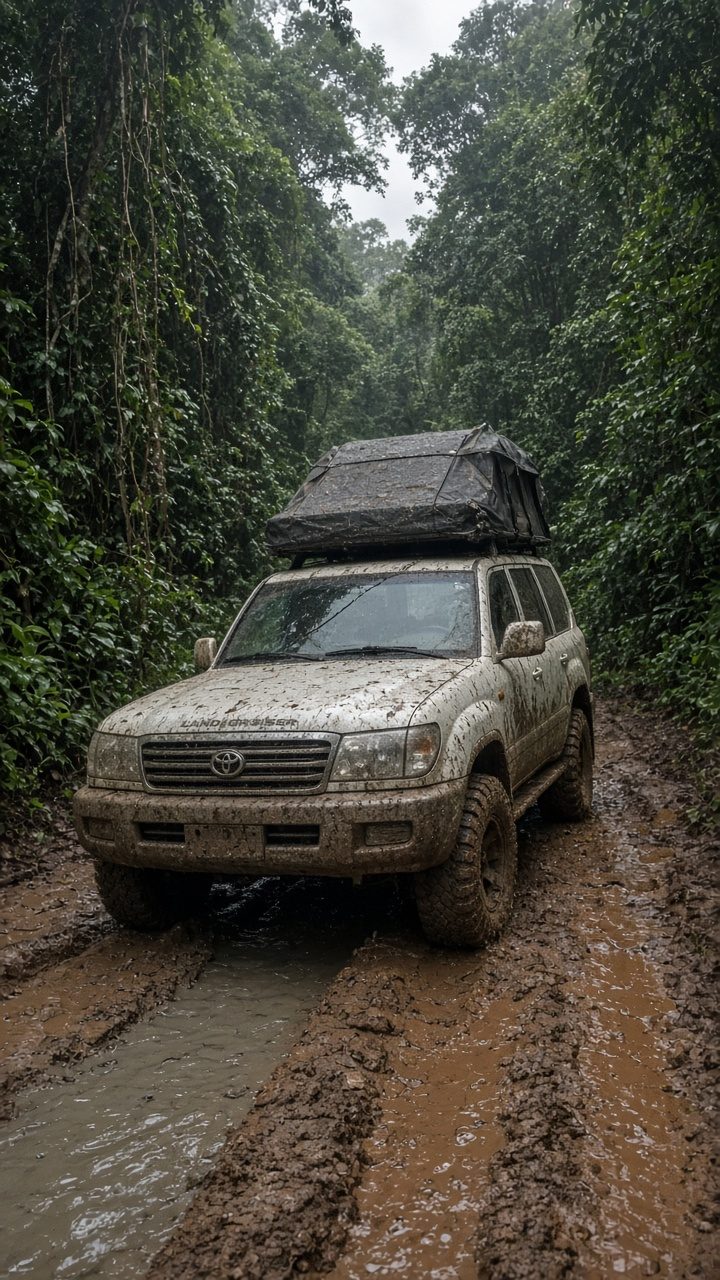
- 🔴 Roads are worst September–November. This itinerary is built for December–April. Connectivity is patchy on the Osa — download offline maps and tell your lodge your plan.
Wildlife guidance (theme)
Go in the dry season (Dec–Apr) for reliable roads and boats, but know that wildlife is dense year-round. Dawn and dusk are the money hours — book the earliest Corcovado boat, and consider the Sirena overnight to own both. A certified guide isn't red tape: it's the difference between a green wall and a wildlife encounter — they read tracks, spot the sleeping sloth, and know where the tapirs bed down. Ethical viewing: keep distance, never feed or bait animals, no flash near nesting or roosting wildlife, and stay on trails. Realistically you'll see all four monkey species, coatis, agoutis, macaws and toucans; tapirs are near-daily at Sirena; jaguar and harpy eagle are rare gifts, not expectations.
Insider tips
- Book Sirena permits and your certified guide before you book anything else — the quota, not the lodging, is the bottleneck.
- Bring a dry bag for every boat leg; river and reef crossings soak everything.
- Cheap binoculars transform the trip — pack a pair per person.
- Do a Drake Bay night walk on arrival night; the amphibian and insect life is a highlight in its own right.
- Fuel and cash discipline: treat Palmar/Sierpe as your last resupply, both directions.
Reserve your rig
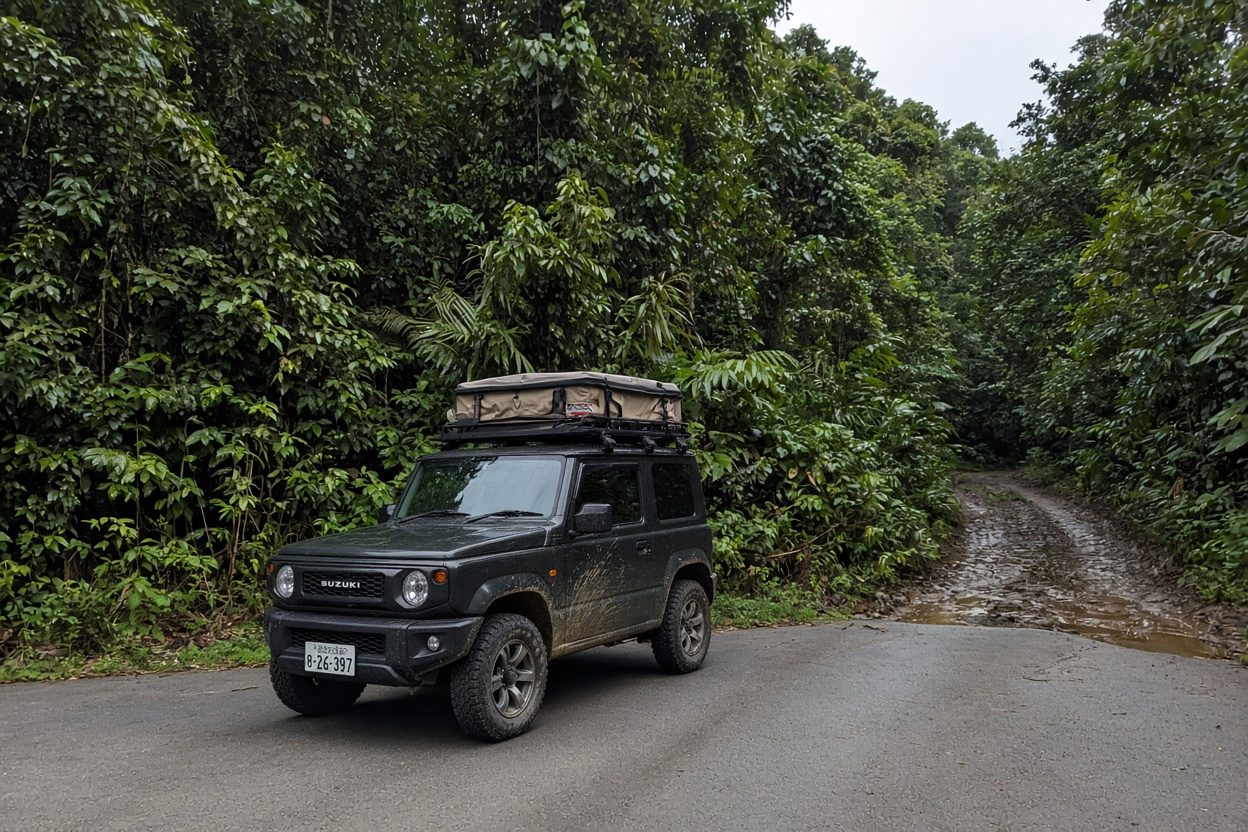
The Osa rewards travelers who arrive self-sufficient. Reserve your VerifiedCR / Carros506 mid-size 4x4 or Land Cruiser with roof-top tent and we'll pre-coordinate your Sierpe parking, Drake Bay boat transfer, certified Corcovado guide and marine permit — plus a dry-season 4x4 upgrade so the Matapalo back roads are a joy, not a gamble. Tell us your dates and we'll build the last great rainforest around your rig.
Before you go
Do you need a 4x4?
4x4 required
Best window to fly
Dec–Apr (dry season; Osa roads worst Sept–Nov)
Offline first
Download your route and offline maps before you leave the lot — signal drops on the best stretches.
Golden rule
Never drive at night — plan arrivals before dark, and use Waze like the locals do.
VerifiedCR · No counter surprises
What a Costa Rica rental actually costs
The number one thing that rattles first-timers is the price jumping at the counter. Here is the honest math, before you get there.
- Advertised daily rate$12–40 / day
- What the booking sites show. It is real — but it is not the whole price. Nobody pays only this.
- Mandatory liability (TPL / SLI)+$15–25 / day
- Required by Costa Rican law on every rental. Cannot be waived. This is the line the cheap ads leave off — it roughly doubles the sticker price. Budget for it.
- Collision damage (CDW)waivable
- Often $20–40/day — but you can usually decline it if your credit card includes rental coverage (Amex, Visa Signature, Chase Sapphire and others). Call your card, ask for a coverage letter, and bring it printed.
- Security hold on your card$1,000–2,500
- A hold, not a charge — released after you return the car clean. Some agencies hold more. Make sure your card has the headroom before you fly.
The verified-rig promise: when you reserve through VerifiedCR, the rig is inspection-checked and the operator is vetted — the price you are quoted is the price you pay. No mystery line items at pickup.