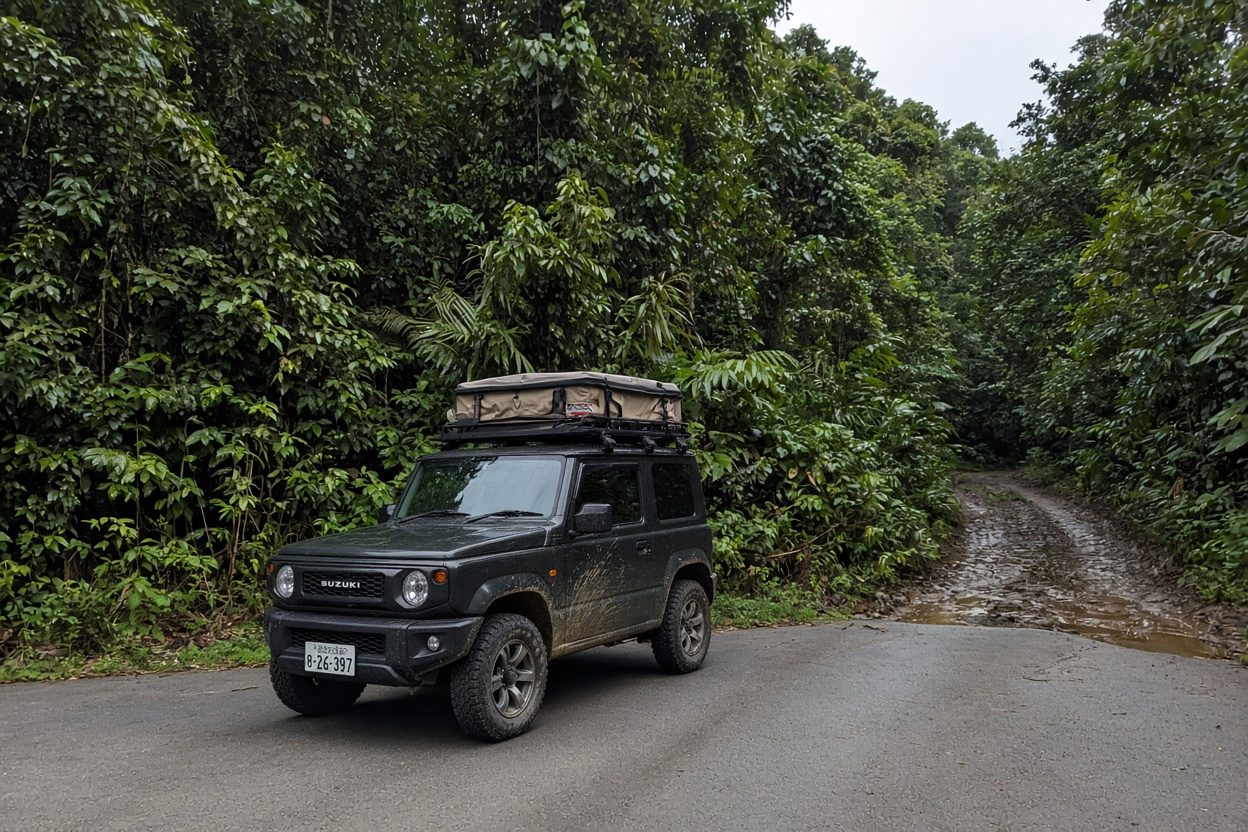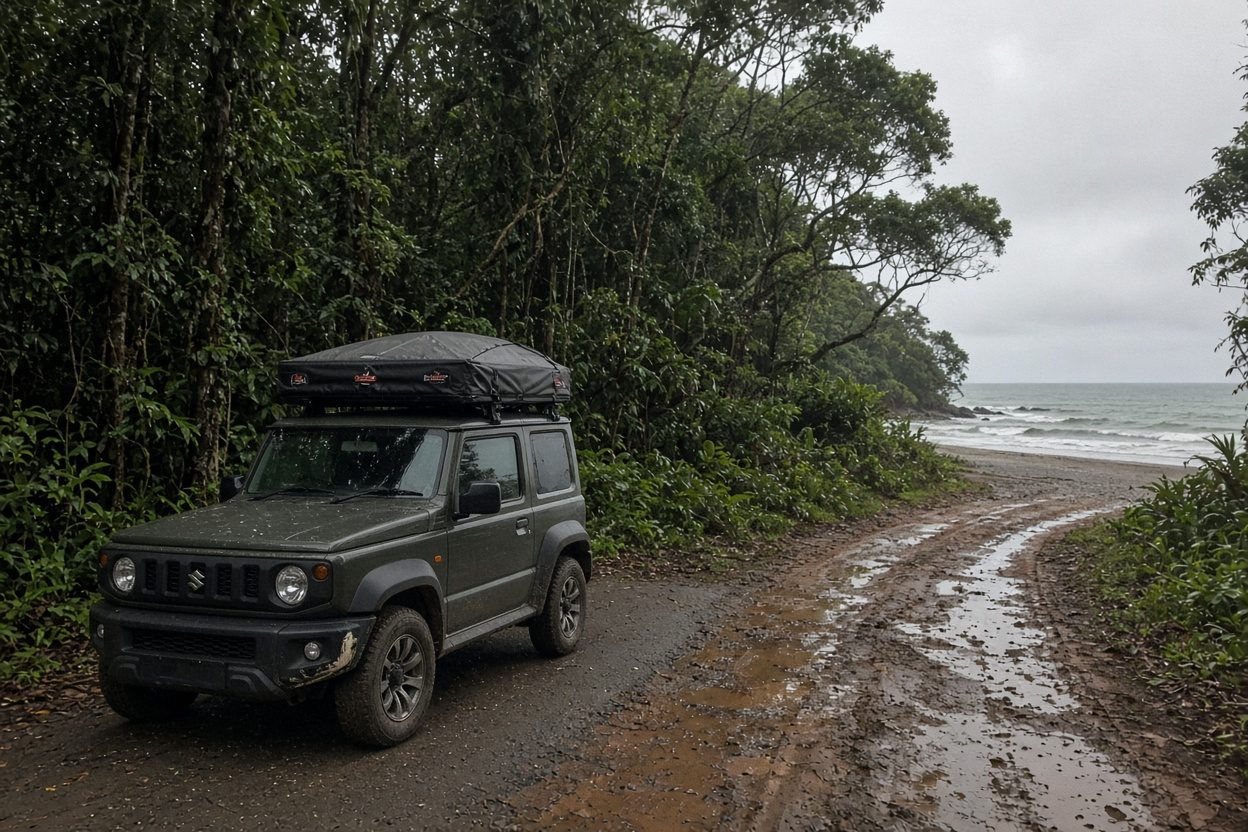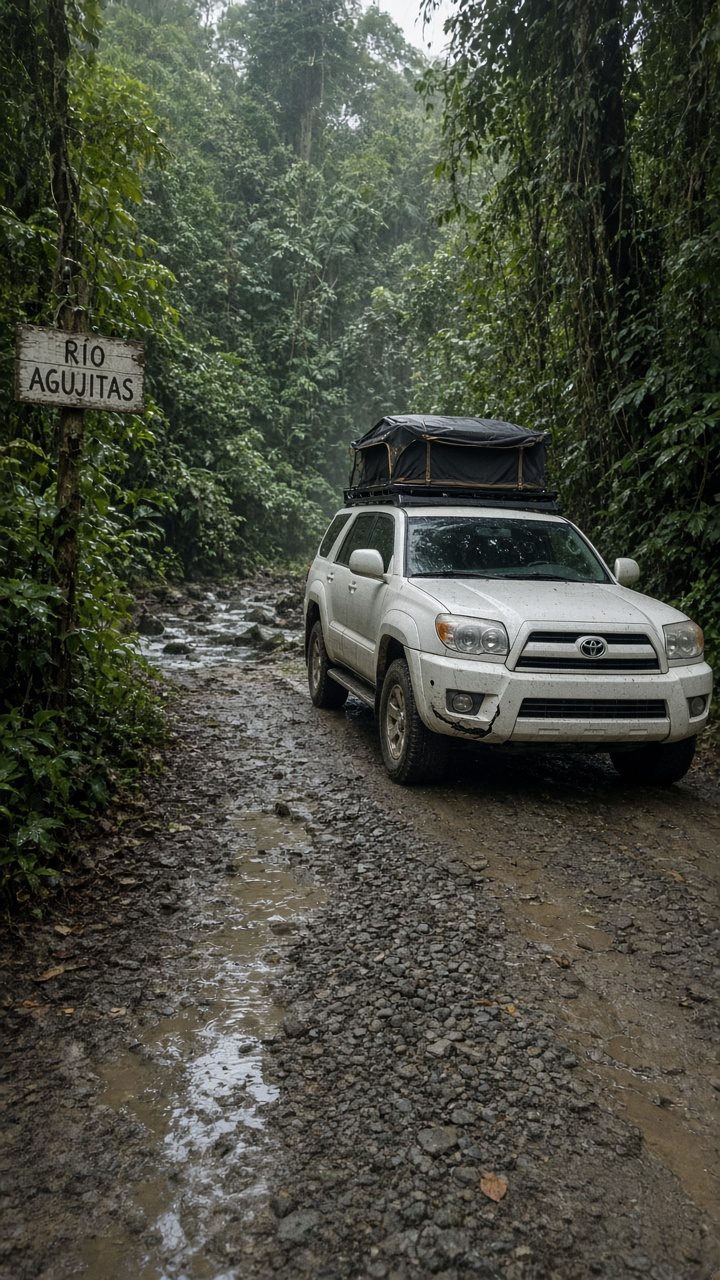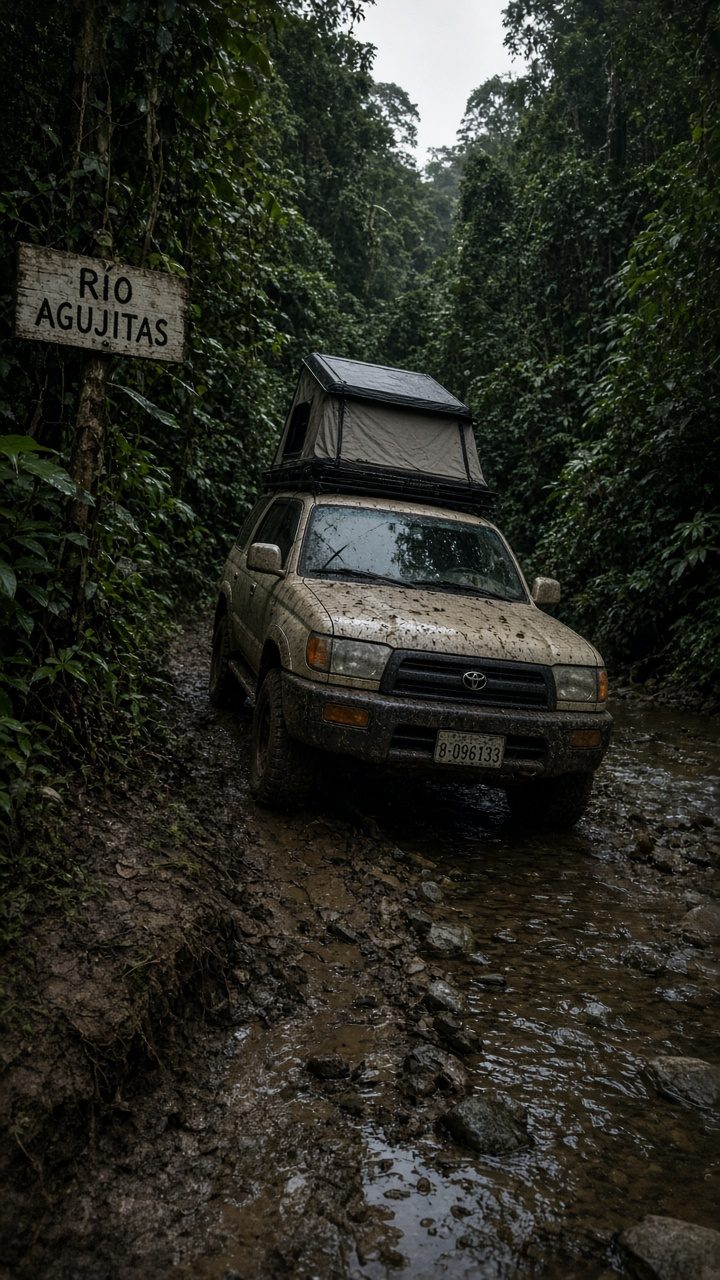
There's a reason surfers whisper about Pavones the way climbers talk about El Cap. On a proper south swell, the wave at Pavones wraps around a boulder-and-sand point deep inside the Golfo Dulce and peels left for the better part of a kilometer — rides measured in minutes, not seconds. It's routinely ranked among the longest left-hand point breaks on Earth (often cited as the second-longest, behind Chicama in Peru). But Pavones is also gloriously hard to reach, tucked in the far southeastern corner of Costa Rica beyond the gulf, and that difficulty is the whole story of this trip.
This is a 🔴 through-land run: seven days, a big loop from Dominical down and around the Golfo Dulce to Pavones and Zancudo, chasing the swell the long way. The cruel irony is that the south swell season (roughly May–October) that lights up Pavones is also the region's rainy season, when the back roads are at their muddiest and the rivers highest. So you build in buffer days, run a mid 4x4 with board racks, and treat weather and swell forecasts as your real itinerary. Golfito is your logistics anchor down there — fuel, cash, and the last real services before the far points.
Day-by-Day
Day 1 — Dominical break. Start in the surf town that anchors the northern Costa Ballena. Dominical has a punchy beach break that's a great warm-up and a proper wave in its own right on a solid swell — plus board shops, shapers, and a surf-town scene to stock up and dial in your quiver. Sleep here; check the extended swell forecast and commit to your Pavones window.
Day 2 — Down to Cabo Matapalo. Drive south and cross onto the Osa, aiming for Cabo Matapalo at the peninsula's tip, where Pan Dulce, Backwash, and King's Wave break within paddling distance and the rainforest comes to the sand. The access road is rough (high clearance required, worse in the wet) — this is your first taste of the trip's real driving. Surf the points, camp or take a cabina, and rest up.
Days 3–4 — Golfito and around the Golfo Dulce. Backtrack off the peninsula and work your way to Golfito, the gulf's main town and your logistics anchor: fuel up, pull cash, provision, and handle anything mechanical here, because services thin out past this point. Golfito is also the jumping-off point for the long, slow drive around the inner gulf toward the far points. Use these two days to reposition and buffer against weather — if a road's washed out or the swell shifts, this is where you have slack.
Days 5–6 — Pavones and Punta Banco. The payoff. Set up at Pavones and surf the legendary left on the best tide-and-swell windows (it needs a real south swell to turn on; on flat days it's a sleepy village, so your forecast homework matters). Just south, Punta Banco offers a mellower alternative and a wildlife-rich, end-of-the-road feel. Two days here gives you multiple sessions and insurance against a slow swell day.
Day 7 — Zancudo, then exit. Ease out via Playa Zancudo, a long, mellow beach with softer waves, hammocks, and a slower pulse — the perfect decompression after Pavones' intensity. From Zancudo, begin the long drive back out toward Golfito and beyond.
Signature Stops (why go)
- Pavones — one of the world's longest lefts; on a south swell, a single wave can be the ride of your life.
- Cabo Matapalo points — Pan Dulce, Backwash, and King's Wave, jungle-backed and world-class.
- Punta Banco & Zancudo — the mellow bookends; wildlife, hammocks, and forgiving waves at the literal end of the road.
- Golfito — the gulf's lifeline town and your fuel/cash anchor.
Where to Stay
Expect surf cabinas and simple lodges in Pavones and Zancudo (book ahead in swell season — Pavones fills when it's firing), with rooftop-tent camping an option en route and at Matapalo. Golfito has the most services and mid-range rooms for the reposition nights. This is a bring-cash region past Golfito; card acceptance is unreliable at the far points.
Logistics & Road Reality
- Swell vs roads — the core tension: The south swell (May–Oct) that makes Pavones is also the wet season with the worst roads. Buffer days are mandatory; treat the forecast as your schedule.
- Fuel & cash: Golfito is your last dependable fuel and ATM before the far points. Carry a jerry can and cash for Pavones/Zancudo/Punta Banco.
- Vehicle: Mid 4x4 with board racks; high clearance for Matapalo and the wet gulf-side roads.
- Connectivity: Patchy to nonexistent at the far points. Offline maps and a downloaded surf/tide forecast are essential.
- Safety: River crossings run high in the wet season — respect them; Pavones' wave and rocks are for competent surfers, not first-timers.
- Overland 🟢 vs through-land 🔴: 🔴 — a long, remote loop in the hardest-road season, entirely driven by swell.
Insider Tips
- Chase the forecast, not the calendar. Keep 2 buffer days floating; when a solid south swell shows, be at Pavones the day before it lands.
- Fuel and cash at Golfito, every time. It's the last real chance — top the tank and the jerry can and pull more cash than you think.
- Pavones works on the incoming tide. Ask locals for the day's window; the point rewards patience and tide-timing over dawn-patrol dogma.
- Carry board-repair and spare leashes. The rocks at Pavones and Matapalo are unforgiving and there's no surf shop at the far points.
- Zancudo is the decompression, not an afterthought. Book a night there — mellow waves and hammocks are the right way to end a Pavones mission.
Reserve Your Rig
This is a swell-chaser's rig: mid 4x4, board racks, jerry cans, and the clearance for wet gulf-side roads. Reserve yours with swell alerts and Golfito fuel-logistics support, and we'll help you time the run to the south swell. [Reserve your surf-trip 4x4 →]
Before you go
Do you need a 4x4?
4x4 required
Best window to fly
May–Oct (south swell; also worst roads — buffer time)
Offline first
Download your route and offline maps before you leave the lot — signal drops on the best stretches.
Golden rule
Never drive at night — plan arrivals before dark, and use Waze like the locals do.
VerifiedCR · No counter surprises
What a Costa Rica rental actually costs
The number one thing that rattles first-timers is the price jumping at the counter. Here is the honest math, before you get there.
- Advertised daily rate$12–40 / day
- What the booking sites show. It is real — but it is not the whole price. Nobody pays only this.
- Mandatory liability (TPL / SLI)+$15–25 / day
- Required by Costa Rican law on every rental. Cannot be waived. This is the line the cheap ads leave off — it roughly doubles the sticker price. Budget for it.
- Collision damage (CDW)waivable
- Often $20–40/day — but you can usually decline it if your credit card includes rental coverage (Amex, Visa Signature, Chase Sapphire and others). Call your card, ask for a coverage letter, and bring it printed.
- Security hold on your card$1,000–2,500
- A hold, not a charge — released after you return the car clean. Some agencies hold more. Make sure your card has the headroom before you fly.
The verified-rig promise: when you reserve through VerifiedCR, the rig is inspection-checked and the operator is vetted — the price you are quoted is the price you pay. No mystery line items at pickup.