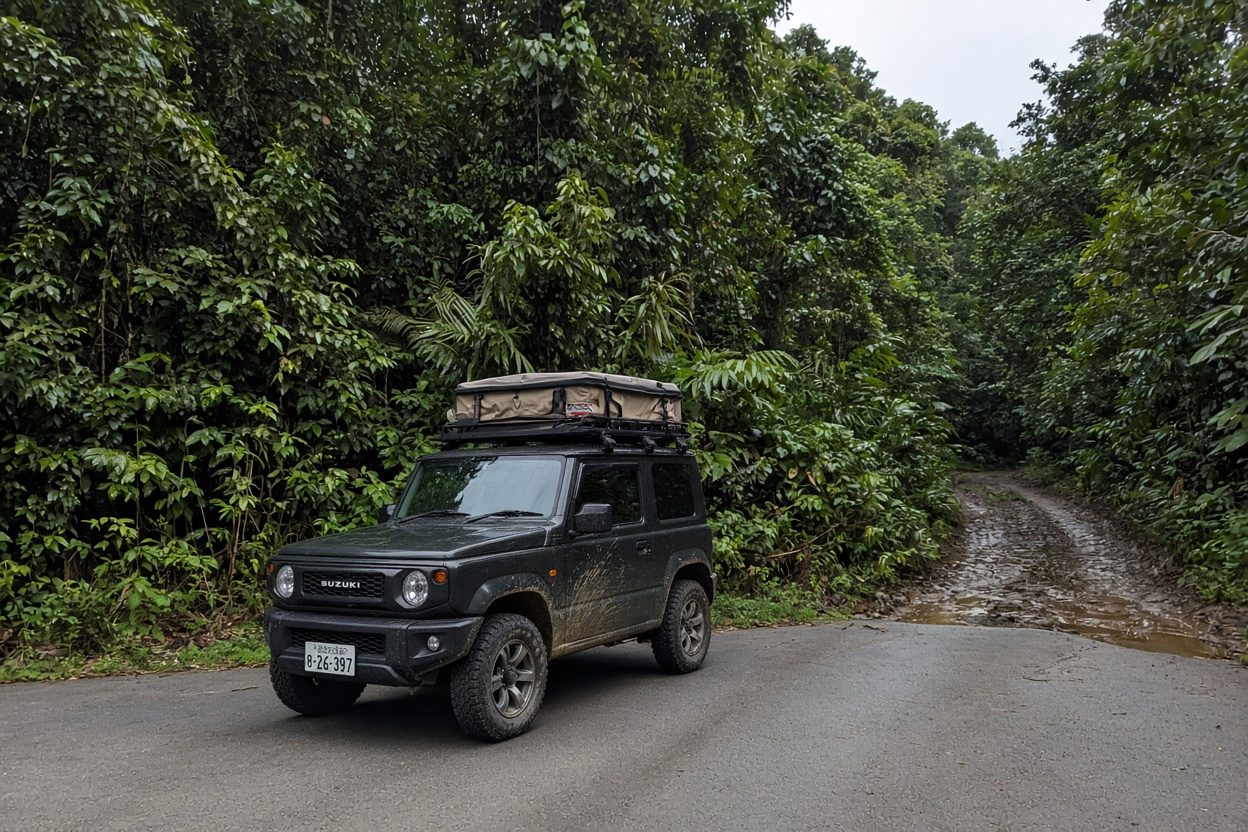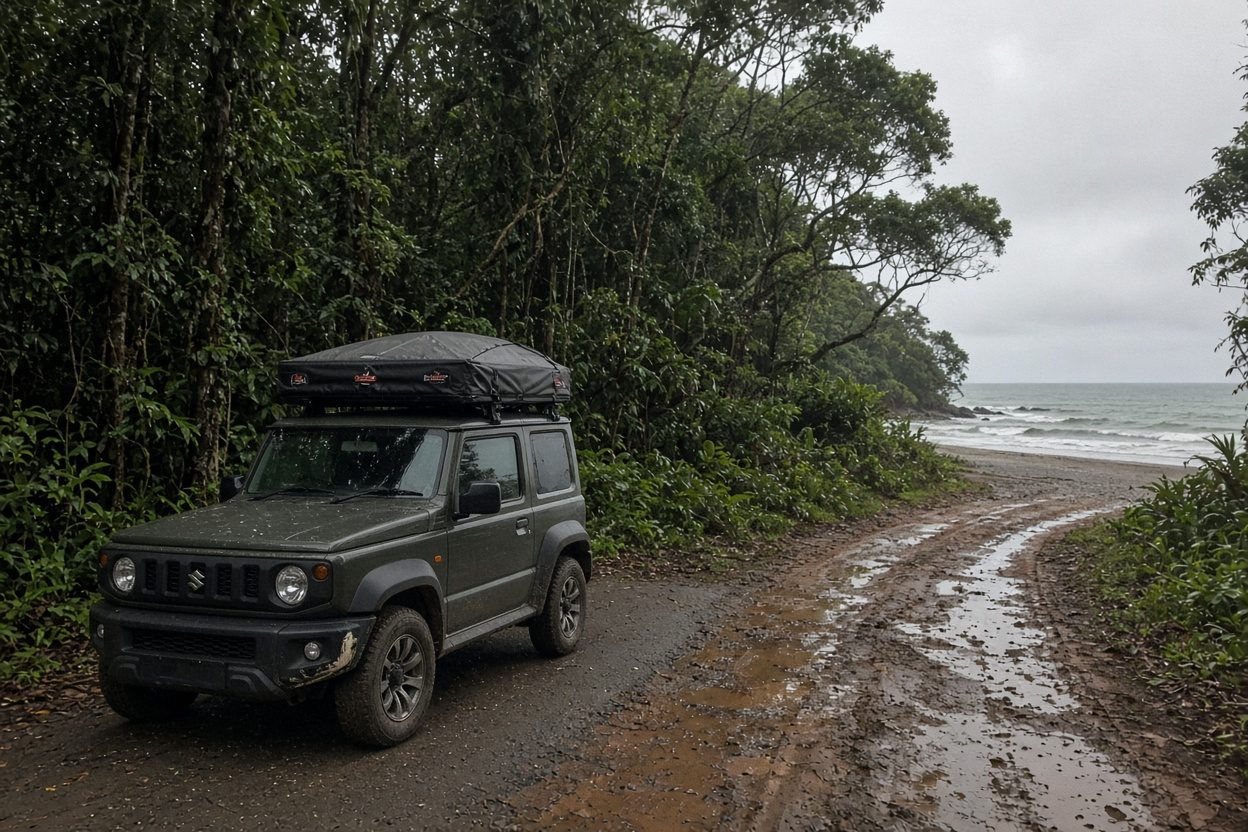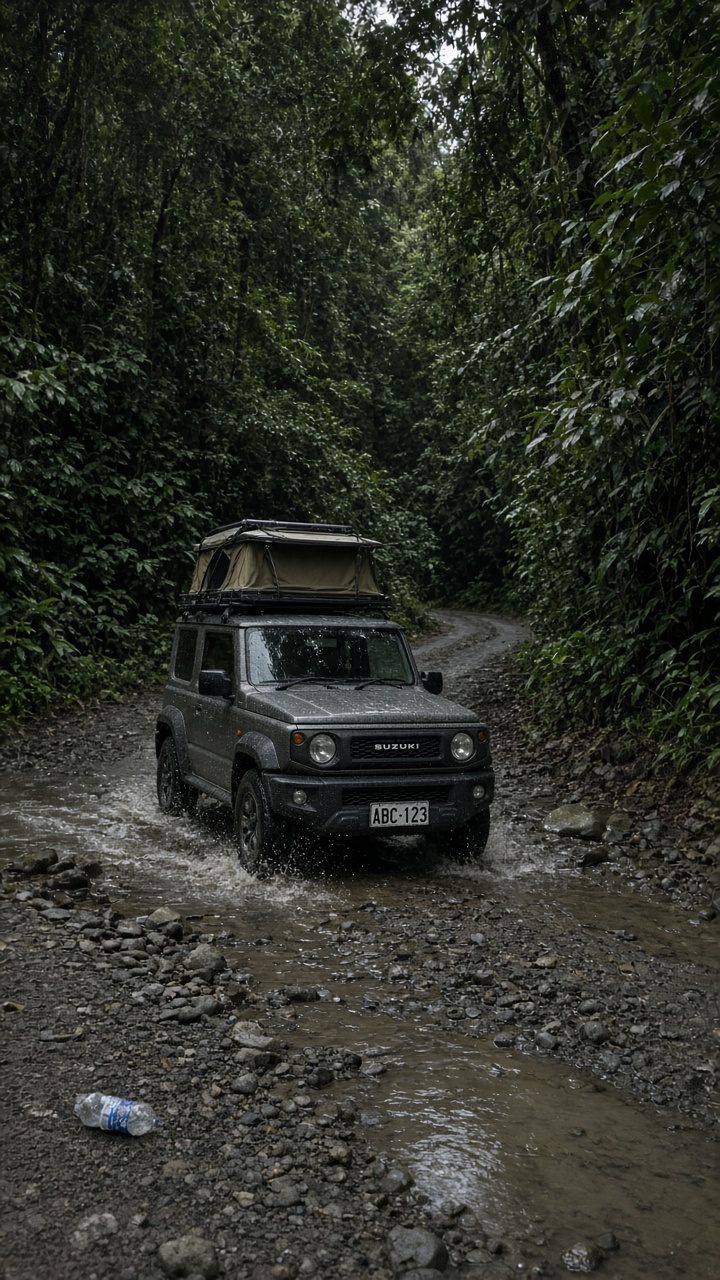
Not every Osa trip has to be a mud-and-fords expedition. Sierpe is the region's most civilized launch pad — a laid-back river town at the end of a paved road, with lodges, restaurants, and boat docks — and it happens to sit at the doorstep of two of Costa Rica's finest natural attractions: the Térraba-Sierpe mangroves (the largest and most ecologically important mangrove wetland in the country and in Central America) and, an hour offshore, the Caño Island Biological Reserve, one of the best snorkel and dive sites on the Pacific coast.
This itinerary uses Sierpe as a base camp and puts the real adventure on the water. That's why we rank it 🟡: the driving is easy (a compact 4x4 is plenty, and much of the approach is paved), but Caño Island is only reachable by boat, and the underwater experience is weather- and season-dependent. Go in the dry season (Dec–Apr) when visibility is best; the green season can still deliver, but plankton blooms and river runoff can cloud the water.
Sierpe is also the antidote to the "no ATM/no gas" anxiety of deeper Osa — it's a real town with services — making this the most comfortable way to sample the region's marine wonders without committing to the through-land grind.
Day-by-Day
Day 1 — Arrive Sierpe; mangrove sunset boat. Roll into Sierpe, check into a riverside lodge, and shake off the drive with an evening boat into the Térraba-Sierpe National Wetlands. The tour weaves narrow channels beneath a cathedral of red, black, and tea mangroves, spotting crocodiles, boa constrictors draped in branches, mangrove hummingbirds, and — as the light drops — the start of the nocturnal shift. Sunset on the river, with the herons flying home, is a quietly spectacular way to open the trip.
Day 2 — Caño Island snorkel or dive (full day). The headline day. Boats depart Sierpe around 7:00–8:00 a.m., run the mangrove channels out to the open sea, and cross to Caño Island in roughly 60 minutes. The reserve's clear water holds white-tip reef sharks, sea turtles, huge schools of jacks and snapper, moray eels, and — in season — mantas and dolphins on the crossing. Snorkelers get two sessions of ~45 minutes; certified divers do a two-tank charter at 45–100 ft. You cannot land and hike the island itself (it's a strict reserve), so the day is all about the water. Back to Sierpe by afternoon.
Day 3 — Second dive or mangrove birding. Choose your own adventure. Divers who loved Caño can book a second charter for the deeper sites and better big-animal odds. Birders and photographers should instead take a dedicated dawn mangrove tour — the Térraba-Sierpe is a birding haven, with a real shot at the mangrove hummingbird, yellow-billed cotinga, boat-billed heron, and roseate spoonbill in the quieter early hours. Either way, spend the afternoon on the dock with a cold drink watching the river work.
Day 4 — Out. Easy road day. Refuel in Palmar on the way out (it's the nearest full-service town) and roll north or east with dry gear and a memory card full of reef and mangrove.
Signature Stops (why go)
- Caño Island Biological Reserve — arguably the Pacific coast's best snorkel/dive: reef sharks, turtles, and walls of fish in clear water, ~60 min by boat from Sierpe.
- Térraba-Sierpe mangroves — the largest mangrove wetland in Costa Rica and Central America; crocs, boas, and specialist birds in a labyrinth of channels.
- Sierpe village & river — a genuinely relaxing base with real services, docks, and riverside dining.
Where to Stay
Sierpe has a cluster of riverside lodges and hotels right on the water — Hotel Oleaje Sereno / Hotel Sierpe River and Kokopelli are long-running, well-located options near the docks, with a handful of smaller eco-cabinas and boutique spots nearby. Because Sierpe is a real town, card acceptance is more common here than deeper in the Osa — but still carry cash for boat crews and tips.
Logistics & Road Reality
- Easy access: The approach to Sierpe is largely paved; a compact 4x4 is ample. This is the least demanding Osa base for driving.
- The adventure is on the water: Caño Island is boat-only (~60 min each way from Sierpe). You cannot land on the island — it's a strict reserve; the experience is snorkel/dive.
- Season & visibility: Dec–Apr for the clearest water. Green-season runoff and plankton can reduce visibility; charters still run.
- Fuel & cash: Sierpe has services, but the nearest big fuel/ATM hub is Palmar — top off there.
- Connectivity: Decent in Sierpe town; patchy on the water. No offline-map heroics required, but download the area anyway.
- Overland 🟢 vs through-land 🔴: 🟡 — easy roads, weather-dependent water days.
Insider Tips
- Book the dive/snorkel for Day 2, not Day 1. A morning to settle in and a mangrove sunset first means you're rested and acclimated before the big water day.
- Take the anti-seasickness pill an hour before boarding. The mangrove-to-open-sea transition and the river-mouth crossing can be lumpy.
- Dawn beats mid-morning for mangrove birding. The channels go quiet and hot by 9 a.m.; the roseate spoonbills and herons are an early act.
- Ask about the manta/whale window. Depending on the month, crossings to Caño can turn up mantas, dolphins, and (Jul–Oct / Dec–Apr) humpbacks — pick an operator who'll detour for them.
- Fuel and cash in Palmar. Sierpe is comfortable but small; do the boring logistics at the last full-service town.
Reserve Your Rig
You don't need a Land Cruiser for this one — a comfortable compact 4x4 gets you to Sierpe's docks in ease. Reserve yours with a Caño Island two-tank charter or mangrove-tour add-on and a PADI referral, and we'll line up the boat. [Reserve your Sierpe base 4x4 →]
Before you go
Do you need a 4x4?
gravel sections — 2WD ok in dry season
Best window to fly
Dec–Apr (best underwater visibility)
Offline first
Download your route and offline maps before you leave the lot — signal drops on the best stretches.
Golden rule
Never drive at night — plan arrivals before dark, and use Waze like the locals do.
VerifiedCR · No counter surprises
What a Costa Rica rental actually costs
The number one thing that rattles first-timers is the price jumping at the counter. Here is the honest math, before you get there.
- Advertised daily rate$12–40 / day
- What the booking sites show. It is real — but it is not the whole price. Nobody pays only this.
- Mandatory liability (TPL / SLI)+$15–25 / day
- Required by Costa Rican law on every rental. Cannot be waived. This is the line the cheap ads leave off — it roughly doubles the sticker price. Budget for it.
- Collision damage (CDW)waivable
- Often $20–40/day — but you can usually decline it if your credit card includes rental coverage (Amex, Visa Signature, Chase Sapphire and others). Call your card, ask for a coverage letter, and bring it printed.
- Security hold on your card$1,000–2,500
- A hold, not a charge — released after you return the car clean. Some agencies hold more. Make sure your card has the headroom before you fly.
The verified-rig promise: when you reserve through VerifiedCR, the rig is inspection-checked and the operator is vetted — the price you are quoted is the price you pay. No mystery line items at pickup.