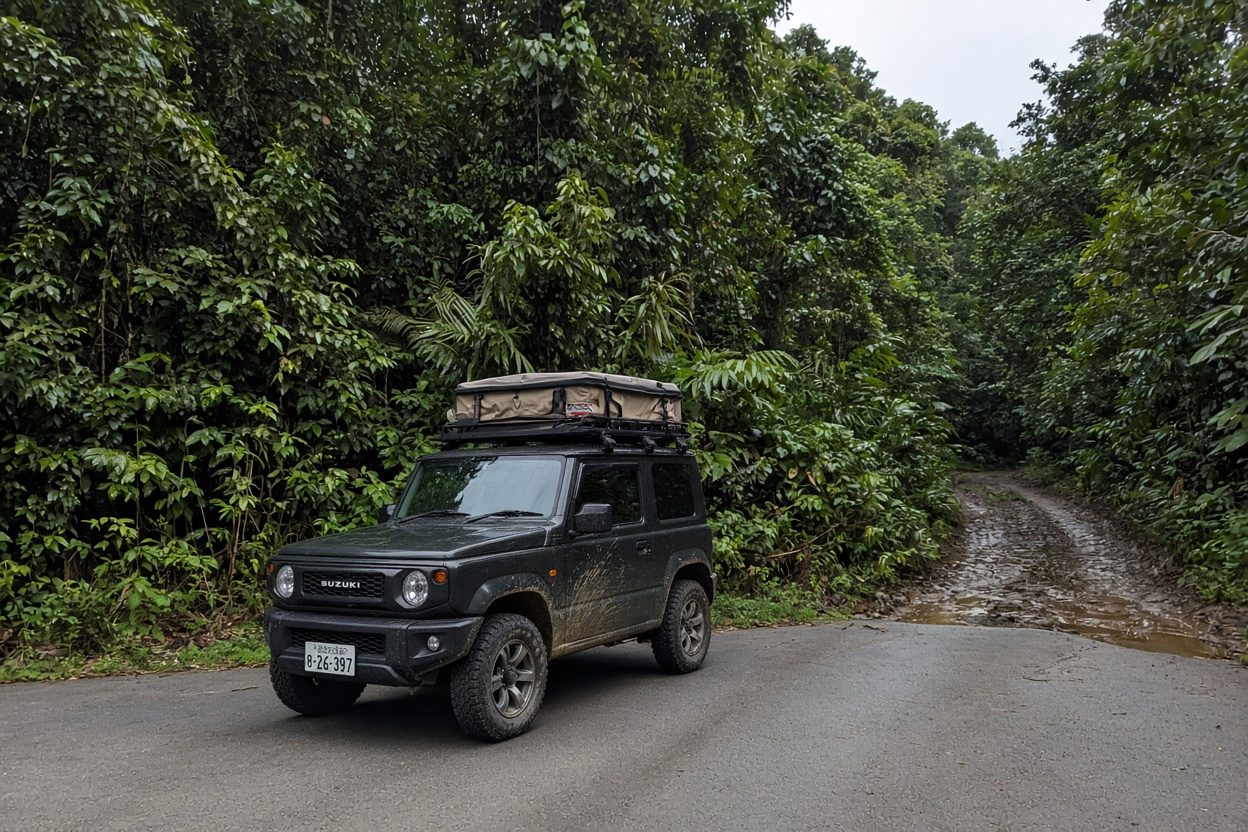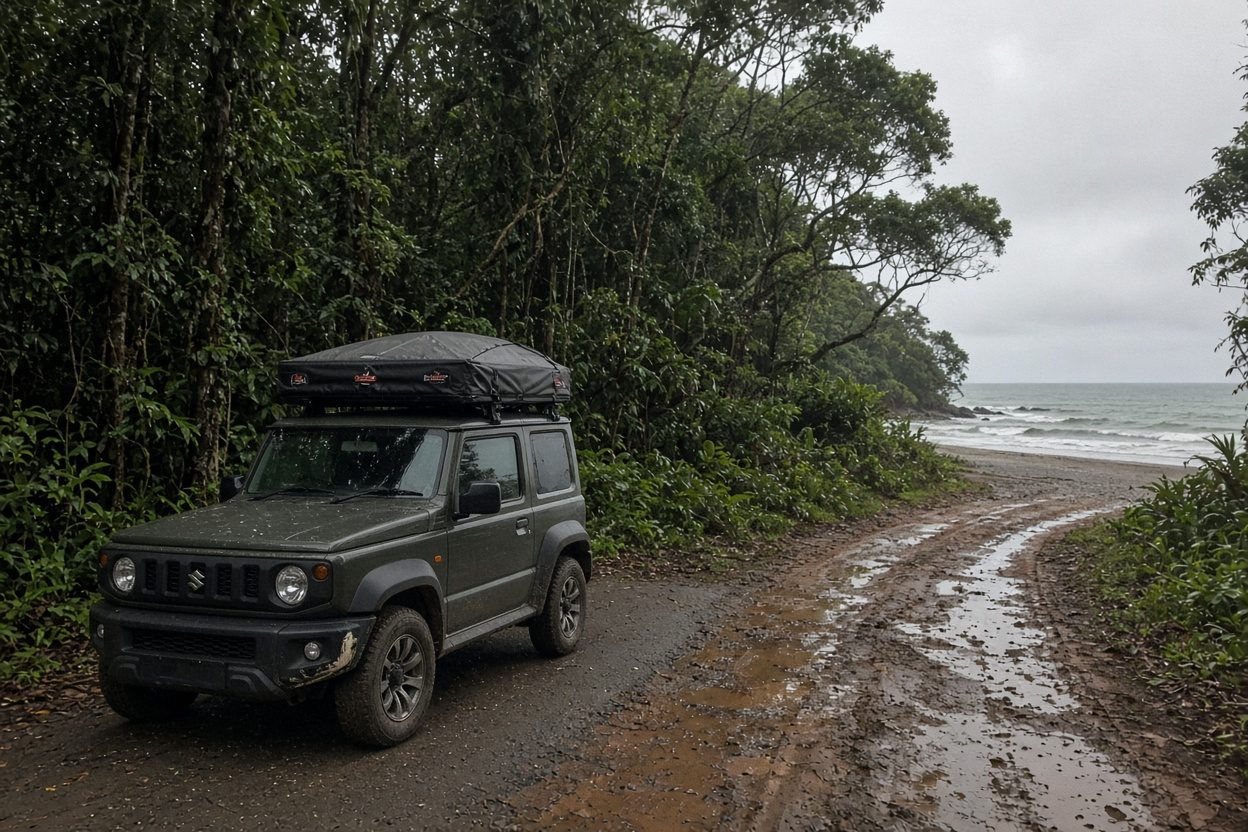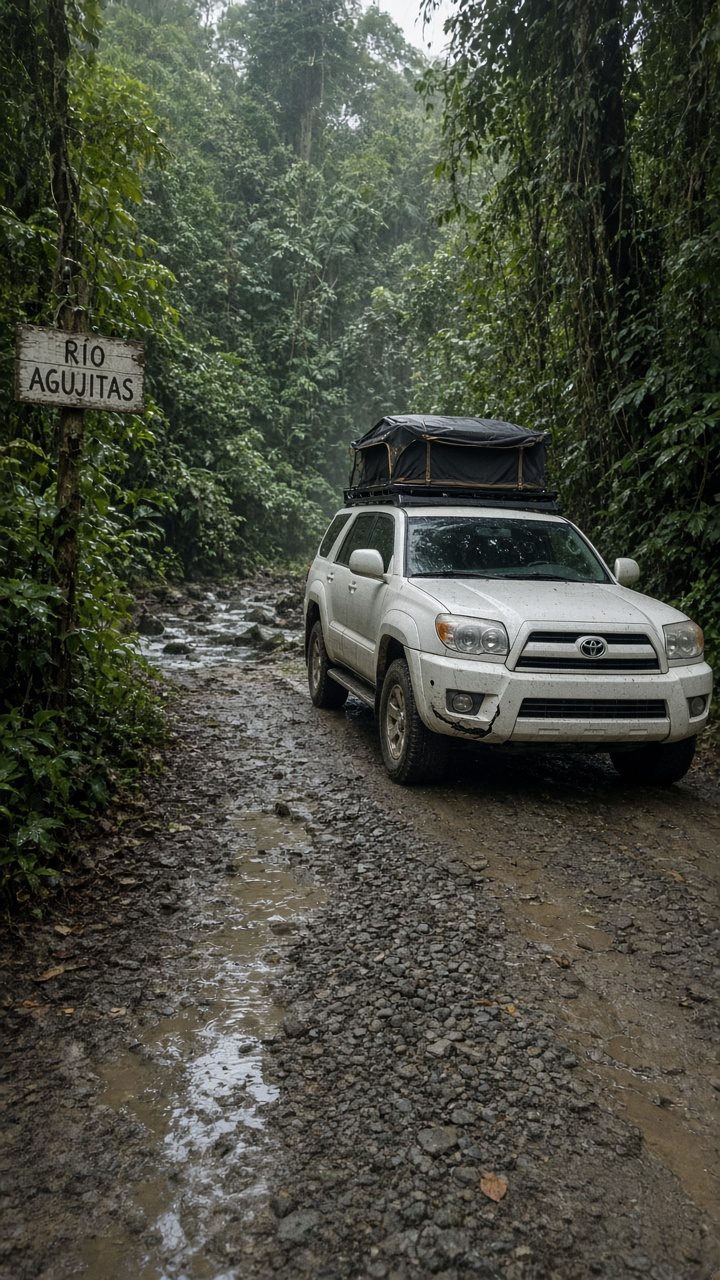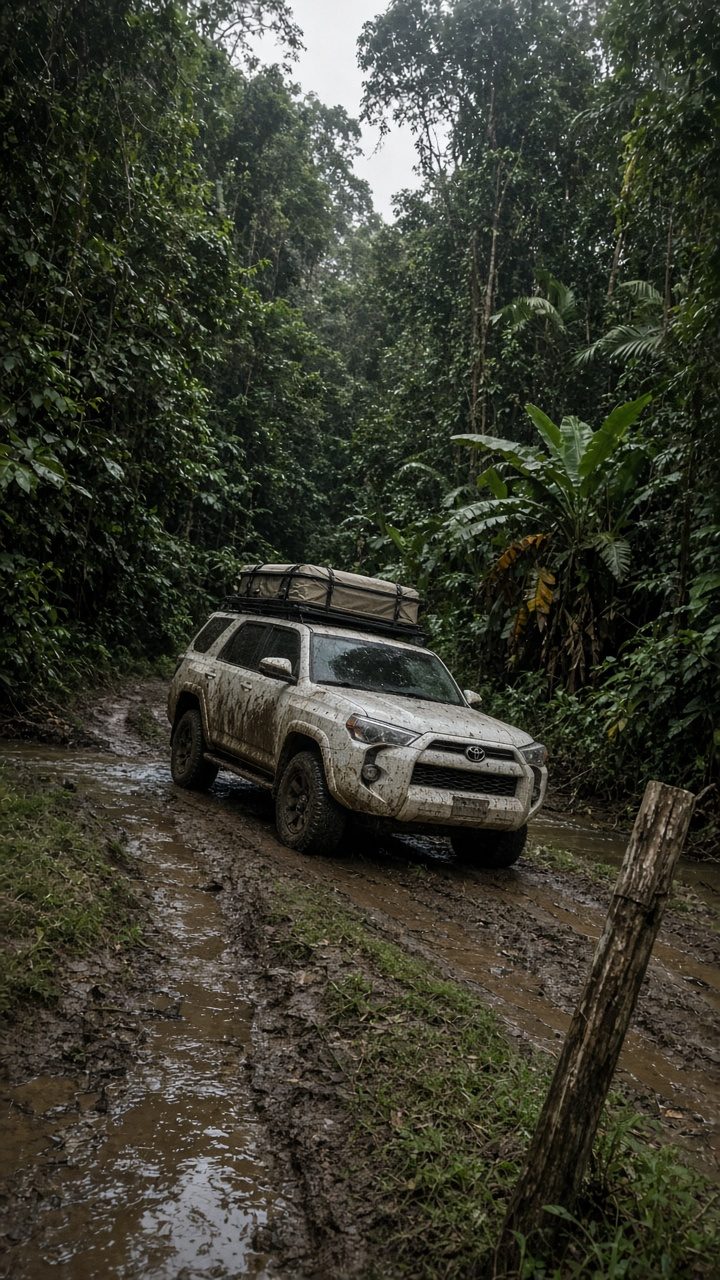
Some Costa Rica waves you drive to. These two you earn a boat ride to. Witch's Rock (Roca Bruja) and Ollie's Point sit inside and beside Santa Rosa National Park — the country's first national park, 49,000-plus hectares of protected dry forest and coast — reachable in practice only by an open panga running north from Playas del Coco or Ocotal at first light. This is a short, intense (🔴) safari built around a confirmed swell: you base in Coco with your 4x4, watch the forecast, and pull the trigger on the boat when the north swell lines up.
Why a boat safari beats any camp package: these breaks are permit-gated and boat-gated on purpose, which is exactly what keeps them from becoming the Tamarindo circus. You can't shuttle here on a fixed itinerary and expect waves; the whole game is being in Coco, rig loaded, ready to book a panga 3–5 days out the moment a N/NW swell shows on the chart. Your own vehicle gives you that flexibility — surf lesser local spots or dive the Catalinas while you wait, then go the instant it's on.
Be honest about level. Witch's Rock is a hollow, punchy left over mixed sand and rock that turns critical above 5–6 ft; Ollie's is a longer, more structured right-hand point over cobblestone that gives you more time but punishes falls on the stones. Both are advanced. Advanced-intermediates who can confidently ride overhead, read priority, and handle consequence can enjoy the sand-bottom sections on 3–4 ft days — no one still working a pop-up should paddle out here.
Day-by-day
Day 1 — LIR → Playas del Coco (~35 km / 40 min, paved). Land, collect the mid 4x4, base in Coco or Ocotal near the boat docks. Coco itself doesn't surf — the bay is too sheltered — so today is logistics: confirm your operator, check the swell, pre-pay in cash (cards rarely work on the dock), and provision water and food (no services at the breaks). If it's flat, shake out at Playa Hermosa Guanacaste's protected bay 10 minutes south, or dive the Catalina Islands.
Day 2 — Boat day: Witch's Rock (Playa Naranjo). Dawn departure (5–6 a.m.) — the 45–60-minute panga run to Playa Naranjo has to land you in the water by first light for the offshore morning window. Witch's Rock is a hollow left over sand-and-rock at a remote cove beneath its namesake volcanic monolith; on a clean 3–5 ft N/NW swell it throws steep, barreling sections that fade to a longer sand-bottom wall inside. There's a more forgiving right on the opposite side of the cove for advanced-intermediates. Lunch is packed and eaten on Naranjo beach among howlers and iguanas; optional afternoon session, back to Coco by 3–4 p.m. Cost typically $80–120/person including the SINAC park fee (~$15–20) — verify current pricing.
Day 3 — Boat day: Ollie's Point (Potrero Grande). A longer run (1.5–2 hr each way) to Ollie's Point, ~10 km north toward Nicaragua — a long right-hand point peeling 200–400 m over cobblestone on a good north swell, with more workable sections than Witch's and more setup time, but an unforgiving bottom on falls. This is the day to bank a long, running wave if the swell has a north component. Same dawn rhythm, same packed lunch, same early return. (If the swell only suits one break, most operators combine or re-run the better of the two — decide on the forecast.)
Day 4 — Coco → LIR (~40 min, paved). Buffer day: a bonus boat run if a fresh swell landed, or an easy morning and the short paved drive back to Liberia. Build three hours before departure.
The breaks
- Witch's Rock (Roca Bruja) — hollow, punchy left over sand/rock in a national-park cove; barrels on the reef sections, longer wall inside. Best N/NW swell, offshore dawn, ~3–5 ft; critical above 6 ft. Advanced; sand sections OK for strong advanced-intermediates at 3–4 ft.
- Ollie's Point — long right-hand point over cobblestone, 200–400 m rides, more structured and forgiving in shape but hard-bottomed on falls. Best N/NW swell, Oct–Mar. Advanced.
Where to stay
Base in Playas del Coco (livelier, slightly closer to the dock) or Ocotal (quieter). Both have the full range of hotels and lodges; a self-contained rig works well since you're leaving before dawn and back mid-afternoon. Tamarindo is a viable alternative base if you want surf-school infrastructure and day-trip operators — but it adds drive time to the dock. Overnighting at Playa Naranjo requires a Santa Rosa camping permit and a 4x4-only dry-season track; the boat is easier and rangers prefer it.
Surf logistics
- Season / swell: Nov–Mar is the reliable N/NW window — Dec–Feb the most consistent, with offshore mornings and the driest boat rides. Green-season (May–Oct) S swells reach the breaks at a poorer angle and make choppier, rougher crossings; only for flexible trips.
- Boards: A step-up (extra volume and length over your everyday board) for overhead days; bring at least two — there's no shop at either break and a snapped board ends the trip. Extra wax, leash, fin key.
- Tides / wind: Dawn offshore is the prize at both; operators time departures to it. Ask your captain the day's tide read.
- Hazards: Reef and rock at Witch's, cobblestone at Ollie's — real injury risk on falls. Open-water paddle-outs with current and no easy shore access; no services, no cell signal, no rescue but your boat. Motion-sickness meds for the crossing.
- Ferry / boat access: Mandatory. Reputable operators handle the SINAC permit and daily-visitor cap — boats without permits get turned back. Book 3–5 days ahead on a confirmed swell; most need a 3–4-surfer minimum (solo? ask the dock to pair you).
- 4x4 need / connectivity: 4x4 only for the base and the flat-day alternatives; the breaks themselves are boat-only. No signal at the park.
- Tag: 🔴 through-land / boat-access — permit-gated national park, open-water panga, advanced-only.
Insider tips
- Base in Coco and let the swell set the date. Don't book the boat for a fixed day; book the surf window. A rig in Coco is your flexibility.
- Cash on the dock. Bring enough for the trip plus the park fee — cards rarely work at departure.
- Two boards or don't go. There is no repair or replacement at Naranjo; a ding kit is the bare minimum.
- Believe your captain on the "too big" call. Experienced operators won't land Naranjo in dangerous surf — that's competence, not caution; take the refund or reschedule.
- If you're on the fence about level, you're not ready. A rescue two hours from a road is the wrong place to find your limit; build paddle fitness at Nosara or Tamarindo first.
Reserve your rig
This safari is base-camp-and-wait, so it wants a comfortable mid 4x4 you can live out of in Coco while you watch the forecast — plus racks for the step-up quiver you'll carry onto the boat. Reserve your VerifiedCR overland rig for the Coco/Ocotal base, and we'll connect you with licensed Santa Rosa charter operators who handle the SINAC permits, and load the swell-alert setup that tells you when to pull the trigger. Liberia pickup, minutes from the dock.
Before you go
Do you need a 4x4?
4x4 required
Best window to fly
Nov–Mar (N/NW swell, offshore mornings) is the reliable window; green-season S swells work at a poorer angle
Offline first
Download your route and offline maps before you leave the lot — signal drops on the best stretches.
Golden rule
Never drive at night — plan arrivals before dark, and use Waze like the locals do.
VerifiedCR · No counter surprises
What a Costa Rica rental actually costs
The number one thing that rattles first-timers is the price jumping at the counter. Here is the honest math, before you get there.
- Advertised daily rate$12–40 / day
- What the booking sites show. It is real — but it is not the whole price. Nobody pays only this.
- Mandatory liability (TPL / SLI)+$15–25 / day
- Required by Costa Rican law on every rental. Cannot be waived. This is the line the cheap ads leave off — it roughly doubles the sticker price. Budget for it.
- Collision damage (CDW)waivable
- Often $20–40/day — but you can usually decline it if your credit card includes rental coverage (Amex, Visa Signature, Chase Sapphire and others). Call your card, ask for a coverage letter, and bring it printed.
- Security hold on your card$1,000–2,500
- A hold, not a charge — released after you return the car clean. Some agencies hold more. Make sure your card has the headroom before you fly.
The verified-rig promise: when you reserve through VerifiedCR, the rig is inspection-checked and the operator is vetted — the price you are quoted is the price you pay. No mystery line items at pickup.