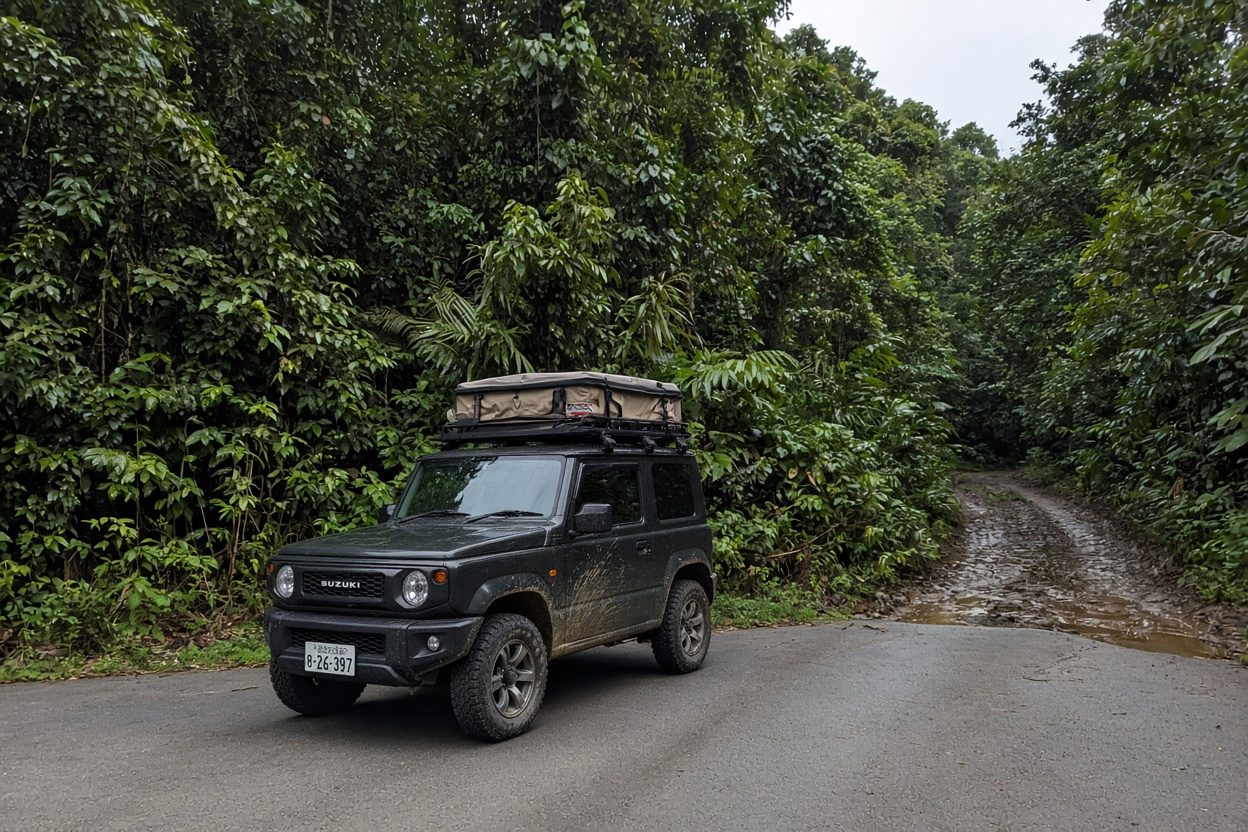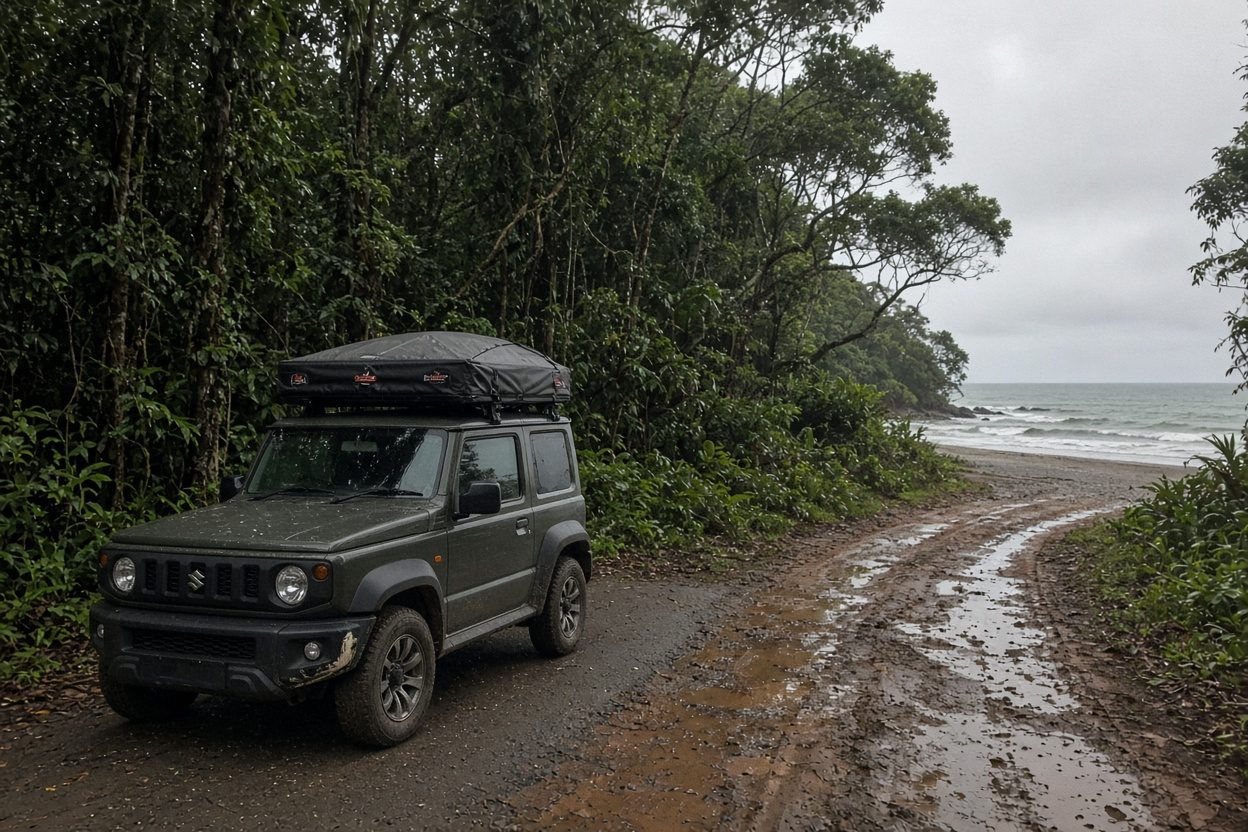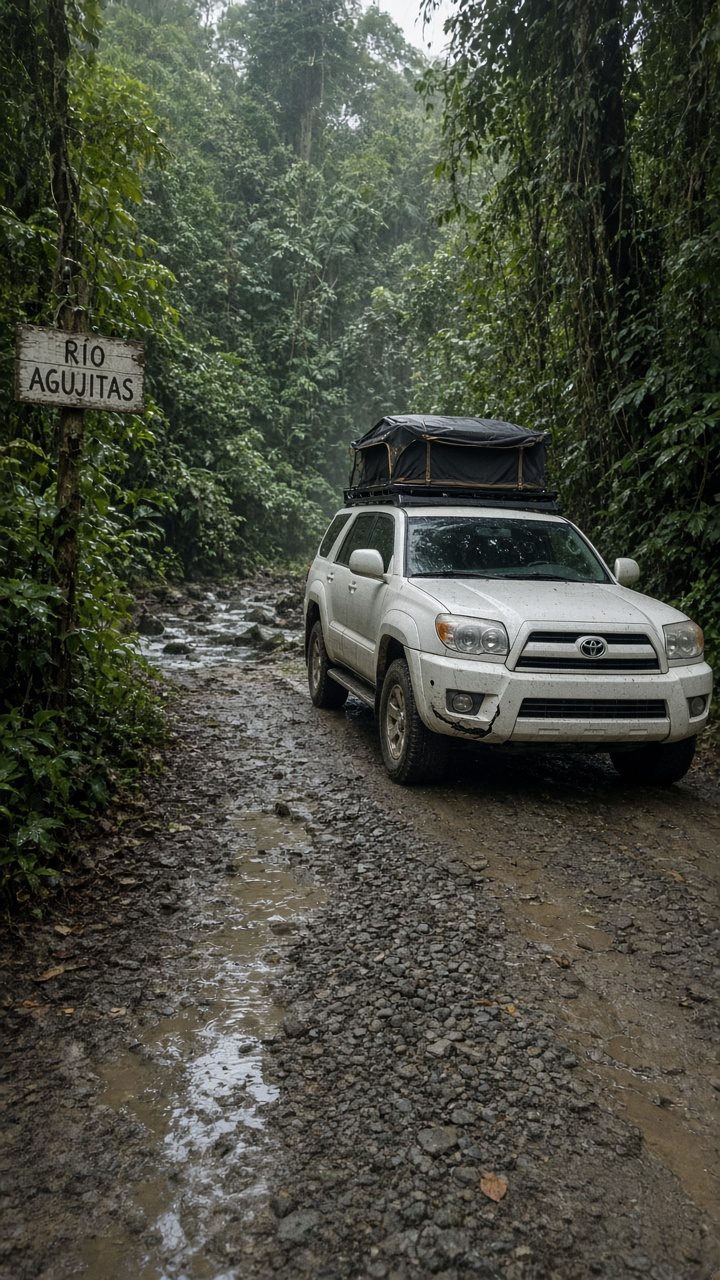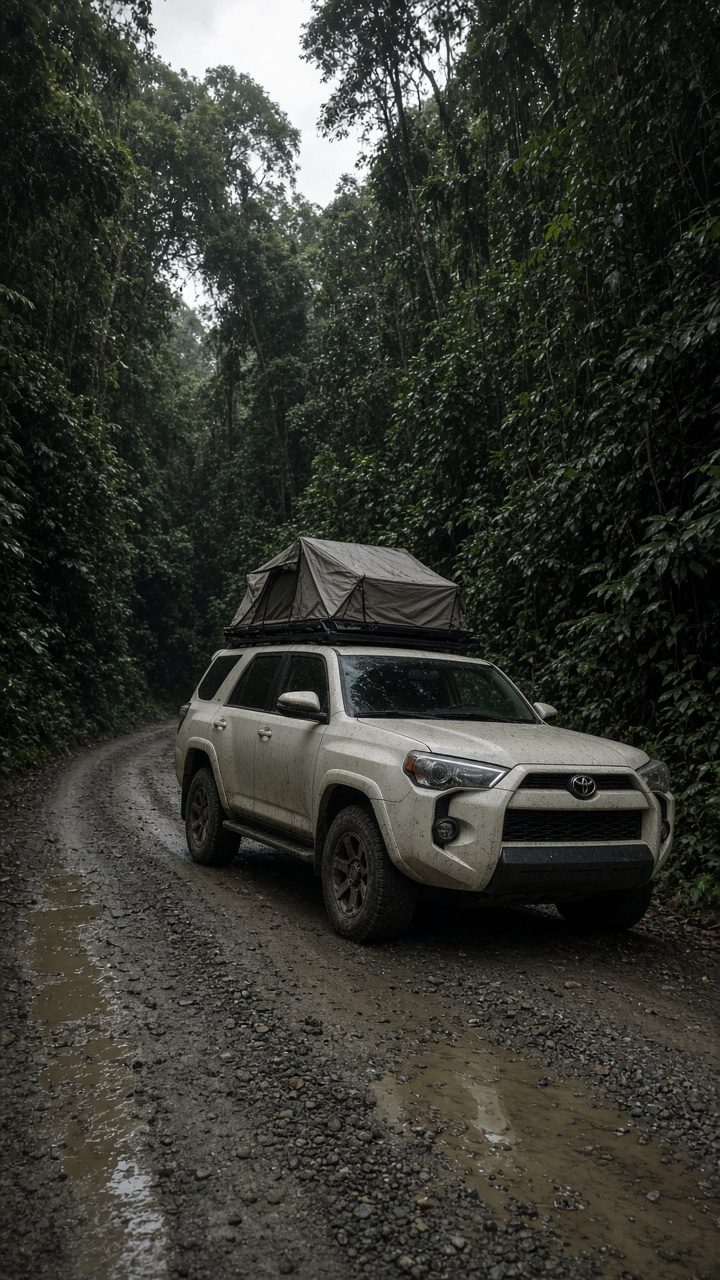
Most travelers reach Drake Bay the famous way: a bumpy boat from Sierpe down the mangrove-lined Río Sierpe and out across the river mouth into the Pacific. It's a great ride — but it means leaving your vehicle behind in Sierpe and living out of a daypack. This itinerary does the thing far fewer visitors attempt: it drives into Drake Bay, keeping your rig (and your gear, your cooler, your independence) with you the whole way.
The land route runs from Rincón on the road toward Drake, and the good news is that in recent years it's become genuinely drivable — the notorious river crossings on the main approach have largely been bridged, so the trip is 🟡 rather than 🔴. The catch is timing: it's an easy dry-season cruise from December to April, but from roughly September to December the road turns to slick clay and a real 4x4 is essential. This is still the Osa, so you're trading a boat's simplicity for a back-road adventure into a village at the edge of Corcovado.
One hard rule before you go, and it's the one everyone forgets: Drake Bay has no ATM and no gas station. Bring all the cash you'll need — for lodging, food, tours, and tips — and roll in with a full tank plus a jerry can. The nearest reliable fuel and cash are back toward Palmar/Sierpe.
Day-by-Day
Day 1 — Provision in Rincón (and top off in Sierpe/Palmar). Your staging point is Rincón, on the road that swings toward Drake. Because Drake has no fuel or ATM, do your last real provisioning before you commit: fill the tank, pull cash, buy food and water. Rincón and the wetlands around the bridge are also a superb birding warm-up — scarlet macaws and the endangered yellow-billed cotinga work this area. Overnight in or near Rincón, or push a short way toward Drake if the light's good.
Day 2 — Rincón → Drake Bay (bridged road, ~1–1.5 hr driving but plan for more). The drive is the adventure. It's gravel, hilly, and rough in patches, with the main crossings now bridged — but "bridged" doesn't mean paved, and any heavy rain will make the clay sections greasy. Drive it midday when it's driest, keep momentum on the hills, and enjoy dropping down into Drake village on the Río Agujitas. Settle into your cabina, then walk the village and the little estuary at Agujitas to get your bearings.
Day 3 — Coastal path to San Josecito and Cocalito. Drake's signature is the coastal trail that threads south from the village past a string of jewel beaches. Walk (or arrange a short boat hop for the far ones) to Playa Cocalito and Playa San Josecito — soft sand, warm water, and rainforest right to the tideline, with a good chance of macaws and monkeys along the way. This is also the launch area for the region's headline day trips (Caño Island snorkel/dive; Corcovado's San Pedrillo sector) if you want to add one. Back to Drake for the night.
Day 4 — Return to Rincón. Retrace the bridged road back out to Rincón and civilization — refuel and re-cash as soon as you can. If you timed the weather well the drive out is easy; if it rained overnight, give the clay time to firm up in the morning sun before you tackle the hills.
Signature Stops (why go)
- Drake village & Río Agujitas — the funky, off-grid heart of the bay, where the river meets the sea and the whole town runs on Tico time.
- Playa San Josecito & Playa Cocalito — postcard beaches on the coastal path, backed by rainforest and reachable on foot or by short boat.
- The bridged Rincón road itself — the accomplishment of arriving under your own power, with your rig and gear intact.
Where to Stay
Drake Bay runs on cabinas, small lodges, and a few campsites — from budget backpacker spots in the village to mid-range cabinas near Agujitas. Because there's no ATM, confirm in advance whether your lodge takes cards (many are cash-only) and carry enough colones/dollars regardless. Rincón has simpler roadside options for the bracketing nights.
Logistics & Road Reality
- No ATM, no gas in Drake Bay. Bring all your cash and a full tank plus a jerry can. Nearest fuel/ATM is back toward Palmar/Sierpe.
- Bridged but rough: The main crossings on the Rincón approach are bridged, so no deep fords in normal conditions — but it's gravel, hilly, and slick when wet. Mid 4x4 is the right tool; in Sept–Dec it's essential.
- Season: Dec–Apr is the easy window. Sept–Dec brings mud and slower going; drive midday.
- Connectivity: Signal is patchy in Drake and along the road. Load offline maps before Rincón.
- Boat vs land: The Sierpe water-taxi is faster and simpler — choose the land route because you want your vehicle in Drake, not because it's quicker.
- Overland 🟢 vs through-land 🔴: 🟡 — a moderate back-road with bridges, not a tide-gated ford route. Weather is the main variable.
Insider Tips
- Cash is king — literally. Budget generously; there is no fallback in Drake, and tours/guides expect cash.
- Drive the road midday and dry. Morning dew and afternoon rain both make the clay hills slick; the middle of the day is your friend.
- Book Caño Island or San Pedrillo from Drake, not Sierpe. You're already on the doorstep — Drake operators run shorter boat transfers to both.
- Fill the jerry can in Palmar. It's the closest dependable fuel, and you'll want the reserve for the return.
- Walk the coastal trail at low tide. Some sections around the headlands are far easier when the water's out — ask your lodge for the day's tide.
Reserve Your Rig
Drive into Drake with your gear and your independence intact. Reserve a mid 4x4 with a jerry-can rental and a road-condition prep briefing, and we'll tell you exactly how the Rincón road is running the week you travel. [Reserve your Drake Bay 4x4 →]
Before you go
Do you need a 4x4?
seasonal river ford — 4x4 advised
Best window to fly
Dec–Apr easiest; 4x4 essential Sept–Dec
Offline first
Download your route and offline maps before you leave the lot — signal drops on the best stretches.
Golden rule
Never drive at night — plan arrivals before dark, and use Waze like the locals do.
VerifiedCR · No counter surprises
What a Costa Rica rental actually costs
The number one thing that rattles first-timers is the price jumping at the counter. Here is the honest math, before you get there.
- Advertised daily rate$12–40 / day
- What the booking sites show. It is real — but it is not the whole price. Nobody pays only this.
- Mandatory liability (TPL / SLI)+$15–25 / day
- Required by Costa Rican law on every rental. Cannot be waived. This is the line the cheap ads leave off — it roughly doubles the sticker price. Budget for it.
- Collision damage (CDW)waivable
- Often $20–40/day — but you can usually decline it if your credit card includes rental coverage (Amex, Visa Signature, Chase Sapphire and others). Call your card, ask for a coverage letter, and bring it printed.
- Security hold on your card$1,000–2,500
- A hold, not a charge — released after you return the car clean. Some agencies hold more. Make sure your card has the headroom before you fly.
The verified-rig promise: when you reserve through VerifiedCR, the rig is inspection-checked and the operator is vetted — the price you are quoted is the price you pay. No mystery line items at pickup.