The wild alternative to a resort fishing trip
The Golfo Dulce is one of only a handful of tropical fjords on the planet — a deep, protected inner gulf ringed by rainforest that runs to the waterline, fed by rivers that push baitfish into a maze of points and reef edges. That geography makes it a world-class inshore fishery. Roosterfish patrol the rocky structure and river mouths (with true trophies showing around Matapalo Rock and the outer gulf), cubera snapper and jack stack on the current edges, and just outside the mouth the blue water holds sailfish, marlin, tuna, and dorado. Crucially for a camp trip, the gulf offers fishable, sheltered water even when the open coast is choppy — you rarely lose a whole day to weather.
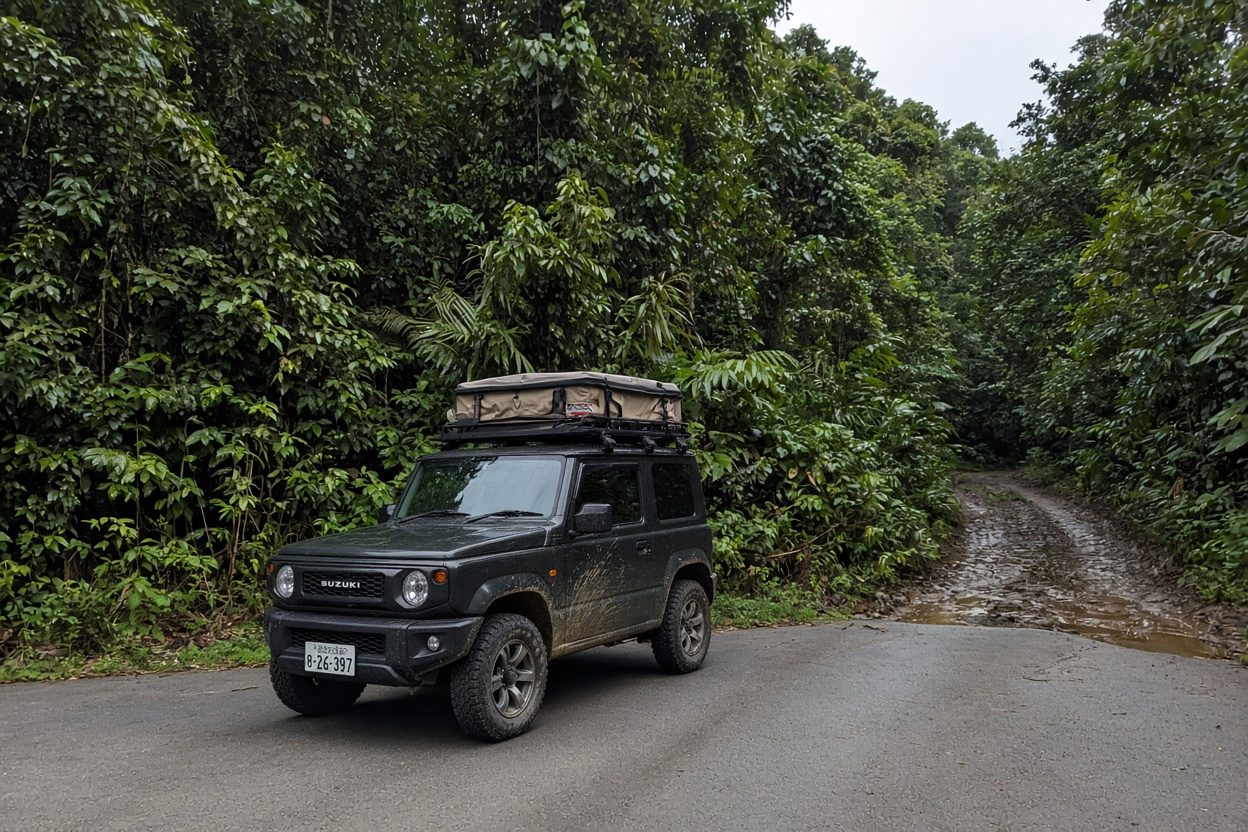
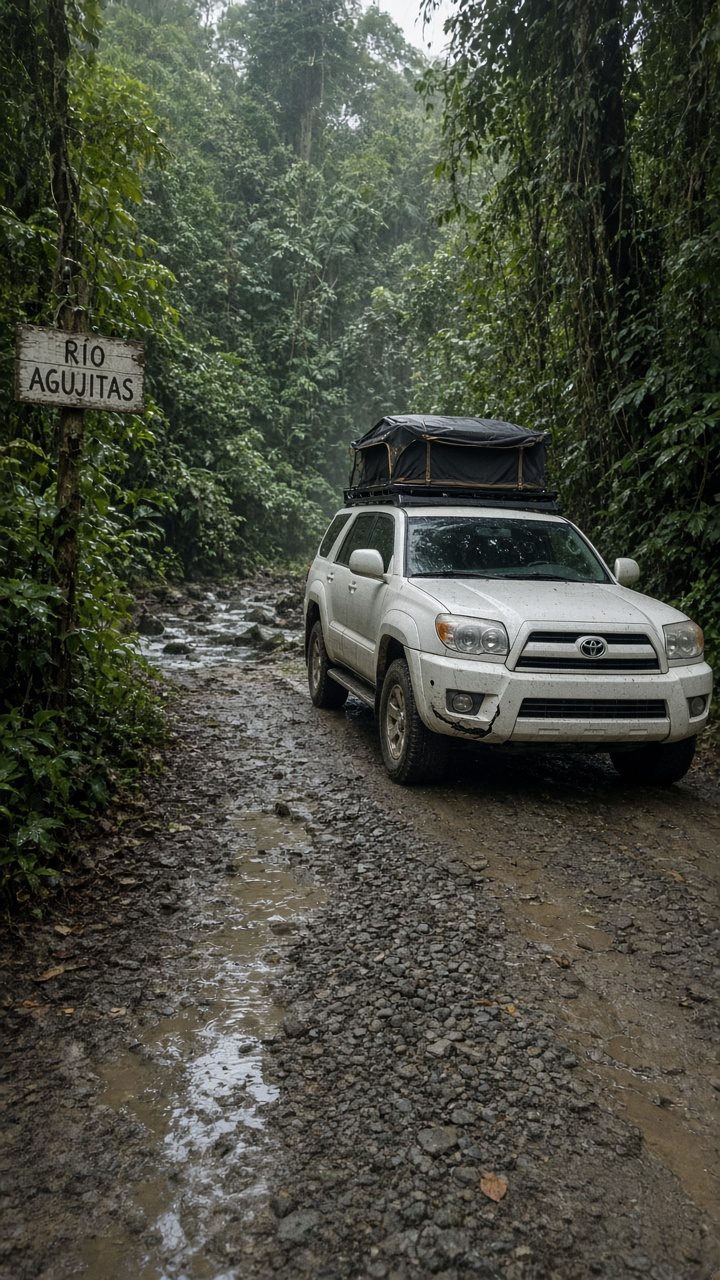
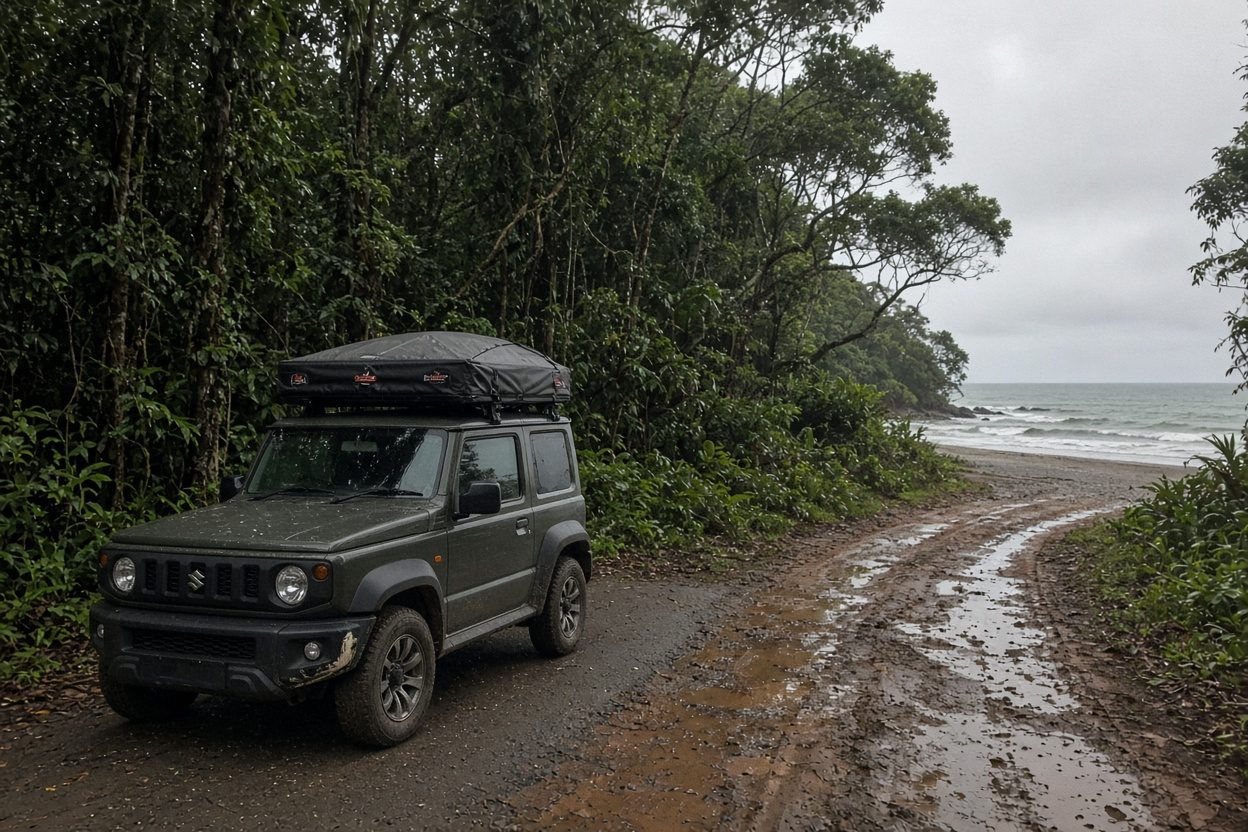
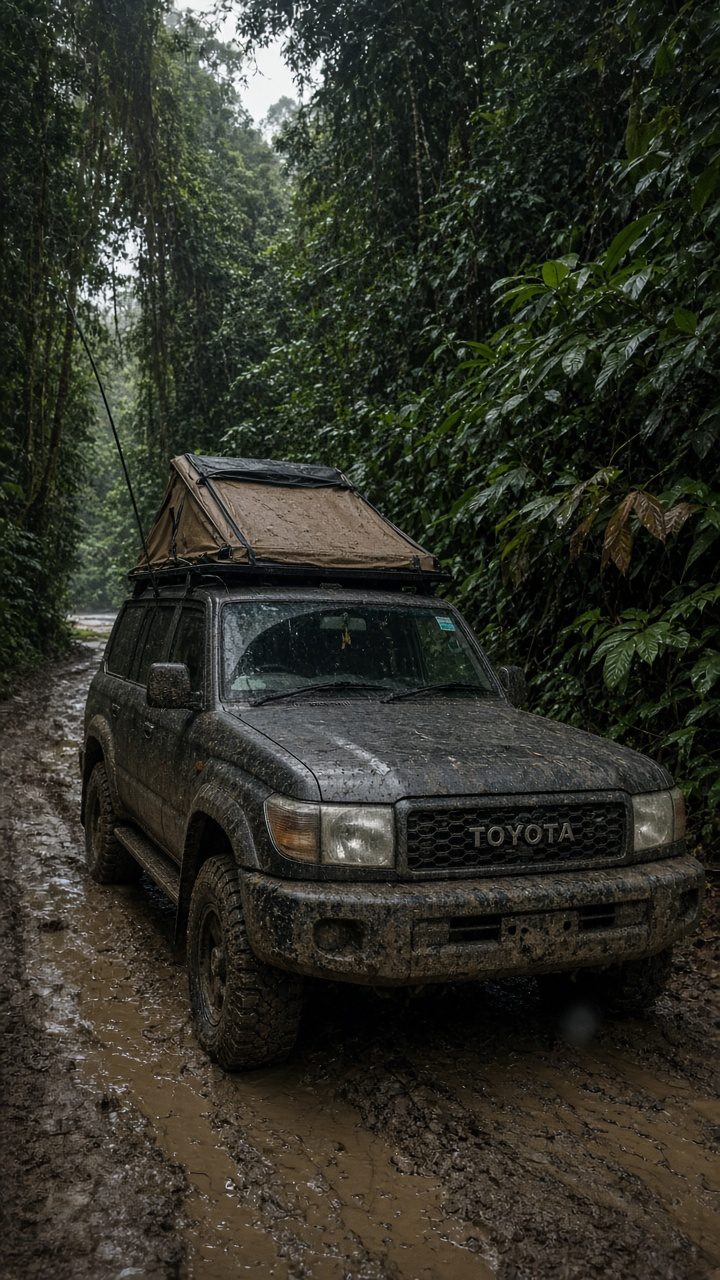
This is the antithesis of the Papagayo luxury run, and it earns its 🔴 rating. The Osa is raw and off-grid: Puerto Jiménez is the last reliable fuel, cash, and ATM before the roadless edges of the peninsula, and much of the region has patchy-to-no signal. You need a Land Cruiser–class rig with a rooftop tent, real self-sufficiency (water, food, a fuel-range plan), and the temperament to enjoy sleeping in the rainforest between fishing days. The reward is a trophy fishery with a fraction of the crowds and cost, wrapped in some of the densest wildlife in the Americas — scarlet macaws, howlers, and monkeys are part of the daily backdrop.
Fish it ethically. Roosterfish are strictly catch-and-release under Costa Rican law (INCOPESCA; FECOP runs the tagging program), and circle hooks are mandatory on all bait. Bill fish are released too. And there is one hard rule that defines this whole trip: you may not fish inside the Caño Island Biological Reserve — it is a protected marine zone for research and conservation. Fish outside its boundary and carry your captain's boundary map.
Day by day
Day 1 — Toward Sierpe (long paved-then-secondary transit 🟡). From the Central Valley or the Costa Ballena coast, make the long haul south to the Sierpe river town on the edge of the Térraba-Sierpe mangroves. Roads are largely paved with a rougher final stretch; treat this as a full driving day and arrive with light. Provision heavily — Sierpe has basics but the deeper Osa does not. Camp riverside near Sierpe. (Confirm a bookable riverside campsite/lodge with tent parking before you go; specific site left open.)
Day 2 — Sierpe → Puerto Jiménez base (secondary roads 🟡→🔴). Reposition to Puerto Jiménez, the Osa's fishing hub on the Golfo Dulce shore. This is your resupply anchor: fill fuel jerry cans, draw cash, and stock food here — services thin out fast beyond town. Set up a base camp you can return to. Afternoon shakedown: an inshore panga run or shore-cast the town flats to dial in tackle. Eat at a Puerto Jiménez soda.
Day 3 — Golfo Dulce inshore (panga day). A full inshore day inside the protected gulf. Work rocky points, reef edges, and river-mouth current lines for roosterfish, cubera snapper, jack, and grouper. Live bait (blue runner, sardine, cojinúa) on medium-heavy spinning tackle is the highest-percentage method; circle hooks throughout; keep roosters in the water and release fast. The gulf's calm inner water makes this the reliable, weather-proof core of the trip.
Day 4 — Charter toward Drake / offshore (blue water). Run out toward the mouth and the Drake Bay side for the offshore game — sailfish, marlin, tuna, dorado, all released. This is a longer, more exposed day; go early for calm seas and confirm the boat's range and safety gear. Back to base by mid-afternoon.
Day 5 — Caño Island area — fish OUTSIDE the reserve 🔴. The waters around Caño Island are superb, but the Caño Island Biological Reserve is a no-fishing protected zone. Work the productive edges beyond the boundary only, and let your captain navigate to the legal water. This is a non-negotiable rule — fishing inside the reserve risks fines and undermines the conservation that keeps the fishery healthy.
Day 6 — Kayak-fish the flats. A low-impact, off-grid day: kayak-fish the sheltered inner-gulf flats and mangrove edges close to your base. Light tackle, moving tide, sight-casting to cruising fish — the most intimate way to fish the Golfo Dulce, and free of charter cost.
Day 7 — Return (secondary → paved 🟡). Break camp, top off fuel in Puerto Jiménez, and begin the long transit out. Buffer the day for slow secondary roads.
Signature stops (why go)
- Golfo Dulce inner gulf — tropical-fjord fishery; sheltered, trophy roosterfish and snapper water.
- Matapalo Rock & outer gulf — where the biggest roosterfish show.
- Drake Bay offshore — blue-water billfish just outside the gulf mouth.
- Caño Island edges — rich water around a strict no-fishing reserve; fish outside the line only.
Where to camp/stay
Base out of a rooftop tent at bookable campsites near Puerto Jiménez and Sierpe. Puerto Jiménez is the essential resupply point (fuel, cash, food). (Specific campsites left open — verify tent-parking availability and current access on iOverlander and with local operators before departure; off-grid conditions change seasonally.)
Logistics & road reality
- Roads: 🔴 Long transits, rough secondary roads, and genuinely remote sectors. A Land Cruiser–class 4x4 is required, not optional.
- Fuel & cash: 🔴 Puerto Jiménez is the last reliable fuel and ATM. Carry jerry cans and enough cash for the whole peninsula; card acceptance is unreliable off-grid.
- Season: Dec–Apr for the driest roads and calmest seas. Roads deteriorate sharply in the wet months.
- Connectivity: 🔴 Patchy to none. Carry offline maps and consider a satellite messenger.
- Permits/rules: No angler license for charters, but roosterfish = catch-and-release + circle hooks by law, and no fishing inside the Caño Island Biological Reserve.
- Safety: Tell someone your plan and return time; the Osa is remote and self-rescue is the default.
Sportfishing guidance
- Seasons: Roosterfish year-round (trophy potential high in the gulf); billfish and dorado strong in the dry season; the inner gulf fishes even when the open coast is rough.
- Vet your captain: Use a verified local panga captain who knows the Caño boundary and fishes catch-and-release with circle hooks. VerifiedCR can help confirm a captain and supply a Caño Island boundary map and billfish-tagging contacts (FECOP).
- Tackle: Medium-heavy spinning for inshore roosters (40 lb braid, 60 lb fluoro, circle hooks); heavier trolling gear for the offshore day.
Insider tips
- Treat Puerto Jiménez as your lifeline. Fuel, cash, and food get scarce fast beyond town — over-provision every time you pass through.
- Carry the Caño boundary map and honor it. Fishing inside the reserve is illegal; your captain should know the line cold.
- Fish the inner gulf on rough days. Its sheltered water is the trip's insurance against lost days.
- Go at dawn for the offshore run — calmer seas and a better bite, and you're back before the afternoon wind.
- Verify camps before you commit. Off-grid sites change with the season; cross-check iOverlander and call ahead.
Reserve your rig
This trip only works with the right vehicle. VerifiedCR outfits you with a Land Cruiser–class 4x4 and rooftop tent built for the Osa's rough roads and off-grid nights, plus the angler add-ons that keep it legal and safe: a vetted panga captain, a Caño Island boundary map, and a fuel-and-cash range plan for the peninsula. Reserve your rig and fish the wildest gulf in Costa Rica on your own terms.
Before you go
Do you need a 4x4?
4x4 required
Best window to fly
Dec–Apr
Offline first
Download your route and offline maps before you leave the lot — signal drops on the best stretches.
Golden rule
Never drive at night — plan arrivals before dark, and use Waze like the locals do.
VerifiedCR · No counter surprises
What a Costa Rica rental actually costs
The number one thing that rattles first-timers is the price jumping at the counter. Here is the honest math, before you get there.
- Advertised daily rate$12–40 / day
- What the booking sites show. It is real — but it is not the whole price. Nobody pays only this.
- Mandatory liability (TPL / SLI)+$15–25 / day
- Required by Costa Rican law on every rental. Cannot be waived. This is the line the cheap ads leave off — it roughly doubles the sticker price. Budget for it.
- Collision damage (CDW)waivable
- Often $20–40/day — but you can usually decline it if your credit card includes rental coverage (Amex, Visa Signature, Chase Sapphire and others). Call your card, ask for a coverage letter, and bring it printed.
- Security hold on your card$1,000–2,500
- A hold, not a charge — released after you return the car clean. Some agencies hold more. Make sure your card has the headroom before you fly.
The verified-rig promise: when you reserve through VerifiedCR, the rig is inspection-checked and the operator is vetted — the price you are quoted is the price you pay. No mystery line items at pickup.