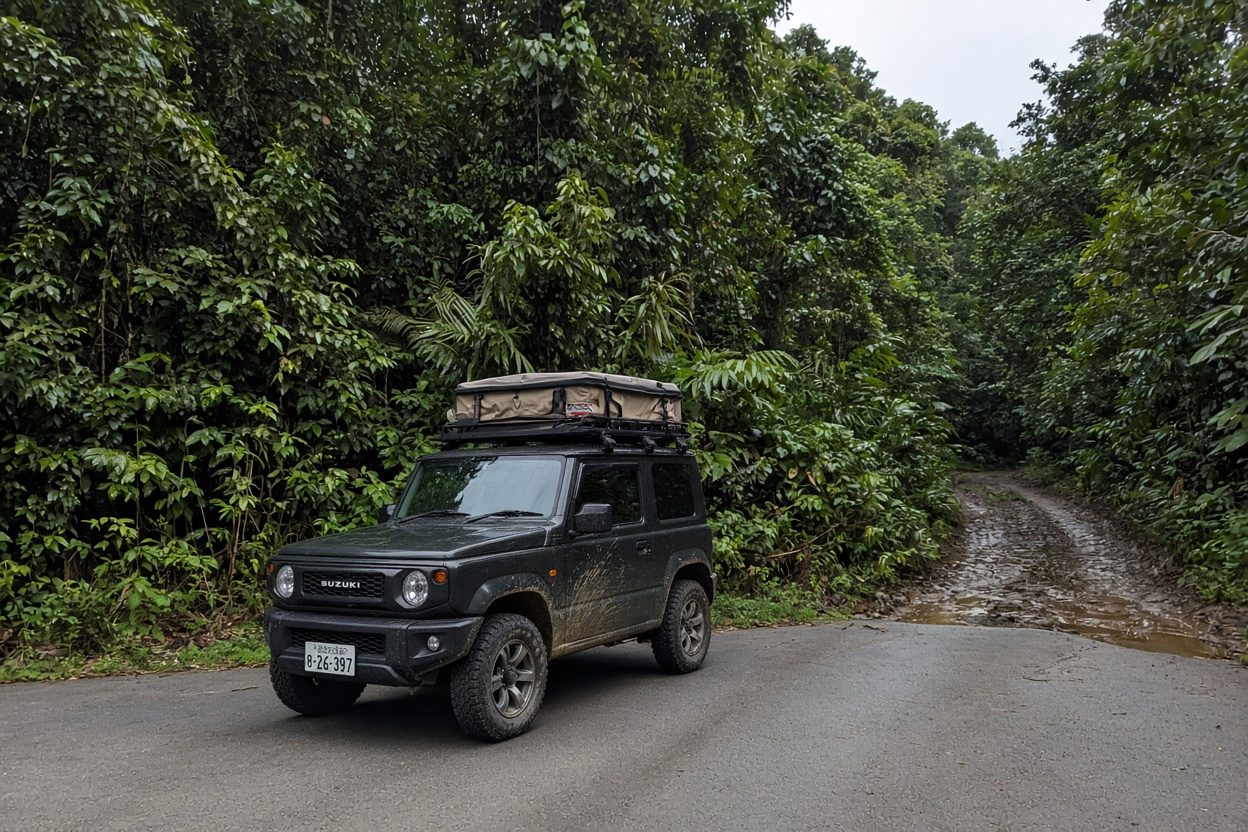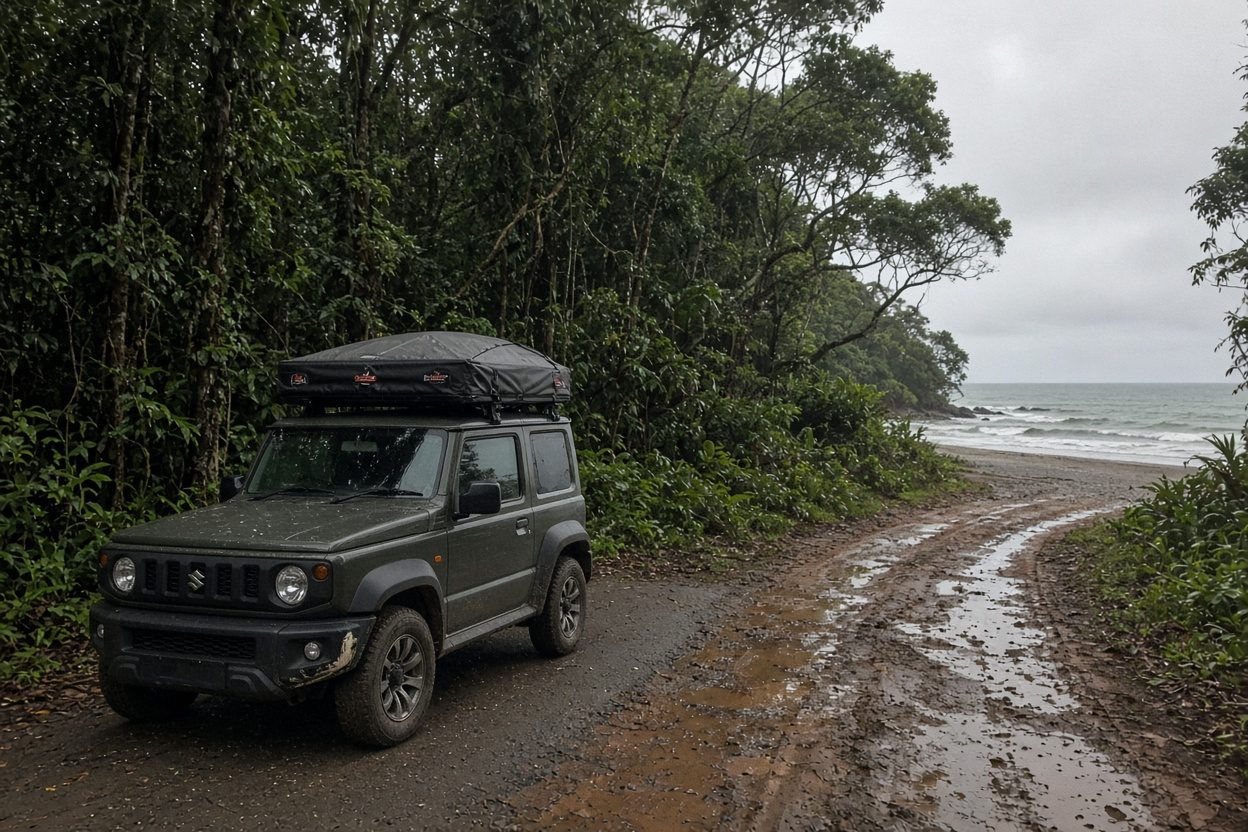
National Geographic famously called Corcovado "the most biologically intense place on Earth," and the Sirena traverse is how you earn that superlative firsthand. This is a point-to-point crossing of the wildest heart of the Osa Peninsula: in at the Los Patos ranger station, two nights at the remote Sirena station deep in the park, and out along the coast to La Leona near Carate. Along the way you have a real shot at all four Costa Rican monkey species, tapir at the Sirena airstrip, scarlet macaws by the dozen, and — for the lucky and quiet — the tracks or even a glimpse of a puma or jaguar.
Here's the honest framing: your vehicle does very little of this trip. Corcovado's interior has no roads. You'll stage the 4x4 at a trailhead, then the traverse is done on your own two feet with a mandatory certified guide — you cannot legally enter Corcovado without one, and you cannot overnight at Sirena without a reservation. We rank the whole undertaking 🔴 because the trekking is genuinely demanding (long days, heat, humidity, river crossings) and the logistics are unforgiving. But the payoff is the densest wildlife experience in Central America.
Go in the dry season (Dec–Apr). Book the guide and the Sirena bunkhouse first — spaces and permits are limited and sell out — then build the trip around the dates you're granted.
Day-by-Day
Day 1 — Puerto Jiménez: prep and guide briefing. Base in Puerto Jiménez, the gateway town and the last place with fuel, an ATM, a supermarket, and reliable signal. Confirm your SINAC park permits (roughly $18 per person per day), your certified guide, and your Sirena reservation with meals. Pack light but complete: quick-dry everything, a headlamp, a dry bag, water treatment, and blister care. Sleep in Jiménez.
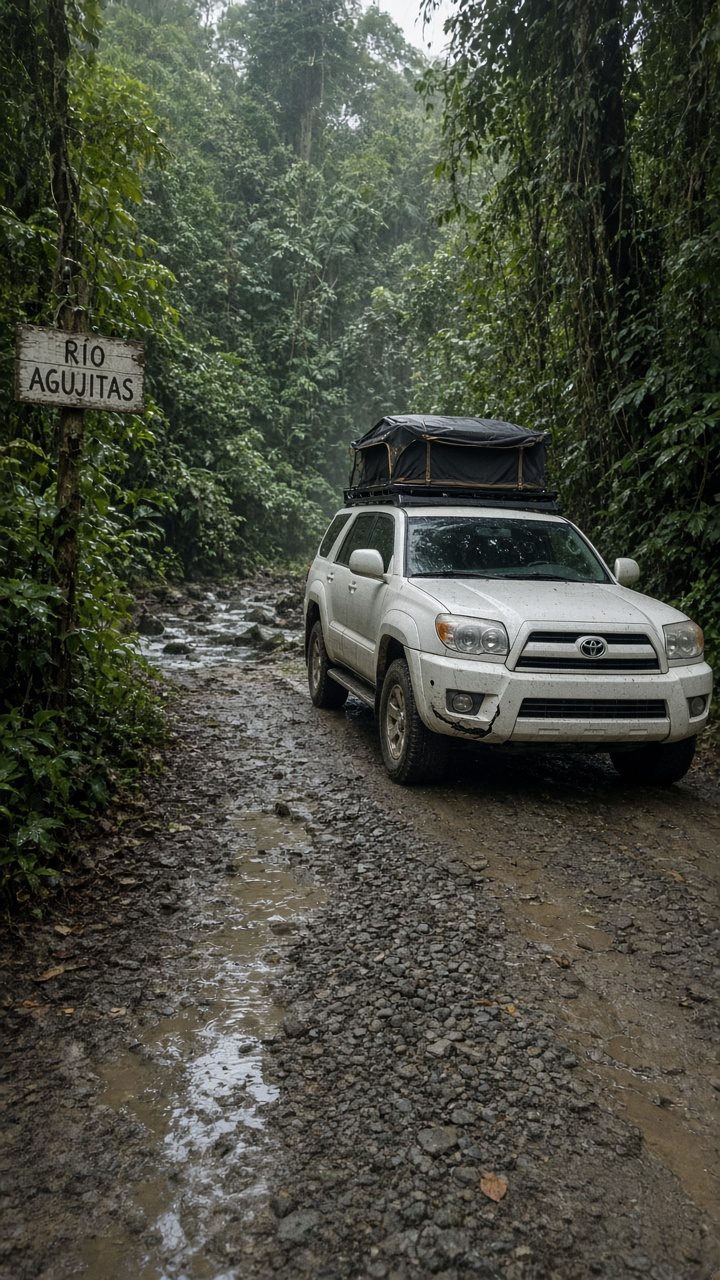
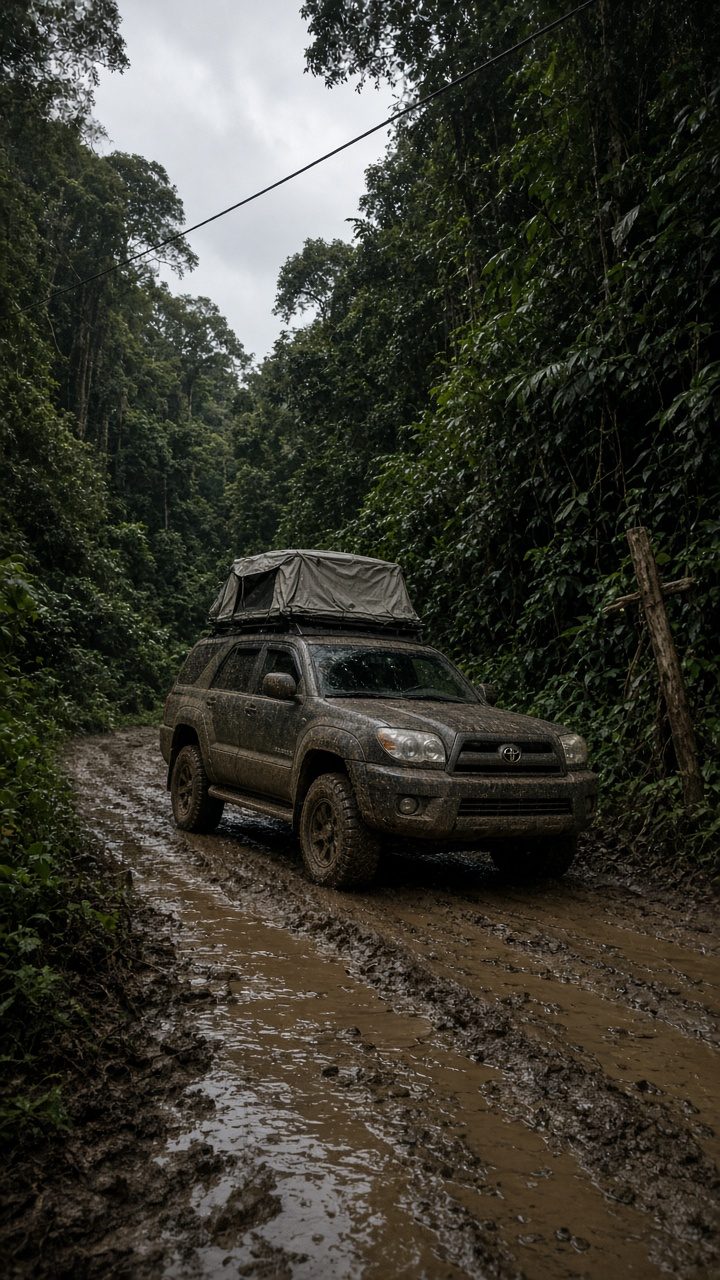
Day 2 — Drive to the Los Patos trailhead; stage the rig. A mid 4x4 gets you up the rough road toward the Los Patos sector (the last stretch involves multiple stream crossings and is dry-season-dependent). This is where the vehicle's job ends — arrange a safe place to leave it (vehicle-watch is worth every colón) and shoulder your pack. Some parties hike a short way in and overnight near the trailhead to get an early start; follow your guide's plan.
Day 3 — Hike Los Patos → Sirena (~20 km). The big one. The Los Patos–to-Sirena trail runs roughly 20 km through dense primary rainforest — hilly at first, then flattening as you approach the Sirena lowlands — and takes most of the day. Expect river fords, mud, and heat; start at dawn. This is prime territory for peccary, curassow, tapir sign, and the constant soundtrack of howlers and macaws. Arrive at Sirena, check into the bunkhouse, and rest.
Day 4 — Sirena wildlife day. No long hike — instead you work the network of short trails and the airstrip around Sirena, which is where the "most biologically intense" reputation earns itself. Dawn and dusk at the airstrip and the Río Claro/Río Sirena mouths are the money windows: Baird's tapir come to wallow, scarlet macaws feed overhead, and big-cat and tapir tracks show in the sand. Your guide's eyes are the difference between "nice jungle" and a once-in-a-lifetime sightings log.
Day 5 — Sirena → La Leona → Carate (~16 km coastal). The exit leg follows the coast toward the La Leona station and out to Carate — about 16 km, and famously tide-dependent: sections of the route round rocky headlands that are only passable at lower tides, so timing is everything and your guide plans the departure accordingly. It's a stunning walk with the rainforest on one shoulder and the surf on the other. From La Leona it's a short beach walk to Carate, the end of the road, where transport or your staged vehicle meets you.
Day 6 — Exit and decompress. Recover your vehicle (or complete the shuttle), drive the rough Carate–Puerto Jiménez road back to town, and reintegrate with the world — first shower, first cold drink, first cell signal in days. Overnight in Jiménez or begin the drive north.
Signature Stops (why go)
- Sirena Ranger Station — the biological epicenter of Corcovado; the airstrip at dawn is one of the best wildlife-watching spots in the Americas.
- The Los Patos primary forest — untouched lowland rainforest, the real thing, on a trail that few people walk.
- The La Leona coastal stretch — jungle-and-surf hiking with a genuine tide gate, ending at the frontier outpost of Carate.
Where to Stay
- Sirena bunkhouse (inside the park): dorm-style bunks with limited, pre-booked meals — reserve well ahead; there is no walk-up. Bring a sleep sheet and a headlamp.
- Puerto Jiménez (Days 1 & 6): cabinas and small hotels, plus your last supermarket and ATM.
- Near Los Patos / Carate: simple lodgings exist at the fringes for early-start or late-exit nights; your guide/operator arranges these.
Logistics & Road Reality
- Guide is mandatory. You cannot enter Corcovado without a certified ICT-registered guide. Guided day tours run ~$110–160 pp; multi-day traverses are priced per party and include permits, guide, and Sirena meals/lodging. Book first.
- Permits: SINAC park entry ~$18 pp per day, arranged with your operator; capacity is capped.
- Fuel & cash: Puerto Jiménez only. Carate and the interior have none — carry cash for guides, meals, and the vehicle-watch.
- Trail reality: Los Patos–Sirena ~20 km; La Leona–Sirena coastal ~16 km and tide-gated. Long, hot, humid days with river crossings. This is a fitness-required trip.
- Connectivity: No signal inside the park. Offline maps for the drives; a satellite messenger for the trek is smart.
- Season: Dec–Apr. Interior trails and the access roads are far harder Sept–Nov.
- Overland 🟢 vs through-land 🔴: 🔴 — the vehicle is a staging tool; the crossing is on foot and fully committing.
Insider Tips
- Book Sirena before your flights. The bunkhouse and guide capacity, not your calendar, decide your dates.
- Do the wildlife day. People who skip the Sirena "rest" day to save time miss the entire reason they came — the airstrip at dawn and dusk is the show.
- Waterproof everything twice. Dry bags inside your pack; assume you'll ford rivers and it'll rain even in the dry season.
- Pay for vehicle-watch at the trailhead. A staged rig left unattended for four days on the edge of the wilderness is a bad plan.
- Break in your boots and pack blister kit. Twenty humid kilometers on Day 3 is not the day to discover a hot spot.
Reserve Your Rig
We'll stage the right 4x4 at Los Patos, arrange trusted vehicle-watch, and hand you a dry-bag kit and a briefing on the current road and tide conditions — while you focus on the trek of a lifetime. [Reserve your Corcovado-staged 4x4 →]
Before you go
Do you need a 4x4?
seasonal river ford — 4x4 advised
Best window to fly
Dec–Apr
Offline first
Download your route and offline maps before you leave the lot — signal drops on the best stretches.
Golden rule
Never drive at night — plan arrivals before dark, and use Waze like the locals do.
VerifiedCR · No counter surprises
What a Costa Rica rental actually costs
The number one thing that rattles first-timers is the price jumping at the counter. Here is the honest math, before you get there.
- Advertised daily rate$12–40 / day
- What the booking sites show. It is real — but it is not the whole price. Nobody pays only this.
- Mandatory liability (TPL / SLI)+$15–25 / day
- Required by Costa Rican law on every rental. Cannot be waived. This is the line the cheap ads leave off — it roughly doubles the sticker price. Budget for it.
- Collision damage (CDW)waivable
- Often $20–40/day — but you can usually decline it if your credit card includes rental coverage (Amex, Visa Signature, Chase Sapphire and others). Call your card, ask for a coverage letter, and bring it printed.
- Security hold on your card$1,000–2,500
- A hold, not a charge — released after you return the car clean. Some agencies hold more. Make sure your card has the headroom before you fly.
The verified-rig promise: when you reserve through VerifiedCR, the rig is inspection-checked and the operator is vetted — the price you are quoted is the price you pay. No mystery line items at pickup.