Everyone "knows" you don't visit Costa Rica in September and October. That folk wisdom is half right and half a gift to travelers who understand the country's split personality. While the Pacific has its two wettest months of the year, the Caribbean coast enjoys its driest, sunniest weather — the famous seasonal inversion. This itinerary is built around that fact: spend the bulk of the trip on the Caribbean side where the sun is, take advantage of green-season prices and empty trails everywhere, and add a short, well-timed Pacific tail only for the one thing the Pacific does better than anywhere in September–October: southern humpback whales at Uvita, whose season runs roughly July–November.
The strategy is discipline about where you spend your days. We give the Caribbean four-plus nights (its sunniest stretch), Tortuguero its green-turtle window, and keep the South Pacific tail deliberately short — three nights, planned around the whales and Nauyaca Falls, accepting that you'll dodge afternoon showers there. Rafting is a bonus of the season, not a liability: high water means the Sarapiquí and Pacuare rivers are running their biggest.
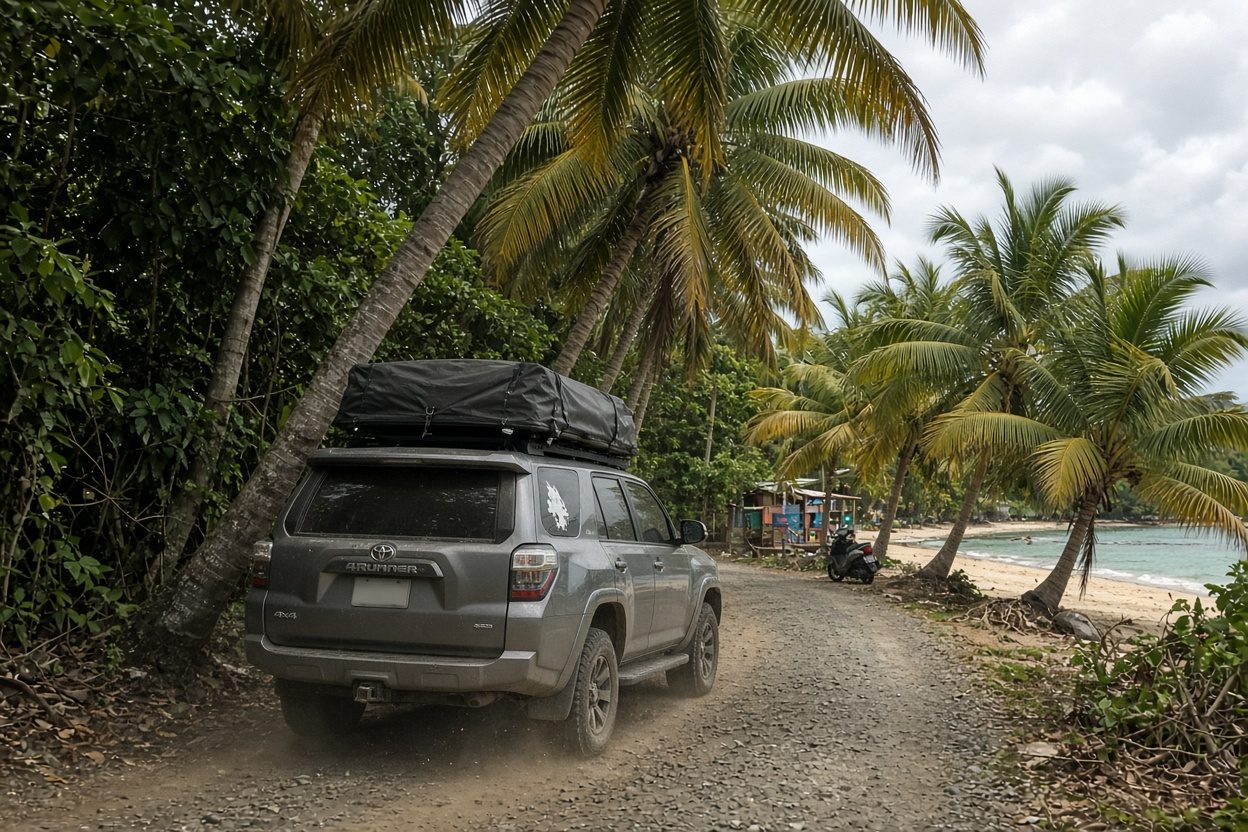
A mid-size 4x4 is right for this trip. The roads are mostly paved, but Route 32 over the mountains and the gravel around Sarapiquí and the South Pacific waterfalls all want clearance and grip in the wet. This is a 🟡 route: real driving days and a boat leg, but no fords.
Day-by-Day
Days 1–2 — Sarapiquí (high-water rivers, Central lowlands). From San José, cross the Braulio Carrillo mountains to the Sarapiquí lowlands, about 2 hours on Route 32 — 🔴 a daylight-only drive, prone to fog and landslides, so leave early. September–October high water makes this prime Class II–III rafting season, and the rainforest is at its lushest. Add a Tirimbina chocolate tour or a wildlife float. Base at a riverside lodge.
Days 3–4 — Tortuguero (green-turtle canals). Continue to La Pavona, where the road ends — Tortuguero has no road access. Park the rig in a secured lot and take the public lancha (roughly hourly ~7 a.m.–4:30 p.m., about ₡6,000 / ~US$12 one-way, ~1 hour on the water; confirm the current timetable). September falls inside the green-turtle nesting season (roughly June–October), so a licensed night turtle walk is on the table, alongside canal tours by boat and kayak. Two nights in the village; the rig waits at La Pavona.
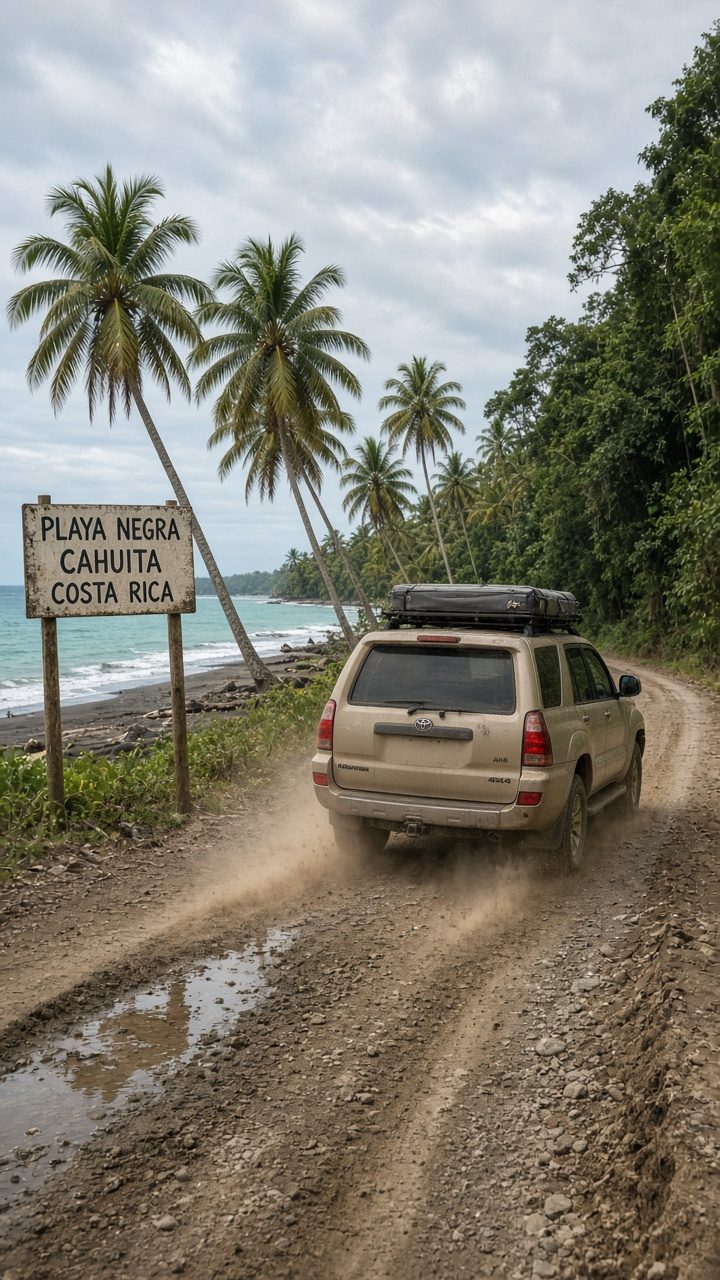
Days 5–8 — South Caribbean (the driest window: Cahuita, Puerto Viejo, Punta Uva, Manzanillo). Collect the vehicle and drive the coast road south. This is the sun you came for — Puerto Viejo is among its driest, calmest, sunniest in September–October. Four nights buys the Cahuita National Park reef trail (sloths, guided snorkel), the Puerto Viejo food scene (rondón, patí, jerk), a Bribri cacao tour, the calm turquoise of Punta Uva, and the Gandoca-Manzanillo trailhead. Base in Puerto Viejo or quieter Punta Uva.
Days 9–10 — Spine transit toward the Pacific. Two days to cross back over the mountains (Route 32 in daylight 🔴) and reposition down toward the Central/South Pacific coast, breaking the drive rather than doing it in one grim push. Expect rain on the Pacific side — this is the wet half of the trip by design.
Days 11–13 — Uvita & Dominical (humpbacks, Nauyaca between showers). Base on the Costa Ballena for the payoff. Marino Ballena National Park at Uvita is prime southern-humpback territory in this window (season ~July–November) — take a whale-watching boat and walk out onto the Whale's Tail sandbar at low tide. Nauyaca Falls near Dominical is the big waterfall here (hike, 4x4, or shuttle in). Plan water activities for mornings and expect afternoon showers — the rain here is heavy but usually predictable in its timing.
Day 14 — Return. Drive back to San José / SJO. From the Dominical–Uvita area, allow a comfortable half-to-full day depending on your route and the weather.
Signature Stops (Why Go)
- The Caribbean in the sun — Puerto Viejo, Cahuita reef, and Punta Uva at the one time of year they're most reliable.
- Tortuguero green turtles — a boat-only park in its nesting season.
- Marino Ballena / Whale's Tail — southern humpbacks offshore and a sandbar you can walk at low tide.
- High-water rafting on the Sarapiquí — green season's best rivers.
- Nauyaca Falls — a powerful South Pacific cascade at full green-season flow.
Where to Camp / Stay (Named)
- Sarapiquí: Selva Verde / Tirimbina area riverside lodges.
- Tortuguero: village guesthouses (rig stays at La Pavona; pack a soft duffel).
- South Caribbean: Puerto Viejo in-town, or Punta Uva beachfront for calm and privacy.
- Costa Ballena: Uvita and Dominical cabinas; Ojochal for a quieter, foodie base.
Logistics & Road Reality
- The inversion is the whole point: 🟢 the Caribbean is driest/sunniest in September–October while the Pacific is at its wettest — spend your days accordingly.
- Route 32: 🔴 daylight-only, fog and landslides in rain — governs your start times on Days 1, 3, and 9.
- Tortuguero boat: 🟢 easy crossing; the discipline is secure parking at La Pavona and catching a scheduled lancha — confirm times before you drive out.
- Pacific tail is deliberately short: 🔴 heavy afternoon rain is expected in Uvita/Dominical — front-load activities to the morning and keep expectations honest.
- Whale season: southern humpbacks ~July–November — September–October is a sweet spot, but verify current sightings with the Uvita operators before booking the boat.
- Fuel: easy on this route — top off before Route 32 crossings and before the Caribbean coast.
Insider Tips
- Book the Caribbean nights first and generously — those are your guaranteed-sun days; everything else works around them.
- Treat Route 32 as a morning road, three times. Every mountain crossing on this trip should be done before the afternoon weather builds.
- Do Pacific water in the morning. In September–October, Uvita and Nauyaca reward an early start and punish an afternoon plan.
- Green season = leverage on price. Lodges and tours discount heavily now; ask directly for shoulder rates, especially midweek.
- Carry rain gear you actually trust and cash for the coast — the Caribbean is drier, not bone-dry, and the sodas, cacao farms, and lancha prefer colones.
Reserve Your Rig
This is a route that rewards a comfortable, capable mid-size 4x4 from VerifiedCR — clearance for wet Route 32 and the Sarapiquí and Nauyaca gravel, comfort for the long green-season transfers, and delivered ready for the rain you'll deliberately be driving around. Green season is the value window on the fleet, too — reserve early and ask about shoulder-season rates.
Before you go
Do you need a 4x4?
gravel sections — 2WD ok in dry season
Best window to fly
September–October (the Caribbean's driest window)
Offline first
Download your route and offline maps before you leave the lot — signal drops on the best stretches.
Golden rule
Never drive at night — plan arrivals before dark, and use Waze like the locals do.
VerifiedCR · No counter surprises
What a Costa Rica rental actually costs
The number one thing that rattles first-timers is the price jumping at the counter. Here is the honest math, before you get there.
- Advertised daily rate$12–40 / day
- What the booking sites show. It is real — but it is not the whole price. Nobody pays only this.
- Mandatory liability (TPL / SLI)+$15–25 / day
- Required by Costa Rican law on every rental. Cannot be waived. This is the line the cheap ads leave off — it roughly doubles the sticker price. Budget for it.
- Collision damage (CDW)waivable
- Often $20–40/day — but you can usually decline it if your credit card includes rental coverage (Amex, Visa Signature, Chase Sapphire and others). Call your card, ask for a coverage letter, and bring it printed.
- Security hold on your card$1,000–2,500
- A hold, not a charge — released after you return the car clean. Some agencies hold more. Make sure your card has the headroom before you fly.
The verified-rig promise: when you reserve through VerifiedCR, the rig is inspection-checked and the operator is vetted — the price you are quoted is the price you pay. No mystery line items at pickup.