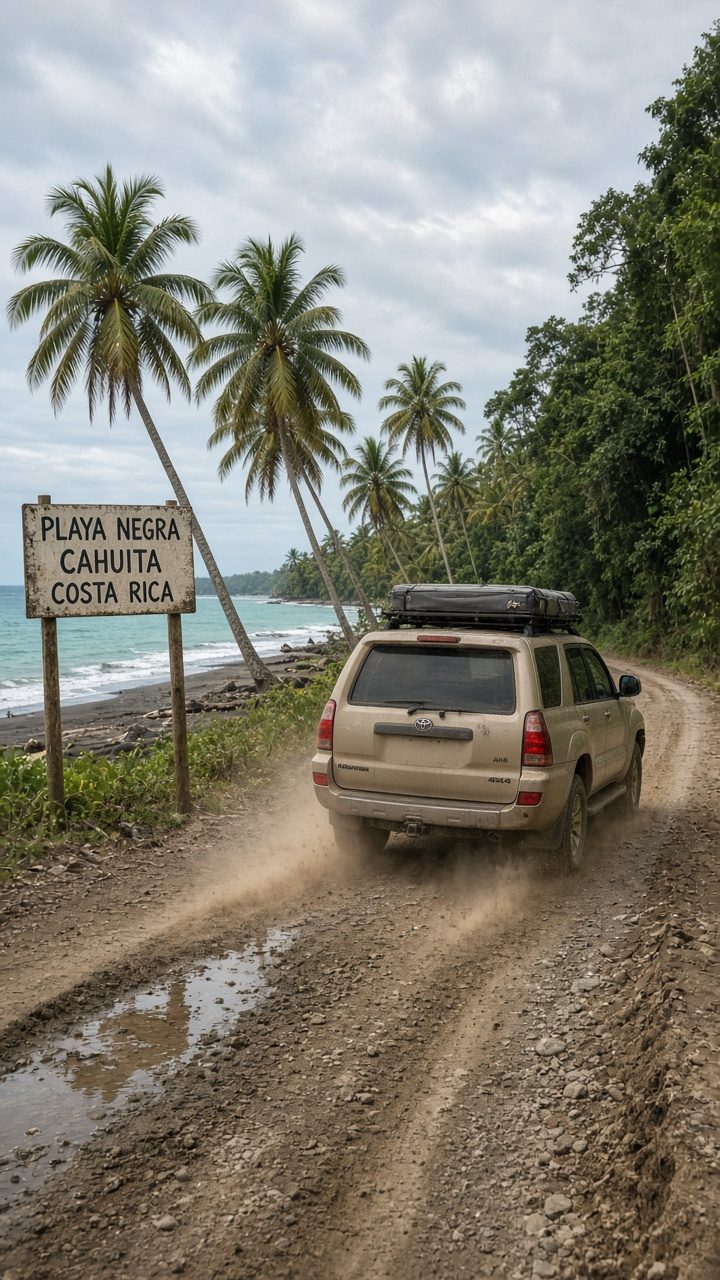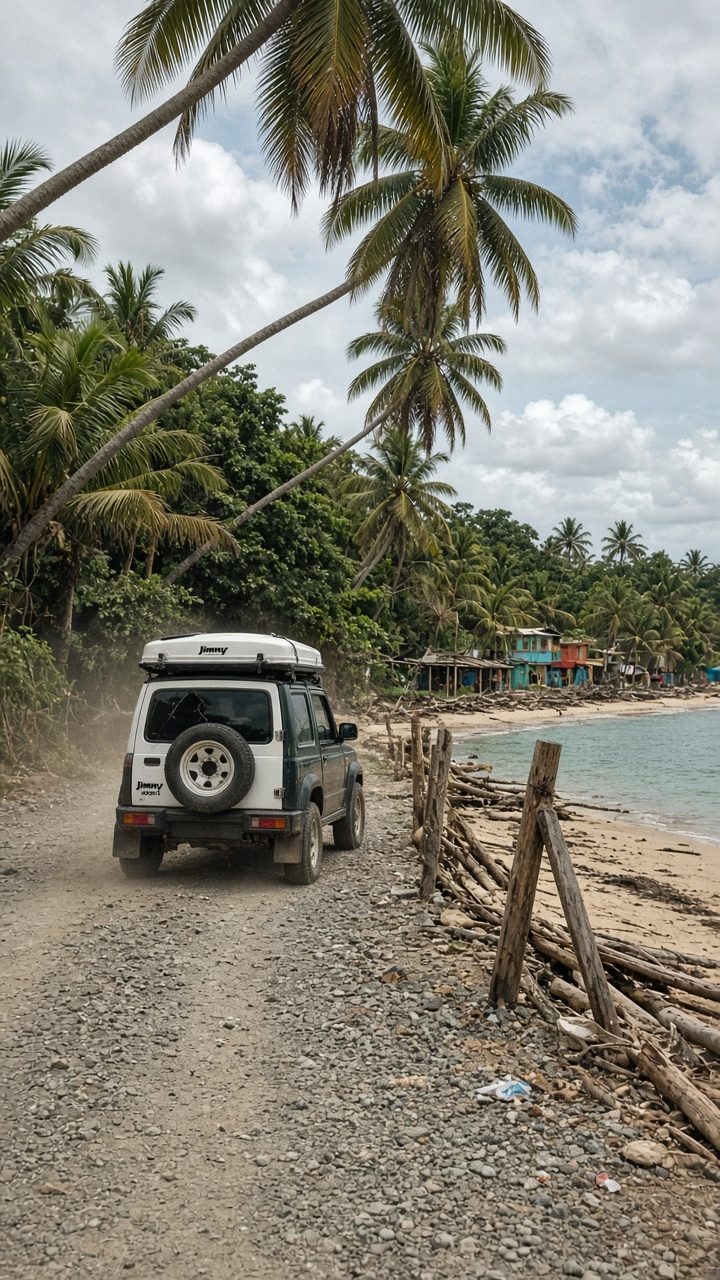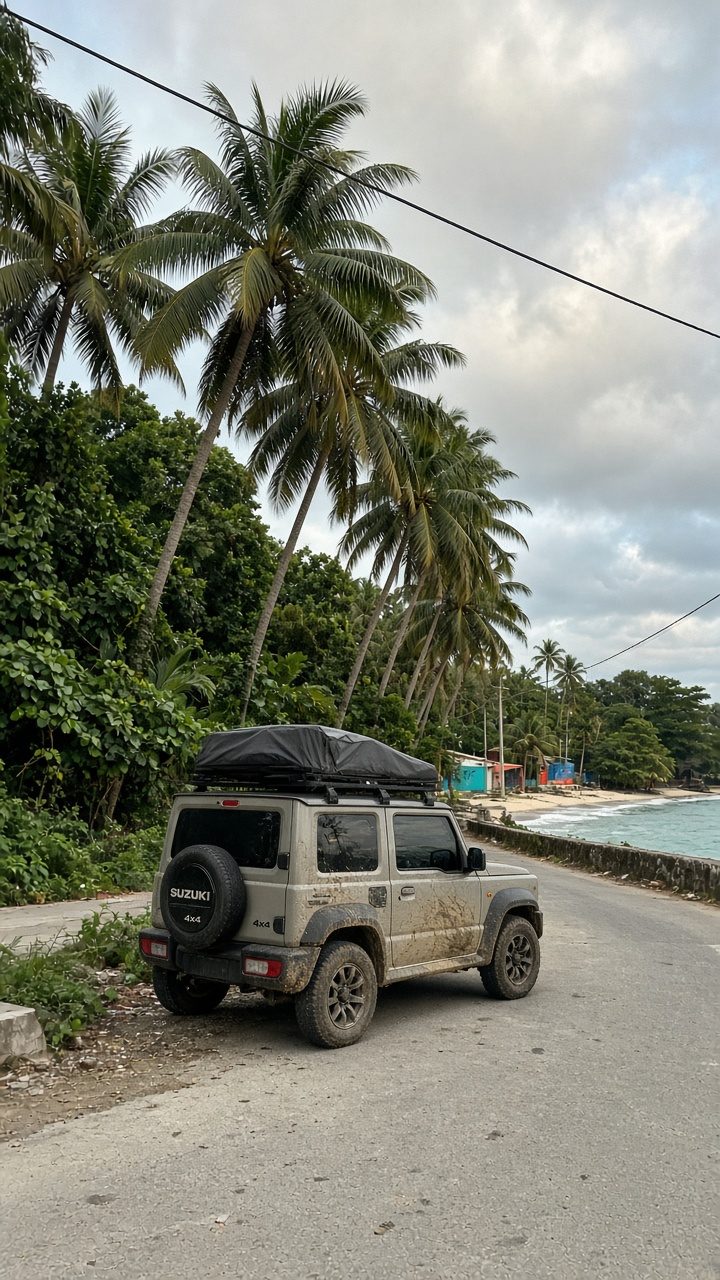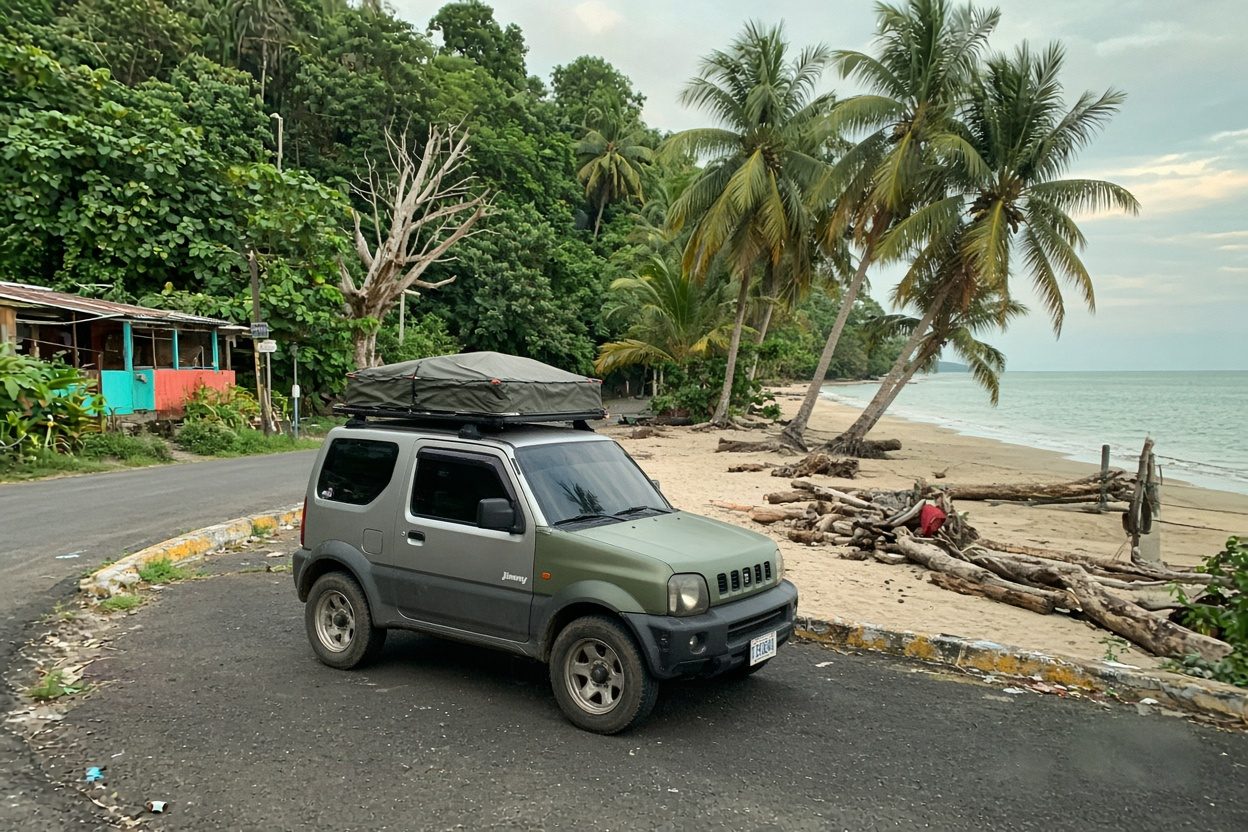
Three days is not much for the Caribbean coast, and yet it is exactly enough to string together the pearls that made this shore famous: reggae-slow villages, a jungle that walks down to the sand, and the calmest turquoise water in Costa Rica. This route is built for the traveler who lands with a long weekend and a rented rig, wants no wasted miles, and wants to come home saying they actually swam in the Caribbean rather than just looked at it.
The trick to the south Caribbean is that the good stuff is strung along a single 13-kilometer paved road running south from Puerto Viejo de Talamanca to Manzanillo. You base once, you never repack, and each morning you simply roll a few minutes down the coast to the next pearl. The other trick is timing: while the Pacific drowns in rain from September into October, this coast is at its driest and sunniest — the seasonal inversion that locals quietly guard. February and March deliver the same reliable sun.
One honest note up front: the real risks here are petty theft (lock the rig, leave nothing visible) and the rip currents at Playa Cocles — not the drug-corridor violence you may have read about, which is network-internal and stays out of the tourist strip. Swim where the water is calm, watch where it isn't, and this is one of the gentlest coasts in the country.
Day 1 — Arrive Puerto Viejo, sunset on the sand
Drive: San José → Puerto Viejo, ~217 km / roughly 4.5–5 hours via Route 32. Road notes: Route 32 climbs over the Braulio Carrillo mountains through the Zurquí tunnel before dropping to the Caribbean lowlands at Guápiles. It is a mountain highway prone to fog, sudden downpours, and occasional landslide closures — drive it in daylight, leave San José early, and check conditions before you go. Below Limón the coastal road flattens and mellows.
Roll into Puerto Viejo by mid-afternoon, drop your gear, and let the town do the rest. This is the beating heart of the coast: bicycles, open-air sodas, Rasta color, and the smell of coconut and jerk drifting off the grills. Walk the beach path north toward Playa Negra for sunset, grab a first plate of rice and beans cooked in coconut milk, and let the reggaetón-meets-reggae soundtrack orient you. Keep tonight loose — you have crossed the country and the coast rewards the unhurried.
Eat: any beachfront soda for coconut rice and beans; a patí (spicy meat pasty) from a street vendor. Sleep: Rockin' J's, the legendary mosaic-tiled hammock-and-camp hostel just south of town (hammocks from roughly $7–10, tent and van space available — verify current rates at booking), or a beachfront campsite toward Playa Cocles.
Day 2 — Cocles to Punta Uva: watch, then swim
Drive: Puerto Viejo → Cocles ~4 km / 10 min; on to Punta Uva ~8 km / 15 min. Flat, paved, easy.
Start at Playa Cocles, the coast's photogenic beach-break — gorgeous, powerful, and rip-prone. This is a look-don't-plunge morning: watch the surfers, walk the sand, and respect the current. Cocles is lifeguarded in high season but the rips are the genuine hazard on this coast.
Then move south to Punta Uva, widely rated the safest, calmest swimming water on the south Caribbean. The rocky headland shelters the bay from swell, so the water goes glassy and warm — ideal for a long, lazy float, a snorkel over the near-shore rocks, or a paddle if you rent a kayak. Palms lean over white sand; howler monkeys roar in the canopy behind you. Spend the whole afternoon here. This is the pearl people remember.
Eat: a beach shack lunch at Punta Uva; sunset drinks back in Puerto Viejo. Sleep: Punta Uva beachfront camping/parking for the calmest overnight, or back at Rockin' J's.
Day 3 — Manzanillo, the wild end of the road, and out
Drive: Punta Uva → Manzanillo ~5 km / 10 min (end of the paved road); then the long haul back to San José — leave by late morning to clear Route 32 in daylight.
Spend the morning where the pavement quits: Manzanillo, the sleepy fishing village at the mouth of the Gandoca-Manzanillo Wildlife Refuge. Walk the first stretch of the coastal jungle trail toward Tom Bay — flat, shaded, ocean flickering through the trees — even if you only do 20 minutes of it. This is protected coast: manatees in the lagoons, dolphins offshore, and a genuine sense that the wild takes over past here. Have a last plate of fresh fish, then point the rig west.
Eat: fresh catch in Manzanillo (Cool & Calm Café is a local institution — confirm hours). Sleep: back on the road / San José.
Signature stops — why go
- Punta Uva — the calmest, safest swim on the coast; the one beach even nervous swimmers can relax in.
- Playa Cocles — the classic Caribbean beach-break; stunning to watch, dangerous to underestimate.
- Gandoca-Manzanillo Refuge — where the paved road ends and primary coastal jungle, dolphins, and manatee lagoons begin.
- Puerto Viejo town — the cultural engine: Afro-Caribbean food, reggae nights, bike culture.
Where to camp & stay (named)
- Rockin' J's, just south of Puerto Viejo — beachfront hammocks, tents, camping and rooms; the budget social hub (hammocks ~$7–10; verify).
- Punta Uva beachfront — the calmest, most private overnight, walking distance to the best swimming.
- Cahuita town (25 min north) is the quieter alternative base if Puerto Viejo feels too lively.
Logistics & road reality
- Route 32 is the make-or-break. Daylight only, weather-checked, no rushing. It is the single serious driving stretch of this trip; the coastal road itself is flat and forgiving.
- The whole south-coast pearl string is paved to Manzanillo — a compact 4x4 camper is plenty; you do not need heavy off-road capability for this route.
- Caribbean weather does not follow Pacific seasons: it can rain any month, but September–October and February–March are the reliably sunny windows.
Insider tips
- Come east when the Pacific is rained out. In green season (Sept–Oct) this is the driest corner of Costa Rica — the answer to "where do I go if it's pouring in Manuel Antonio?"
- Rent a bicycle in Puerto Viejo. The coast road is flat and the parking is easier on two wheels; many travelers barely touch the rig once they arrive.
- Swim at Punta Uva, sightsee at Cocles. Match the beach to the activity and the rips stop being a problem.
- Lock the rig, hide valuables. Petty theft is the real risk here; treat it like any beach town and you'll be fine.
- Carry cash. Small sodas, beach shacks, and park donations often don't take cards.
Reserve your rig
Three days, one paved coast road, zero wasted miles — the south Caribbean is made for a self-contained camper. Reserve a compact 4x4 camper, aim your first and last days at a daylight run over Route 32, and let Puerto Viejo, Punta Uva, and Manzanillo do the rest. Book your rig and roll east.
Before you go
Do you need a 4x4?
paved all the way — 2WD ok
Best window to fly
Any — best Sept–Oct & Feb–Mar (Caribbean's dry windows)
Offline first
Download your route and offline maps before you leave the lot — signal drops on the best stretches.
Golden rule
Never drive at night — plan arrivals before dark, and use Waze like the locals do.
VerifiedCR · No counter surprises
What a Costa Rica rental actually costs
The number one thing that rattles first-timers is the price jumping at the counter. Here is the honest math, before you get there.
- Advertised daily rate$12–40 / day
- What the booking sites show. It is real — but it is not the whole price. Nobody pays only this.
- Mandatory liability (TPL / SLI)+$15–25 / day
- Required by Costa Rican law on every rental. Cannot be waived. This is the line the cheap ads leave off — it roughly doubles the sticker price. Budget for it.
- Collision damage (CDW)waivable
- Often $20–40/day — but you can usually decline it if your credit card includes rental coverage (Amex, Visa Signature, Chase Sapphire and others). Call your card, ask for a coverage letter, and bring it printed.
- Security hold on your card$1,000–2,500
- A hold, not a charge — released after you return the car clean. Some agencies hold more. Make sure your card has the headroom before you fly.
The verified-rig promise: when you reserve through VerifiedCR, the rig is inspection-checked and the operator is vetted — the price you are quoted is the price you pay. No mystery line items at pickup.