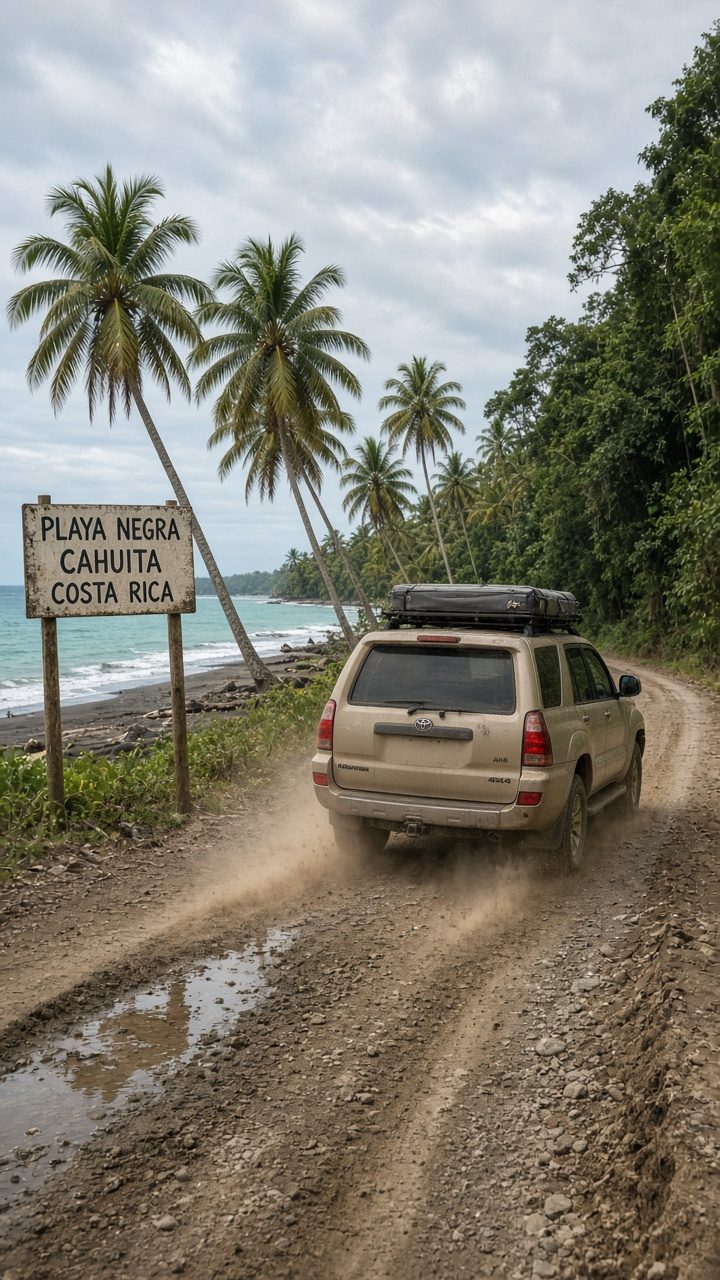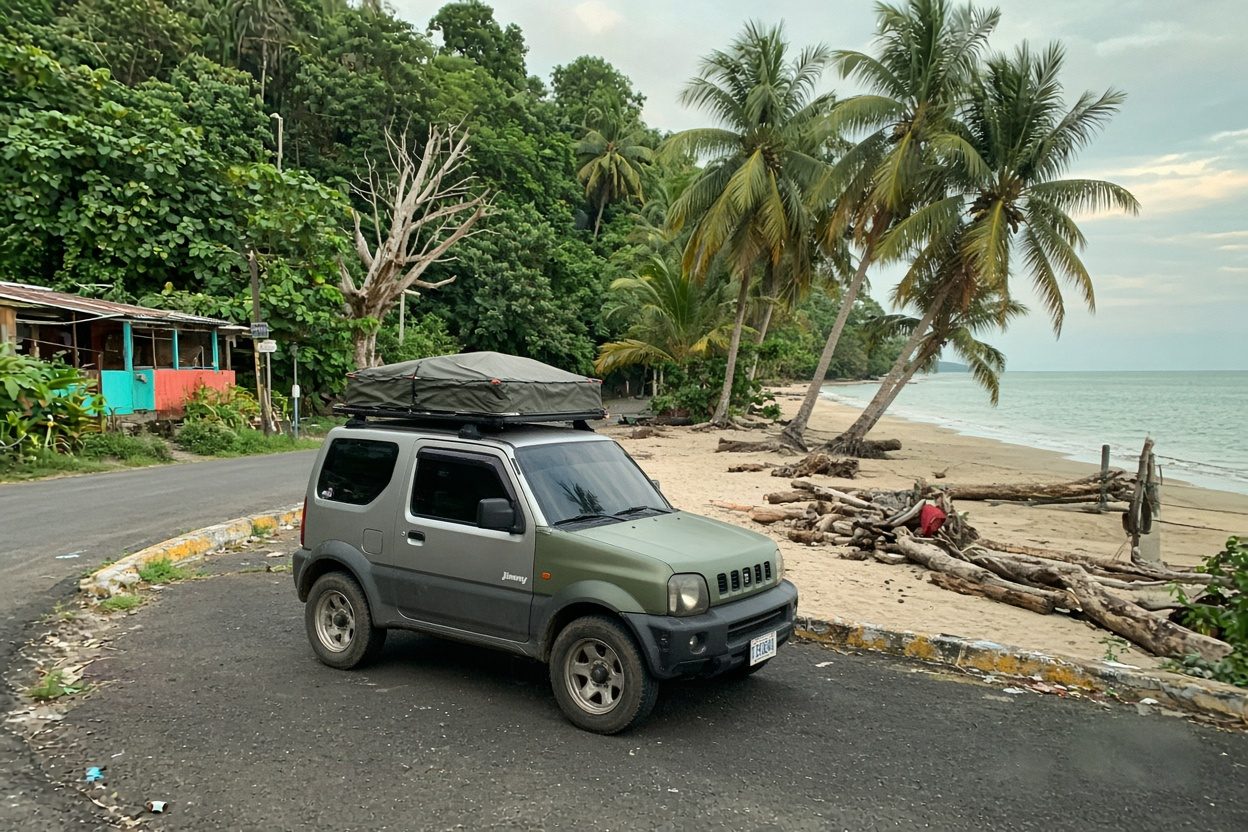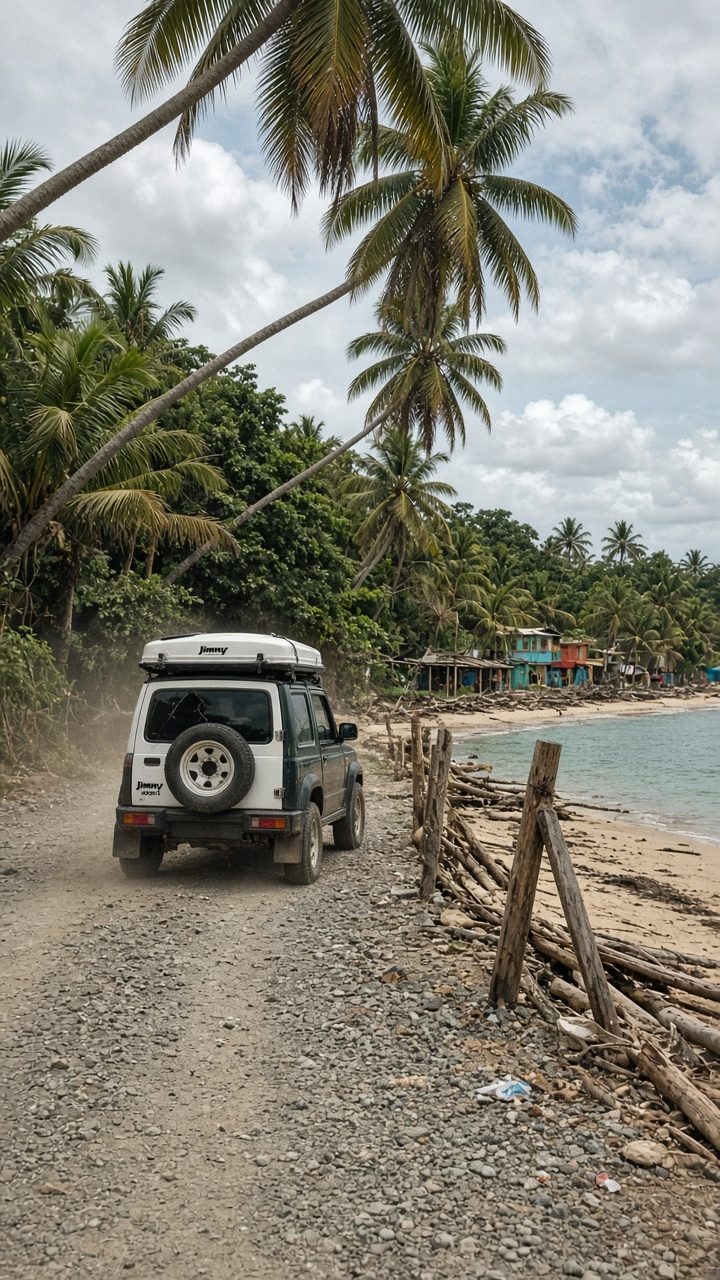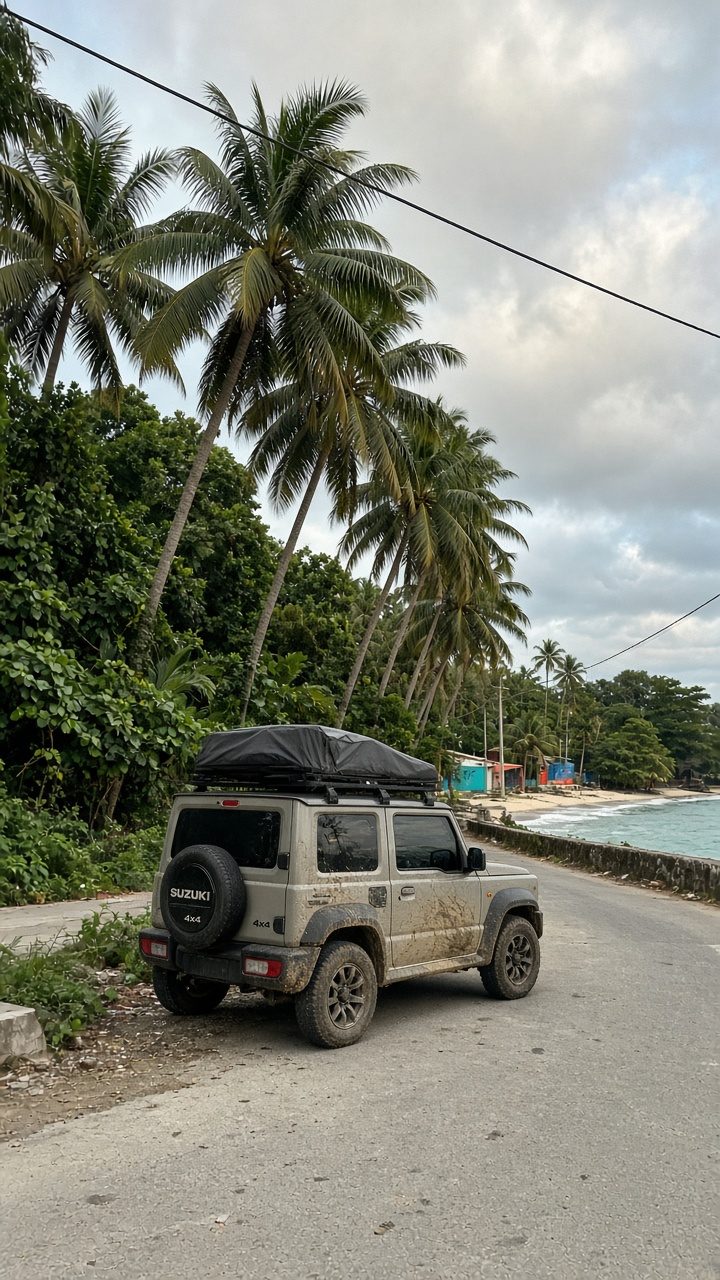
Costa Rica's Caribbean coast eats and sounds like nowhere else in the country. This is the Costa Rica of Jamaican-descended cooks simmering rondón for hours, of black-eyed peas and rice bubbling in coconut milk, of spicy meat patí sold from doorways, and of reggae rolling out of open-air bars into the warm night. Behind it all sit the Bribri, the Indigenous people of the Talamanca who first turned cacao into a sacred drink long before any of the ships arrived. This four-day route is a plate-by-plate, beat-by-beat tour of the whole layered culture — the one part of Costa Rica that has nothing to do with the Pacific postcard.
Because this trip is about food, music, and people rather than sun, it works in any season — a genuinely rain-proof itinerary. (For the record, the coast is still driest in Sept–Oct and Feb–Mar if you want beach time too.)
Day 1 — Cahuita: the Afro-Caribbean village
Drive: San José → Cahuita, ~200 km / ~4–4.5 hours via Route 32. Road notes: Route 32 over the Braulio Carrillo mountains — fog, downpours, and occasional landslide closures make it a daylight-only drive. Check conditions, leave early.
Ease in at Cahuita, the smaller, older, more purely Afro-Caribbean of the two coastal towns. This is where the culture feels lived-in rather than performed. Walk the village, meet the rhythm of the place, and have your first serious Caribbean dinner: rice and beans cooked in coconut milk with thyme and Panamanian chili — nothing like the Pacific's gallo pinto — and fresh fish in coconut sauce.
Eat: Soda Kawe or a local soda for coconut rice and beans; ask who's cooking rondón (it's often a weekend or made-to-order dish). Sleep: Cahuita beach camping.
Day 2 — Puerto Viejo food crawl + reggae night
Drive: Cahuita → Puerto Viejo, ~17 km / ~25 min. Flat and paved.
Puerto Viejo is the coast's kitchen and its dance floor. Spend the day grazing: patí (a flaky, peppery meat pasty of Panamanian-Caribbean origin), pan bon (a dense spiced black bread), jerk chicken off a street grill, and — if you can find a cook doing it right — rondón, the slow seafood-and-coconut stew whose name comes from "run down," for everything the cook could run down and throw in the pot. Wash it down with fresh coconut water or a cold Imperial. As the sun drops, the town shifts into reggae mode; find a beachfront bar with a live set and let the night run long.
Eat: Puerto Viejo sodas and street grills — patí, jerk, pan bon, rondón; Cocomar and similar Caribbean-food spots for rice and beans (verify hours). Sleep: in-town Puerto Viejo or Rockin' J's just south (hammocks/tents/rooms; hammocks ~$7–10, verify).
Day 3 — Bribri cacao, chocolate & a waterfall
Drive: Puerto Viejo inland toward Bribri/Talamanca, ~30–45 min depending on the specific finca; some tours include transport.
Head inland to the Talamanca foothills for a Bribri cacao and chocolate tour with an Indigenous family. You'll walk medicinal-plant gardens, learn how the Bribri ferment, roast, and grind cacao by hand, taste chocolate the way it was drunk for centuries, and hear why cacao is sacred in Bribri cosmology. Many tours pair the cacao with a jungle waterfall swim — a cool freshwater counterpoint to the coast. This is the "roots" of the trip: the culture underneath the reggae.
Eat: a traditional Bribri lunch is often included in the full-day tours; confirm when booking. Sleep: back to Puerto Viejo / Rockin' J's.
Day 4 — Keköldi and out
Drive: short hop to the Keköldi area, then Puerto Viejo → San José, ~5 hours; leave by late morning for daylight on Route 32.
Close with a morning near the Keköldi Indigenous Reserve, home to a Bribri/Cabécar community and a well-known iguana and wildlife project (visits are community-run — arrange in advance). Then point the rig west while the mountain road is bright.
Signature stops — why go
- A Bribri cacao tour — the origin story of chocolate, told by the people who made it sacred; the deepest cultural experience on the coast.
- Puerto Viejo's food streets — patí, jerk, pan bon, and if you're lucky, real rondón.
- Cahuita village — the quieter, more authentically Afro-Caribbean town.
- Keköldi Reserve — community-run Indigenous visits and an iguana conservation project.
Where to camp & stay (named)
- Cahuita beach for the first quiet nights.
- Rockin' J's or an in-town Puerto Viejo campsite for the food-and-music days.
Logistics & road reality
- This is a season-proof itinerary — food and culture don't cancel for rain — but Route 32 still demands a daylight, weather-checked crossing.
- Book the Bribri cacao tour ahead. The best experiences are with specific Indigenous families and communities (near Puerto Viejo, and deeper in at Shiroles/Yorkín); walk-ups aren't reliable. Confirm price and whether transport and lunch are included.
- Keköldi visits are community-managed — arrange access in advance, don't just turn up.
- A compact 4x4 camper handles the whole route; the coast road is paved.
Insider tips
- Rondón is a "call ahead" dish. It takes hours to cook, so many places make it to order or only on certain days — ask on day one so it's ready by the time you want it.
- Panamanian chili (chile panameño) is the coast's signature heat — it's aromatic, not just hot; try it in the sauces before you decide you don't like spice.
- Go with an Indigenous-run cacao operator, not a resort's watered-down version — the money stays in the community and the story is the real one.
- Reggae nights are late. Eat early, nap, then go out — the music doesn't get going until the tourists from the day trips have left.
- Ask before photographing people or ceremonies in Bribri communities — it's their culture, on their terms.
Reserve your rig
A food-and-culture trip that doesn't care whether it rains is a rare gift on a Costa Rica calendar — and a camper lets you graze at your own pace and stay for the late reggae set. Reserve a compact 4x4 camper, book your Bribri cacao tour ahead, and plan your Route 32 legs for daylight. Book your rig and eat your way down the coast.
Before you go
Do you need a 4x4?
paved all the way — 2WD ok
Best window to fly
Any (culture and food don't need sun)
Offline first
Download your route and offline maps before you leave the lot — signal drops on the best stretches.
Golden rule
Never drive at night — plan arrivals before dark, and use Waze like the locals do.
VerifiedCR · No counter surprises
What a Costa Rica rental actually costs
The number one thing that rattles first-timers is the price jumping at the counter. Here is the honest math, before you get there.
- Advertised daily rate$12–40 / day
- What the booking sites show. It is real — but it is not the whole price. Nobody pays only this.
- Mandatory liability (TPL / SLI)+$15–25 / day
- Required by Costa Rican law on every rental. Cannot be waived. This is the line the cheap ads leave off — it roughly doubles the sticker price. Budget for it.
- Collision damage (CDW)waivable
- Often $20–40/day — but you can usually decline it if your credit card includes rental coverage (Amex, Visa Signature, Chase Sapphire and others). Call your card, ask for a coverage letter, and bring it printed.
- Security hold on your card$1,000–2,500
- A hold, not a charge — released after you return the car clean. Some agencies hold more. Make sure your card has the headroom before you fly.
The verified-rig promise: when you reserve through VerifiedCR, the rig is inspection-checked and the operator is vetted — the price you are quoted is the price you pay. No mystery line items at pickup.