Costa Rica's Caribbean coast tastes like nowhere else in the country. This is the land of Afro-Caribbean cooking — rice and beans simmered in coconut milk, the slow seafood-and-tuber stew called rondón, spice-hot Caribbean jerk, the flaky meat turnover patí, and the sweet-dark spiced loaf pan bon — all seasoned with Panamanian-Jamaican heritage, Limónese Creole and a lot of Scotch bonnet. It's also the origin country of cacao: the Talamanca hills behind the coast are Indigenous Bribri territory, where chocolate has been food, medicine and currency for centuries.
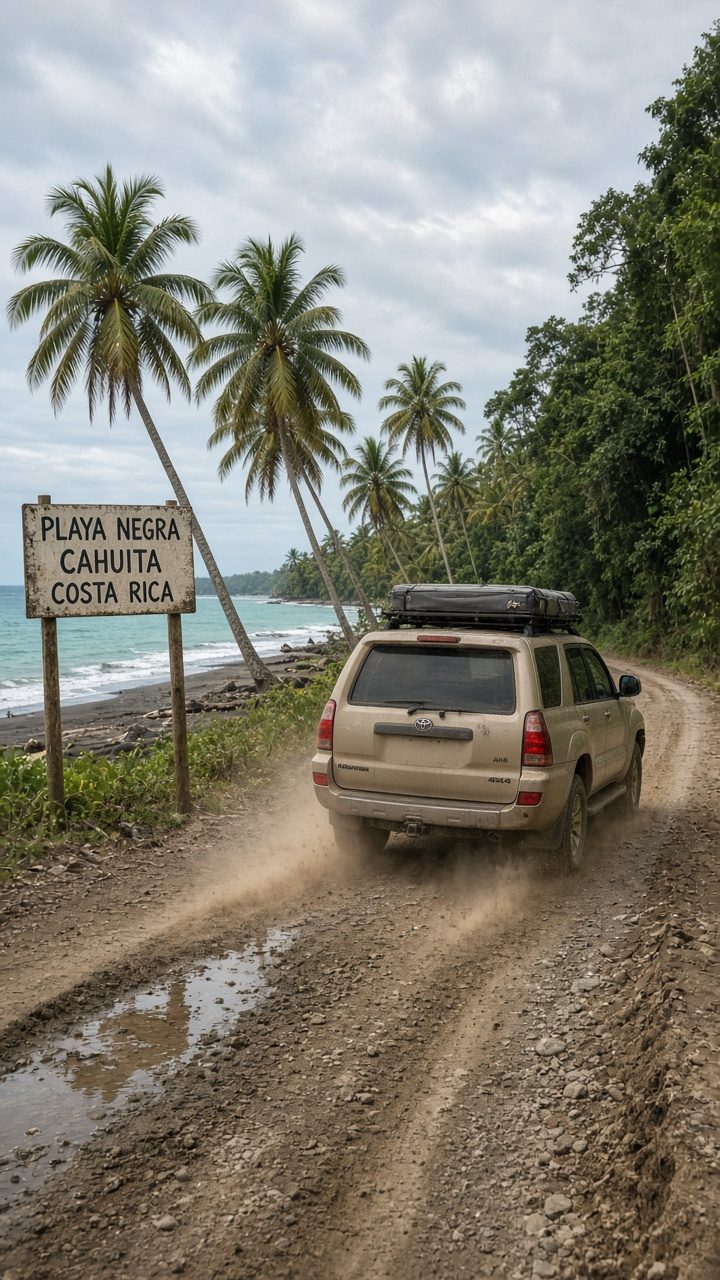
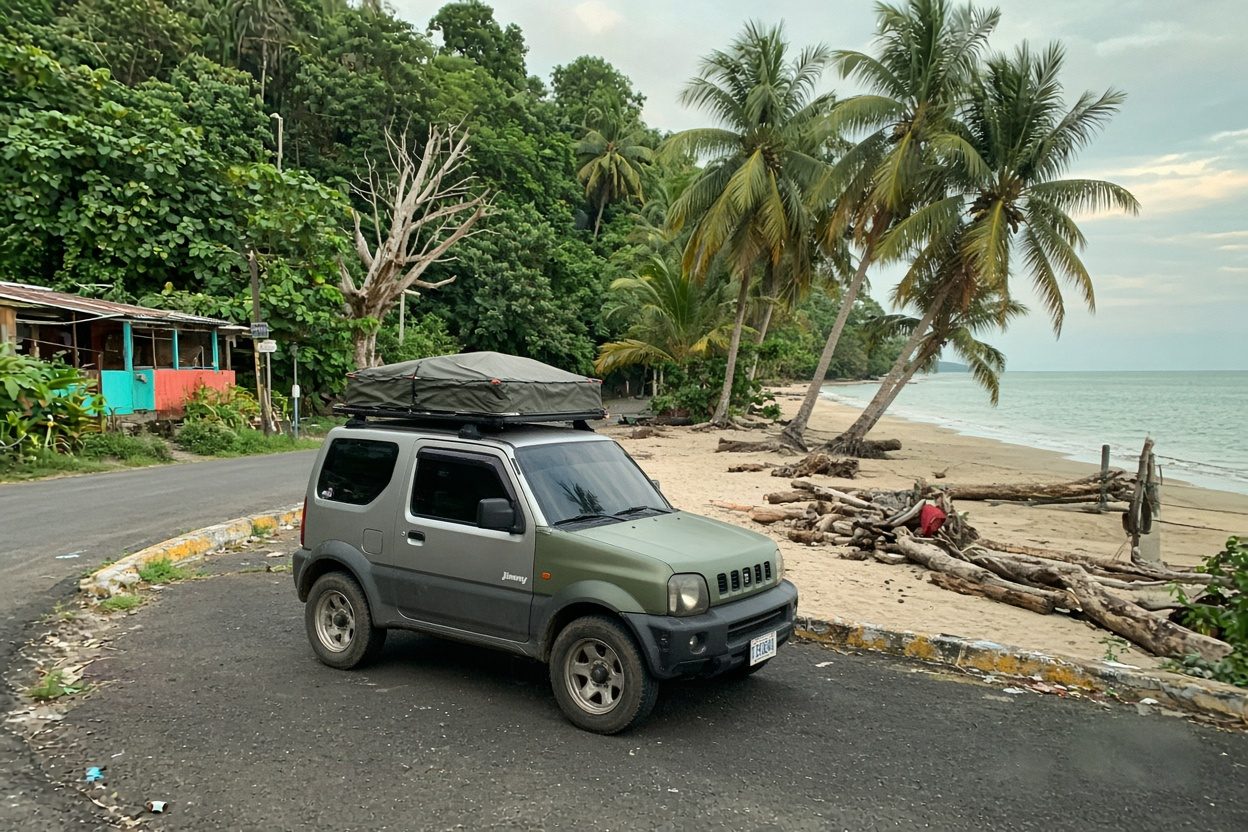
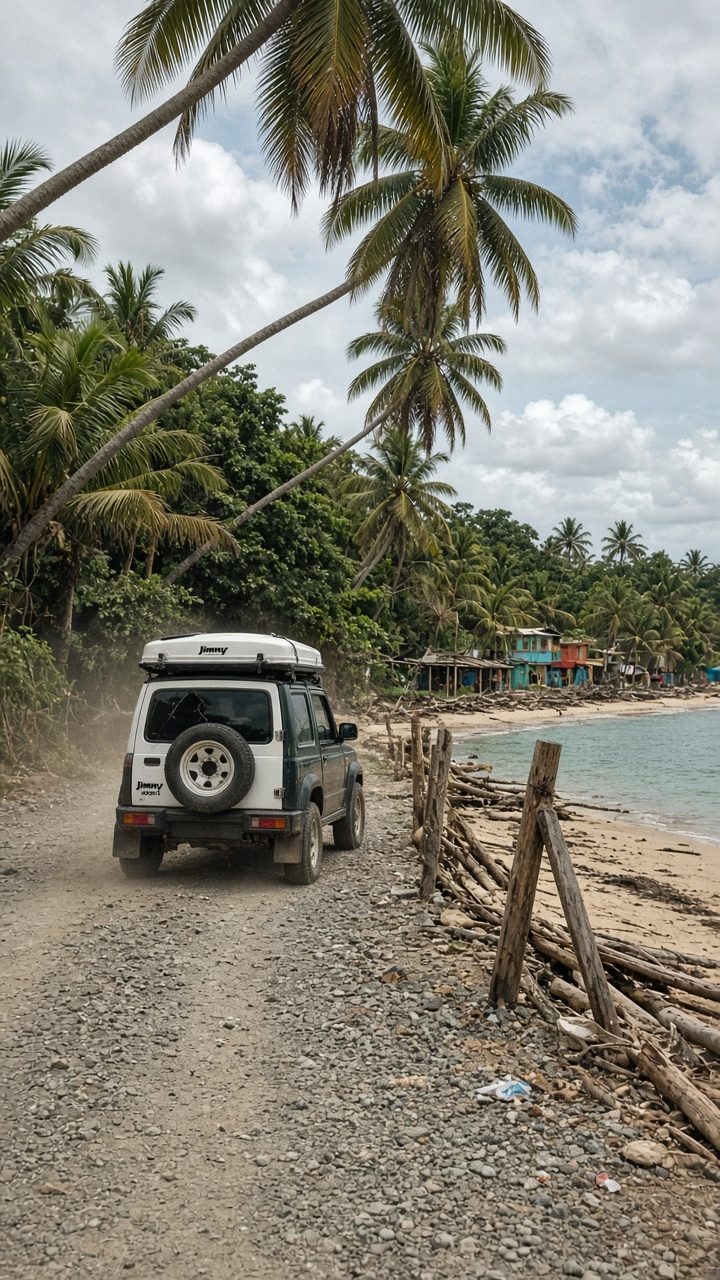
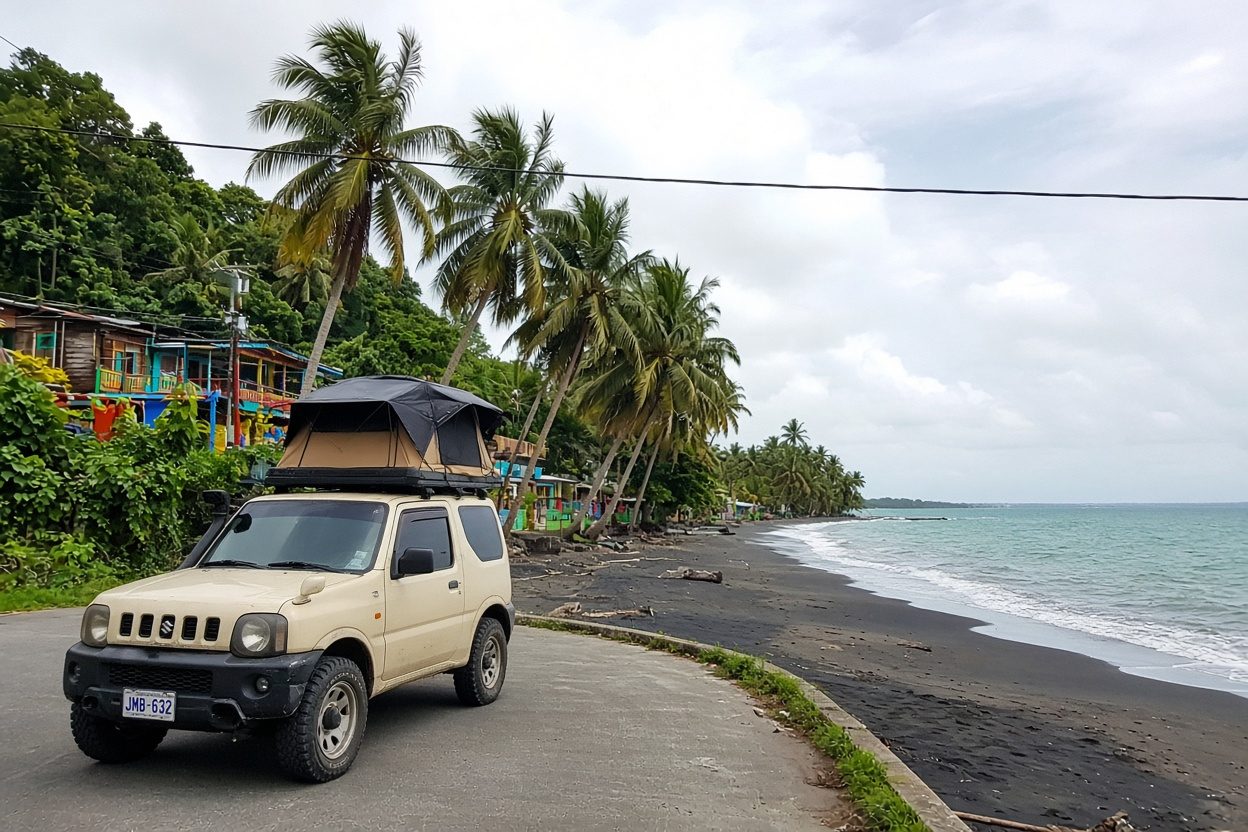
This 🟢 easygoing six-day loop is a straight shot to the flavor: San José over the mountains to the coast, two nights in Puerto Viejo eating your way through sodas and Caribbean kitchens, a day up into Bribri country for cacao at the source, and a coastal crawl through Cahuita, Punta Uva and Manzanillo before the return. A compact 4x4 is plenty — the coast road is paved, but a few beach lanes and rainy-season potholes make clearance welcome.
Timing matters here. The Caribbean runs on its own weather clock — its driest, sunniest windows are roughly September–October and February–March (the opposite of the Pacific). Aim for those and you get beach heat between meals instead of downpours.
Day-by-day
Day 1 — SJO → Puerto Limón / Puerto Viejo via Route 32 (approx. 4.5–5 hrs). Collect the 4x4 and cross the Braulio Carrillo cloud forest on Route 32 — the fastest way to the coast but landslide-prone and best driven in daylight; check conditions before you go and don't push it in heavy rain or after dark. Break in Puerto Limón for a first Caribbean lunch (the city's sodas do excellent rice-and-beans and rondón), then continue south to Puerto Viejo. Settle in for two nights.
Days 2–3 — Puerto Viejo: the flavor capital. Two full days of eating. Puerto Viejo is small and walkable, packed with local sodas run by legendary cooks — ask around town for Miss Dolly, Miss Sam and Miss Irma, whose modest kitchens serve sit-down Caribbean plates. Work through the canon: rice and beans in coconut milk, rondón (order it a day ahead at many spots — it's slow food), jerk chicken, patí from a bakery case, and pan bon for the drive. Established sit-down Caribbean spots include Café Viejo, Monli and Salsa Brava (verify current hours locally). Use one afternoon for the beach between meals, and consider a Caribbean cooking class — several are offered around town (book ahead).
Day 4 — Bribri cacao & chocolate at the source (day trip up into Talamanca). Drive inland to Bribri / Talamanca, the Indigenous territory in the hills, for a guided cacao-and-chocolate experience with a Bribri family — walking a cacao grove, learning the ferment-dry-roast-grind process, and tasting chocolate made the traditional way (tours run around $75–100+ per person and take a half to full day; book in advance, and go with a Bribri-run operator so the money stays in the community). Many tours pair the cacao with a rainforest waterfall. Back to Puerto Viejo or overnight in the Bribri/Cahuita area.
Day 5 — Coastal soda crawl: Cahuita, Punta Uva & Manzanillo. Spend the day grazing the coast road south and north. Punta Uva has a cluster of excellent little sodas and higher-end Caribbean kitchens; Manzanillo, at the end of the road beside the wildlife refuge, has classic local spots (ask for Wuacho and other village sodas serving whole fried fish and coconut rice). North, Cahuita town — quieter and old-Caribbean — is another soda-and-reef stop. Eat small and often; this is a graze, not a sit-down marathon.
Day 6 — Coast → SJO (approx. 4.5–5.5 hrs). Return over Route 32 in daylight. Buy pan bon and patí for the road, fuel in Limón, and leave a flight buffer.
Signature stops (why go)
- Puerto Viejo sodas (Miss Dolly / Miss Sam / Miss Irma) — home-kitchen Caribbean cooking; the soul of the coast on a plate.
- Rondón — the coconut-seafood-tuber stew that defines Limónese cooking; order ahead.
- Bribri cacao experience (Talamanca) — chocolate from tree to cup with an Indigenous family, in the territory where it originated.
- Punta Uva & Manzanillo sodas — reef-side villages with some of the best casual Caribbean food on the coast.
Where to camp / stay
- Puerto Viejo: the widest choice — beach cabinas, guesthouses and small hotels in and around town (book direct; reserve ahead for Feb–Mar).
- Cohita / Cahuita: quieter old-Caribbean lodging near the national park.
- Punta Uva / Manzanillo: jungle-and-beach cabinas for a night closer to the reef; a few have kitchens if you want to cook your market haul.
- Bribri area: simpler lodging if you overnight after the cacao day.
Logistics & road reality
- 🔴 Route 32 is the pinch point — landslide-prone through the cloud forest; drive it in daylight, check conditions, and don't attempt it in heavy rain.
- 🟢 The coast road (Limón → Puerto Viejo → Manzanillo) is paved and easy; beach access lanes and rainy potholes are where the 4x4 helps.
- 🟢 Fuel: stations in Limón and Puerto Viejo; top up in Puerto Viejo before the Manzanillo/Bribri excursions.
- 🟢 Season: target Sept–Oct or Feb–Mar — the Caribbean's dry windows — for sun between meals.
- 🟢 Connectivity is decent in Puerto Viejo, patchier up in Talamanca — download offline maps.
- 🟢 Safety: Puerto Viejo is relaxed but is a party town at night; keep the rig locked and valuables out of sight, and be cautious with strong beach currents.
Signature dishes, markets & where to book (foodie guidance)
- The must-eat list: rice & beans in coconut milk · rondón (order a day ahead) · jerk chicken · patí (spiced meat turnover, from bakery cases) · pan bon (sweet spiced bread) · whole fried snapper with patacones · fresh cacao/hot chocolate the Bribri way.
- Sodas over restaurants for the truest flavor — the Miss cooks and village kitchens in Punta Uva/Manzanillo are the real find; sit-down spots (Café Viejo, Monli, Salsa Brava) round it out.
- Cacao origin: book a Bribri-run cacao/chocolate tour in Talamanca in advance — it's the deepest chocolate lesson in the country and supports the community directly.
- Cooking classes: several Caribbean cooking classes operate around Puerto Viejo — reserve ahead and ask whether they include a market walk.
- Verify hours locally — Caribbean kitchens keep their own schedules, and rondón especially often needs a day's notice.
Insider tips
- Order rondón a day ahead. It's a slow stew; the best versions aren't made to order on the spot.
- Eat where the taxi drivers eat — ask a local for the current Miss who's cooking; the roster shifts.
- Go Bribri with a community operator, not a resort re-seller — better chocolate, and the money stays in Talamanca.
- Buy pan bon and patí for the drive home — they travel well over the mountains.
- Cross Route 32 in the morning, both directions, to beat afternoon rain and landslide risk.
Reserve your rig
The Caribbean coast is a graze best done on your own clock — a soda here, a bakery there, an unhurried day up in cacao country. Reserve your VerifiedCR / Carros506 compact 4x4 and we'll hand you the map that matters: a Puerto Viejo soda-and-bakery crawl, a rondón spot that takes day-ahead orders, a Bribri-run cacao tour, and a Punta Uva–Manzanillo eating route. Tell us your dates and we'll build the flavor coast around your rig.
Before you go
Do you need a 4x4?
paved all the way — 2WD ok
Best window to fly
Sept–Oct & Feb–Mar (Caribbean's driest windows)
Offline first
Download your route and offline maps before you leave the lot — signal drops on the best stretches.
Golden rule
Never drive at night — plan arrivals before dark, and use Waze like the locals do.
VerifiedCR · No counter surprises
What a Costa Rica rental actually costs
The number one thing that rattles first-timers is the price jumping at the counter. Here is the honest math, before you get there.
- Advertised daily rate$12–40 / day
- What the booking sites show. It is real — but it is not the whole price. Nobody pays only this.
- Mandatory liability (TPL / SLI)+$15–25 / day
- Required by Costa Rican law on every rental. Cannot be waived. This is the line the cheap ads leave off — it roughly doubles the sticker price. Budget for it.
- Collision damage (CDW)waivable
- Often $20–40/day — but you can usually decline it if your credit card includes rental coverage (Amex, Visa Signature, Chase Sapphire and others). Call your card, ask for a coverage letter, and bring it printed.
- Security hold on your card$1,000–2,500
- A hold, not a charge — released after you return the car clean. Some agencies hold more. Make sure your card has the headroom before you fly.
The verified-rig promise: when you reserve through VerifiedCR, the rig is inspection-checked and the operator is vetted — the price you are quoted is the price you pay. No mystery line items at pickup.