Most Caribbean itineraries hug the beach. This one goes uphill first — into the dripping, primary-forest slopes of the Talamanca where the real rainforest lives — before it ever touches the sand. Six days built around canopy trams, private reserves, night-frog symphonies, and an animal-rescue center, for the traveler who came to Costa Rica for the forest and treats the beach as dessert. Because rainforest is lush year-round on this coast, it works any month — there's no wrong season for green.
The route pairs two contrasting inland reserves — the polished, accessible Veragua Rainforest and the wild, off-grid Selva Bananito — with the coast's best beach park and its beloved rescue center. It's a 🟡 route mainly because of one access road: Selva Bananito's approach can involve gravel and a river crossing that demands genuine 4x4.
Day 1 — Route 32 to Veragua Rainforest
Drive: San José → Veragua Rainforest (in the mountains inland of Puerto Limón), ~4–4.5 hours via Route 32, then a mountain access road up from the Limón area. Road notes: Route 32 over the Braulio Carrillo range is a daylight-only drive — fog, rain, landslide closures. The final climb to Veragua is a rural road; check conditions.
Veragua Rainforest is the accessible, family-friendly deep-forest hit: a sky gondola/aerial tram gliding through the canopy, a canopy zipline, world-class frog and reptile habitats, a butterfly garden, forest trails, and a waterfall. It sits less than an hour from Puerto Limón and generally runs day operations (roughly Tue–Sun, opening around 10 AM; verify current hours, days, and the ~$75 entry). It's the gentle introduction to the Caribbean slope's biodiversity.
Eat: Veragua's on-site facilities; self-cater at your camp. Sleep: camp near the park / in the Limón foothills.
Days 2–3 — Selva Bananito private reserve
Drive: to Selva Bananito, reached via a gravel road and a river crossing from the town of Bananito — 4WD required; conditions vary with rain. Budget time and drive carefully. (The lodge can arrange transfers; verify the road and whether your rig can make the crossing before committing.)
Selva Bananito protects nearly 3,000 acres of primary rainforest on the Talamanca's Caribbean slope, a buffer zone to the vast La Amistad International Park. This is the real thing: off-grid, solar-powered, deliberately low-impact, with guided primary-forest hikes, tree-climbing, waterfall rappels, horseback rides, and some of the best birding on the coast. Two days here is immersion — the forest at dawn, the frogs at night, and no phone signal to interrupt either.
Eat: lodge meals (self-sufficient reserve — plan around it). Sleep: Selva Bananito (rustic eco-lodging) or rooftop tent as the reserve allows — arrange ahead.
Day 4 — Cahuita National Park
Drive: Selva Bananito area → Cahuita, ~1.5–2.5 hours (allow for the access road out), down through Limón.
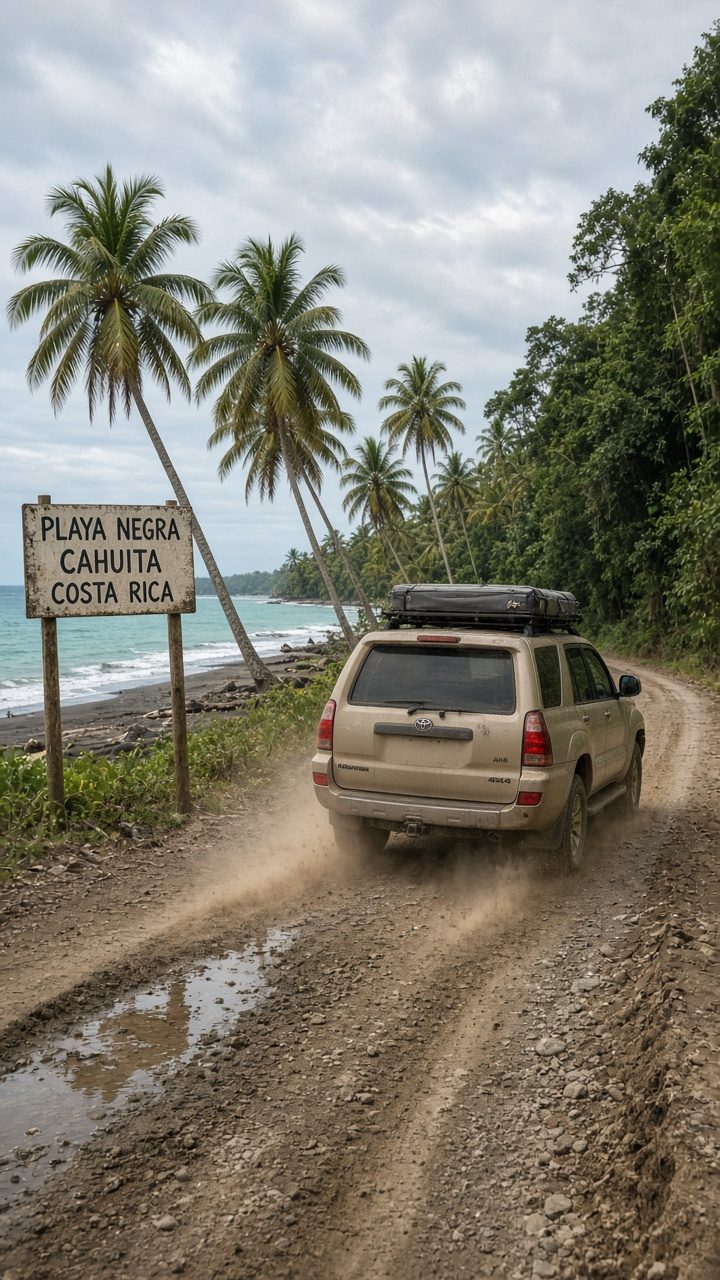
Trade primary highland forest for coastal jungle at Cahuita National Park. The flat Kelly Creek trail (by donation) is thick with sloths, howler and white-faced monkeys, and eyelash vipers — an ICT-certified guide finds far more. If the sea is calm, add a licensed reef snorkel over the country's largest coral reef. Camp on the beach for the first taste of the coast.
Eat: Soda Kawe or a Cahuita soda. Sleep: Cahuita beach camping.
Day 5 — Jaguar Rescue Center + Puerto Viejo
Drive: Cahuita → Jaguar Rescue Center (near Playa Chiquita), ~40 min.
The Jaguar Rescue Center rehabilitates and releases sloths, monkeys, birds, and reptiles; morning public guided tours run roughly around 9:30 and 11:30 AM (~2 hours, adults ~$25–28, under-10s often free — verify times/price and closure days). It's the "rescue" half of the trip and a moving counterpoint to the wild forest. After, roll into Puerto Viejo for a food-crawl afternoon and a reggae night.
Eat: Puerto Viejo — jerk, patí, rondón. Sleep: in-town Puerto Viejo or Rockin' J's.
Day 6 — Daylight drive out
Drive: the coast → San José, ~5 hours; leave by late morning for daylight on Route 32.
Signature stops — why go
- Veragua Rainforest — canopy tram, frog and reptile habitats, and easy deep-forest access.
- Selva Bananito — 3,000 acres of genuine primary rainforest, off-grid and wild; the trip's soul.
- Cahuita National Park — coastal jungle sloths plus the largest reef in the country.
- Jaguar Rescue Center — sloths, monkeys, and the rescue-and-release story.
Where to camp & stay (named)
- Limón foothills camp near Veragua for night one.
- Selva Bananito eco-lodge for the primary-forest immersion (arrange ahead; verify access).
- Cahuita beach and Rockin' J's / Puerto Viejo for the coast nights.
Logistics & road reality
- Selva Bananito's access is the crux. Gravel plus a river crossing means real 4x4 and rain-dependent conditions — verify with the lodge before you go and don't attempt the crossing in high water.
- Route 32 daylight only, weather-checked.
- Confirm Veragua's operating days, hours, and price — it runs a day-trip schedule and isn't open every day.
- A mid 4x4 camper is the minimum tier for the Selva Bananito road; the coast legs are paved and easy.
Insider tips
- Do a night walk at Selva Bananito — the frog and insect life after dark is the reason to stay two nights, not one.
- Check the Bananito river before crossing — after heavy rain it can rise fast; when in doubt, take the lodge's transfer.
- Book Veragua and the Jaguar Rescue Center ahead and confirm their days off — both run limited schedules.
- Bring serious rain gear and quick-dry layers — this is the wet side of the country; the "any season" flexibility comes with humidity and showers.
- Guides transform the forest — a trained eye is the difference between "green wall" and a day of sightings, both at Cahuita and in the reserves.
Reserve your rig
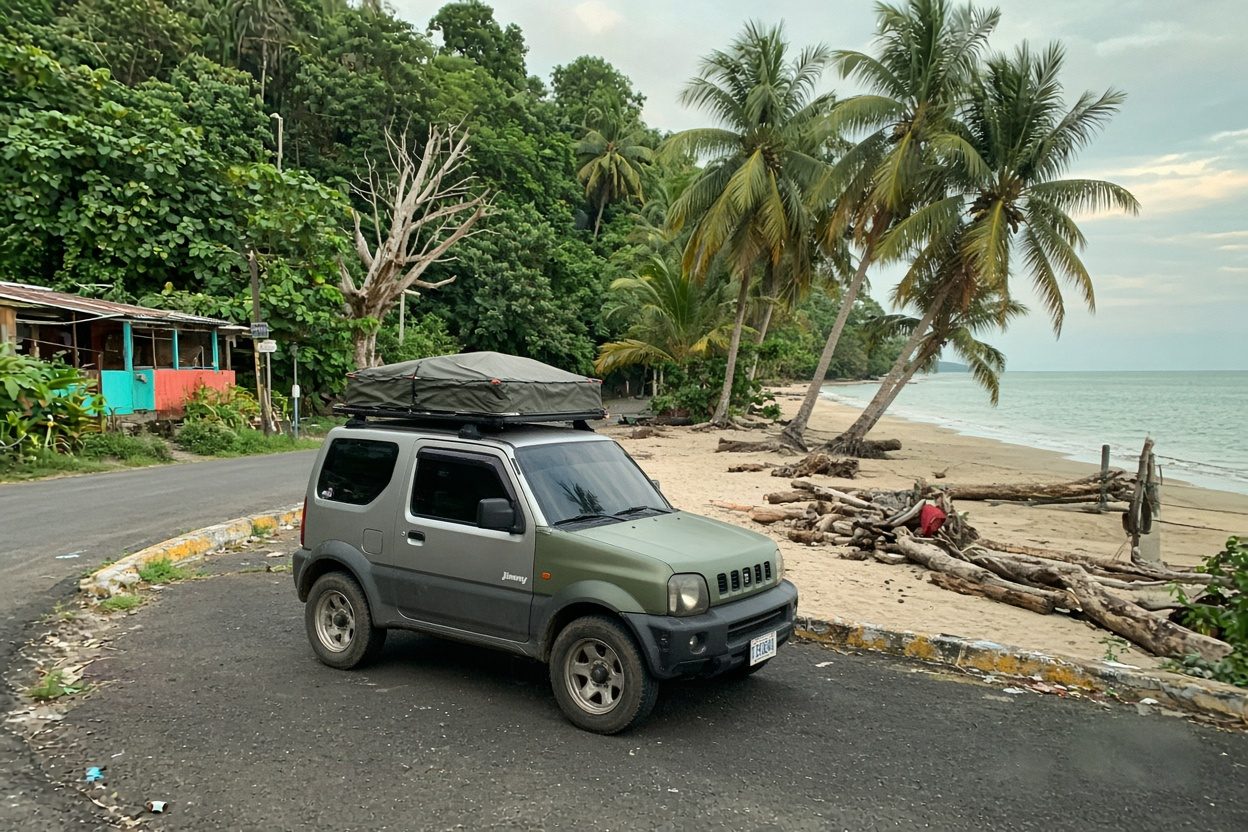
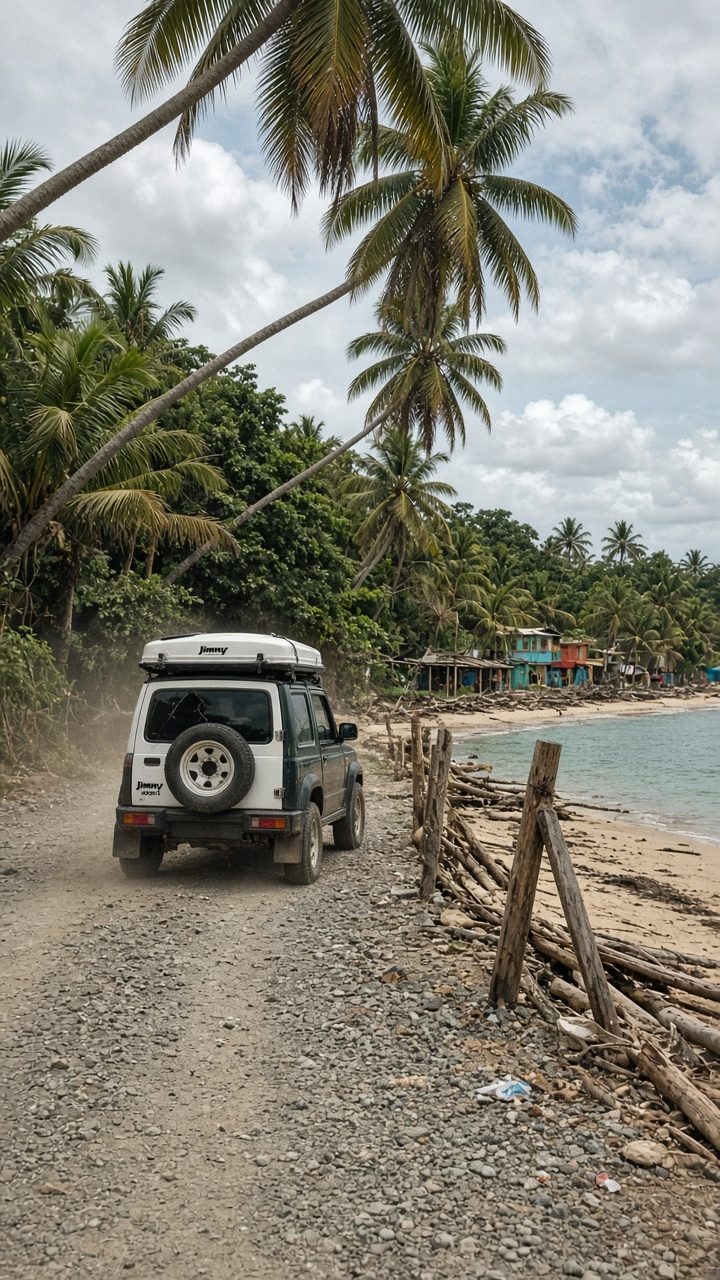
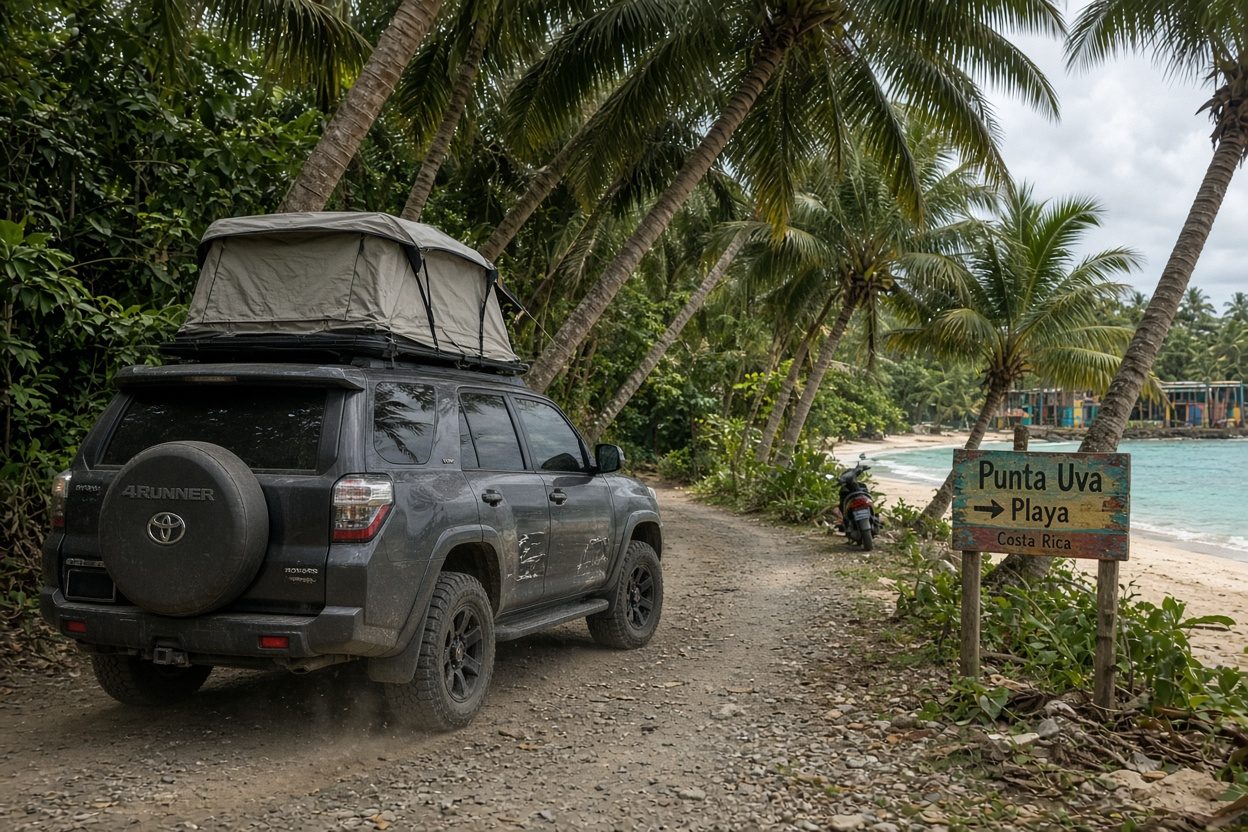
A rainforest-first Caribbean trip needs a rig that can actually reach the wild reserves — gravel, a river crossing, and remote camps included. Reserve a mid 4x4 camper, verify the Selva Bananito access before you commit, and plan Route 32 for daylight. Book your rig and go deep green.
Before you go
Do you need a 4x4?
4x4 required
Best window to fly
Any (lush year-round)
Offline first
Download your route and offline maps before you leave the lot — signal drops on the best stretches.
Golden rule
Never drive at night — plan arrivals before dark, and use Waze like the locals do.
VerifiedCR · No counter surprises
What a Costa Rica rental actually costs
The number one thing that rattles first-timers is the price jumping at the counter. Here is the honest math, before you get there.
- Advertised daily rate$12–40 / day
- What the booking sites show. It is real — but it is not the whole price. Nobody pays only this.
- Mandatory liability (TPL / SLI)+$15–25 / day
- Required by Costa Rican law on every rental. Cannot be waived. This is the line the cheap ads leave off — it roughly doubles the sticker price. Budget for it.
- Collision damage (CDW)waivable
- Often $20–40/day — but you can usually decline it if your credit card includes rental coverage (Amex, Visa Signature, Chase Sapphire and others). Call your card, ask for a coverage letter, and bring it printed.
- Security hold on your card$1,000–2,500
- A hold, not a charge — released after you return the car clean. Some agencies hold more. Make sure your card has the headroom before you fly.
The verified-rig promise: when you reserve through VerifiedCR, the rig is inspection-checked and the operator is vetted — the price you are quoted is the price you pay. No mystery line items at pickup.