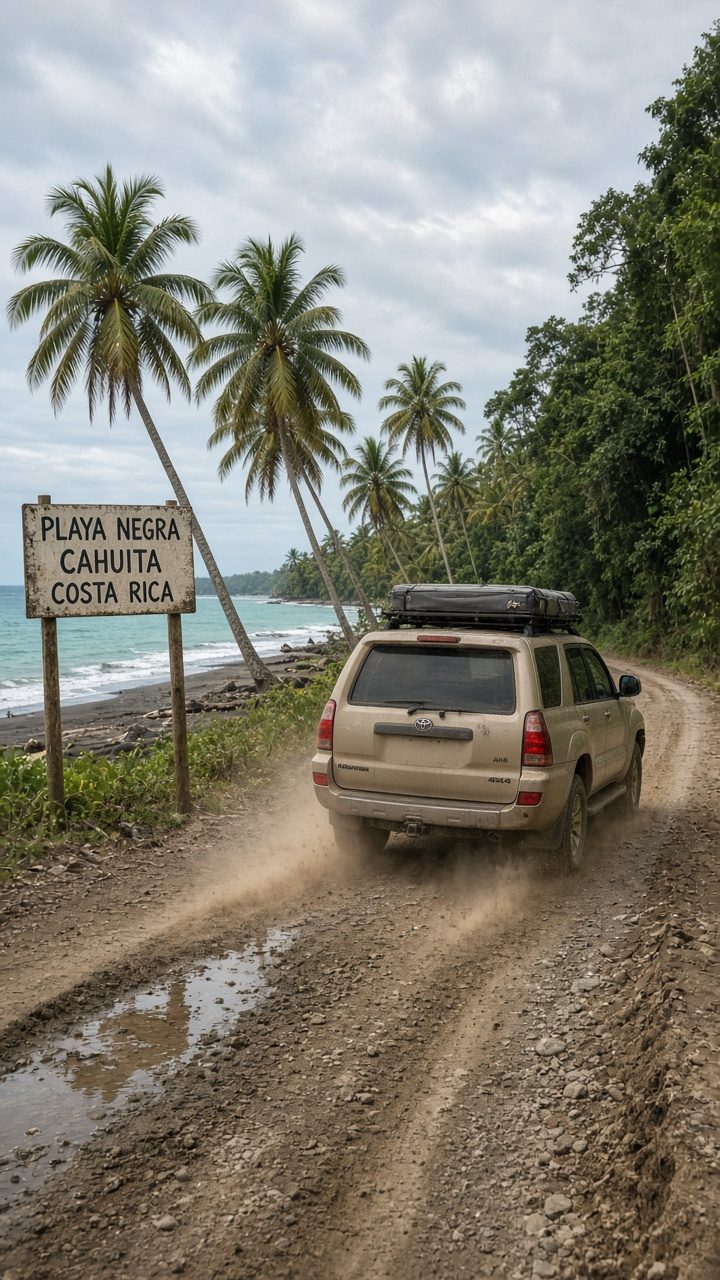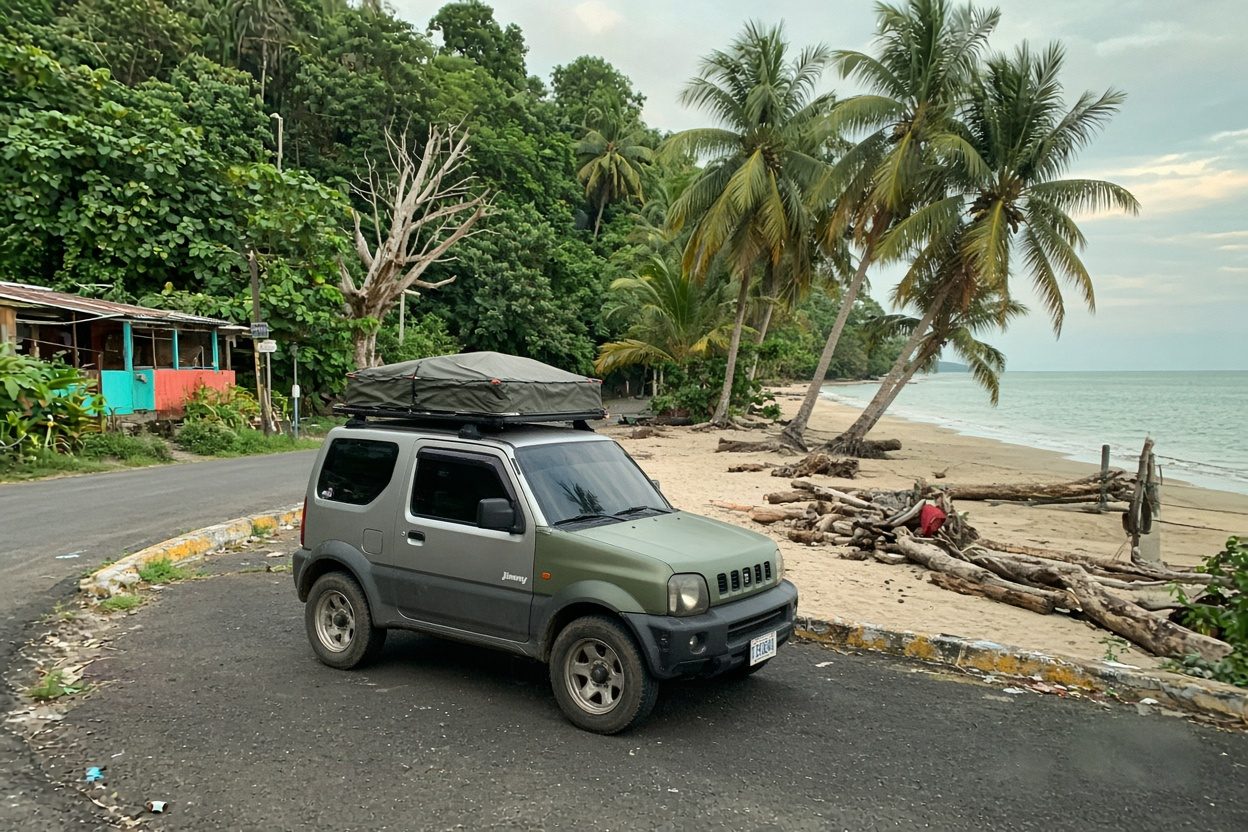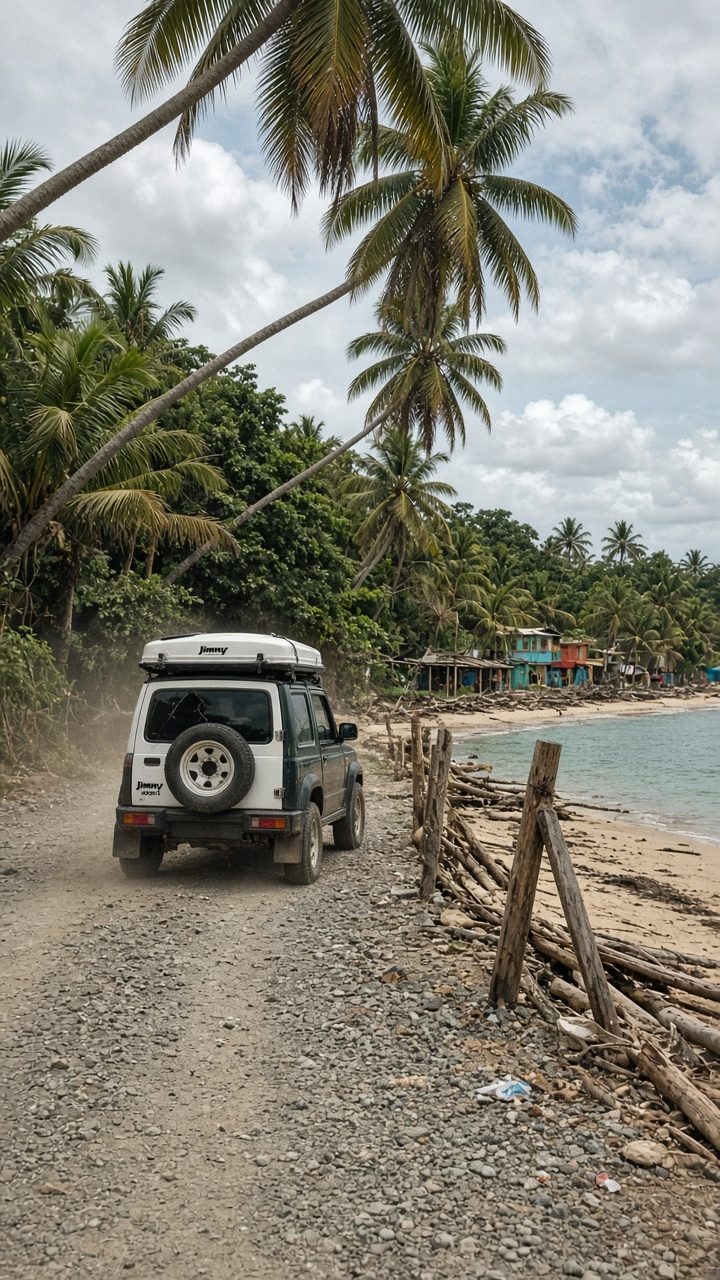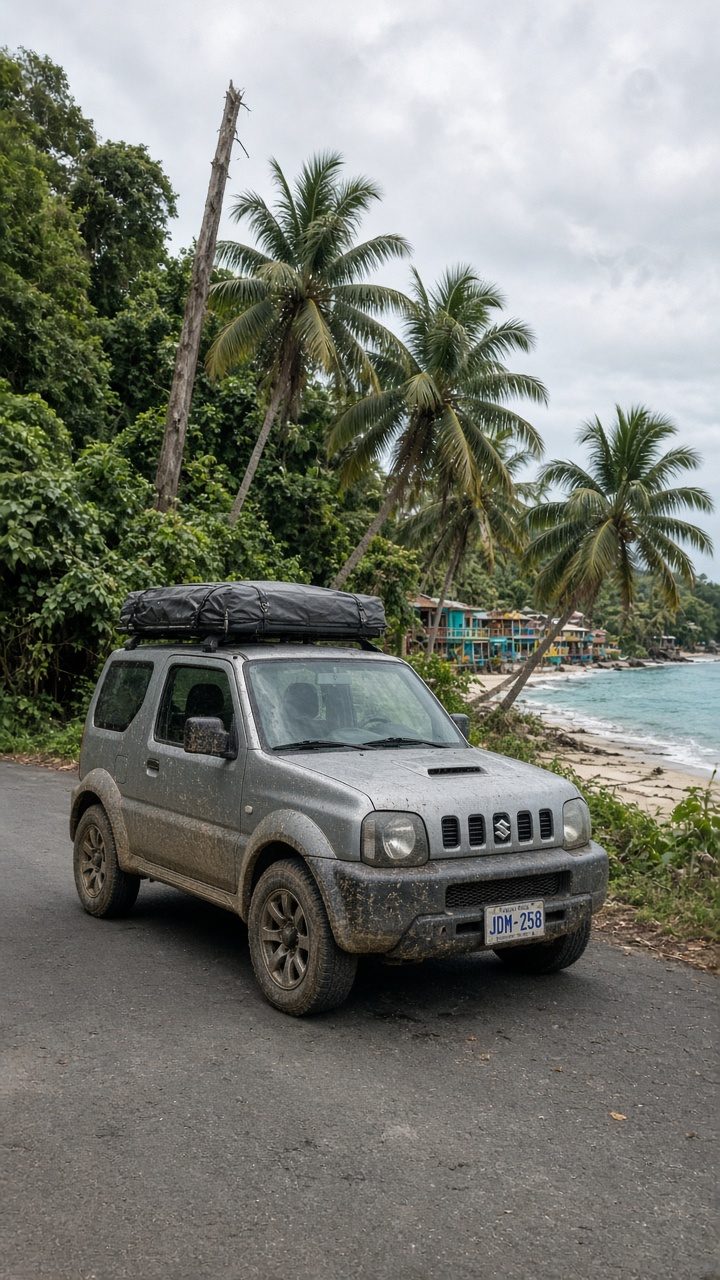
You've got four days and a rain radar that's gone entirely red over the Pacific. Don't cancel — steal the sun. While Guanacaste and Manuel Antonio drown in green-season downpours, Costa Rica's Caribbean coast is enjoying its driest, brightest stretch of the year. This four-day route is the tactical strike version of a Caribbean trip: land, run east in daylight, and pack Puerto Viejo, Cocles, Punta Uva, and a Bribri cacao half-day into a long weekend that ends before you've even remembered it was supposed to be raining.
The whole trip hinges on the seasonal inversion: September–October is the Caribbean's most reliable sun, precisely because it's the Pacific's worst. It's a short window and it's not a guarantee — the coast can shower any month — but the odds are heavily in your favor, and you'll likely have the place to yourself at low-season prices.
Day 1 — Daylight run to Puerto Viejo
Drive: San José → Puerto Viejo, ~217 km / ~5 hours via Route 32. Road notes: Route 32 over the Braulio Carrillo mountains is a daylight-only drive — fog, downpours, and landslide closures. Leave San José early so you arrive with beach time to spare.
Drop into Puerto Viejo by afternoon. With only four days, base once and don't move the rig much. Settle in, walk the beach path, and get your first plate of coconut rice and beans and a cold Imperial while the sun — the entire point — actually shines. Ease into the reggae rhythm; you've earned it.
Eat: beachfront soda for coconut rice and beans; a street patí. Sleep: Rockin' J's (hammocks ~$7–10, verify) or an in-town Puerto Viejo campsite.
Day 2 — Cocles walk + reggae night
Drive: Puerto Viejo → Cocles ~4 km / 10 min.
Spend the morning at Playa Cocles — the coast's photogenic beach-break. It's gorgeous and it's rip-prone, so this is a walk-and-watch beach, not a plunge: stroll the sand, watch the surfers, and admire from the shallows. Bike the flat coast road, laze through the sunny afternoon, and then lean into a reggae night in town — live music, open air, and the low-season crowd that means you can actually get a good spot.
Eat: Puerto Viejo food streets — jerk, patí, pan bon. Sleep: Rockin' J's / Puerto Viejo.
Day 3 — Punta Uva swim + Bribri cacao half-day
Drive: Puerto Viejo → Punta Uva ~15 min; cacao tour inland (often includes transport).
Morning at Punta Uva, the calmest, safest, most beautiful swimming water on the coast — float, snorkel the rocks, and soak up the sun you came to steal. In the afternoon, do a Bribri cacao half-day tour: an Indigenous family's chocolate-from-scratch experience with medicinal gardens and often a waterfall swim. Sweet, cultural, and the perfect low-effort counterpoint to the beach.
Eat: beach shack lunch at Punta Uva; cacao tasting on the tour. Sleep: Punta Uva / Rockin' J's.
Day 4 — Slow morning, daylight drive out
Drive: the coast → San José, ~5 hours; leave by late morning for daylight on Route 32.
One last sunny swim, then home before the weekend's over.
Signature stops — why go
- The seasonal inversion — sun on the Caribbean while the Pacific floods; the whole reason to book east.
- Punta Uva — the calmest, safest swim on the coast, at its best in the dry window.
- A Bribri cacao half-day — culture and chocolate without eating a whole day.
- Puerto Viejo reggae night — the coast's signature evening, uncrowded in low season.
Where to camp & stay (named)
- Rockin' J's or an in-town Puerto Viejo campsite — base once, keep it central.
- Punta Uva beachfront if you want the calm-water night.
Logistics & road reality
- Base once. With four days you can't afford to repack — Puerto Viejo puts everything within a short paved hop.
- Route 32 daylight only, weather-checked, both directions — the mountains stay wet even when the coast is dry.
- Book the cacao half-day ahead — the good Indigenous-run tours are small.
- A compact 4x4 camper is all you need; the coast road is paved.
Insider tips
- Watch the forecast and flip east. When the Pacific goes red in Sept–Oct, the Caribbean is your sunny plan B — often the same day.
- Low season = low prices. You're traveling against the tourist tide, so lodging and tours are cheaper even in the sun.
- Swim Punta Uva, watch Cocles — the one safety rule that makes the weekend worry-free.
- Half-day tours only on a four-day trip — save the full-day cacao/waterfall combos for a longer visit.
- Bring a light rain layer — "driest" still means the odd tropical shower; it won't own your afternoon.
Reserve your rig
A long-weekend sun-steal only works if you can move fast and cheap — which is exactly what a compact camper delivers: your bed and base ride along, so all four days go to the beach, not the logistics. Reserve a compact 4x4 camper, plan Route 32 for daylight, and point east the moment the Pacific forecast turns. Book your rig and steal the sun.
Before you go
Do you need a 4x4?
paved all the way — 2WD ok
Best window to fly
Sept–Oct (the Caribbean's dry window)
Offline first
Download your route and offline maps before you leave the lot — signal drops on the best stretches.
Golden rule
Never drive at night — plan arrivals before dark, and use Waze like the locals do.
VerifiedCR · No counter surprises
What a Costa Rica rental actually costs
The number one thing that rattles first-timers is the price jumping at the counter. Here is the honest math, before you get there.
- Advertised daily rate$12–40 / day
- What the booking sites show. It is real — but it is not the whole price. Nobody pays only this.
- Mandatory liability (TPL / SLI)+$15–25 / day
- Required by Costa Rican law on every rental. Cannot be waived. This is the line the cheap ads leave off — it roughly doubles the sticker price. Budget for it.
- Collision damage (CDW)waivable
- Often $20–40/day — but you can usually decline it if your credit card includes rental coverage (Amex, Visa Signature, Chase Sapphire and others). Call your card, ask for a coverage letter, and bring it printed.
- Security hold on your card$1,000–2,500
- A hold, not a charge — released after you return the car clean. Some agencies hold more. Make sure your card has the headroom before you fly.
The verified-rig promise: when you reserve through VerifiedCR, the rig is inspection-checked and the operator is vetted — the price you are quoted is the price you pay. No mystery line items at pickup.