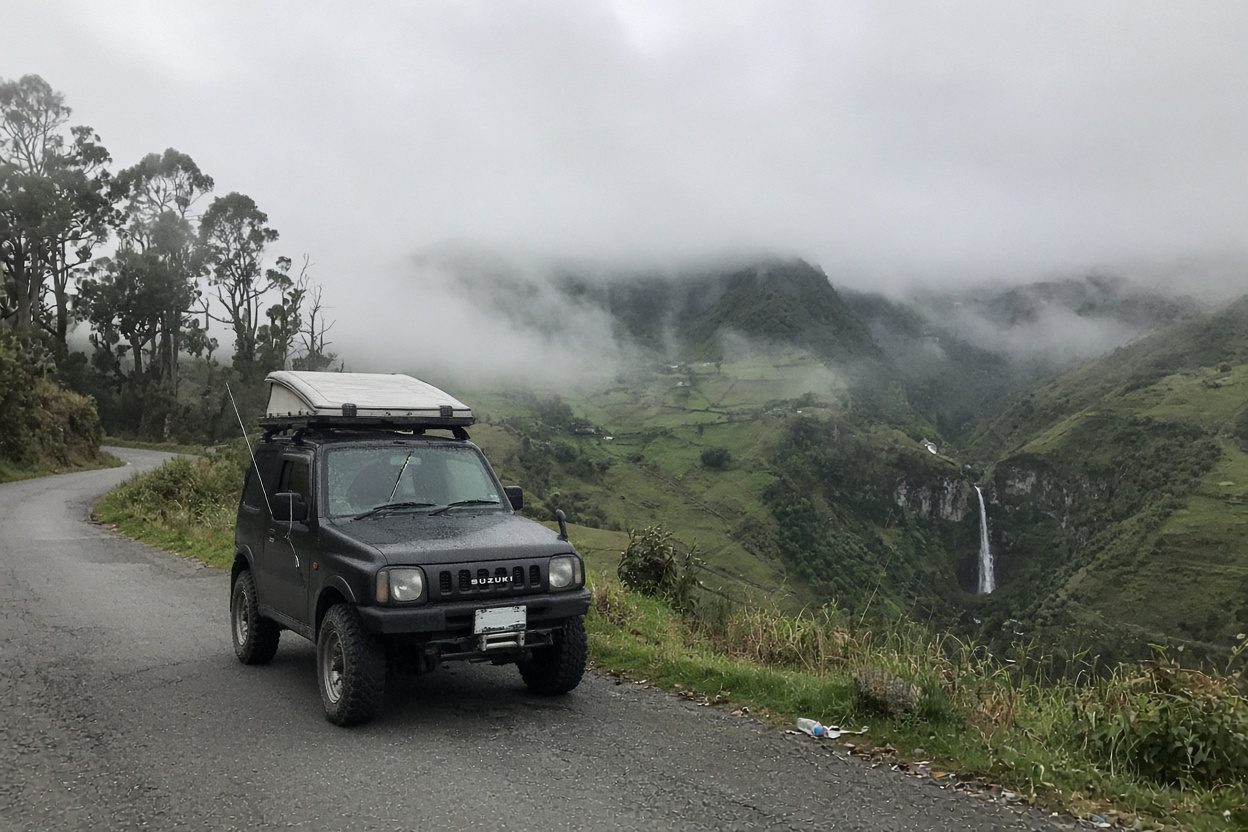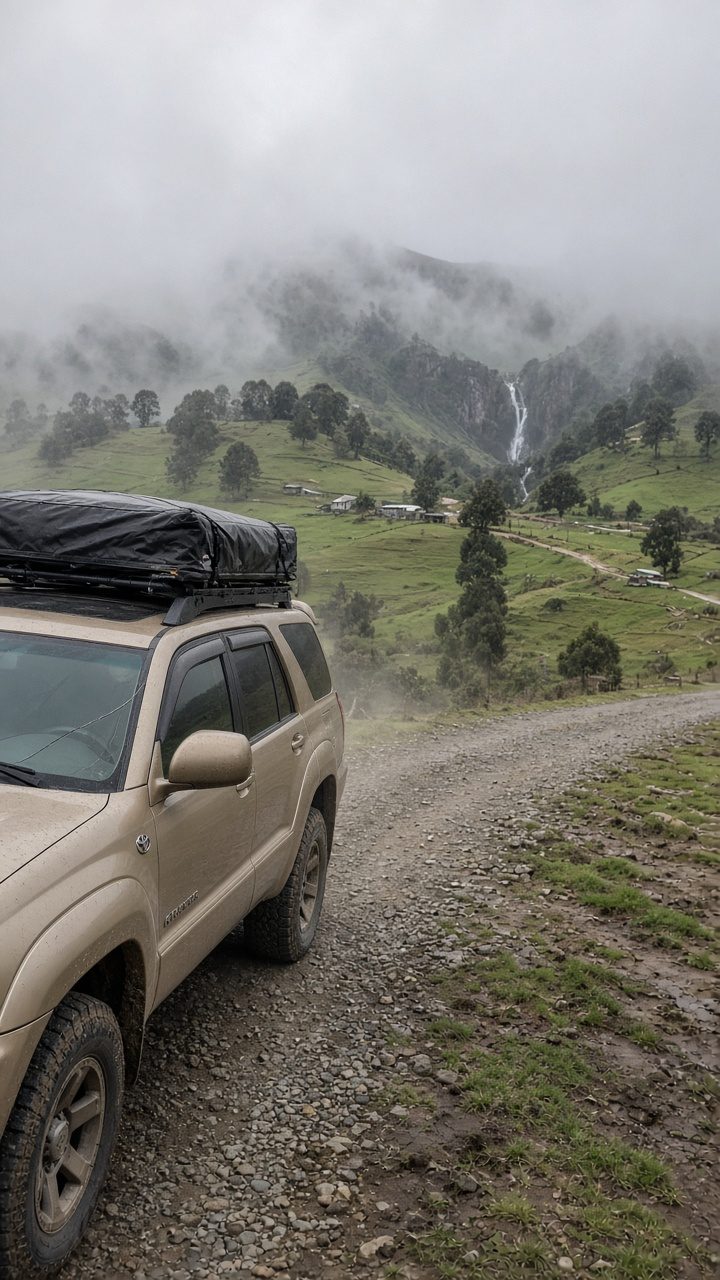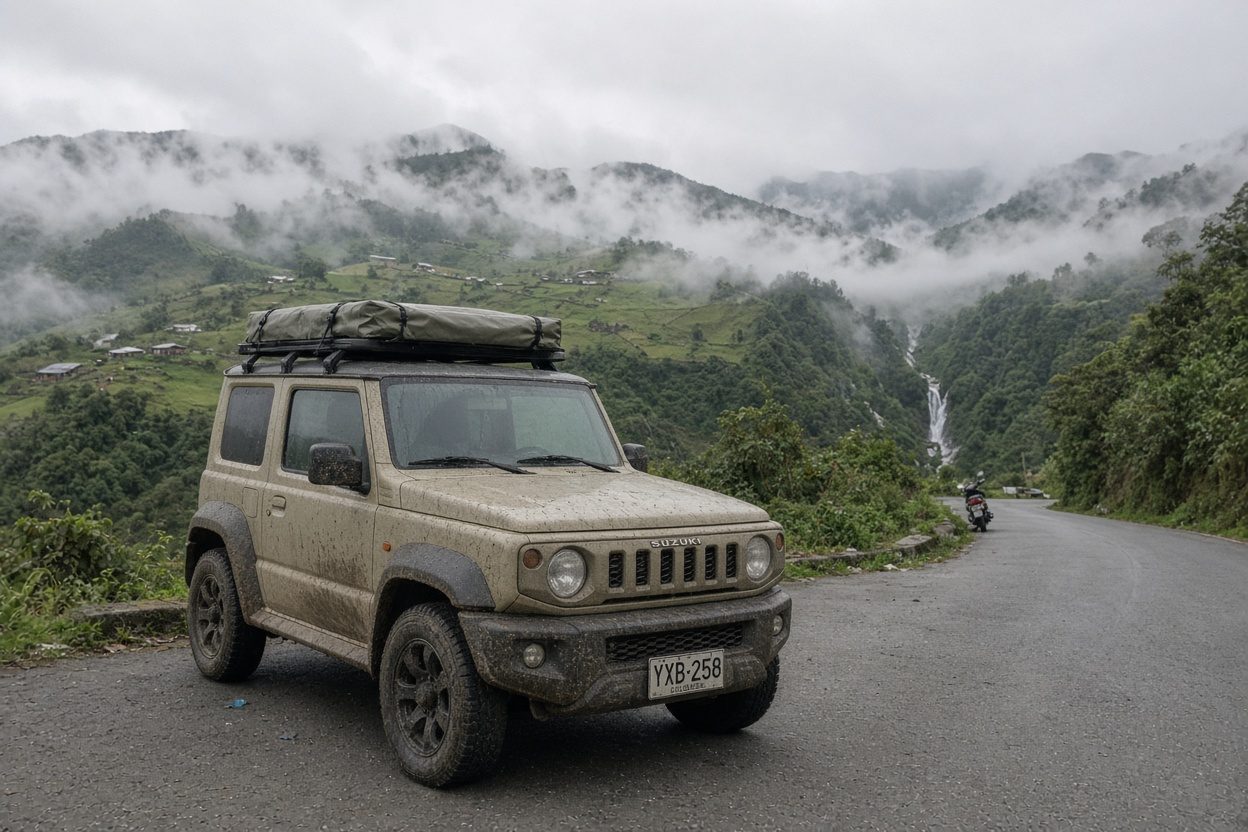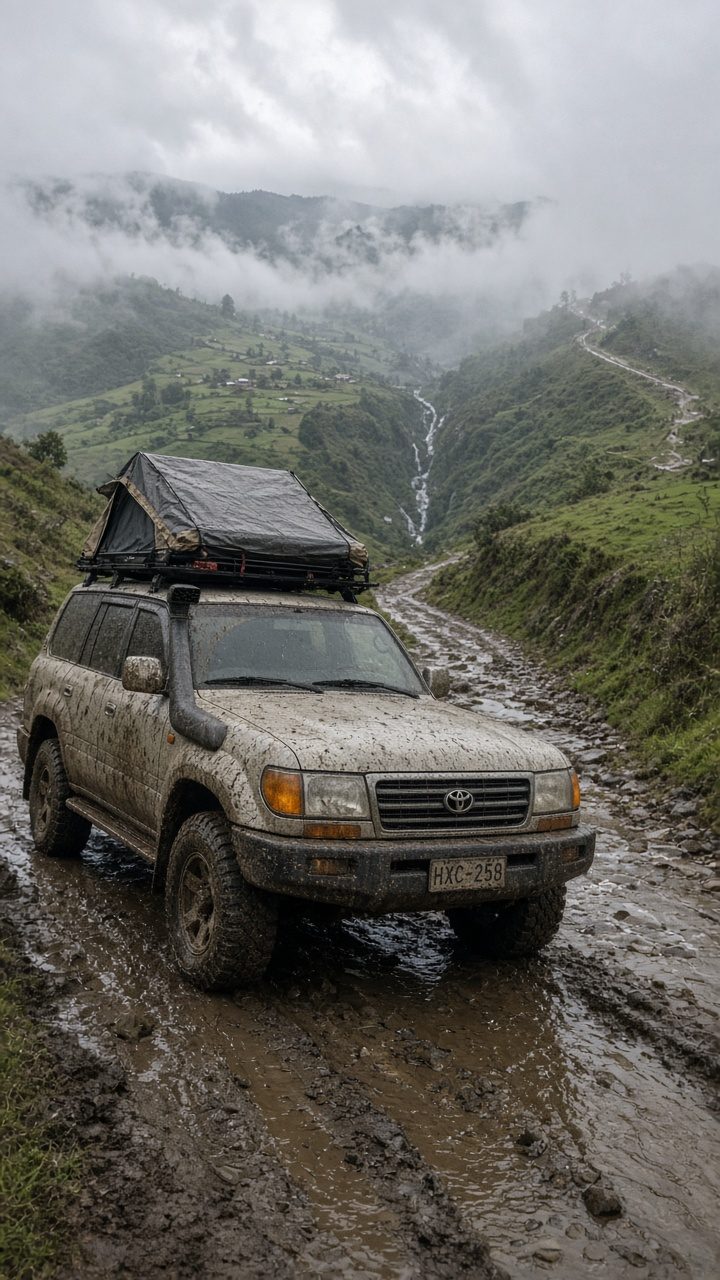
This is the whole zone, top to bottom, done when the rain has the waterfalls at full roar. Over eight days you traverse the Sacred Inner Valley / Southern Highlands from the birding refuges and cloud-forest reserves around San Isidro, up to the hot springs and forest of San Gerardo de Rivas, across the misty Tinamaste ridge, and down through the region's two greatest waterfalls to the Pacific. It's a self-contained overland trip for people who want range and don't mind that green season trades crowds for mud. Bring recovery gear and a flexible attitude — the payoff is a region seen at its lushest and emptiest.
⚠️ Green season is the point and the risk. June–early August brings the fullest waterfalls and the quietest trails, but also more landslides, slick gravel, and swollen rivers. Drive daylight-only, carry recovery gear, and keep the itinerary flexible — a washed-out road or a closed falls is normal, not a disaster. Verify road and falls conditions locally each morning.
Day 1 — San Isidro (Feria) → base up
Start in San Isidro de El General, provision fully, and — if the timing lands — walk the Feria del Agricultor (200+ vendors; big days Thursday into Friday, verify locally) to stock the cooler. This is your last full supermarket and fuel. Camp near town or head straight toward the first reserves. 🟢
Sleep: rooftop tent at a farm campsite near San Isidro.
Day 2 — Los Cusingos + Las Quebradas
A double dose of birding and forest. Morning at Los Cusingos near Quizarra — Alexander Skutch's 192-acre refuge, managed by the Tropical Science Center (open 7 a.m.–4 p.m., ~$20 foreign adults). Afternoon at Centro Biológico Las Quebradas (FUDEBIOL), ~3 km uphill from Quebradas, a community watershed reserve with 4+ km of guided trails from ~1,000–2,500 m. Two very different forests in one day.
Sleep: valley campsite or farm-stay.
Day 3 — San Gerardo de Rivas hot springs
Drive up to San Gerardo de Rivas (45 min–1 hr) and take a rest-and-soak day at the Aguas Termales ($7) after the reserve legwork. In green season the river runs high and the village is cool and quiet. Camp in or near the village.
Sleep: San Gerardo campsite/pull-off.
Day 4 — Cloudbridge
Spend the day on Cloudbridge Nature Reserve's trails above the village (open 7 a.m.–4 p.m.; day fee ~₡6,000 foreigners). Green season means the reserve's waterfalls are thundering and the cloud forest is at maximum lush — bring rain gear and expect mud. A big, satisfying forest day before you turn toward the ridge.
Sleep: San Gerardo, or begin moving toward the ridge.
Day 5 — Tinamaste Feria → ridge
If it's a Tuesday, catch the Feria de Tinamastes (8 a.m.–1 p.m.) on the way across — organic produce and crafts, and a resupply point. Then base on the Platanillo/Tinamaste ridge ahead of the waterfall days. 🟢 Paved ridge, gravel spurs.
Sleep: ridge farm-stay/campsite.
Day 6 — Diamante Falls (Las Tumbas)
The giant. Diamante Falls near Las Tumbas — a multi-tier cascade with its tallest tier around ~183 m (~600 ft), one of the tallest in Costa Rica, with a cave behind the water. It's guided-only on private land: 4x4 to the Las Tumbas trailhead, then a steep guided descent. In green season it's at full, deafening flow — spectacular, but the descent is slick and the day is strenuous. Zero signal.
Sleep: ridge camp near Las Tumbas/Tinamaste.
Day 7 — Nauyaca Falls
Down toward the coast side for Nauyaca Falls (~10 km from Dominical) — two tiers into a big pool, via Cataratas Nauyaca (Don Lulo's) (hike ~$10 / 4x4 ~$32 / horseback ~$80 — ⚠️ verify horseback is running; default to 4x4 or hike) or Nauyaca Waterfall Nature Park (trolley ~$28–38, cave view, no time limit). In green season the falls are huge; swim only if conditions are safe — heavy rain makes the pool dangerous and can close the falls.
Sleep: ridge or coast-edge camp.
Day 8 — Platanillo descent to coast
Drop the Platanillo ridge to the Pacific, closing the traverse at the coast. A last roadside cascade, a final ridge view, and you've crossed the entire zone from cloud forest to sea. 🟢
Signature stops — why go
- Diamante Falls at full green-season flow. One of CR's tallest, with a cave behind the water — overwhelming when the rains are on.
- Nauyaca Falls. The classic two-tier swimming waterfall to close the highland-to-coast arc.
- Los Cusingos & Cloudbridge. Elite birding and thundering cloud-forest waterfalls at the wet-season peak.
- The traverse itself. Cloud forest to Pacific coast in one continuous overland line.
Where to camp / stay (named)
- Rooftop tent across farm-stays and campsites, based at San Gerardo de Rivas and the Platanillo/Tinamaste ridge; village cabinas (Casa Mariposa, Hotel Uran) as backup.
Logistics & road reality
- Fuel: Fill in San Isidro repeatedly — it's the only reliable fuel across the traverse. 🔴
- 4x4: Land Cruiser + rooftop tent with recovery gear — green-season gravel, the Las Tumbas approach, and ridge spurs demand it. 🔴
- Season: Green (Jun–early Aug) for fullest falls; expect landslides, mud, and closures. 🔴
- Permits: Diamante guided-only; Nauyaca 4x4 slots pre-booked; reserves want advance booking. 🟡
- Connectivity: Zero signal at Diamante/Las Tumbas and thin throughout. 🔴
- Safety: Never swim under swollen falls; slick descents; daylight-only driving; carry recovery gear and a sat-messenger. 🔴
Insider tips
- Book Diamante's guided tour first and treat it as the fixed point of the whole traverse.
- Verify roads and falls each morning in green season — conditions change daily; build in a buffer day if you can.
- Confirm Nauyaca horseback status when reserving; if it's off, the 4x4 or hike is still excellent.
- Carry recovery gear and don't push slick gravel at dusk — the traverse's real hazard is the road, not the trails.
- Time Day 5 to a Tuesday for the Tinamaste feria resupply mid-traverse.
Reserve your rig
The full green-season traverse is a Land Cruiser + rooftop tent trip — recovery gear, self-contained camping, and clearance for the Las Tumbas approach are non-negotiable. We can bundle a full-zone package, the guided Diamante expedition, a "falls at full flow" plan, and a hot-springs finale, plus a sat-messenger loan for the no-signal days. Reserve your overland rig and traverse the highlands to the sea.
Before you go
Do you need a 4x4?
4x4 required
Best window to fly
Green Jun–early Aug (falls at full flow)
Offline first
Download your route and offline maps before you leave the lot — signal drops on the best stretches.
Golden rule
Never drive at night — plan arrivals before dark, and use Waze like the locals do.
VerifiedCR · No counter surprises
What a Costa Rica rental actually costs
The number one thing that rattles first-timers is the price jumping at the counter. Here is the honest math, before you get there.
- Advertised daily rate$12–40 / day
- What the booking sites show. It is real — but it is not the whole price. Nobody pays only this.
- Mandatory liability (TPL / SLI)+$15–25 / day
- Required by Costa Rican law on every rental. Cannot be waived. This is the line the cheap ads leave off — it roughly doubles the sticker price. Budget for it.
- Collision damage (CDW)waivable
- Often $20–40/day — but you can usually decline it if your credit card includes rental coverage (Amex, Visa Signature, Chase Sapphire and others). Call your card, ask for a coverage letter, and bring it printed.
- Security hold on your card$1,000–2,500
- A hold, not a charge — released after you return the car clean. Some agencies hold more. Make sure your card has the headroom before you fly.
The verified-rig promise: when you reserve through VerifiedCR, the rig is inspection-checked and the operator is vetted — the price you are quoted is the price you pay. No mystery line items at pickup.