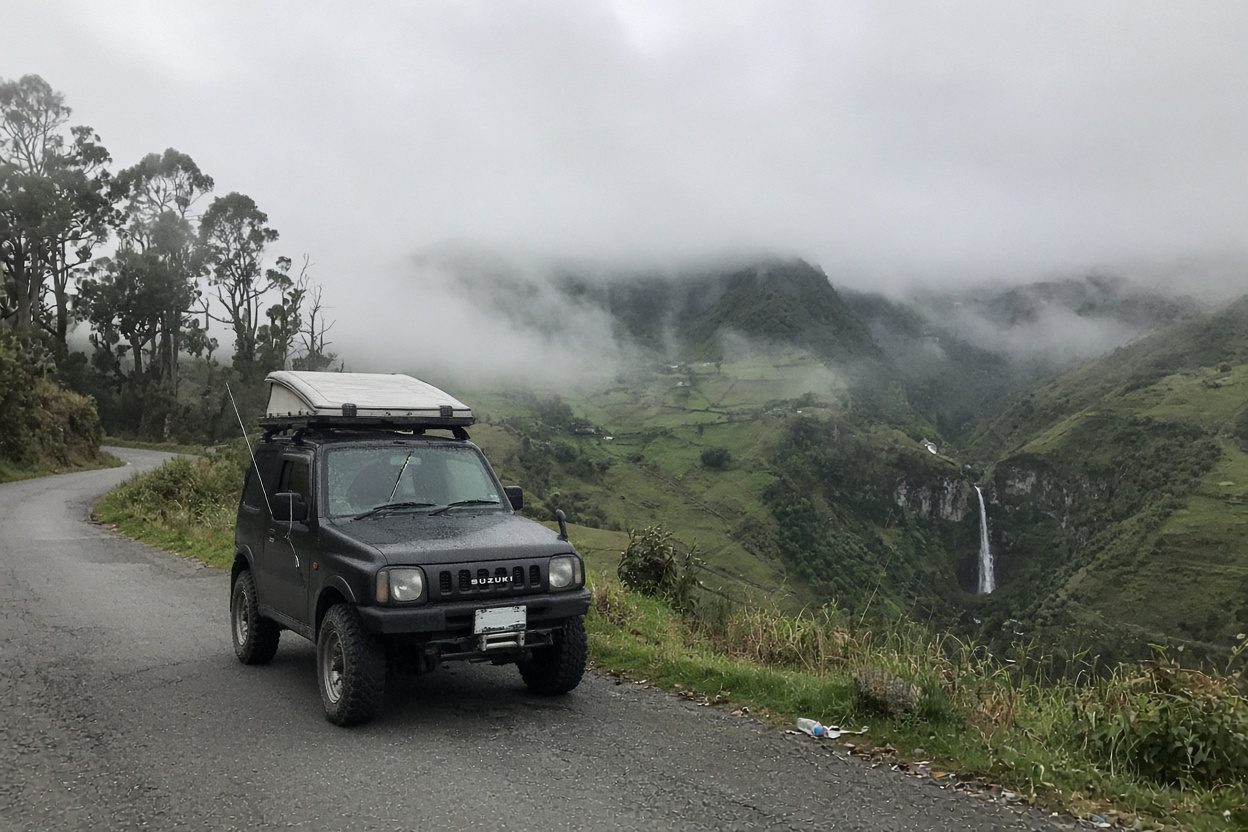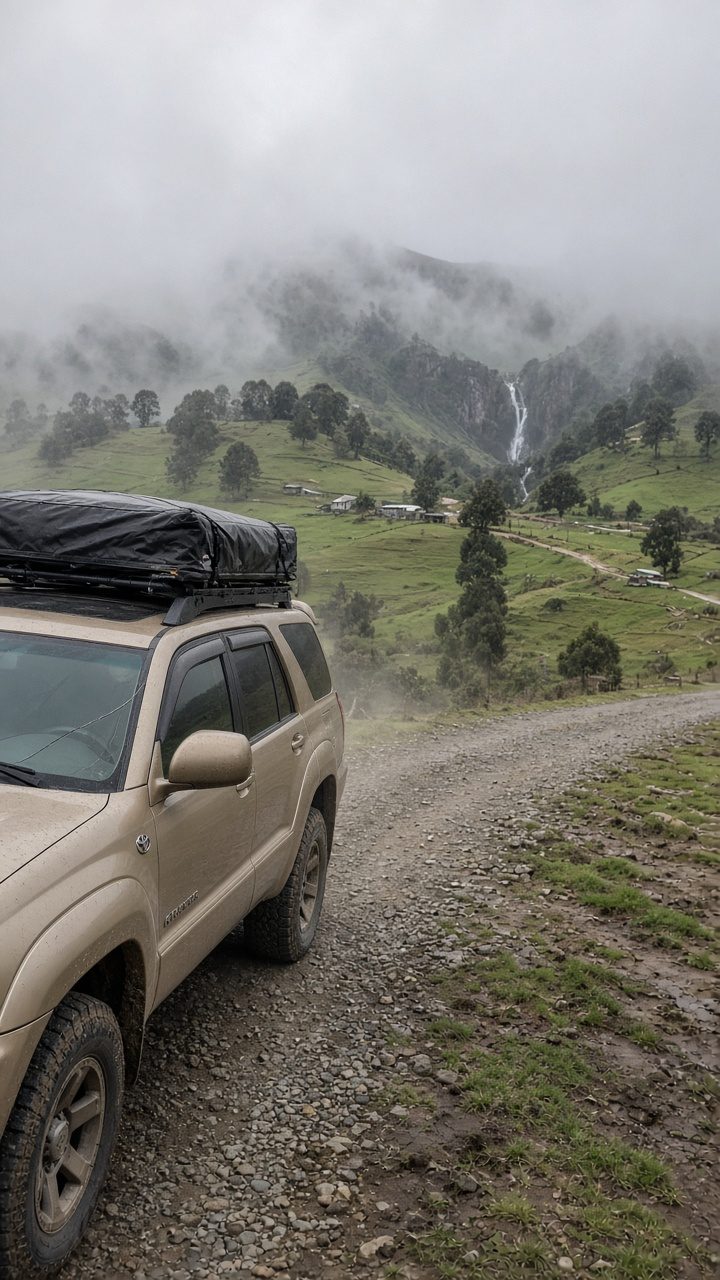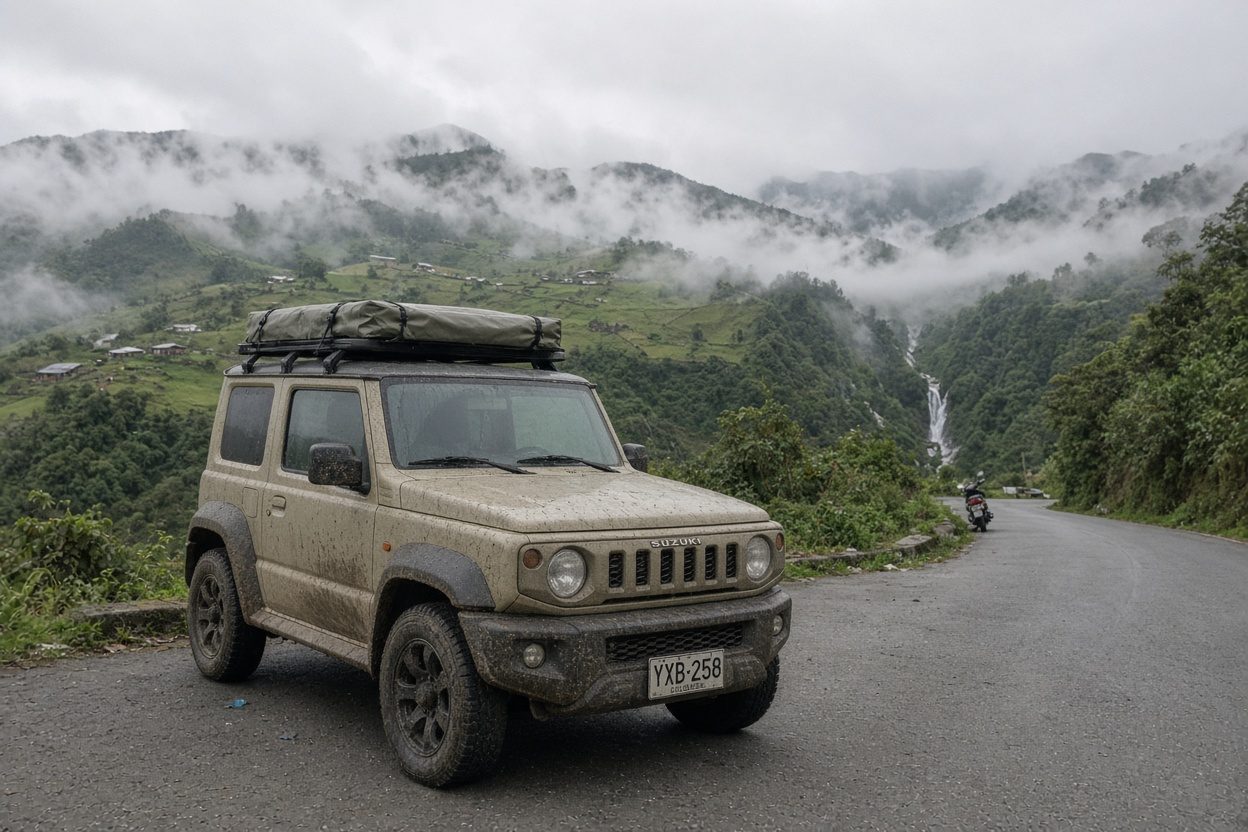
Some of Costa Rica's biggest scenery sits less than an hour and a half from the airport. This two-day loop is built for the traveler who lands at Juan Santamaría (SJO) with a spare day on either end of a bigger trip — or who simply refuses to spend a jet-lagged morning in an Alajuela hotel. You climb from coffee country into the clouds to stand at the rim of Poás, one of the largest active craters on the planet, then drop into the emerald valley of Bajos del Toro to chase waterfalls that most first-timers never hear about. It is paved almost the whole way, the elevation keeps it cool, and you sleep in the mountains rather than the city.
The loop rewards discipline on two fronts: get to Poás for the 8 a.m. opening while the crater is still clear of cloud, and lock your timed SINAC reservation before you arrive, because tickets are not sold at the gate. Do those two things and the rest of the trip is soft — good coffee, a 90-metre waterfall inside a collapsed volcanic caldera, and a network of blue cascades that feel like a secret. 🟢 A compact 4x4 is plenty; nothing here demands a Land Cruiser.
Day 1 — Alajuela to Poás crater, then down into Bajos del Toro
From Alajuela or the SJO airport it is roughly 37 km and 1 to 1.5 hours up a well-paved, switchbacking road to the Poás Volcano National Park entrance, climbing through strawberry farms and fern nurseries. Leave in the pre-dawn dark to make the first entry slot: the crater is most likely to be cloud-free right at opening, and gas and mist roll in as the morning warms. Visits to the crater lookout are short and controlled — rangers move groups through in timed windows because of the sulfur dioxide the volcano vents — so don't dawdle getting from the car park to the mirador. A second short trail leads to Laguna Botos, a cold rain-fed crater lake ringed by cloud forest. Grab a casado and a coffee in the highland town of Poasito or Fraijanes on the way down.
By late morning, point the car toward Bajos del Toro, about 1 to 1.5 hours away on a winding but paved mountain road (Vara Blanca and the Poás flanks). This is a green, high-altitude valley of dairy farms, trout ponds, and steep forested gorges. Check into a valley lodge, eat trout for lunch, and spend the afternoon at the Blue Falls of Costa Rica — a private reserve with a trail linking several sky-blue cascades and swimming pools tinted by the same mineral chemistry that colors Río Celeste. Entry is about $20 per adult, and the reserve is open roughly Monday–Saturday (Sunday closed) — verify hours locally before you go. Sleep: a Bajos del Toro eco-lodge such as El Silencio Lodge & Spa (upscale) or one of the valley's cabinas and trout-farm stays; book direct.
Day 2 — Catarata del Toro, then back to SJO
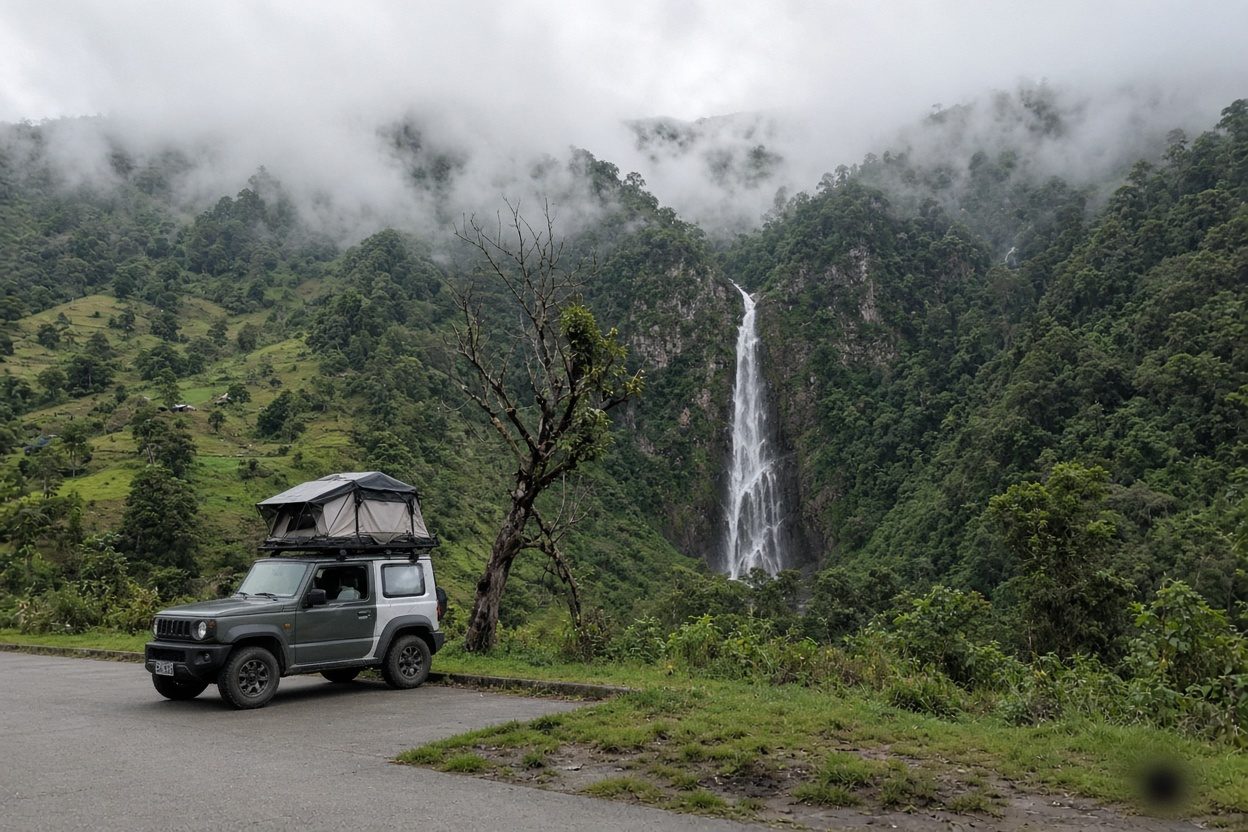
Start at Catarata del Toro, a thundering ~90-metre (270-ft) waterfall that plunges into an extinct volcanic crater — one of the tallest single-drop falls in the region. It sits on the same private property system as the Blue Falls, and a combo ticket (~$25) covers both; the stairway down into the crater is steep but well-built, with viewing decks the whole way. Give yourself a couple of hours for the round trip and the photos. Afterward, it is an easy 1.5-hour drive back down to Alajuela/SJO, with time to hit a coffee-tour finca (Doka Estate on the Poás skirts is a classic) or lunch in Grecia before an afternoon flight. 🟢 Roads are paved and gentle throughout the return.
Signature stops (why go)
- Poás crater — a rare chance to stand above an active, steaming acid lake in the world's largest-diameter craters, reached on a flat 15-minute paved walk.
- Catarata del Toro — a 90 m free-fall into a green crater bowl; the descent staircase is an attraction in itself.
- Blue Falls of Costa Rica — Río-Celeste-blue pools and cascades a fraction of the drive and crowd, with swimming holes.
Where to camp / stay
- El Silencio Lodge & Spa (Bajos del Toro) — cloud-forest cabins, spa, guided trails; the splurge option.
- Bajos del Toro cabinas & trout-farm stays — several family-run options in the valley; book direct or by WhatsApp.
- Poasito / Fraijanes highland cabins — closer to the crater if you want to be first in line at 8 a.m.
- For rooftop-tent travelers, camp options in this valley are limited — 🟡 verify a bookable, legal site before relying on it; the Central Valley highlands are cold and wet at night.
Logistics & road reality
- Drive from SJO/Alajuela: ~1–1.5 h to Poás; Bajos del Toro adds ~1–1.5 h; total loop is short and paved. 🟢
- Poás reservations: timed entry is mandatory through the official SINAC online reservation system — tickets are not sold at the gate. Book the earliest slot for the clearest crater. 🔴 Poás is an active volcano and can close on short notice for elevated gas or seismic activity; confirm status the day before.
- Catarata del Toro / Blue Falls: privately run; ~$20 single / ~$25 combo; roughly Mon–Sat, Sunday closed — verify hours.
- Connectivity: decent signal in Poasito/Alajuela; patchier in the Bajos del Toro valley — download offline maps.
- Safety: highland roads are foggy and winding; drive them in daylight, don't leave valuables visible at trailhead lots.
Insider tips
- Book the first Poás slot and be at the gate before it opens — cloud, not crowds, is the enemy here.
- Bring a warm layer and rain shell; Poás and Bajos del Toro are cold and can be wet even in dry season.
- Buy the combo ticket for Catarata del Toro + Blue Falls; doing both in one valley is the whole point of the second day.
- If Poás is closed for gas the day you planned it, flip the itinerary — do Bajos del Toro first and try Poás the next morning.
- Fill the tank in Alajuela or Grecia; mountain stations are sparse.
Reserve your rig
This loop is the easiest possible first taste of Costa Rica's mountain scenery — paved, short, and spectacular. A compact 4x4 handles every kilometre with room for a cooler of highland strawberries and trout. Reserve your rig with VerifiedCR and we'll pre-load your Poás SINAC reservation window and a Bajos del Toro waterfall combo so your first (or last) two days in country run themselves.
Before you go
Do you need a 4x4?
gravel sections — 2WD ok in dry season
Best window to fly
year-round (Poás crater clearest at the 8 a.m. opening; falls fullest in the green season)
Offline first
Download your route and offline maps before you leave the lot — signal drops on the best stretches.
Golden rule
Never drive at night — plan arrivals before dark, and use Waze like the locals do.
VerifiedCR · No counter surprises
What a Costa Rica rental actually costs
The number one thing that rattles first-timers is the price jumping at the counter. Here is the honest math, before you get there.
- Advertised daily rate$12–40 / day
- What the booking sites show. It is real — but it is not the whole price. Nobody pays only this.
- Mandatory liability (TPL / SLI)+$15–25 / day
- Required by Costa Rican law on every rental. Cannot be waived. This is the line the cheap ads leave off — it roughly doubles the sticker price. Budget for it.
- Collision damage (CDW)waivable
- Often $20–40/day — but you can usually decline it if your credit card includes rental coverage (Amex, Visa Signature, Chase Sapphire and others). Call your card, ask for a coverage letter, and bring it printed.
- Security hold on your card$1,000–2,500
- A hold, not a charge — released after you return the car clean. Some agencies hold more. Make sure your card has the headroom before you fly.
The verified-rig promise: when you reserve through VerifiedCR, the rig is inspection-checked and the operator is vetted — the price you are quoted is the price you pay. No mystery line items at pickup.