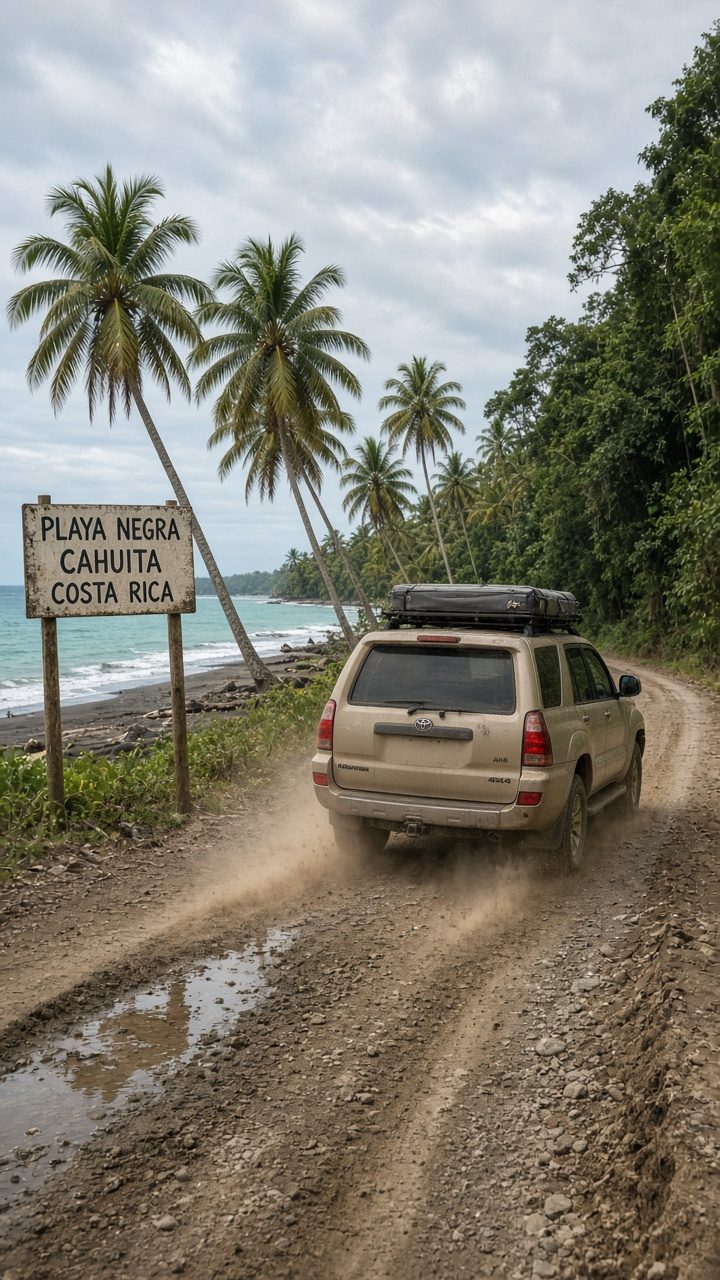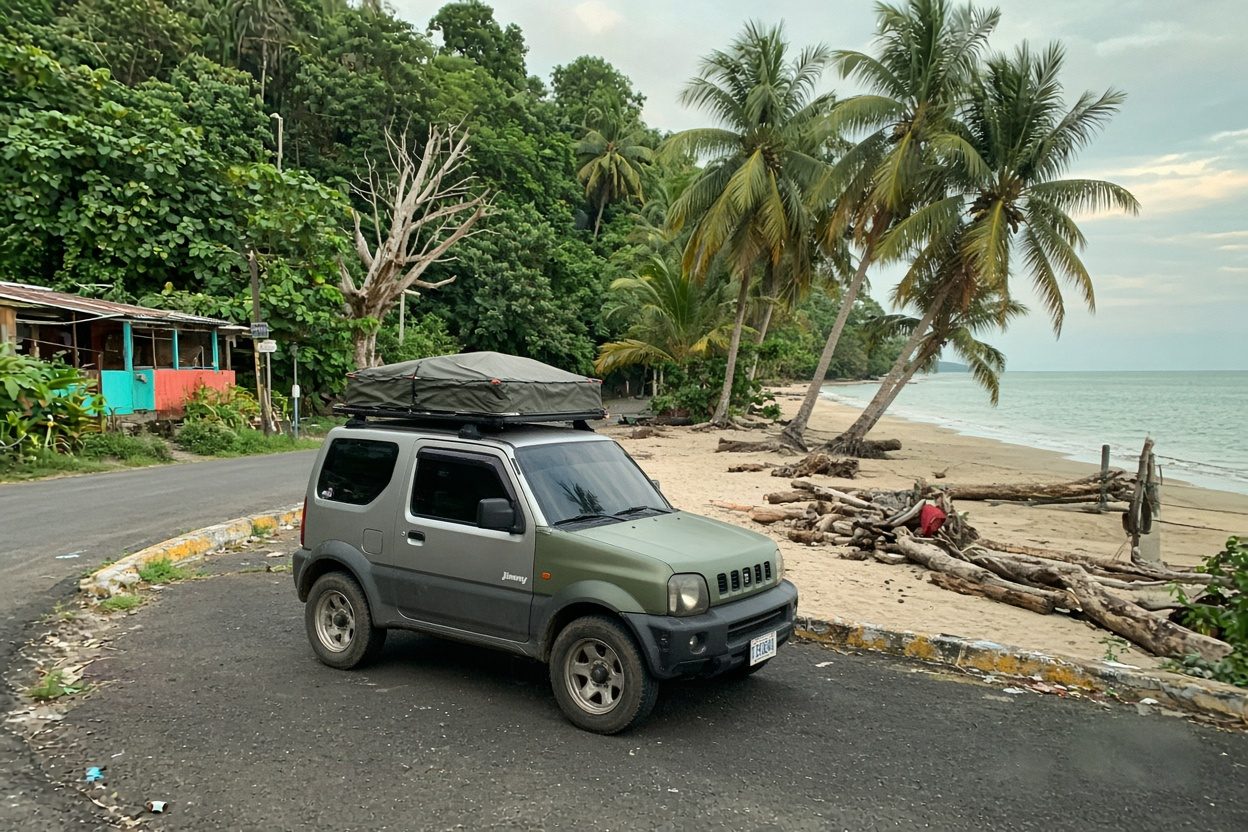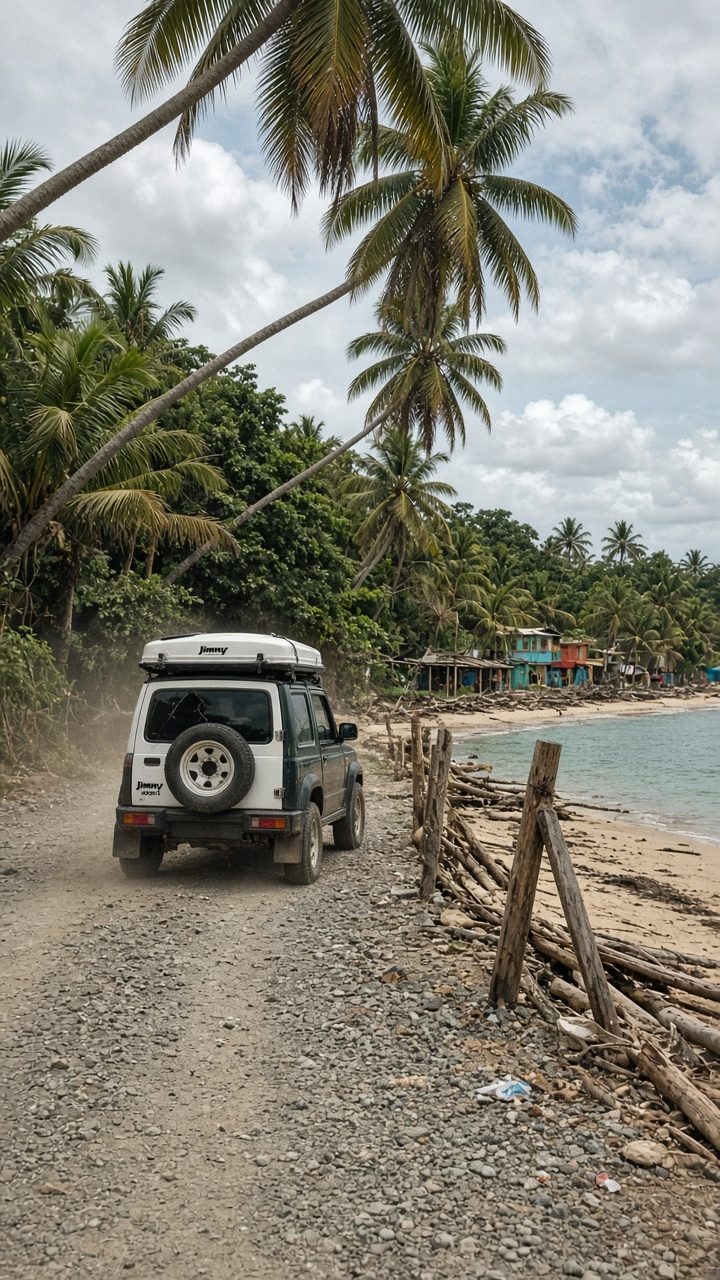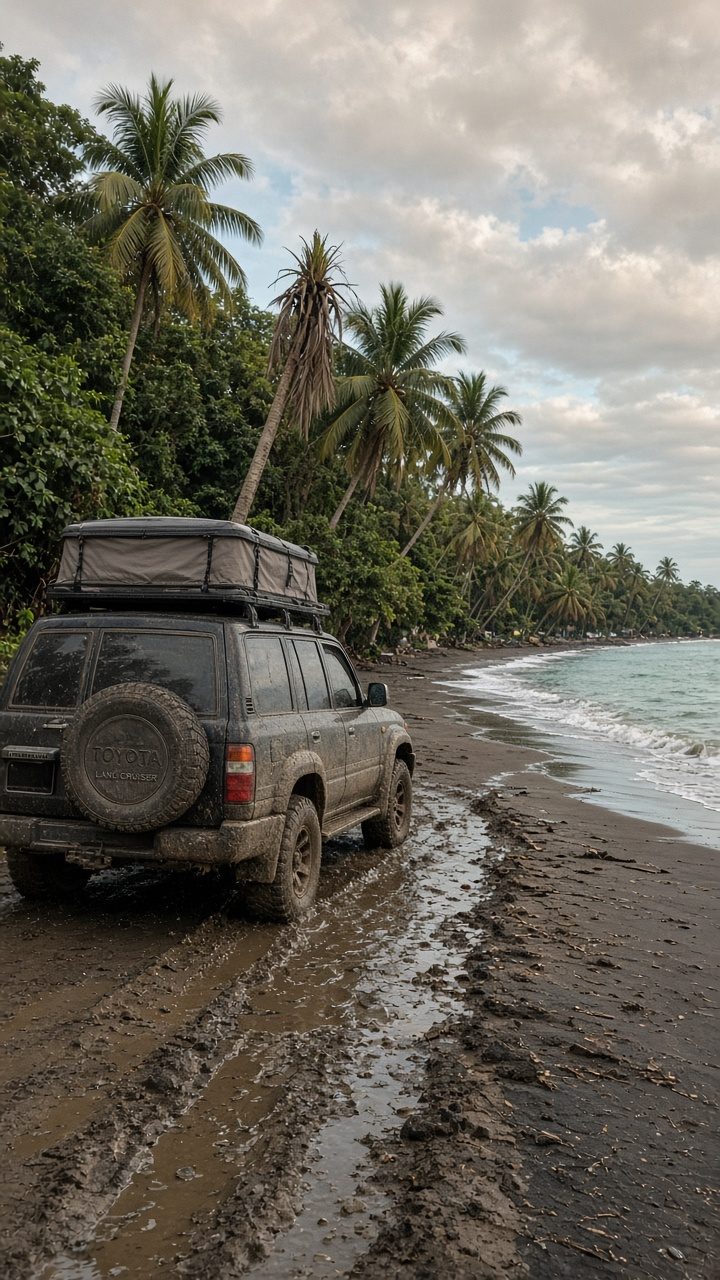
This is the whole coast, top to bottom, done the overlander's way: your own rig, a rooftop tent, and ten days to run the Caribbean slope from the cloud forest of Braulio Carrillo down through the roadless turtle lagoons of Tortuguero, along the reef-and-reggae shore, and all the way to the Panamanian border at Sixaola. It's the traverse that stitches every pearl on this coast into one continuous line — and it demands self-sufficiency, a capable vehicle, and respect for the two roads (Route 32 and the Tortuguero water route) that dictate the whole thing.
Time it for September–October, the coast's dry-and-sunny inversion window — or come June–November if the green-turtle rookery at Tortuguero is your priority (peak nesting Aug–Sep). This is a 🔴 route: longer transits, a river-boat leg where you leave the rig behind, and a rooftop-tent camping rhythm that assumes you're comfortable being self-contained.
Day 1 — Braulio Carrillo (Zurquí)
Drive: San José → Braulio Carrillo (Zurquí sector), ~30–45 min up Route 32. Road notes: you start on Route 32 itself — a mountain highway through cloud forest, prone to fog and rain. Go in daylight.
Begin high and green: Braulio Carrillo National Park cloaks the mountains Route 32 climbs through, a wall of primary cloud forest. Hike the Zurquí or Quebrada González trails, soak in the misty canopy, and camp on the Caribbean slope. It's a deliberate altitude-to-sea-level opening act.
Eat: self-cater; sodas in the Guápiles direction. Sleep: rooftop tent on the Caribbean slope near the park.
Day 2 — Guápiles / Siquirres, stage near La Pavona
Drive: down to the lowlands via Guápiles and Siquirres, positioning near the La Pavona boat landing, ~2–3 hours total depending on stops.
Descend into the banana-and-pineapple lowlands. Stage yourself near La Pavona so you can catch an early boat tomorrow. Prep the rig for two nights parked: this is where you go water-borne.
Sleep: rooftop tent near La Pavona.
Days 3–4 — Tortuguero by lancha (rig parked)
Drive: boat La Pavona → Tortuguero, ~1–1.5 hrs. Park the rig at La Pavona (guarded lot) — there is no road to Tortuguero.
Two days in the roadless world: canal tours by boat and kayak through the national park's waterways (caimans, otters, monkeys, toucans), and — in season — a licensed night turtle walk to witness green turtles nesting (peak Aug–Sep). Catch a morning boat back on Day 4 to retrieve the rig; last public lancha out is around 4:30 PM, so don't cut it fine.
Sleep: Tortuguero village lodging (the rig sleeps at La Pavona).
Day 5 — Cahuita
Drive: La Pavona → Cahuita, ~3–3.5 hours down through Limón.
Retrieve the rig, run south, and land in Cahuita. Camp on the beach and walk into Cahuita National Park for the sloth-heavy shoreline trail (Kelly Creek, by donation) and, if the sea is clear, a licensed reef snorkel over the country's largest coral reef.
Sleep: rooftop tent, Cahuita beach.
Day 6 — Puerto Viejo
Drive: Cahuita → Puerto Viejo, ~17 km / ~25 min.
The coast's hub: food streets, reggae nights, and the seawall view of Salsa Brava. Resupply, refuel, and enjoy a town night after the wild north.
Sleep: Rockin' J's or an in-town campsite.
Day 7 — Punta Uva
Drive: Puerto Viejo → Punta Uva ~15 min.
A calm-water day at Punta Uva — the gentlest swimming on the coast, near-shore snorkeling, and rooftop-tent camping in the palm shade.
Sleep: Punta Uva beachfront.
Day 8 — Manzanillo / Gandoca-Manzanillo
Drive: Punta Uva → Manzanillo ~10 min (end of the pavement).
Hike the Gandoca-Manzanillo coastal jungle trail toward Punta Mona (~5.5 km / 3.4 mi one-way to the point), watch for dolphins, and camp near the wild end of the road.
Sleep: rooftop tent near Manzanillo.
Day 9 — Bribri + Keköldi
Drive: inland to Bribri/Keköldi, ~30–45 min.
Go cultural and inland: a Bribri cacao tour with an Indigenous family and a visit to the Keköldi Reserve (community-run — arrange ahead). For the truly self-sufficient, a Yorkín community overnight up the river is the deep-immersion option worth building in.
Sleep: Keköldi/Bribri area or Yorkín community stay.
Day 10 — Sixaola border viewpoint, out
Drive: to the Sixaola border with Panama, then back — long day. Plan the return so any Route 32 leg is in daylight.
Touch the far end of the coast at Sixaola, the border town on the river that divides Costa Rica and Panama — the literal end of the Caribbean traverse. Take in the frontier viewpoint, then point the rig home.
Signature stops — why go
- Braulio Carrillo cloud forest — the high, green start of the Caribbean slope.
- Tortuguero — roadless canals and green-turtle nesting; the trip's wild heart.
- Cahuita reef + Punta Uva + Manzanillo — the full reef-and-jungle shore.
- Bribri/Keköldi/Yorkín — Indigenous Talamanca, the cultural bedrock.
- Sixaola border — the symbolic end of the traverse.
Where to camp & stay (named)
- Rooftop tent the length of the coast — Braulio slope, La Pavona, Cahuita beach, Punta Uva, Manzanillo.
- Tortuguero village lodging for the two boat-in nights (rig at La Pavona).
- Yorkín community stay for the deep-immersion overlander.
Logistics & road reality
- Route 32 is daylight-only and can close for landslides — the spine of the whole traverse; weather-check every crossing.
- The rig parks at La Pavona for the Tortuguero leg; last boat out ~4:30 PM.
- Extended-range setup pays off — fuel and resupply thin out in the far south and the Tortuguero staging area. Carry a recovery/comms kit; cell coverage is patchy.
- A Land Cruiser + rooftop tent is the right tier for the range, the self-sufficiency, and the freedom to camp the whole string.
Insider tips
- Stage near La Pavona the night before the Tortuguero boat — it removes all morning stress from the roadless leg.
- Carry a jerry can and a comms plan — the south coast and border are the thinnest part of the route for services.
- Book the Yorkín overnight ahead — it's community-run and the logistics (a river boat in) need arranging.
- Time it for Sept–Oct for dry weather, or Aug–Sep if the turtles are the goal.
- The border is a viewpoint, not a crossing — enjoy Sixaola, but plan the drive back so Route 32 is in daylight.
Reserve your rig
The full Caribbean traverse — cloud forest to turtle lagoons to the Panamanian border — is exactly the trip a self-sufficient overland rig was built for. Reserve a Land Cruiser with a rooftop tent, plan every Route 32 and La Pavona leg around daylight and boat schedules, and carry range for the thin south. Book your rig and run the whole coast.
Before you go
Do you need a 4x4?
4x4 required
Best window to fly
Sept–Oct (or Jun–Nov for turtles)
Offline first
Download your route and offline maps before you leave the lot — signal drops on the best stretches.
Golden rule
Never drive at night — plan arrivals before dark, and use Waze like the locals do.
VerifiedCR · No counter surprises
What a Costa Rica rental actually costs
The number one thing that rattles first-timers is the price jumping at the counter. Here is the honest math, before you get there.
- Advertised daily rate$12–40 / day
- What the booking sites show. It is real — but it is not the whole price. Nobody pays only this.
- Mandatory liability (TPL / SLI)+$15–25 / day
- Required by Costa Rican law on every rental. Cannot be waived. This is the line the cheap ads leave off — it roughly doubles the sticker price. Budget for it.
- Collision damage (CDW)waivable
- Often $20–40/day — but you can usually decline it if your credit card includes rental coverage (Amex, Visa Signature, Chase Sapphire and others). Call your card, ask for a coverage letter, and bring it printed.
- Security hold on your card$1,000–2,500
- A hold, not a charge — released after you return the car clean. Some agencies hold more. Make sure your card has the headroom before you fly.
The verified-rig promise: when you reserve through VerifiedCR, the rig is inspection-checked and the operator is vetted — the price you are quoted is the price you pay. No mystery line items at pickup.