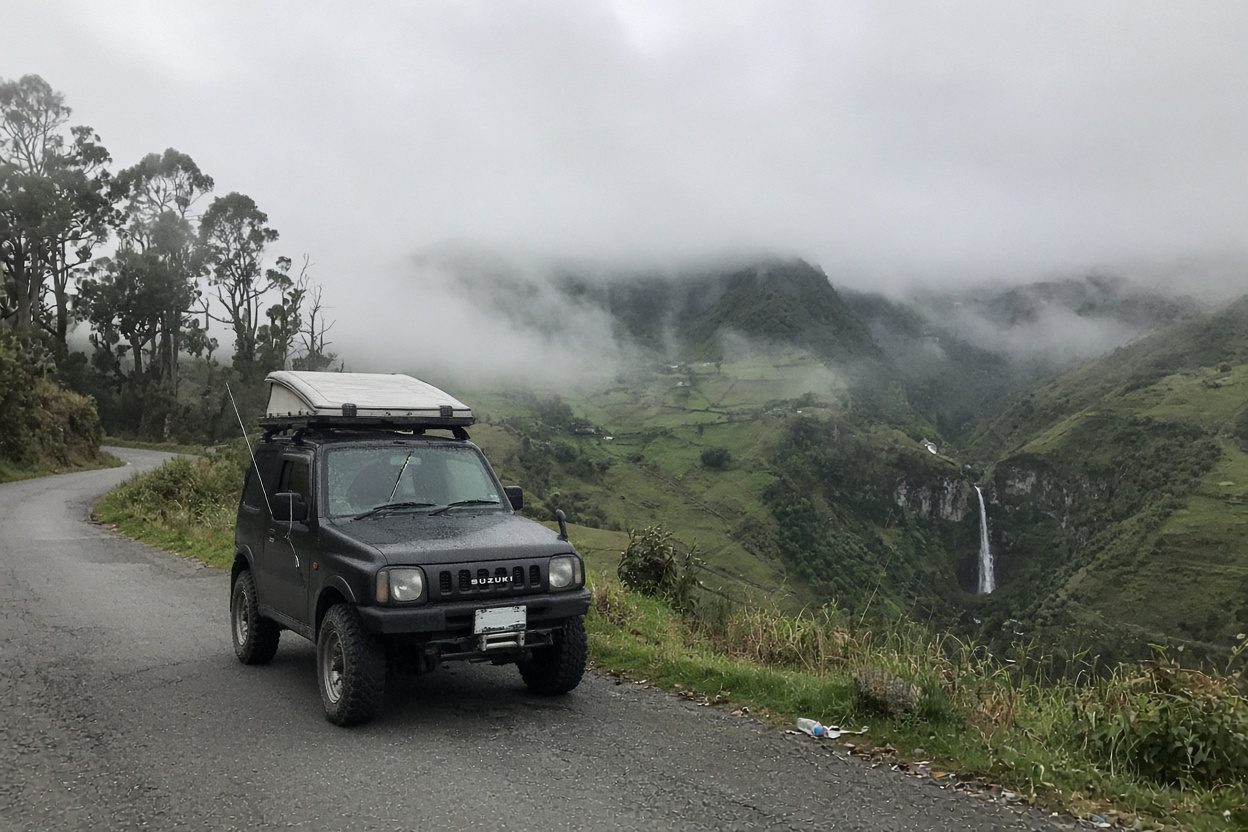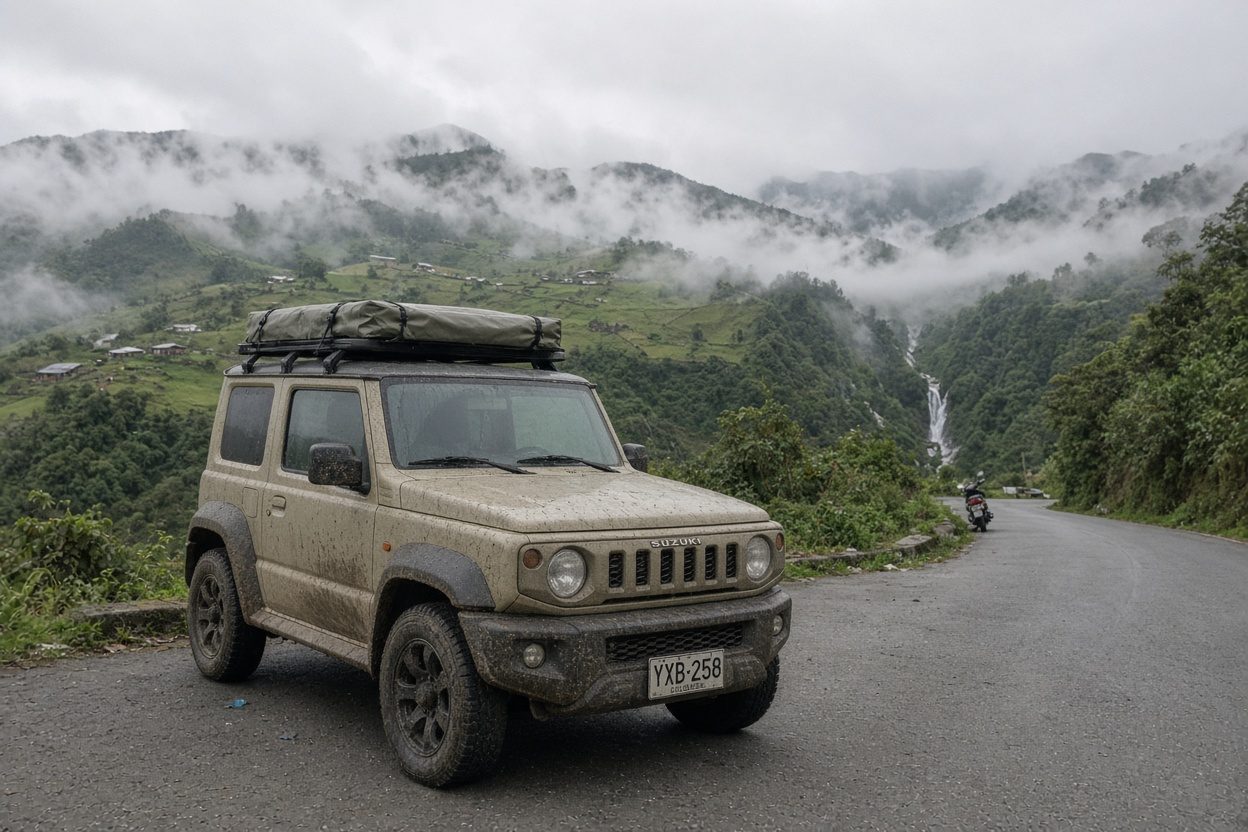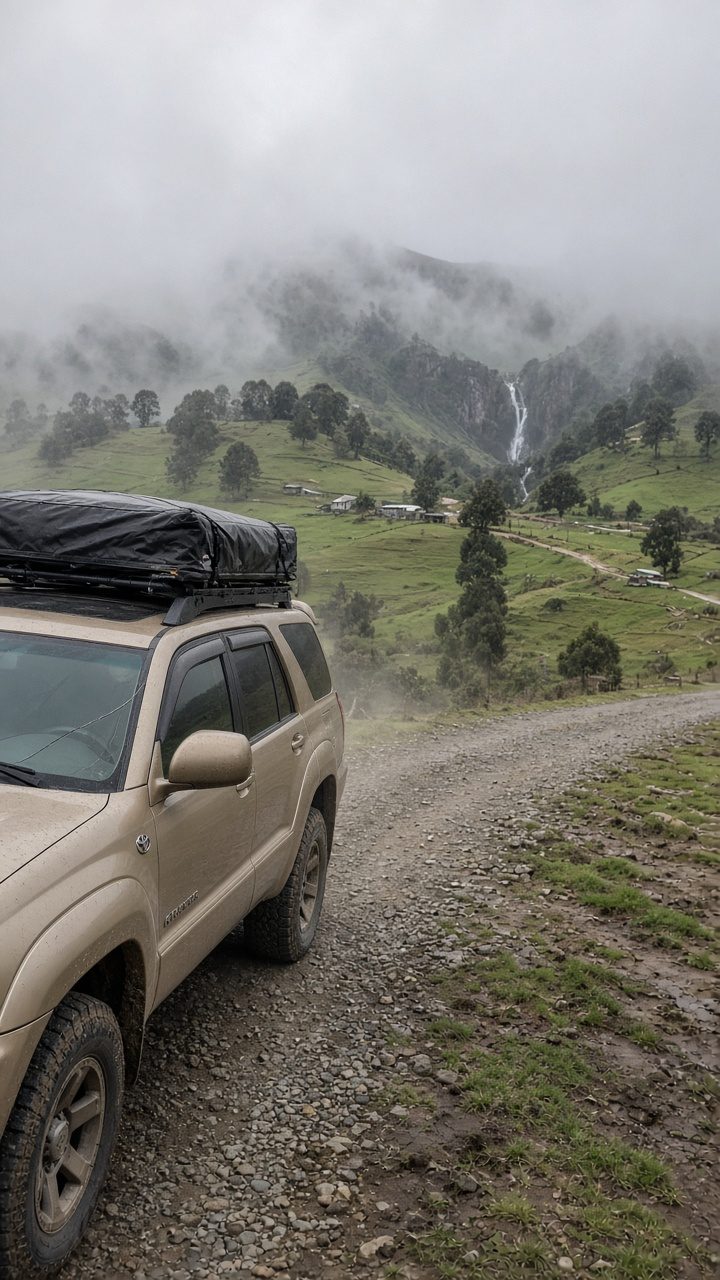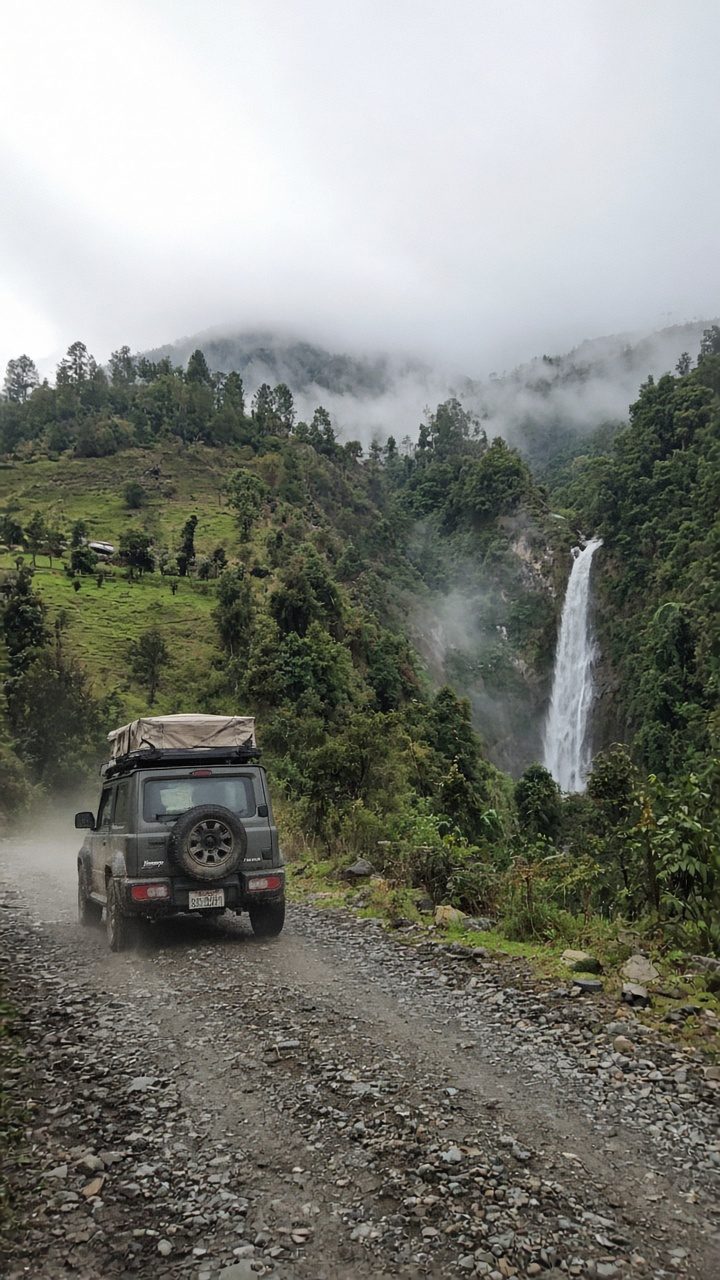
This is the trip for the couple who has learned that the point of Costa Rica is not to see everything — it is to see three or four astonishing things slowly, with nobody else's schedule to keep. It threads together the country's most photogenic cascades and its single most surreal river through a compact loop of the northern Central Highlands, and it never asks you to drive more than a few hours on any one day. You wake in a cloud-forest hamlet, you soak in a volcano-fed river at dusk, and in between there is coffee, hammocks, and the kind of fog that makes even a gas-station empanada feel cinematic.
The arc is deliberate: two nights in the waterfall country of Bajos del Toro, two nights on the wild Tenorio flank near Río Celeste, and a soft three-night landing at Arenal where the roads flatten, the hot springs run all night, and the hardest decision is which volcano-view dinner to book. It is rated 🟢 for most legs, with a 🟡 or two on the steep, winding mountain grades and the muddy Río Celeste trail — nothing a compact 4x4 and daylight driving can't handle.
Because the whole loop lives in the cool, wet interior, it rewards flexibility. In the December–April dry season the roads are easy and the light is clear; in the green months the same falls run at full, thundering volume but the blue of Río Celeste can wash out after heavy rain. Pick your priority and we'll tune the dates.
Day-by-Day
Days 1–2 · Bajos del Toro — the land of hidden waterfalls
Drive: San José / SJO airport → Bajos del Toro, roughly 65 km / about 2 hours. The final climb over the mountains is steep, winding, and low-visibility in fog — paved to town but drive it in daylight. 🟡
Bajos del Toro is a tiny cloud-forest village that feels like a secret even though it sits two hours from the capital. Base here for two nights and let the pace drop. On your full day, hike into Catarata del Toro, a ~90 m free-fall into an old volcanic crater, then spend the afternoon at the Blue Falls of Costa Rica (Tesoro Escondido) trail system, a private reserve of stacked turquoise pools you can swim beneath. Both are short, well-maintained hikes — this is scenery without suffering.
Eat: the village sodas and the trout-farm restaurants along the river; several lodges run their own kitchens. Sleep: cloud-forest cabins around Bajos del Toro (book direct; the valley has a cluster of couples-oriented eco-lodges — confirm exact property names and availability at booking). If you're in the rig, there are lodge-adjacent pull-offs — verify camping permission locally.
Days 3–4 · Río Celeste & the Tenorio flank — the turquoise river
Drive: Bajos del Toro → Bijagua / Río Celeste area, approximately 2.5–3 hours (route drops back toward the Pan-American, then runs north; times approximate — verify locally). 🟡
Bijagua is the quiet base for Tenorio Volcano National Park, home to the electric-blue Río Celeste waterfall — a color created where two mineral-laden streams meet. Enter early: the park admits visitors 8 a.m.–2 p.m. and you can stay until 4 p.m., on a SINAC-issued ticket you should pre-book. Flag — verify locally: since mid-2025 the staircase down to the waterfall observation point has been closed; you can descend the steps only partway. The forest loop, the teñideros (where the rivers merge and turn blue), and the mirador remain open. There is no cell signal through much of this zone — download offline maps and tell someone your plan.
Fill the second day with the slow stuff Bijagua does best: a sloth-spotting tour on a private finca, a chocolate/cacao farm visit, or the travertine soaks and mud at nearby geothermal spots. Sleep: eco-lodges around Bijagua (La Aurora and similar; book direct). Eat: Bijagua sodas — simple, excellent casados.
Days 5–7 · Arenal — the hot-springs wind-down
Drive: Río Celeste / Bijagua → La Fortuna, roughly 1.5–2 hours, mostly paved and easy. 🟢
This is where the trip exhales. Base three nights in La Fortuna and let the volcano do the work. Day one: hot springs — the free Río Tabacón pools under the bridge (no lifeguards; never enter if the river is high — flash-flood risk 🔴) or a paid resort circuit for a private, candle-lit evening. Day two: the Mistico Arenal Hanging Bridges in morning fog and the La Fortuna Waterfall (a steep staircase to a swimmable pool). Day three: a lazy Lake Arenal morning and a sunset volcano-view dinner before the easy paved run back to SJO (about 3–3.5 hours).
Signature Stops — Why Go
- Catarata del Toro — a rare chance to stand inside an extinct crater beneath a ~90 m waterfall, usually near-empty on weekday mornings.
- Blue Falls / Tesoro Escondido — a whole reserve of turquoise plunge pools you can actually swim in, not just photograph.
- Río Celeste — the most improbable color in Costa Rica; even with the base stairs closed, the teñideros and mirador are worth the trip.
- Tabacón hot springs — a thermal river warmed by Arenal, the archetypal Costa Rica soak.
Where to Stay (named)
- Bajos del Toro: cluster of cloud-forest eco-cabins in the valley (book direct; verify current property names).
- Bijagua / Río Celeste: La Aurora and other Tenorio-flank eco-lodges (book direct).
- La Fortuna / Arenal: El Castillo lodges for volcano views, or in-town for walkable dinners; the Volcán Arenal area has rig-friendly options — verify camping.
Logistics & Road Reality
- Vehicle: 🟢 A compact 4x4 (Jimny class) handles the entire loop. The only reasons to size up are heavy green-season mud on the Río Celeste access or if you want rooftop-tent camping.
- Fuel: Fill up in the Central Valley before Bajos del Toro and again before leaving Bijagua — mountain stations are sparse and close early.
- Season: Dec–Apr for easy roads and clear light. Green season (Jul–Oct) gives the fullest waterfalls but muddier trails and a Río Celeste that can turn cloudy-grey for a day or two after downpours — build in buffer.
- Río Celeste: SINAC ticket + 8 a.m.–2 p.m. entry window; base stairs closed since mid-2025 (🔴 verify locally); no cell signal.
- Safety: The mountain grades between zones are steep, foggy, and best driven before mid-afternoon. Never wade the Tabacón river when it's running high.
Insider Tips
- Go midweek. Catarata del Toro and Blue Falls are quiet on weekday mornings and packed with San José day-trippers on weekends.
- Río Celeste is a morning park. Be at the gate near opening — the color reads best in flat morning light and the 2 p.m. cutoff sneaks up.
- Pre-book the SINAC ticket for Tenorio; walk-up space is not guaranteed, and there's no signal to fix it once you're up there.
- Bank your romance night at Arenal. Book one private hot-springs evening rather than spreading soaks thin — it's the memory you'll keep.
- Pack a dry bag and water shoes. Every headline stop on this route involves getting near, or into, moving water.
Reserve Your Rig
This loop is built for a nimble, comfortable 4x4 you can live out of between soaks. VerifiedCR outfits couples' rigs — compact 4x4s with the gear that makes the slow version of Costa Rica effortless: offline route packs, cooler and camp-kitchen options, and rooftop-tent setups if you want to sleep under the cloud forest. Tell us your dates and whether the waterfalls or the turquoise come first, and we'll tune the route and the vehicle to match. Reserve your rig and roll into the fog.
Before you go
Do you need a 4x4?
gravel sections — 2WD ok in dry season
Best window to fly
Dec–Apr (dry) — see the green-season note for fuller falls
Offline first
Download your route and offline maps before you leave the lot — signal drops on the best stretches.
Golden rule
Never drive at night — plan arrivals before dark, and use Waze like the locals do.
VerifiedCR · No counter surprises
What a Costa Rica rental actually costs
The number one thing that rattles first-timers is the price jumping at the counter. Here is the honest math, before you get there.
- Advertised daily rate$12–40 / day
- What the booking sites show. It is real — but it is not the whole price. Nobody pays only this.
- Mandatory liability (TPL / SLI)+$15–25 / day
- Required by Costa Rican law on every rental. Cannot be waived. This is the line the cheap ads leave off — it roughly doubles the sticker price. Budget for it.
- Collision damage (CDW)waivable
- Often $20–40/day — but you can usually decline it if your credit card includes rental coverage (Amex, Visa Signature, Chase Sapphire and others). Call your card, ask for a coverage letter, and bring it printed.
- Security hold on your card$1,000–2,500
- A hold, not a charge — released after you return the car clean. Some agencies hold more. Make sure your card has the headroom before you fly.
The verified-rig promise: when you reserve through VerifiedCR, the rig is inspection-checked and the operator is vetted — the price you are quoted is the price you pay. No mystery line items at pickup.