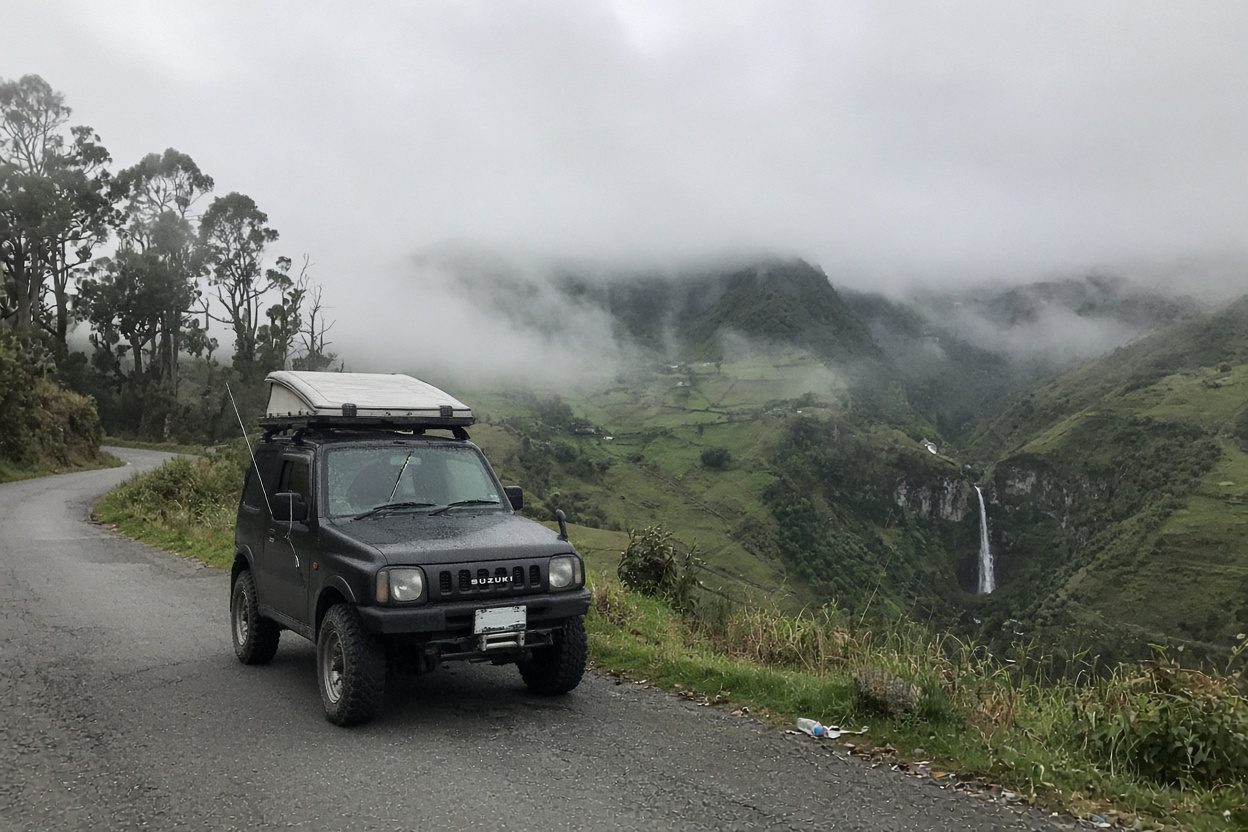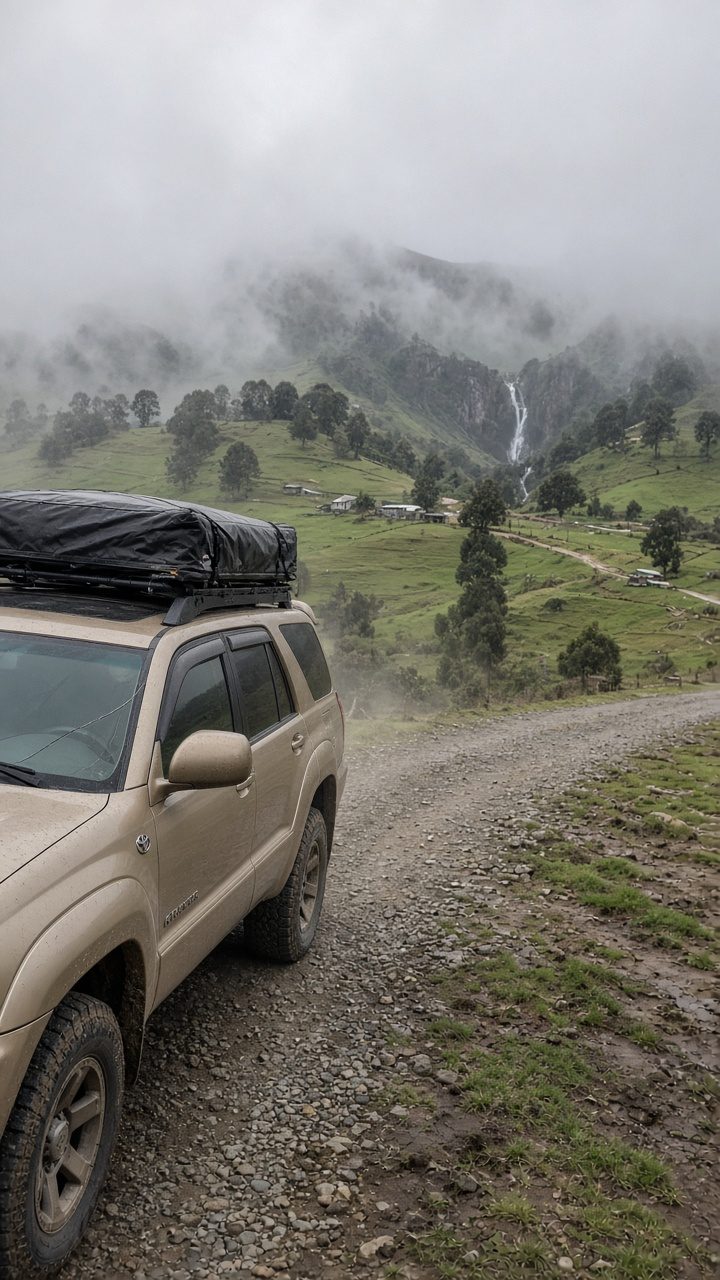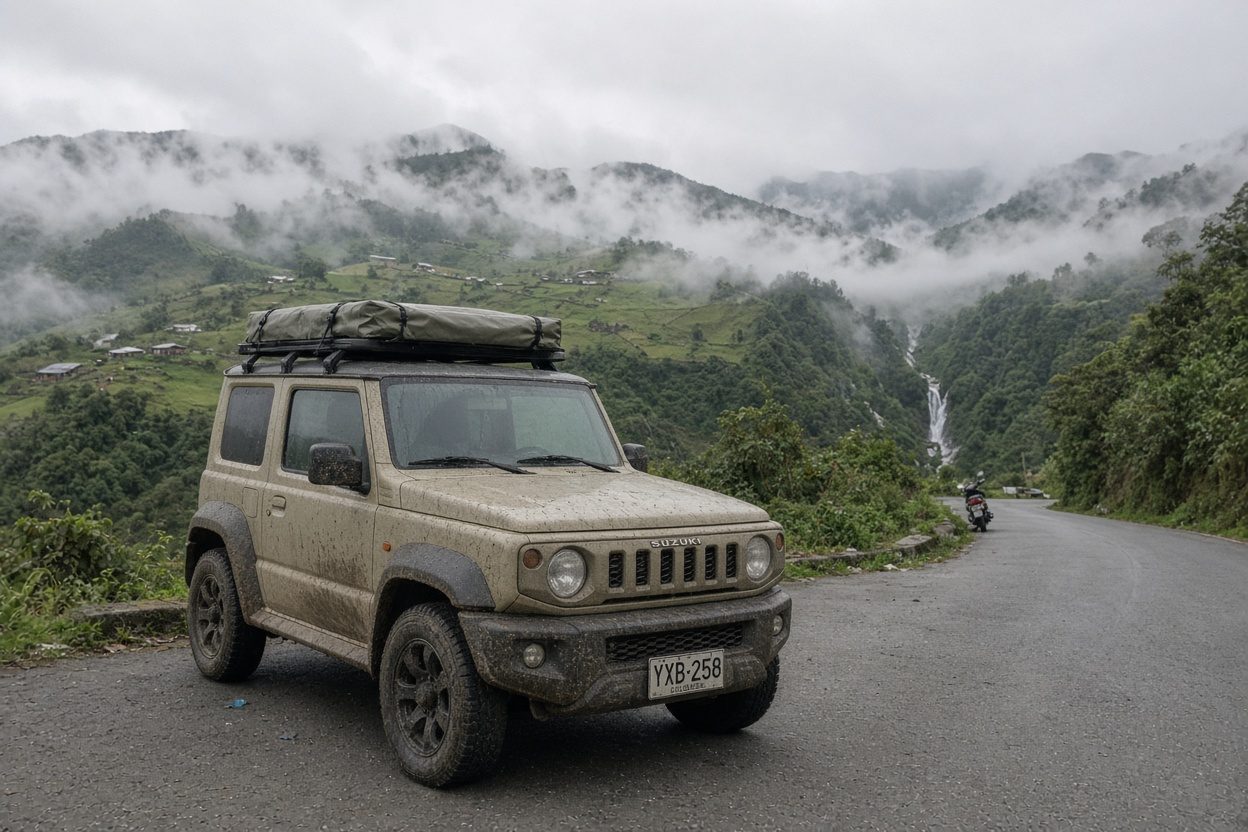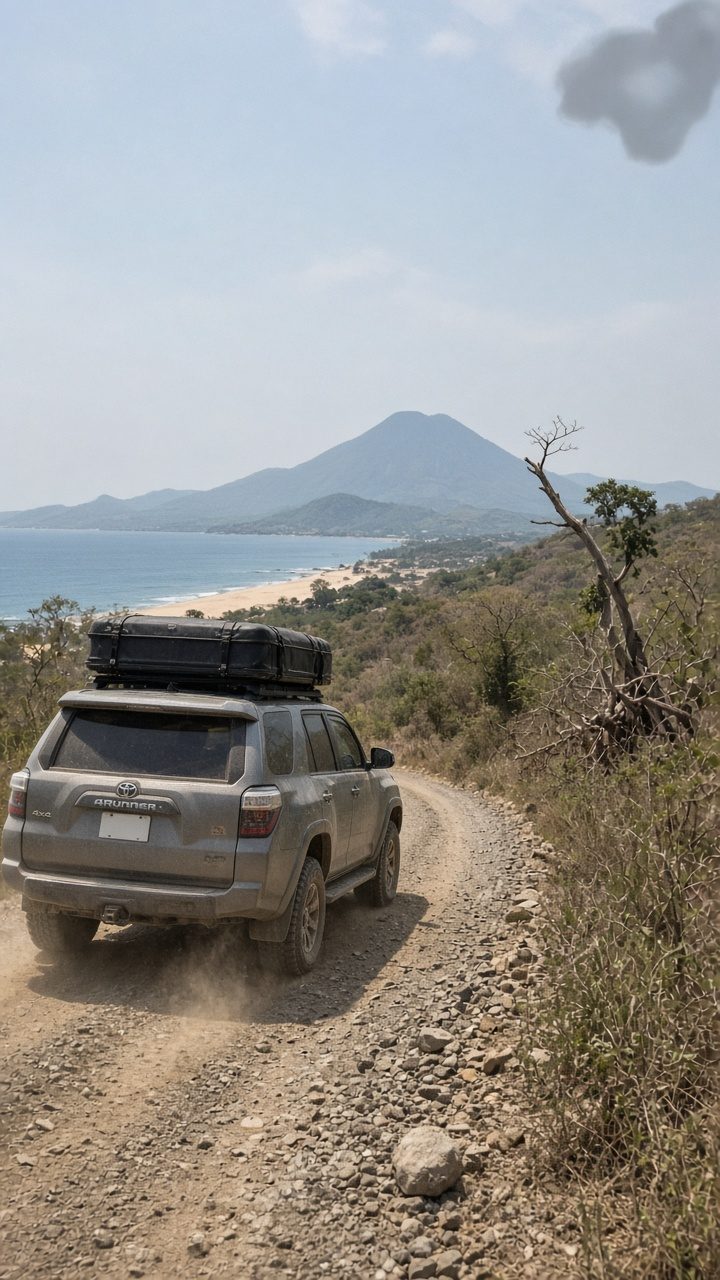
Costa Rica packs more than 900 bird species into a country the size of West Virginia, and this route is built to sample two of its richest habitats in one loop: the misty cloud forest of Monteverde, where the resplendent quetzal breeds, and the sun-baked northern wetlands of Caño Negro and Palo Verde, where boats drift past crocodiles, spoonbills, jacanas and dry-forest specialists. Up top you chase a handful of jewel-like endemics; down low you rack up big daily counts. Together they make a birder's dream nine days.
This is a 🟡 route — moderate driving, no serious hiking required, well suited to a mid-size 4x4. The engine here is timing: come February through July, the resplendent quetzal's breeding season, when the males trail their meter-long emerald tail coverts and gather at fruiting wild-avocado (aguacatillo) trees. That same window keeps the wetlands productive before the heaviest rains.
Day-by-day
Days 1–3 — Monteverde / Santa Elena (drive from SJO approx. 3.5–4.5 hrs). Pick up the 4x4 and climb to Monteverde. Good news since recent paving: the main route from San José is now largely paved, though some approach roads and the local Santa Elena network remain rough gravel (verify your specific route locally) — the 4x4 is for confidence, not survival. Base in Santa Elena for three nights. Dedicate two dawn starts to quetzals: the Monteverde Cloud Forest Reserve and the Curi-Cancha Reserve are the classic sites, and a local guide with a scope dramatically raises your odds. Fill the rest with the Santa Elena Reserve, hummingbird gardens, and a night walk for owls and kinkajous. Cloud-forest targets beyond the quetzal: three-wattled bellbird (seasonal), black guan, emerald toucanet, and a wall of hummingbirds.
Days 4–5 — Caño Negro wetlands (drive approx. 3 hrs / ~125 km). Descend north toward Los Chiles — the Monteverde-to-Caño Negro drive runs roughly 3 hours. Caño Negro is birding-first: boat tours launch from Los Chiles on the Río Frío into the refuge's lagoons and marshes. This is the wetland-bird motherlode — anhingas, roseate spoonbills, jabiru (seasonal), northern jacana, herons and egrets, plus caimans and howler monkeys along the banks. Do a dawn boat and a late-afternoon boat on your full day for two very different bird casts. Lodge in the Los Chiles / Caño Negro area (book the boat-birding trip ahead).
Days 6–7 — Palo Verde National Park (drive southwest toward the Tempisque; confirm timing locally). Move into the Guanacaste dry forest and the Río Tempisque. Palo Verde is famous for its river boat tours — one of Central America's great concentrations of waterbirds and, in the dry months, crocodiles hauled out on the banks and monkeys in the gallery forest. The OTS (Organization for Tropical Studies) biological station area anchors the park; boat trips typically launch on the Tempisque (pre-book through an operator or your lodge). Two nights lets you pair a river boat with a dawn dry-forest walk for a different suite of species.
Day 8 — Optional Cloudbridge spur (long reposition — verify feasibility). For birders who want one more habitat, Cloudbridge Nature Reserve above San Gerardo de Rivas (the Chirripó gateway) offers highland trails and its own quetzal and highland-bird chances. Be realistic: this sits in the Talamanca highlands well to the south, a long repositioning drive from Guanacaste, and the access road above San Gerardo de Rivas is rough (most vehicles stop in the village) — treat this as an optional add-on and verify the drive and road conditions locally. Otherwise use Day 8 to bird your favorite of the earlier zones a second time.
Day 9 — Exit. Drive back to San José and return the rig. Build in buffer for mountain roads and traffic.
Signature stops (why go)
- Monteverde / Curi-Cancha — the reliable cloud-forest quetzal, in breeding plumage, Feb–Jul.
- Caño Negro (Río Frío boats) — arguably the country's best pure wetland birding; huge species lists.
- Palo Verde (Río Tempisque boats) — dry-forest waterbird spectacle plus crocodiles and monkeys.
- Cloudbridge (optional) — quiet highland trails and a second quetzal shot near Chirripó.
Where to camp / stay
- Santa Elena / Monteverde: the full range from budget cabinas to cloud-forest lodges; pick one close to your dawn reserve to protect the early start.
- Los Chiles / Caño Negro: riverside lodges near the boat launch (verify current names locally and book the boat-birding trip with the room).
- Palo Verde area: lodges toward Bagaces / the Tempisque, or inquire about OTS station stays; camping is workable with the rig.
- San Gerardo de Rivas (if doing Cloudbridge): trailhead guesthouses in the village.
Logistics & road reality
- 🟡 Monteverde access: main route now largely paved; some local/approach roads remain rough gravel — a mid 4x4 is the comfortable choice. Verify your exact route.
- 🟢 Caño Negro & Palo Verde are boat parks — the wildlife is seen from the water. Pre-book the boat-birding trips; launches are at Los Chiles (Río Frío) and on the Río Tempisque respectively.
- 🔴 Cloudbridge spur adds a long southern reposition and a rough final road — optional, and only if your schedule and vehicle allow (verify locally).
- Distances between zones are real driving days — treat travel legs as half-days, not transfers.
- Guanacaste is hot and dry Feb–Apr; the highlands are cold and wet — pack for both.
Wildlife guidance (theme)
Season and time of day decide your list. For the resplendent quetzal, come Feb–Jul and be at the reserve gate at dawn — males display and feed at fruiting aguacatillo trees in the first hours of light. For wetlands, dawn and late afternoon boats beat midday, when heat flattens activity. A local guide with a spotting scope is the single best investment on this trip — cloud-forest birds hide in dense canopy, and a guide knows the current quetzal nest trees and the bellbird's calling perches. Ethical birding: use playback sparingly if at all, keep distance from nests, and never crowd a displaying bird. Realistic haul: quetzal and a strong cloud-forest suite up top; dozens of waterbirds, raptors and dry-forest species down low — a two-habitat trip can easily push a serious birder past 200 species.
Insider tips
- Hire dawn-birding guides per zone — the highland guide and the wetland boat guide are different specialists.
- Rent or bring a scope (or book a guide who carries one); it turns distant quetzals and wetland flocks into real views.
- Keep a per-zone checklist — cloud-forest, Caño Negro and Palo Verde barely overlap in species.
- Book Caño Negro and Palo Verde boats in advance; walk-up slots are unreliable in high season.
- Decide the Cloudbridge spur before you leave Palo Verde — the drive south is a commitment.
Reserve your rig
Nine days, three habitats, and one flexible rig that lets you own the dawn every morning. Reserve your VerifiedCR / Carros506 mid-size 4x4 and we'll line up your dawn-birding guides, scope rental, per-zone target checklists, and pre-booked boat-birding trips at Caño Negro and Palo Verde — and advise honestly on whether the Cloudbridge spur fits your dates. Tell us your quetzal-season window and we'll build the loop around the birds.
Before you go
Do you need a 4x4?
gravel sections — 2WD ok in dry season
Best window to fly
Feb–Jul (resplendent quetzal breeding season)
Offline first
Download your route and offline maps before you leave the lot — signal drops on the best stretches.
Golden rule
Never drive at night — plan arrivals before dark, and use Waze like the locals do.
VerifiedCR · No counter surprises
What a Costa Rica rental actually costs
The number one thing that rattles first-timers is the price jumping at the counter. Here is the honest math, before you get there.
- Advertised daily rate$12–40 / day
- What the booking sites show. It is real — but it is not the whole price. Nobody pays only this.
- Mandatory liability (TPL / SLI)+$15–25 / day
- Required by Costa Rican law on every rental. Cannot be waived. This is the line the cheap ads leave off — it roughly doubles the sticker price. Budget for it.
- Collision damage (CDW)waivable
- Often $20–40/day — but you can usually decline it if your credit card includes rental coverage (Amex, Visa Signature, Chase Sapphire and others). Call your card, ask for a coverage letter, and bring it printed.
- Security hold on your card$1,000–2,500
- A hold, not a charge — released after you return the car clean. Some agencies hold more. Make sure your card has the headroom before you fly.
The verified-rig promise: when you reserve through VerifiedCR, the rig is inspection-checked and the operator is vetted — the price you are quoted is the price you pay. No mystery line items at pickup.