Salsa Brava — "wild sauce" — is the heaviest wave in Costa Rica's Caribbean, a thick, hollow reef break that peels over shallow, sharp coral just off Puerto Viejo. When it's on, it is a serious, board-snapping, reputation-making barrel that experienced surfers fly across oceans for. When it's off, the same coast still serves up beach-breaks and a mellow reef alternative. This eight-day route is built for the surfer who wants to live on the wave — dawn patrols, down-days, and the flexibility to chase the swell as it moves. It is emphatically not a learner's trip: Salsa Brava breaks in shallow water over live coral, and it demands real reef experience.
Season is everything. The most consistent swell runs December through March, with February–March the sweet spot where dry weather overlaps with size. There's a bonus window too: Atlantic hurricane season (roughly Sept–Nov) can throw powerful, unexpected swells at the coast — feast-or-famine, but capable of the biggest days of the year. Booties are recommended; the reef is unforgiving.
Day 1 — Daylight transit to Puerto Viejo
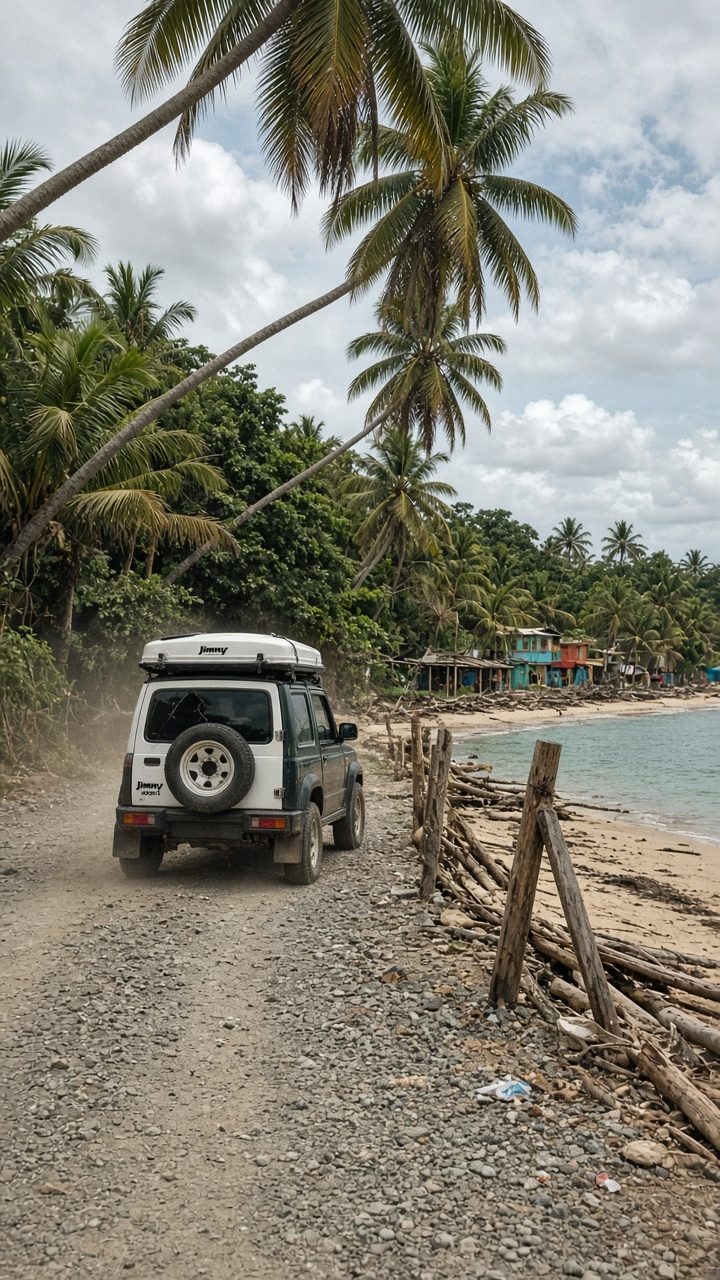
Drive: San José → Puerto Viejo, ~217 km / ~5 hours via Route 32. Road notes: Route 32 over the Braulio Carrillo mountains — fog, rain, and landslide closures make it a daylight-only drive. Rack the boards securely (Caribbean humidity and mountain wind both test bad tie-downs) and leave early.
Arrive, scope the break from the seawall in front of town, and read the coast. Talk to local surfers, check the tide (Salsa Brava favors mid-to-high tide), and get your bearings before you paddle out to anything.
Eat: carb up on coconut rice and beans in town. Sleep: Rockin' J's (hammocks/tents/rooms, ~$7–10 hammock; verify) or an in-town Puerto Viejo campsite — you want to be walking distance from the wave for dawn.
Days 2–5 — Dawn patrols: Salsa Brava + Cocles
Drive: minimal — you're based on the break; short hops to Cocles (~4 km).
Four days to surf. Salsa Brava is the prize when there's swell and the tide's right — a fast, hollow right (and a left) over shallow coral, for confident reef surfers only. On smaller or messier days, Playa Cocles just south offers a punchy beach-break that handles a wider range of conditions and skill. Alternate: dawn patrol Salsa Brava when it's firing, slide to Cocles when it's not, rest through the midday heat, and check the evening glass-off. Hire a local surf guide for the first session — they know the takeoff, the coral heads, and the current, and it's cheap insurance on a wave like this.
Safety, honestly: Salsa Brava is shallow and sharp — wear reef boots, don't paddle out beyond your level, and never surf it alone your first time. Cocles has strong rip currents — respect them whether you're surfing or swimming.
Eat: big protein plates in town; hydrate hard in the humidity. Sleep: Puerto Viejo / Rockin' J's.
Day 6 — Down-day at Punta Uva
Drive: Puerto Viejo → Punta Uva ~15 min.
Give the body a break at Punta Uva, the calm, sheltered bay where the coral that punishes you at Salsa Brava simply makes for pretty snorkeling. Flat water, palm shade, a float and a nap. Every swell chase needs a recovery day.
Eat: beach shack lunch. Sleep: Punta Uva beachfront or back at base.
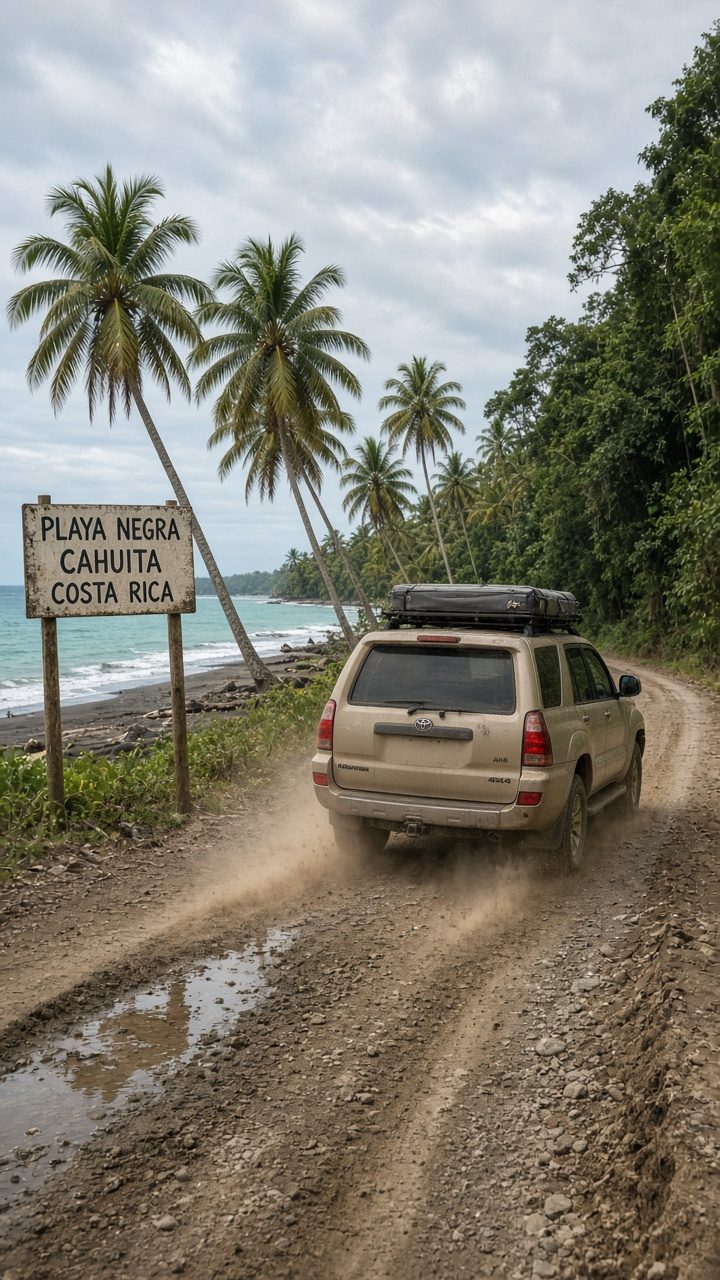
Day 7 — Playa Negra (Cahuita) alt break
Drive: Puerto Viejo → Cahuita/Playa Negra, ~30 min.
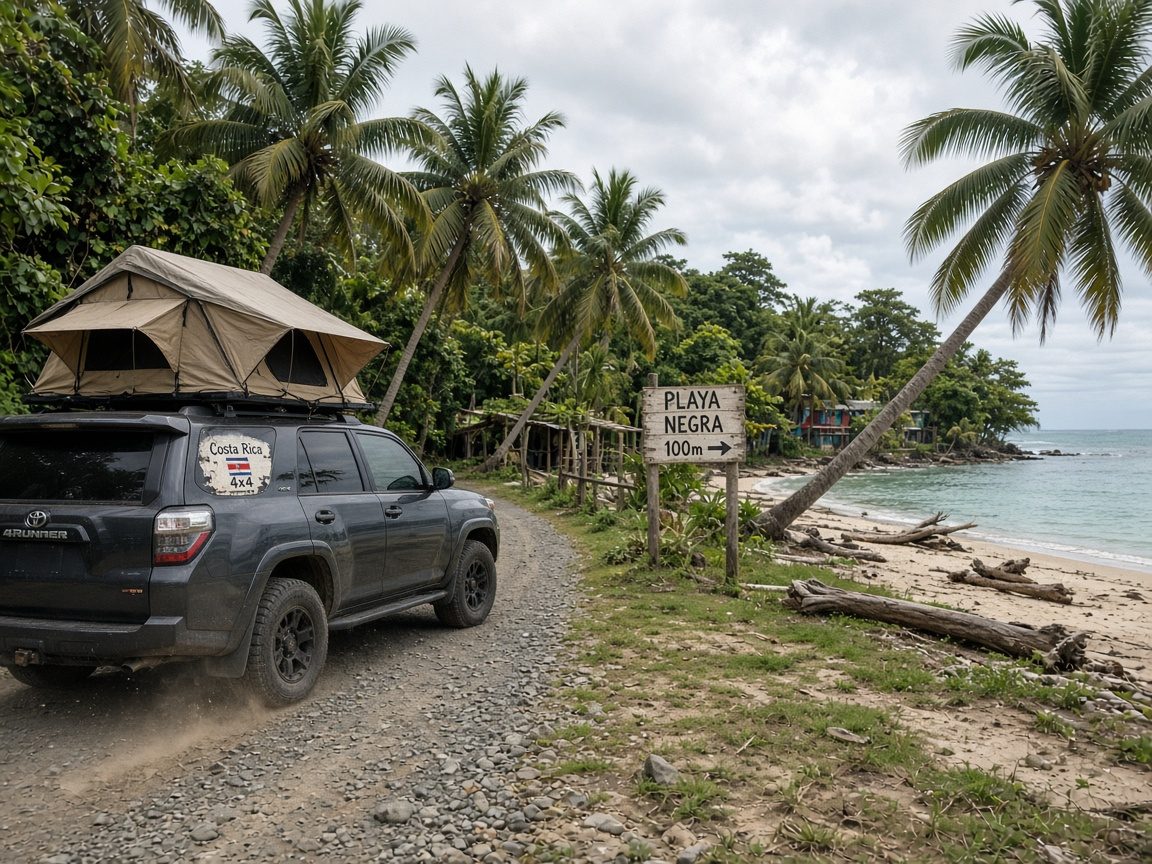
Chase a change of scene at Playa Negra in Cahuita, a black-sand beach-break that can offer a fun, less-crowded alternative when the south end is flat or blown out. Scope it, surf it if it's working, and enjoy the quieter Cahuita vibe.
Eat: Cahuita soda — rice and beans, fresh fish. Sleep: Cahuita beach or back to Puerto Viejo for a final dawn.
Day 8 — Last dawn, daylight drive out
Drive: the coast → San José, ~5 hours; leave by late morning for daylight on Route 32.
Signature stops — why go
- Salsa Brava — Costa Rica's heaviest Caribbean reef break; the whole reason for the trip, experts only.
- Playa Cocles — the reliable beach-break backup for smaller/messier days.
- Playa Negra (Cahuita) — quieter alt break and a scene change.
- Punta Uva — the calm recovery bay between swells.
Where to camp & stay (named)
- Rockin' J's / in-town Puerto Viejo — walking distance to Salsa Brava for the dawn patrol.
- Cahuita beach for the Playa Negra day.
Logistics & road reality
- Base within walking distance of the break — dawn patrol is non-negotiable and you don't want to be driving in the dark.
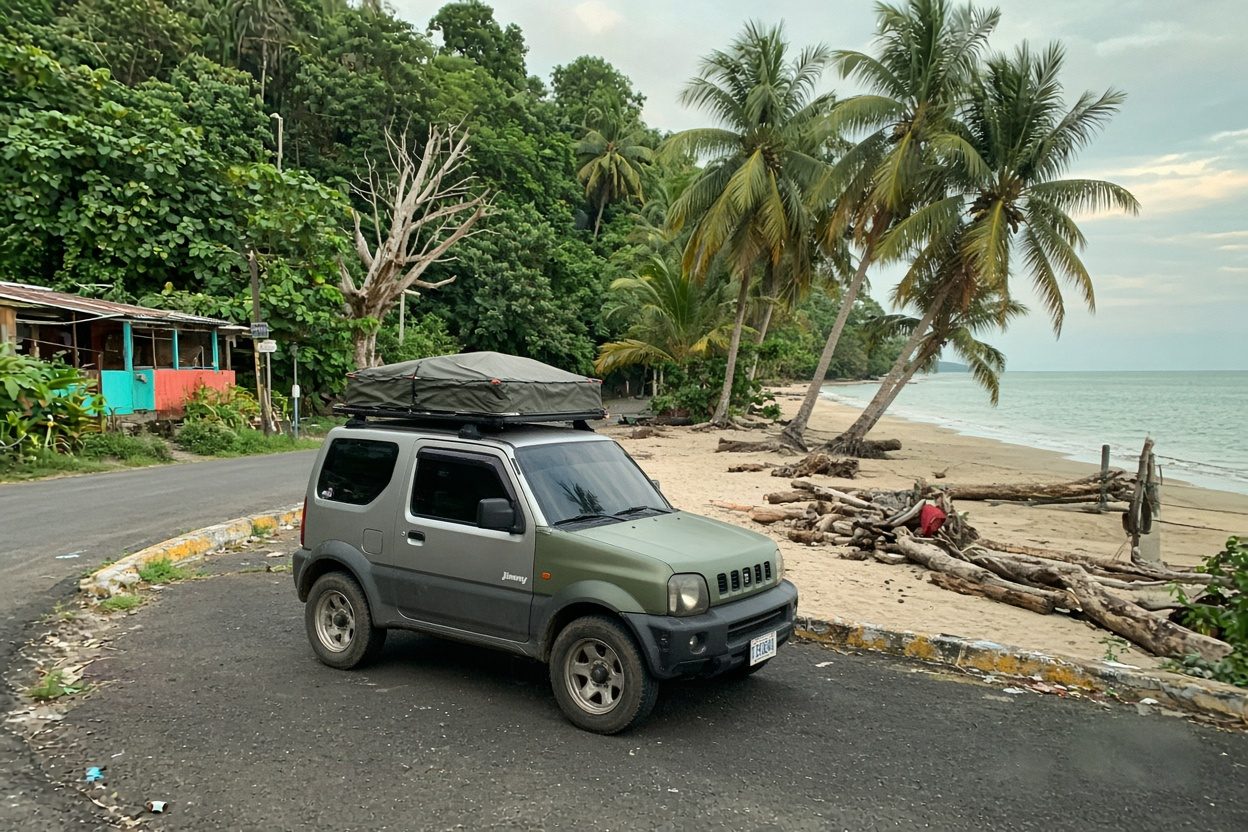
- A board rack is essential; rack securely for the windy, humid Route 32 crossing (daylight only).
- Reef boots and a local guide for the first Salsa Brava session — the coral is sharp and shallow.
- A mid 4x4 camper gives room for boards and gear; the coast road is paved.
Insider tips
- Target Feb–Mar for the dry-plus-swell sweet spot; watch Sept–Nov for the bonus hurricane-swell feast days.
- Surf Salsa Brava mid-to-high tide — low tide exposes too much coral to be worth the risk.
- Booties, always. The reef will find your feet otherwise.
- Cocles rips are real — the same currents that shape the beach-break will pull a tired surfer out; mind them on the swim in.
- Ask the locals before your first paddle-out — respect the lineup and the coral map; it's their wave.
Reserve your rig
Chasing a swell means being able to move on the wave's schedule, not a hotel's — which is exactly what a board-racked camper gives you. Reserve a mid 4x4 camper with a rack, base within walking distance of Salsa Brava, and time the trip for the Feb–Mar sweet spot. Book your rig and chase the wild sauce.
Before you go
Do you need a 4x4?
gravel sections — 2WD ok in dry season
Best window to fly
Dec–Mar (Feb–Mar = dry + swell sweet spot)
Offline first
Download your route and offline maps before you leave the lot — signal drops on the best stretches.
Golden rule
Never drive at night — plan arrivals before dark, and use Waze like the locals do.
VerifiedCR · No counter surprises
What a Costa Rica rental actually costs
The number one thing that rattles first-timers is the price jumping at the counter. Here is the honest math, before you get there.
- Advertised daily rate$12–40 / day
- What the booking sites show. It is real — but it is not the whole price. Nobody pays only this.
- Mandatory liability (TPL / SLI)+$15–25 / day
- Required by Costa Rican law on every rental. Cannot be waived. This is the line the cheap ads leave off — it roughly doubles the sticker price. Budget for it.
- Collision damage (CDW)waivable
- Often $20–40/day — but you can usually decline it if your credit card includes rental coverage (Amex, Visa Signature, Chase Sapphire and others). Call your card, ask for a coverage letter, and bring it printed.
- Security hold on your card$1,000–2,500
- A hold, not a charge — released after you return the car clean. Some agencies hold more. Make sure your card has the headroom before you fly.
The verified-rig promise: when you reserve through VerifiedCR, the rig is inspection-checked and the operator is vetted — the price you are quoted is the price you pay. No mystery line items at pickup.