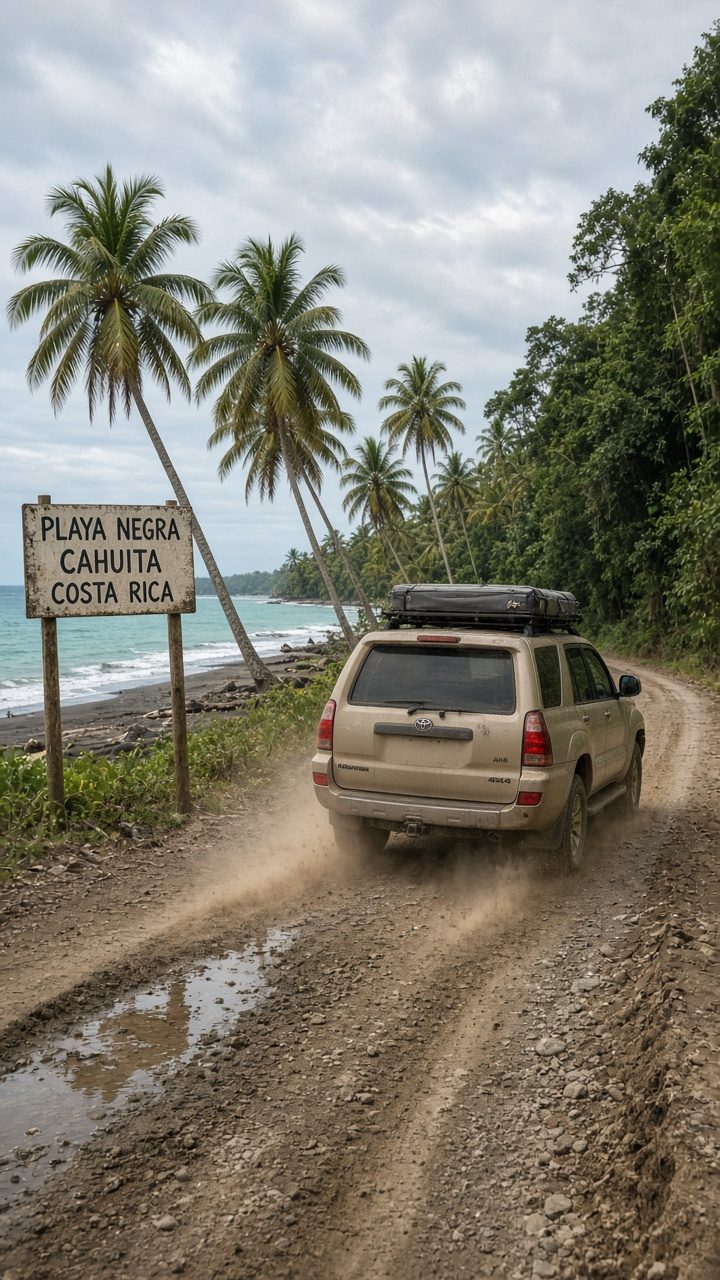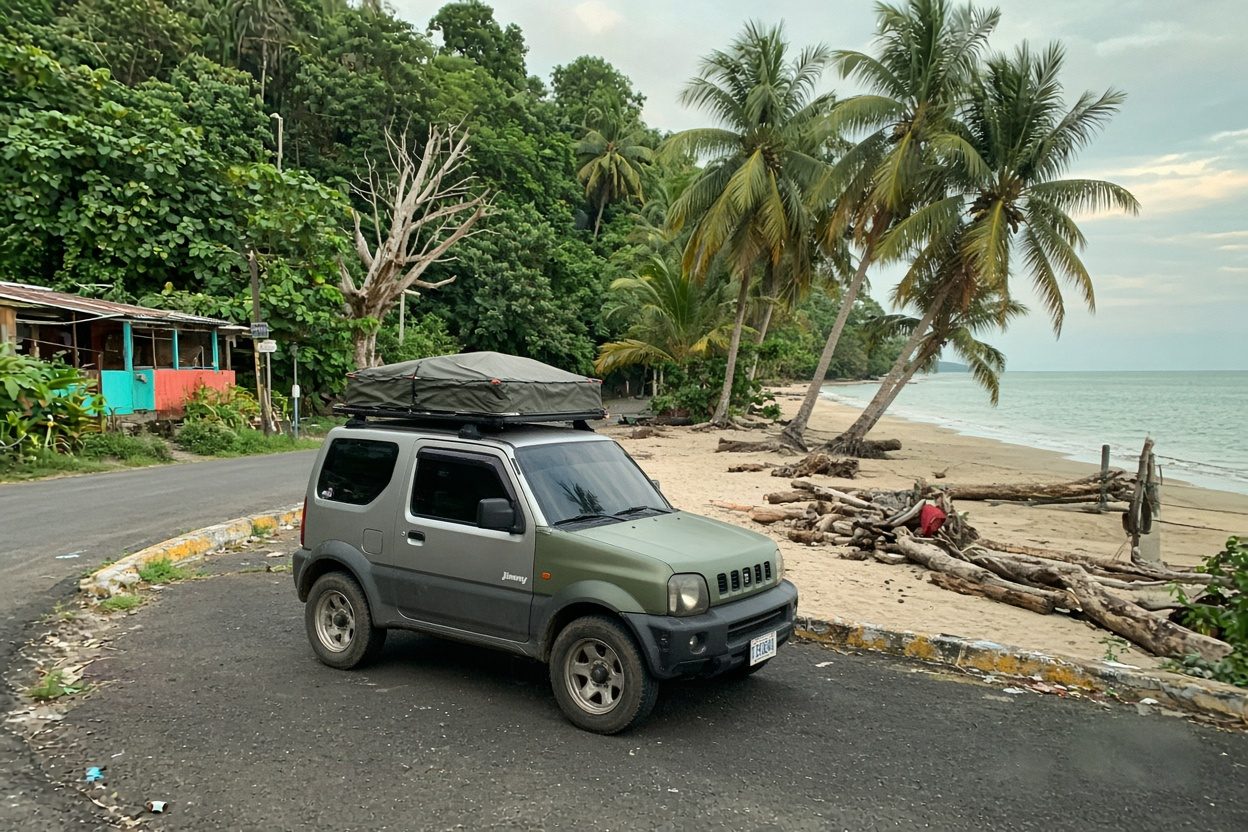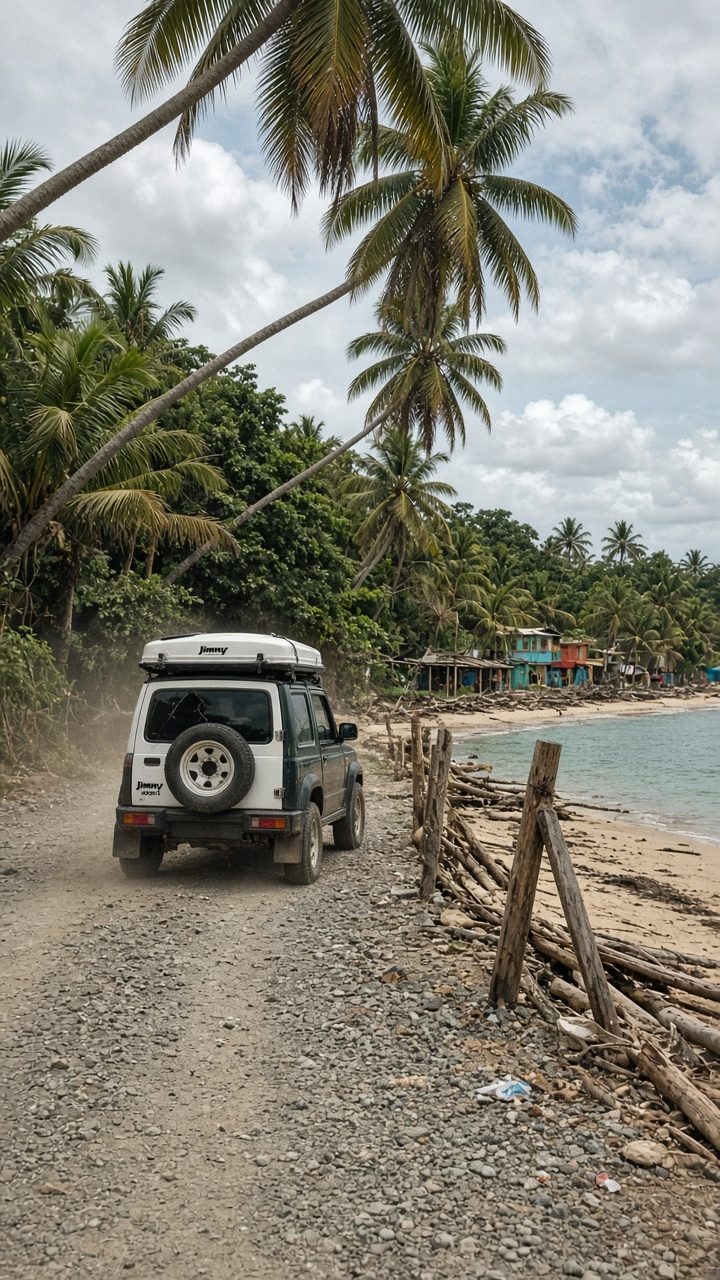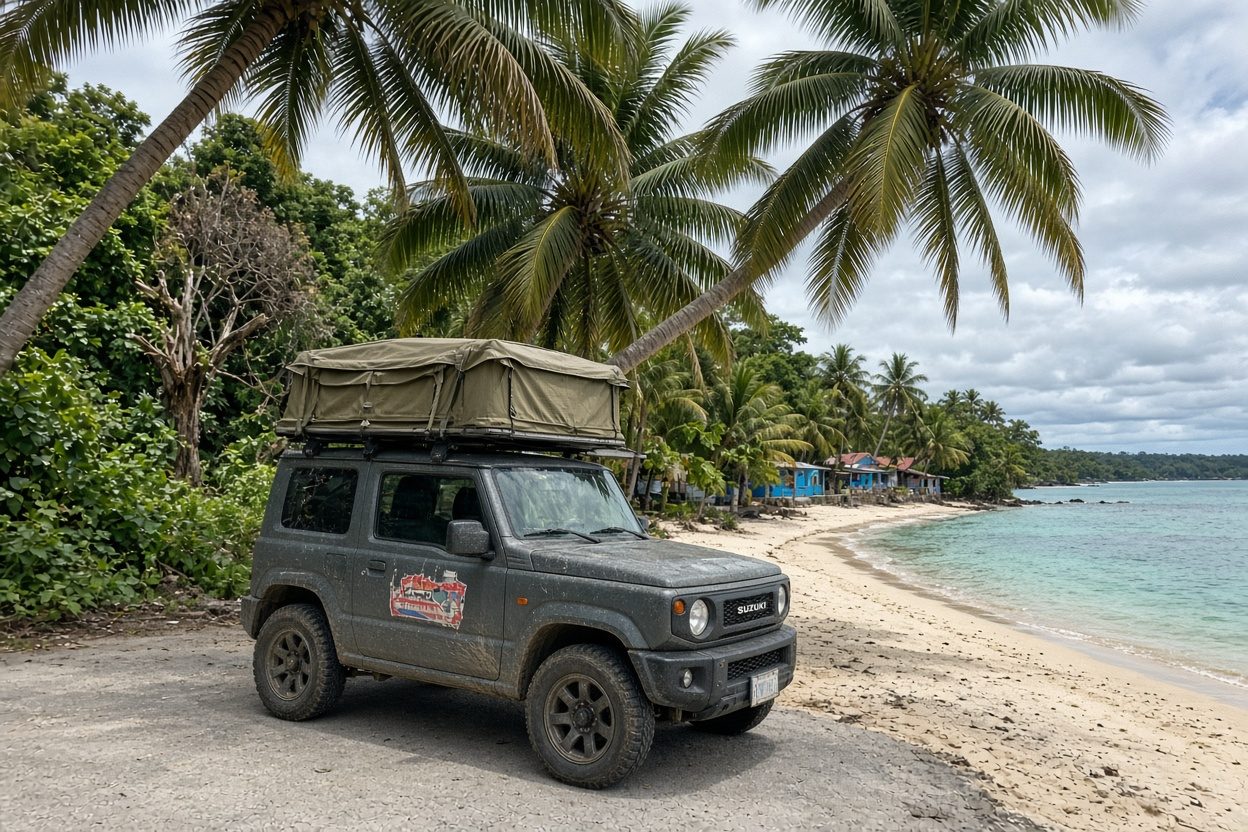
Costa Rica's Caribbean coast is a different country from the Pacific — reggae instead of ranchero, rondón and jerk chicken instead of casado, turquoise reef water and jungle that tumbles straight onto the sand. This four-day loop from San José strings together the best of the south Caribbean: Cahuita and its living reef and sloth-filled national park, buzzing Puerto Viejo for the food and music, the postcard swimming coves of Punta Uva, and the wildlife-refuge end of the road at Manzanillo. It's a low-effort, high-reward long weekend on mostly flat, paved roads once you're over the mountains.
The one thing that governs this trip is weather timing, and the Caribbean plays by opposite rules. 🟢 The driest, sunniest windows are September–October and February–March — precisely when the Pacific is often rained out — which makes this the answer to "where do I go in Costa Rica when it's the green season everywhere else?" The other governing factor is the crossing: 🔴 Route 32 over the Braulio Carrillo mountains should be driven in daylight only — it's foggy, truck-heavy, and prone to landslides and closures in hard rain.
Day 1 — San José to Puerto Viejo
It's about 210 km and 4 to 4.5 hours from SJO to Puerto Viejo, dropping out of the capital on Route 32 through the Braulio Carrillo cloud forest, past Guápiles and Limón, then south down the coast. Leave early so the mountain section is behind you well before dark. Arrive in Puerto Viejo de Talamanca in the afternoon, settle in, rent bikes (the whole coast is best explored on two wheels), and hit the sand for sunset. Dinner is the point here: patí (spiced beef patties), jerk chicken, and rice-and-beans cooked in coconut milk. Sleep: Rockin' J's (backpacker hammock hotel, ~$10–15) in town, or a Playa Chiquita / Punta Uva beachfront cabina for quiet; book direct.
Day 2 — Cahuita National Park
Drive ~40 minutes north to Cahuita (~20–25 min if you based between the two). Cahuita National Park is one of the coast's treasures: the flat, ~8 km coastal trail from the Kelly Creek (Cahuita village) entrance — which runs on a voluntary donation rather than a fixed fee — threads jungle and beach where sloths, howler monkeys, and coatis are near-guaranteed. To snorkel the reef, you must go by licensed in-park guide/boat (required, and boats only run when the sea is calm 🔴). Lunch on rice-and-beans and fresh fish in Cahuita village, laze on Playa Negra, and drive back south for the evening. Sleep: Puerto Viejo / Punta Uva.
Day 3 — Punta Uva & Manzanillo
Spend the day working south down the coast road. Punta Uva has the calmest, most swimmable, palm-fringed water on the coast — the family-and-couples beach — with SUP and kayak rentals. Continue to Manzanillo, the laid-back end-of-the-road village, where the Gandoca-Manzanillo Wildlife Refuge trail leads to viewpoints over empty coves (the hike toward Punta Mona is a classic). Grab lunch at a Manzanillo soda, then loop back for one more Puerto Viejo dinner and reggae night. A Bribri cacao/chocolate half-day in the hills is an easy add if you want culture over beach. Sleep: Punta Uva / Puerto Viejo.
Day 4 — Slow morning, drive back
Take a last swim or bike ride, buy chocolate to take home, then aim to be on Route 32 by early afternoon for the ~4–4.5 hour drive back to SJO — again, cross the mountains in daylight. 🟢 highway; 🔴 the Braulio Carrillo section.
Signature stops (why go)
- Cahuita National Park — flat sloth-and-monkey coastal trail plus the coast's best snorkeling reef, entry by donation.
- Punta Uva — the calmest turquoise swimming water on the Caribbean side.
- Puerto Viejo food & music — rondón, patí, jerk, and reggae; the cultural heart of the coast.
- Manzanillo & Gandoca-Manzanillo — the wild, quiet southern end and its refuge trails.
Where to camp / stay
- Rockin' J's (Puerto Viejo) — legendary budget hammock/tent/room hotel a few dollars a night.
- Punta Uva / Playa Chiquita beachfront cabinas — quiet, shaded, calm-water stays for couples and families.
- In-town Puerto Viejo guesthouses — walk to food and nightlife.
- 🟡 Verify a bookable, legal campervan/rooftop-tent site before relying on one; most sleeping here is cabinas/hostels, and theft is the real local risk — always lock the rig.
Logistics & road reality
- Drive from SJO: ~4–4.5 h via Route 32. 🔴 Daylight-only over Braulio Carrillo — fog, trucks, landslide/closure risk in rain.
- Reservations: no online park permits for Cahuita (donation entry at Kelly Creek); the reef snorkel requires a licensed in-park guide/boat and only runs in calm seas.
- Connectivity: decent signal in the towns; patchier on the Manzanillo end and over the mountains.
- Season: 🟢 driest Sept–Oct & Feb–Mar — the "seasonal inversion" that makes this the sunny choice when the Pacific is wet.
- Safety: petty theft is the genuine risk — never leave valuables in the car or on the beach; Cocles beach has strong rips (swim at Punta Uva instead).
Insider tips
- Cross the mountains in daylight, both ways — Route 32's Braulio Carrillo stretch is no place to be after dark or in a downpour.
- Come in September–October when the rest of the country is soaked — this coast is at its sunniest.
- Bikes beat the car for the Puerto Viejo–Punta Uva–Manzanillo strip; rent them day one.
- Enter Cahuita from the Kelly Creek (village) side for the donation entry and the sloth-rich flat trail.
- Swim at Punta Uva, not Cocles — the rips at Cocles are serious.
Reserve your rig
A compact 4x4 is the perfect Caribbean weekender: enough clearance and comfort for the Route 32 crossing, easy to park in Puerto Viejo, and roomy for bikes and boards. Reserve your rig with VerifiedCR and we'll time your departure for a daylight mountain crossing, flag the current Caribbean dry window for your dates, and line up a licensed Cahuita reef guide.
Before you go
Do you need a 4x4?
paved all the way — 2WD ok
Best window to fly
driest windows Sept–Oct and Feb–Mar (Caribbean seasonal inversion)
Offline first
Download your route and offline maps before you leave the lot — signal drops on the best stretches.
Golden rule
Never drive at night — plan arrivals before dark, and use Waze like the locals do.
VerifiedCR · No counter surprises
What a Costa Rica rental actually costs
The number one thing that rattles first-timers is the price jumping at the counter. Here is the honest math, before you get there.
- Advertised daily rate$12–40 / day
- What the booking sites show. It is real — but it is not the whole price. Nobody pays only this.
- Mandatory liability (TPL / SLI)+$15–25 / day
- Required by Costa Rican law on every rental. Cannot be waived. This is the line the cheap ads leave off — it roughly doubles the sticker price. Budget for it.
- Collision damage (CDW)waivable
- Often $20–40/day — but you can usually decline it if your credit card includes rental coverage (Amex, Visa Signature, Chase Sapphire and others). Call your card, ask for a coverage letter, and bring it printed.
- Security hold on your card$1,000–2,500
- A hold, not a charge — released after you return the car clean. Some agencies hold more. Make sure your card has the headroom before you fly.
The verified-rig promise: when you reserve through VerifiedCR, the rig is inspection-checked and the operator is vetted — the price you are quoted is the price you pay. No mystery line items at pickup.