The south Caribbean is the best-value coast in Costa Rica for one simple reason: the good stuff is free or nearly so. The beaches cost nothing, the national park runs on a donation, the town is flat enough to bike instead of drive, and you can sleep in a beachfront hammock for the price of a fancy coffee back home. This seven-day route is a blueprint for doing the reggae coast on roughly $25 a day — a camper as your base camp, a bicycle as your daily wheels, and a diet of coconut rice and beans and street patí that happens to be delicious.
Because backpacking here is about beaches, bikes, and hanging out — not weather-sensitive tours — it works any month, and the shoulder/low season (which includes the sunny Sept–Oct window) is the cheapest of all. One honest note: theft is the real risk on a budget trip. Lock the rig, never leave gear visible, and use lockers where hostels offer them. The coast's darker reputation is about drug-network violence that stays out of the tourist strip — not something a careful traveler encounters.
Days 1–2 — Cahuita: camp + free beaches
Drive: San José → Cahuita, ~200 km / ~4–4.5 hours via Route 32 (a daylight-only mountain crossing — fog, rain, possible closures).
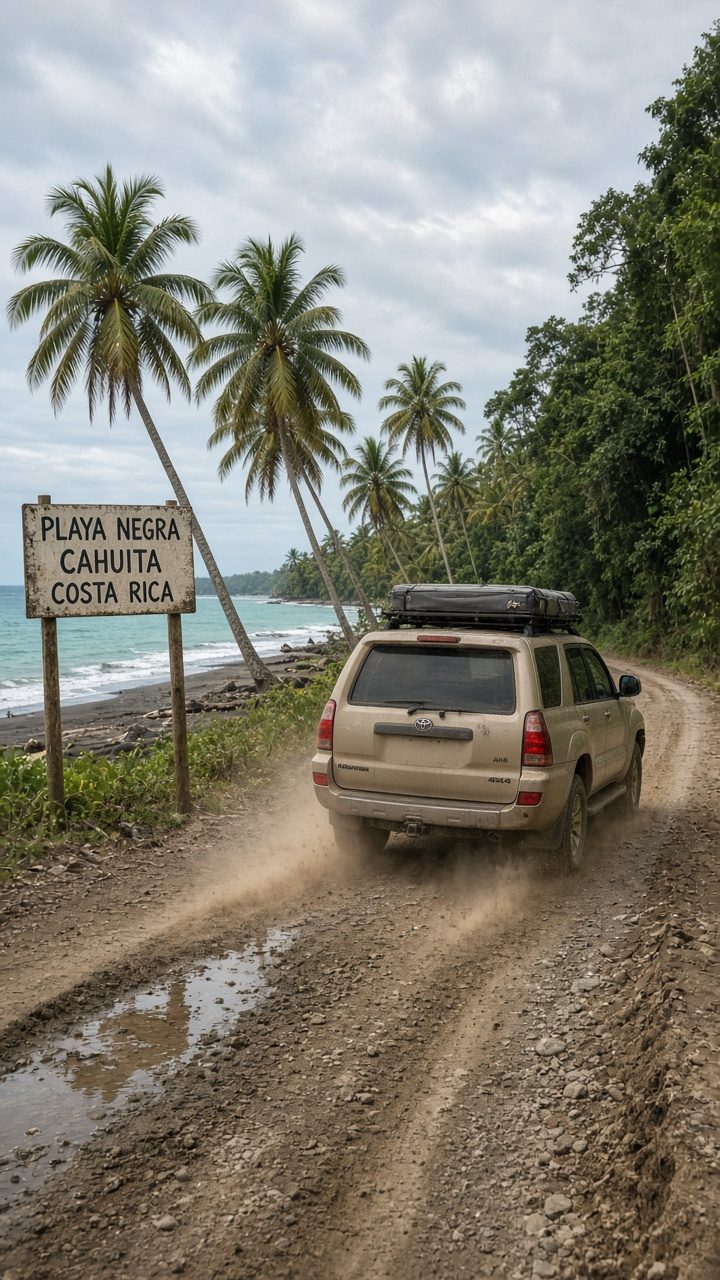
Start cheap in Cahuita. Camp on the beach, walk into Cahuita National Park through the donation-based Kelly Creek entrance (pay what you can), and spend two days on free sand watching sloths for the price of a walk. The park trail is the single best free wildlife experience in Costa Rica — skip the paid guide if you're pinching colones, though splitting a guide across a group is worth it. Cook your own dinners in the rig; buy produce and fresh fish at local shops.
Eat: self-cater from local pulperías; one cheap soda plate of rice and beans. Sleep: Cahuita beach camping (cheapest option on the coast).
Days 3–5 — Puerto Viejo: Rockin' J's & bike everywhere
Drive: Cahuita → Puerto Viejo, ~17 km / ~25 min. Then park the rig and ride.
Base at Rockin' J's, the famous mosaic-tiled beachfront hostel just south of town — hammocks run around $7–10 a night (tents and camp spots too; verify current rates), which is the cheapest legit bed on the coast and a social hub to boot. Rent a cheap bicycle and you'll barely touch the van: the coast road is dead flat, and biking to Cocles, Playa Chiquita, and beyond is free entertainment and free transport in one. Fill your days with free beaches, cheap street food (patí, jerk off the grill, whole coconuts), and reggae nights where the music is the ticket price. Split a group cacao tour or shared snorkel gear with hostel friends to cut costs.
Eat: street patí and jerk, coconut water, self-catered breakfasts; split big plates. Sleep: Rockin' J's hammock or the rig; Cahuita beach as backup.
Day 6 — Pedal to Punta Uva / Manzanillo
Drive/ride: bike the flat coast road south — Puerto Viejo to Punta Uva (~8 km) and on toward Manzanillo (~13 km) is a doable, gorgeous ride.
Make it a two-wheel adventure day: ride to Punta Uva for the calmest, free swimming on the coast, snorkel the near-shore rocks with borrowed gear, then push on to Manzanillo and the edge of the Gandoca-Manzanillo Refuge if your legs are willing. Everything on this day costs nothing but calories.
Eat: pack a picnic; cheap fish plate in Manzanillo if you splurge. Sleep: Rockin' J's / Cahuita beach.
Day 7 — Daylight drive out
Drive: Puerto Viejo → San José, ~5 hours; leave by late morning for daylight on Route 32.
Signature stops — why go
- Cahuita National Park (by donation) — free-ish access to the country's best budget wildlife trail and reef beaches.
- Rockin' J's — ~$7–10 beachfront hammocks and the coast's backpacker social scene.
- Bike-everywhere Puerto Viejo — a flat coast road that turns transport into free fun.
- Punta Uva — free, calm, beautiful swimming at the end of a bike ride.
Where to camp & stay (named)
- Cahuita beach camping — cheapest sleep on the coast.
- Rockin' J's (just south of Puerto Viejo) — hammocks/tents/camp spots, ~$7–10 (verify).
Logistics & road reality
- A bicycle is your real vehicle here. Rent one cheap in Puerto Viejo and leave the rig parked — it saves fuel and parking hassle and the flat road makes it easy.
- Lock everything. Petty theft is the genuine budget-trip risk; use hostel lockers and never leave valuables in the van.
- Route 32 daylight only, weather-checked.
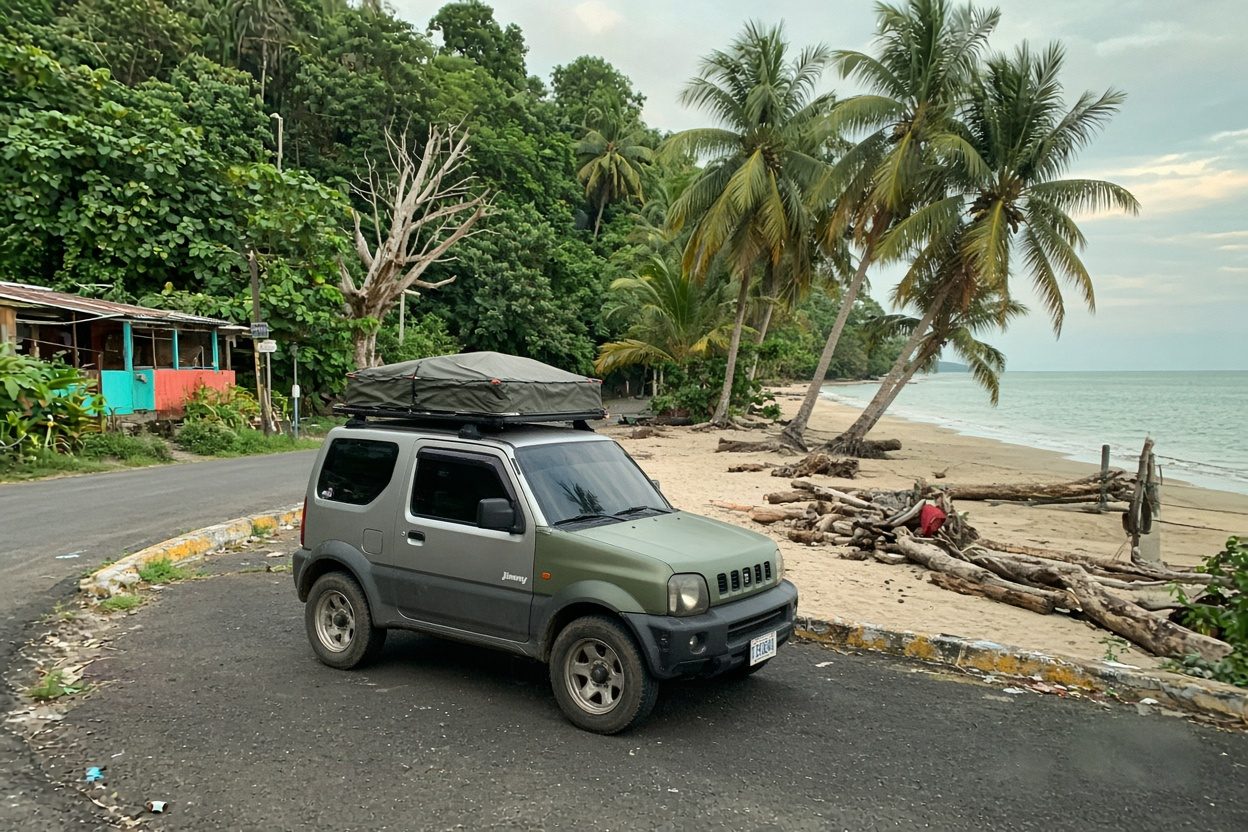
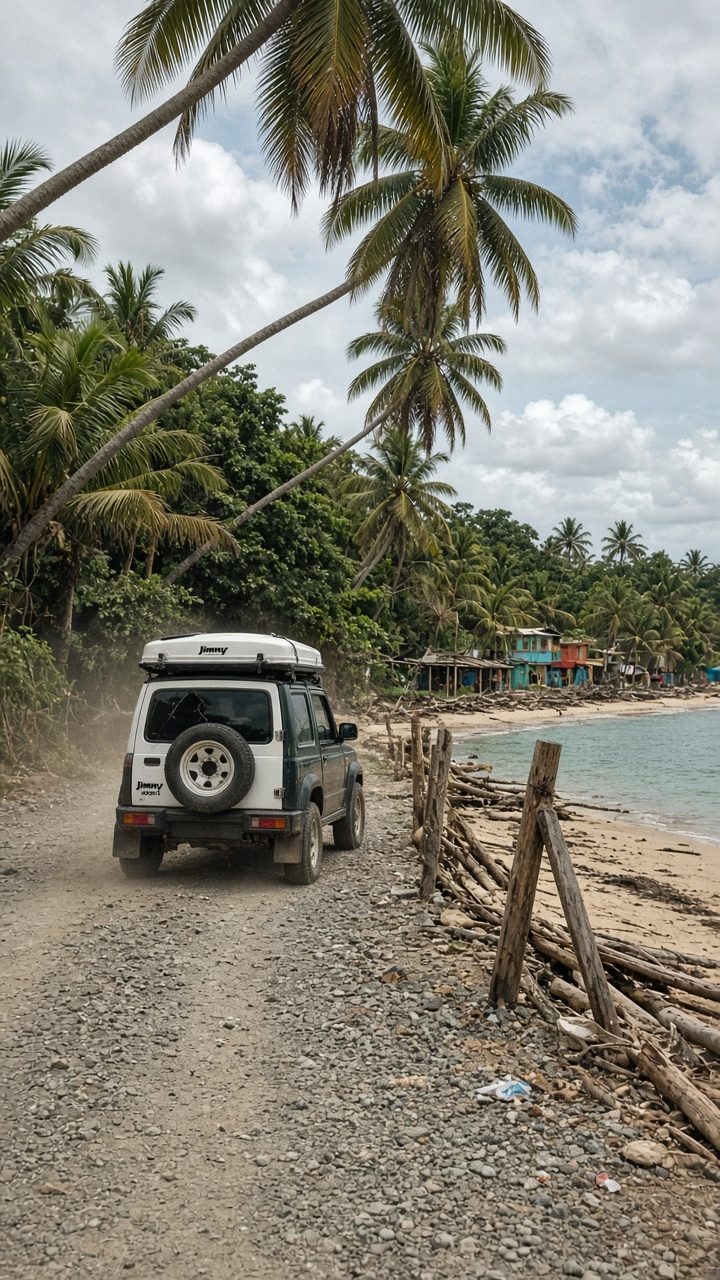
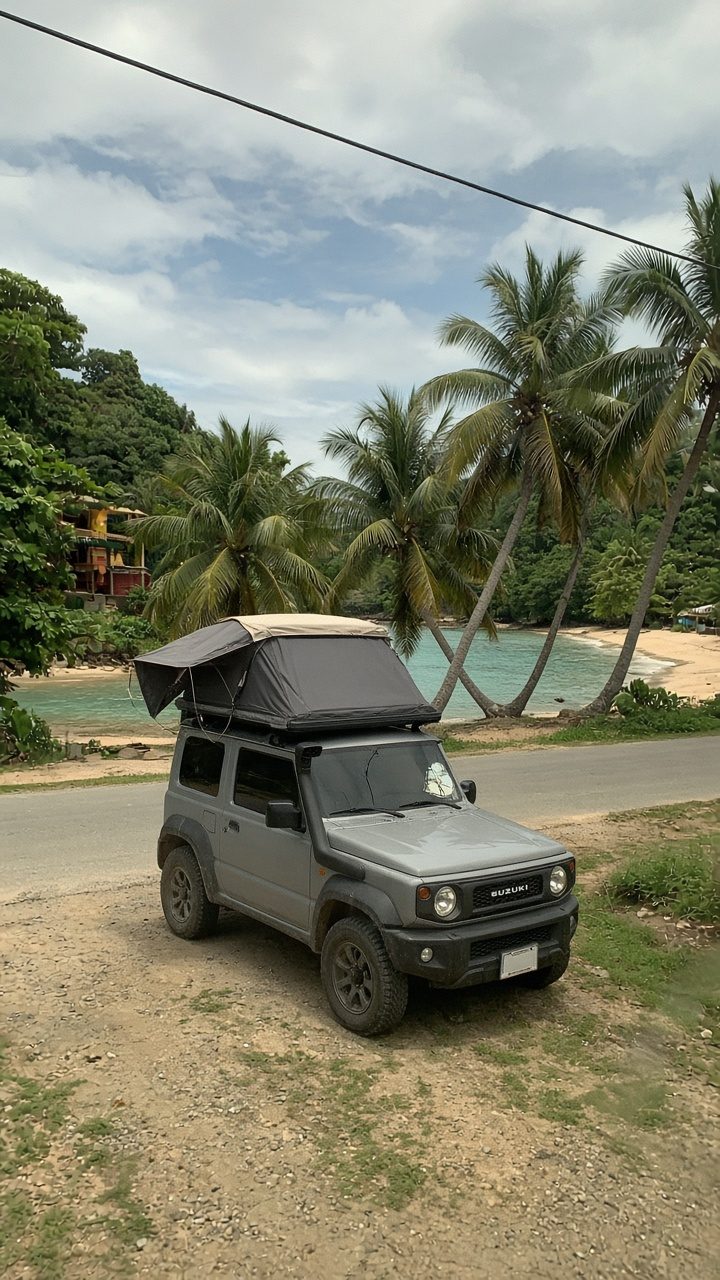
- A compact 4x4 camper is all you need — small, cheap on fuel, and doubles as free lodging.
Insider tips
- Self-cater from pulperías and the local fish guys — cooking in the rig is where the $25/day actually comes from.
- Split everything with hostel friends — cacao tours, snorkel gear, even a national-park guide are cheap per head in a group.
- The park is donation-based at Kelly Creek — give what you can; it's still the best-value wildlife in the country.
- Shoulder season is cheapest and still sunny — Sept–Oct is low season and the coast's dry window.
- Free entertainment is everywhere — beaches, reggae nights (music over the price of a drink), and the bike ride itself.
Reserve your rig
A camper is the ultimate budget hack on this coast: it's your bed, your kitchen, and your storage locker in one, so the only daily spend is food and a bicycle. Reserve a compact 4x4 camper, plan Route 32 for daylight, and let Rockin' J's, free beaches, and street patí do the rest. Book your rig and do the reggae coast on the cheap.
Before you go
Do you need a 4x4?
paved all the way — 2WD ok
Best window to fly
Any (shoulder season is cheapest)
Offline first
Download your route and offline maps before you leave the lot — signal drops on the best stretches.
Golden rule
Never drive at night — plan arrivals before dark, and use Waze like the locals do.
VerifiedCR · No counter surprises
What a Costa Rica rental actually costs
The number one thing that rattles first-timers is the price jumping at the counter. Here is the honest math, before you get there.
- Advertised daily rate$12–40 / day
- What the booking sites show. It is real — but it is not the whole price. Nobody pays only this.
- Mandatory liability (TPL / SLI)+$15–25 / day
- Required by Costa Rican law on every rental. Cannot be waived. This is the line the cheap ads leave off — it roughly doubles the sticker price. Budget for it.
- Collision damage (CDW)waivable
- Often $20–40/day — but you can usually decline it if your credit card includes rental coverage (Amex, Visa Signature, Chase Sapphire and others). Call your card, ask for a coverage letter, and bring it printed.
- Security hold on your card$1,000–2,500
- A hold, not a charge — released after you return the car clean. Some agencies hold more. Make sure your card has the headroom before you fly.
The verified-rig promise: when you reserve through VerifiedCR, the rig is inspection-checked and the operator is vetted — the price you are quoted is the price you pay. No mystery line items at pickup.