Here is the secret the guidebooks bury: September and October — the wettest, gloomiest weeks on Costa Rica's Pacific — are the driest, sunniest weeks on its Caribbean coast. While Manuel Antonio and Guanacaste disappear behind afternoon walls of rain, the reggae coast from Cahuita to Manzanillo basks in its own private summer. This is the seasonal inversion, and it is the single best answer to the most-Googled Costa Rica question: "where do I go if I'm traveling in September or October?" This six-day route is built to exploit it — a full, unhurried tour of the south Caribbean's best in the exact window everyone else writes off.
The coast doesn't run on the usual dry/wet calendar. There's no crisp dry season; it can drizzle any month. But two windows reliably deliver sun: September–October (the strongest) and February–March. Come in the Sun Run window and you get warm, clear water, calm seas, and — because you're going against the tourist tide — lower prices and open roads.
Day 1 — Daylight run to Cahuita
Drive: San José → Cahuita, ~200 km / ~4–4.5 hours via Route 32. Road notes: Route 32 climbs over the Braulio Carrillo range through the Zurquí tunnel and drops to the lowlands at Guápiles. Even in the Caribbean's dry window, the mountains can be foggy and wet — drive it in daylight and check for landslide closures. Once past Limón, it flattens.
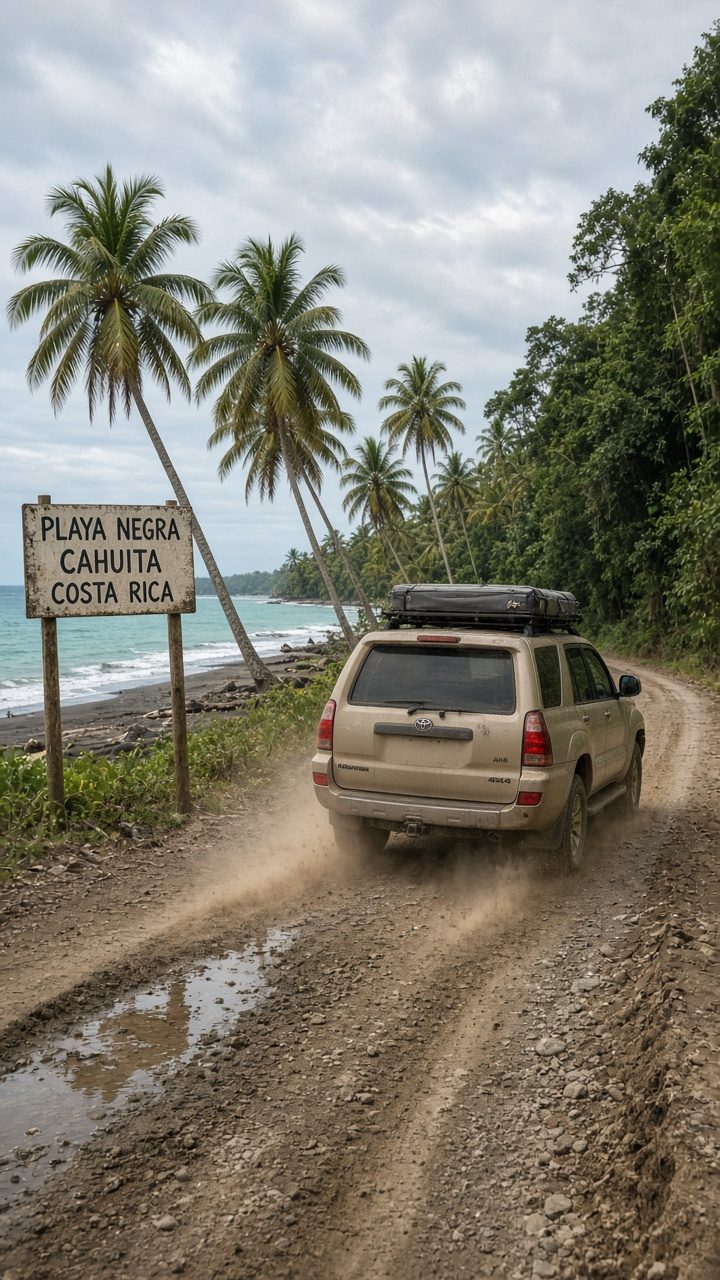
Land in Cahuita, the quiet Afro-Caribbean village that makes a mellow first base. Settle, walk the beach, and have your first coconut-milk rice and beans as the sun — the whole point of this trip — actually shows up.
Eat: Soda Kawe or a local soda. Sleep: Cahuita beach camping.
Day 2 — Cahuita National Park
Drive: none — walk in from town.
Spend the day in Cahuita National Park: the flat Kelly Creek trail (by donation) for sloths, monkeys, and iguanas with an ICT-certified guide, and — because Sept–Oct is peak water clarity — a licensed guided reef snorkel by boat over Costa Rica's largest coral reef. This is the one window where the Caribbean reef reliably clears; use it.
Eat: picnic in the park (no plastics), big plate in town after. Sleep: Cahuita beach.
Day 3 — Puerto Viejo
Drive: Cahuita → Puerto Viejo, ~17 km / ~25 min.
Shift to Puerto Viejo, the coast's lively hub. Bike the flat coast road, graze the food streets (patí, jerk, pan bon, rondón), and dig into a reggae night. In the Sun Run season the town is busy but not overwhelmed — the sweet spot.
Eat: Puerto Viejo food crawl. Sleep: in-town Puerto Viejo or Rockin' J's (hammocks ~$7–10, verify).
Day 4 — Punta Uva
Drive: Puerto Viejo → Punta Uva ~15 min.
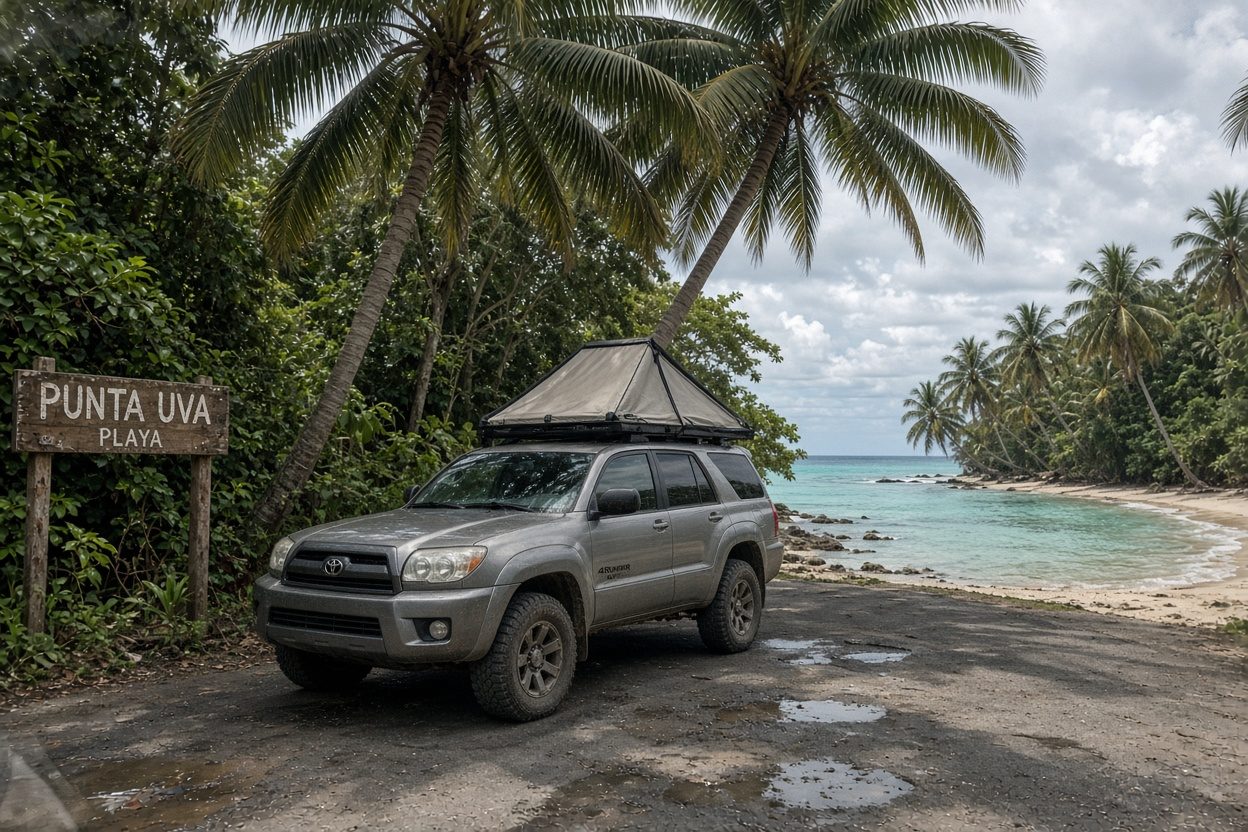
A full day at Punta Uva, the calmest, clearest swimming water on the coast — and in Sept–Oct the sea is at its gentlest. Float, snorkel the near-shore rocks, and kayak the flat bay. This is what "dry Caribbean" is supposed to feel like.
Eat: beach shack lunch; sunset back toward Puerto Viejo. Sleep: Punta Uva beachfront.
Day 5 — Manzanillo + Gandoca-Manzanillo
Drive: Punta Uva → Manzanillo ~10 min (end of the pavement).
End at the wild end: Manzanillo village and the Gandoca-Manzanillo Wildlife Refuge. Walk the flat coastal jungle trail toward Punta Mona and Tom Bay (the full trail runs about 5.5 km / 3.4 mi to Punta Mona — do as much as you like), watch for dolphins offshore, and swim in the calm coves. This is the least-developed stretch of the whole coast.
Eat: fresh fish in Manzanillo. Sleep: rotate back to Punta Uva or Rockin' J's.
Day 6 — Daylight drive out
Drive: the coast → San José, ~5 hours; leave by late morning for daylight on Route 32.
Signature stops — why go
- The seasonal inversion itself — sun and calm seas in the exact weeks the rest of Costa Rica floods.
- Cahuita reef snorkel — best water clarity of the year lands in Sept–Oct.
- Punta Uva — calmest swim on the coast, at its gentlest in the dry window.
- Gandoca-Manzanillo Refuge — wild coastal jungle, dolphins, and the road's end.
Where to camp & stay (named)
- Cahuita beach camping, Rockin' J's (Puerto Viejo), and Punta Uva beachfront — rotate through the three for the full coast.
Logistics & road reality
- The inversion is the pitch: book east when the Pacific forecast turns to rain. The Caribbean's Sept–Oct window is the country's most reliable sun in those months.
- Route 32 daylight only — the mountains stay wet even when the coast is dry.
- Snorkel the reef early in the trip while a calm forecast holds; boats don't run in swell.
- A mid 4x4 camper gives comfortable range for the rotation; the coast road is paved.
Insider tips
- Watch the forecast and pounce. The Caribbean's dry weeks aren't a fixed date — when the Pacific goes red and the Caribbean goes clear, that's your signal to point the rig east.
- Shoulder-season pricing is real — Sept–Oct is low season by the national calendar, so lodging and tours are cheaper even as the sun shines.
- Snorkel Cahuita in this window — it's the one time of year the Caribbean reliably clears.
- Swim Punta Uva, watch Cocles. Even in calm season, Cocles keeps its rips.
- Bring rain gear anyway — "driest" on the Caribbean still means the odd tropical shower; it just won't own your whole afternoon.
Reserve your rig
The seasonal inversion is a plan you can only fully exploit on wheels: watch the forecast, and when the Pacific drowns, point a self-contained camper east to the one sunny corner of the country. Reserve a mid 4x4 camper, plan Route 32 for daylight, and snorkel the reef while it's clear. Book your rig and beat the rain.
Before you go
Do you need a 4x4?
paved all the way — 2WD ok
Best window to fly
Sept–Oct (the Caribbean's driest, sunniest window)
Offline first
Download your route and offline maps before you leave the lot — signal drops on the best stretches.
Golden rule
Never drive at night — plan arrivals before dark, and use Waze like the locals do.
VerifiedCR · No counter surprises
What a Costa Rica rental actually costs
The number one thing that rattles first-timers is the price jumping at the counter. Here is the honest math, before you get there.
- Advertised daily rate$12–40 / day
- What the booking sites show. It is real — but it is not the whole price. Nobody pays only this.
- Mandatory liability (TPL / SLI)+$15–25 / day
- Required by Costa Rican law on every rental. Cannot be waived. This is the line the cheap ads leave off — it roughly doubles the sticker price. Budget for it.
- Collision damage (CDW)waivable
- Often $20–40/day — but you can usually decline it if your credit card includes rental coverage (Amex, Visa Signature, Chase Sapphire and others). Call your card, ask for a coverage letter, and bring it printed.
- Security hold on your card$1,000–2,500
- A hold, not a charge — released after you return the car clean. Some agencies hold more. Make sure your card has the headroom before you fly.
The verified-rig promise: when you reserve through VerifiedCR, the rig is inspection-checked and the operator is vetted — the price you are quoted is the price you pay. No mystery line items at pickup.