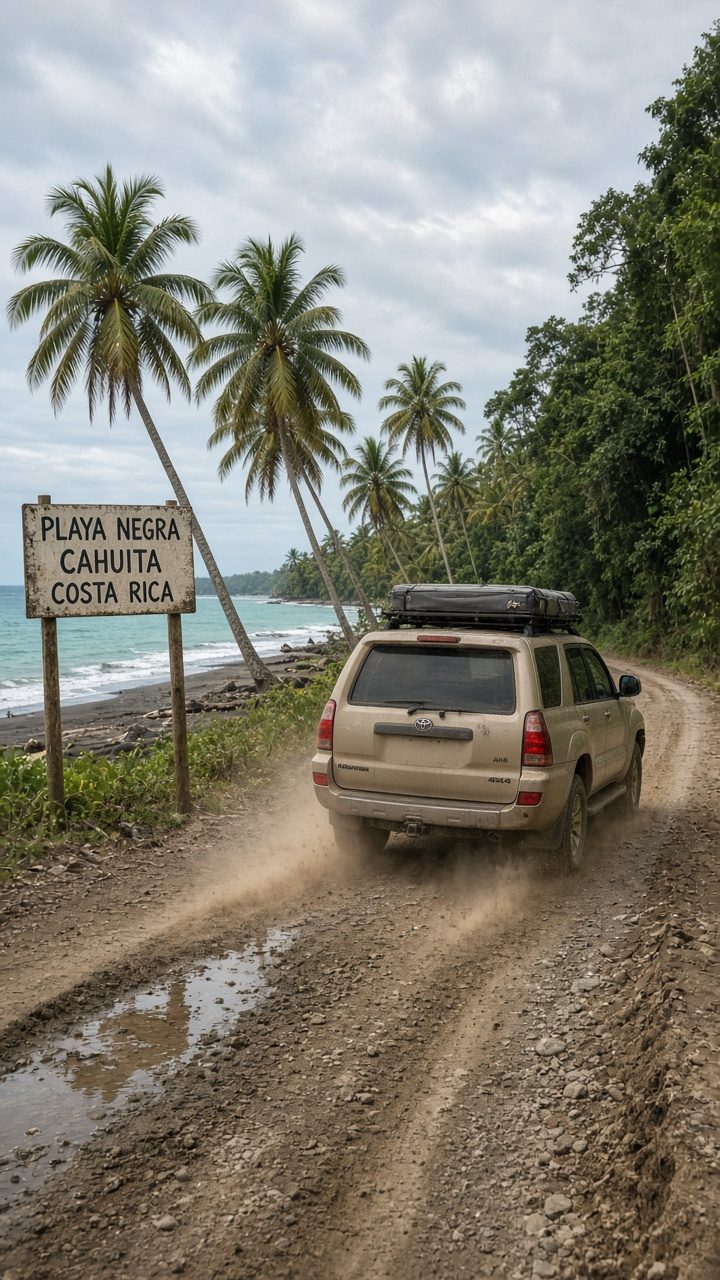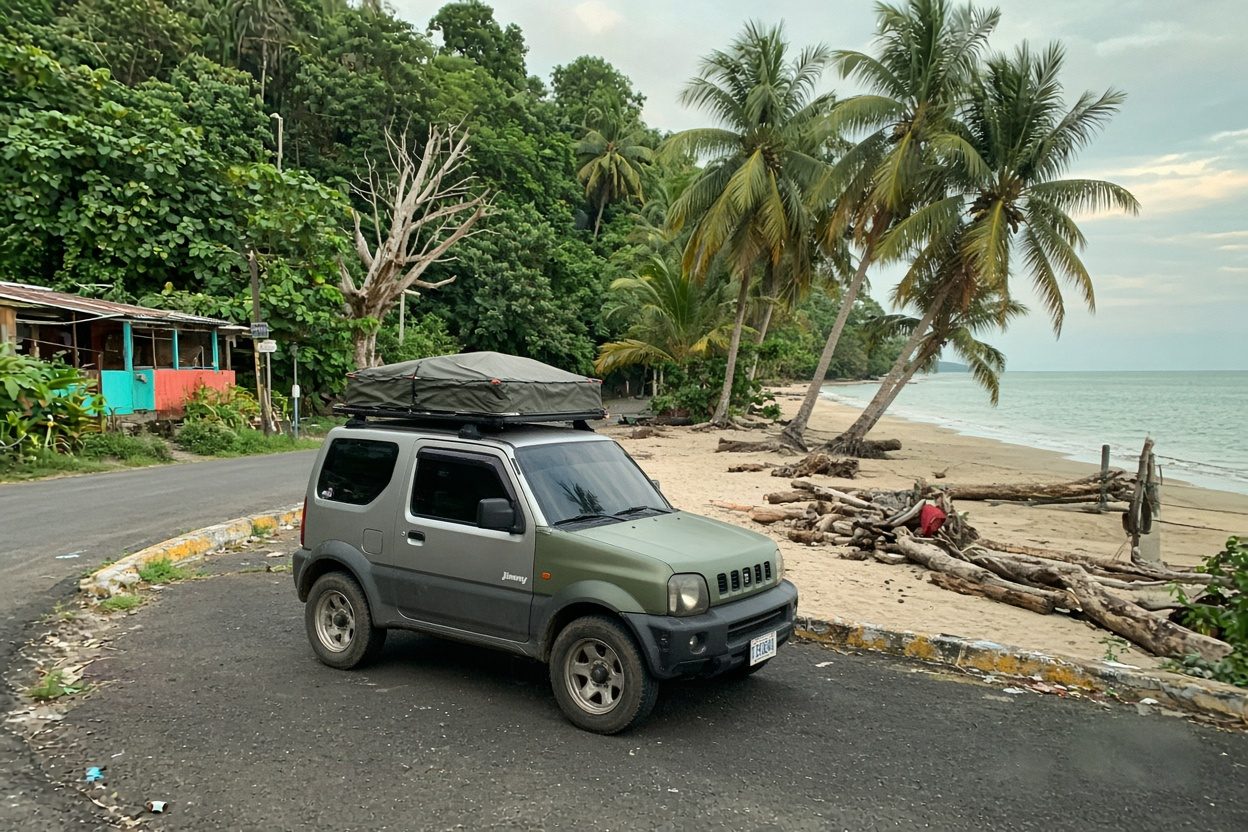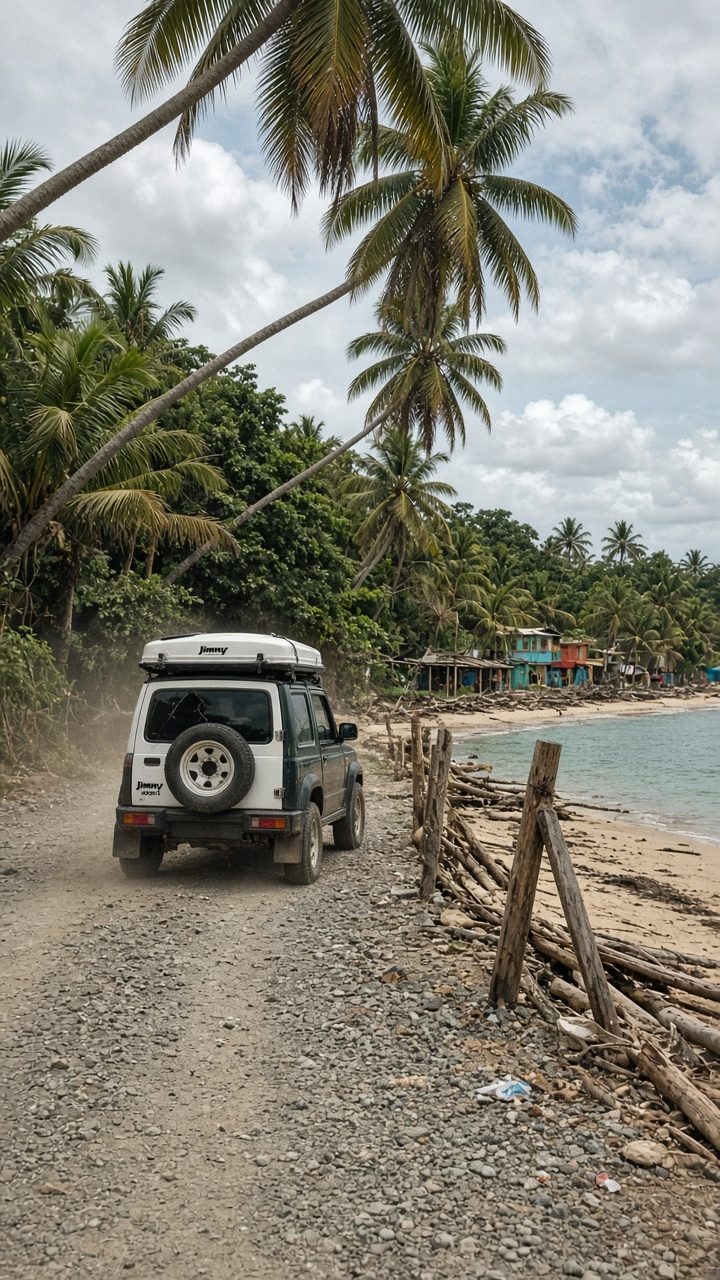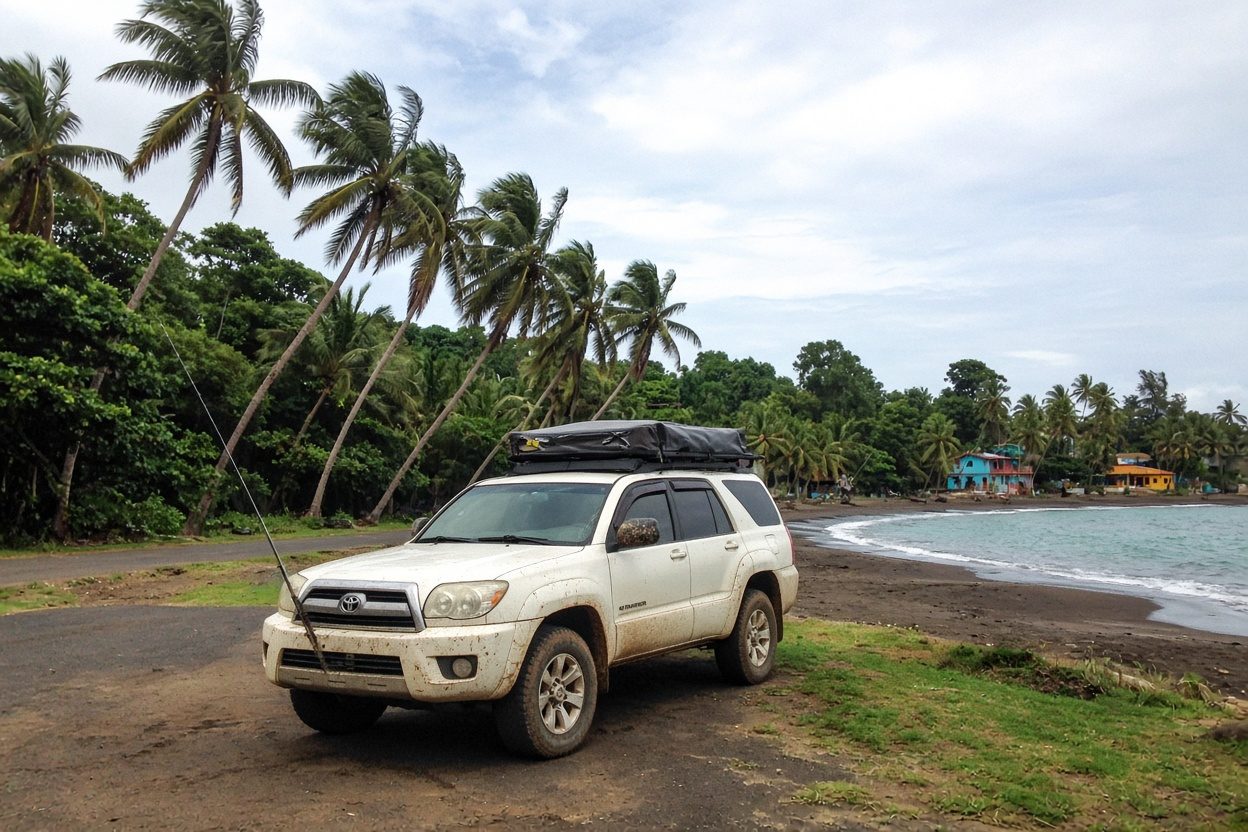
Costa Rica's south Caribbean might be the most under-rated family coast in the country: the wildlife trails are flat enough for small legs, the sloths practically wave from the trees, there's an animal-rescue center kids adore, and — crucially — there is one beach where the water goes calm enough that parents can actually relax. This five-day loop threads the easy wins together and steers deliberately clear of the coast's one real hazard: the rip currents at Cocles. Keep the swimming at Punta Uva and this becomes a low-stress, high-delight family week.
Timing matters for families more than anyone: come in the coast's dry, calm windows — September–October or February–March — when the seas lie down and the sun holds. As a bonus, those are the weeks the Pacific is often rained out, so the Caribbean becomes the smart family call.
Day 1 — Settle into Cahuita
Drive: San José → Cahuita, ~200 km / ~4–4.5 hours via Route 32. Road notes: Route 32 crosses the Braulio Carrillo mountains — fog, rain, and possible landslide closures make it a daylight-only drive with kids aboard. Leave early, pack snacks, check conditions. Below Limón it flattens into an easy coastal cruise.
Cahuita is the ideal family base: small, safe, walkable, and quieter than Puerto Viejo's nightlife scene. Arrive, settle, and let everyone decompress on the beach. An early night sets up a full day tomorrow.
Eat: Soda Kawe or a family-friendly soda — coconut rice and beans, chicken, fresh fish. Sleep: Cahuita beach camping.
Day 2 — Cahuita National Park sloth trail
Drive: none — walk in from town.
The Cahuita National Park trail from the Kelly Creek entrance (by donation) is the family jackpot: flat, shaded, and short-able — you can turn around whenever the youngest tires. Sloths, howler and white-faced monkeys, iguanas, and colorful crabs line the first stretch, often within minutes of the gate. Hire an ICT-certified guide — kids see ten times more with a spotting scope and a trained eye, and the guide keeps everyone safely on the path (there are eyelash vipers in the trees; a good reason not to wander). Break for a swim at Playa Blanca inside the park where it's calm.
Eat: pack a picnic (no single-use plastics in the park); big plate in town after. Sleep: Cahuita beach.
Day 3 — Jaguar Rescue Center
Drive: Cahuita → the Jaguar Rescue Center (near Playa Chiquita, past Puerto Viejo), ~40 min.
The Jaguar Rescue Center is a guaranteed family highlight: a rehabilitation center for sloths, monkeys, birds, and reptiles rescued and readied for release. Public guided tours run in the morning (commonly around 9:30 and 11:30 AM, roughly 2 hours; children under 10 are typically free, adults around $25–28 — verify current times and price, and note it's usually closed some afternoons/Sundays for the animals). Kids meet the stories behind the rescues and learn why you don't keep wild animals — the good kind of lesson that sticks.
Eat: lunch in Puerto Viejo or Playa Chiquita after the tour. Sleep: move down to Punta Uva for the calm-water finale.
Day 4 — Punta Uva: calm swim + kayak
Drive: short hops along the paved coast road (Puerto Viejo → Punta Uva ~15 min).
Punta Uva is the whole reason the swimming works on this trip: the rocky point shelters the bay into the calmest, safest water on the south Caribbean. Warm, shallow near shore, palm shade on the sand — a full easy day of floating, sandcastles, near-shore snorkeling over the rocks, and a family kayak or SUP paddle in flat water. This is where parents finally exhale.
Eat: a beach shack lunch at Punta Uva. Sleep: Punta Uva beachfront camping — shade, calm, and the beach out the door.
Day 5 — Slow morning, daylight drive out
Drive: Punta Uva → San José, ~5 hours; leave by late morning for daylight on Route 32.
Signature stops — why go
- Cahuita National Park — flat, short-able sloth-and-monkey trail with calm in-park swimming; the easiest big-wildlife hit in Costa Rica.
- Jaguar Rescue Center — hands-on-adjacent animal rescue tour kids love; under-10s often free.
- Punta Uva — the calmest, safest swimming water on the coast; the family beach.
Where to camp & stay (named)
- Cahuita beach camping — quiet base near the park.
- Punta Uva beachfront — shade, calm water, and the safest swimming for the last nights.
Logistics & road reality
- Swim at Punta Uva, not Cocles. Cocles has serious rip currents — beautiful to look at, not a kids' swimming beach. This one rule keeps the trip safe.
- Route 32 daylight only, weather-checked — the one demanding drive of the week.
- The coast road is paved and gentle; a mid 4x4 camper gives families the room and comfort without needing hardcore off-road capability.
- Jaguar Rescue Center hours vary and it closes for the animals on some days — verify before you build the day around it.
Insider tips
- Rent bikes with child seats in Puerto Viejo — the flat coast road is safer and more fun on two wheels than fighting for parking.
- Do the park trail early — cooler for little legs, and the wildlife is most active before mid-morning.
- Book the rescue center's morning slot and confirm the day; the popular tours fill and afternoons are often closed.
- Pack reef shoes — Punta Uva's near-shore rocks are great for snorkeling but hard on bare feet.
- Caribbean humidity means mosquitoes — bring repellent and long-sleeve layers for dusk.
Reserve your rig
A family week where the wildlife is easy, the rescue center is a hit, and the swimming is genuinely safe — that's a hard combination to book from a hotel front desk, but simple from a camper you can move down the coast a few minutes at a time. Reserve a mid 4x4 camper, aim for the calm Sept–Oct or Feb–Mar seas, and plan Route 32 for daylight. Book your rig for the family Caribbean.
Before you go
Do you need a 4x4?
paved all the way — 2WD ok
Best window to fly
Sept–Oct & Feb–Mar (calmest seas)
Offline first
Download your route and offline maps before you leave the lot — signal drops on the best stretches.
Golden rule
Never drive at night — plan arrivals before dark, and use Waze like the locals do.
VerifiedCR · No counter surprises
What a Costa Rica rental actually costs
The number one thing that rattles first-timers is the price jumping at the counter. Here is the honest math, before you get there.
- Advertised daily rate$12–40 / day
- What the booking sites show. It is real — but it is not the whole price. Nobody pays only this.
- Mandatory liability (TPL / SLI)+$15–25 / day
- Required by Costa Rican law on every rental. Cannot be waived. This is the line the cheap ads leave off — it roughly doubles the sticker price. Budget for it.
- Collision damage (CDW)waivable
- Often $20–40/day — but you can usually decline it if your credit card includes rental coverage (Amex, Visa Signature, Chase Sapphire and others). Call your card, ask for a coverage letter, and bring it printed.
- Security hold on your card$1,000–2,500
- A hold, not a charge — released after you return the car clean. Some agencies hold more. Make sure your card has the headroom before you fly.
The verified-rig promise: when you reserve through VerifiedCR, the rig is inspection-checked and the operator is vetted — the price you are quoted is the price you pay. No mystery line items at pickup.