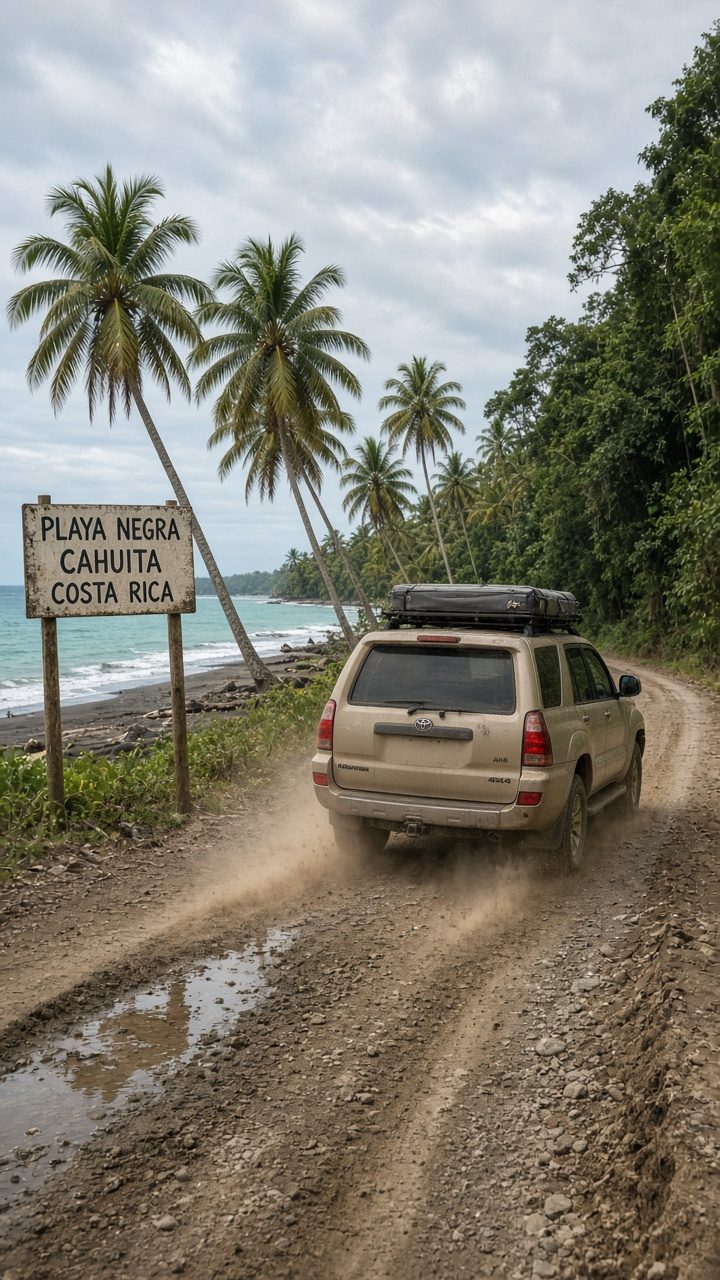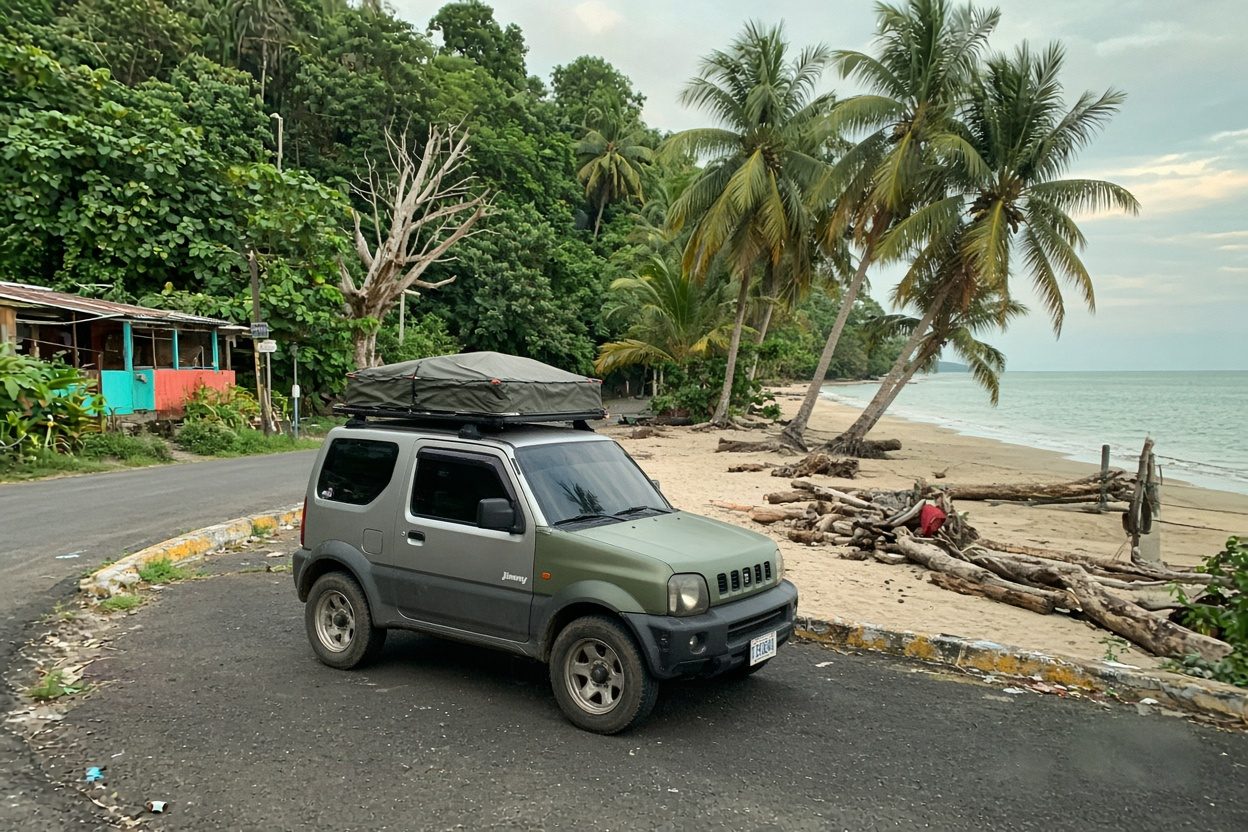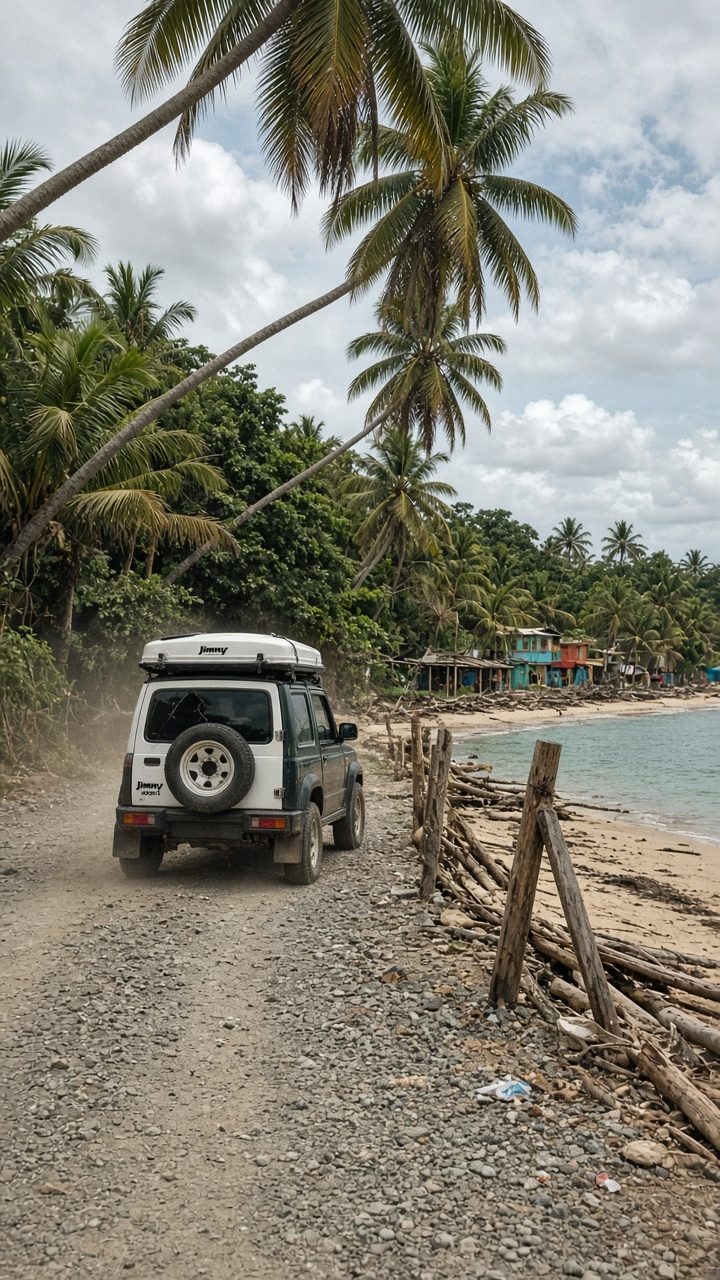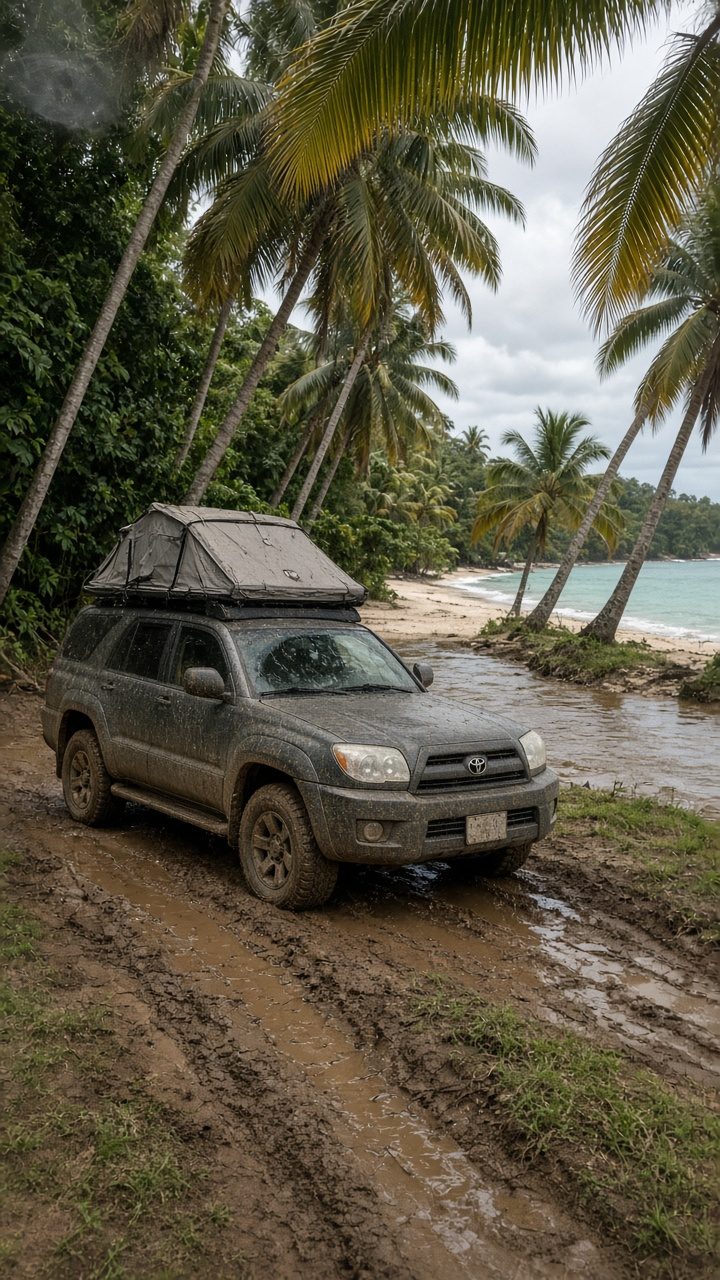
Everyone "knows" September and October are Costa Rica's rainy months. That's true — for the Pacific. The country's weather runs on an inversion: when the Pacific coast is drowning in its wettest weeks of the year, the Caribbean coast enjoys its driest, sunniest, calmest window. September and October are consistently reported as among the best months on the Caribbean side, with calm seas and fewer passing showers than even July. This loop is the answer to the most-searched shoulder-season question — "where do I go in Costa Rica in September/October?" — and the answer is: east.
The play is simple and smart. Start with the high-water rafting the green season makes epic near Sarapiquí, boat into Tortuguero during peak green-turtle nesting, then settle into the string of southern Caribbean beach towns during their finest weeks. You pay low-season prices and shoulder-season crowds while collecting sun the rest of the country can't offer. It's a 🟡 trip — a mid 4x4 handles all of it — with one honest 🔴 leg: the Route 32 crossing over Braulio Carrillo, which you'll bookend the loop with.
Because Tortuguero has no road, this is a "park-and-boat" itinerary: your rig waits at La Pavona while you take a lancha into the canals. Everything else is drivable, and the driving is short.
Day-by-Day
Days 1–2 — San José to Sarapiquí (High-Water Rafting)
Drive: SJO to Puerto Viejo de Sarapiquí is ~2–2.5 hrs. In the green season the Sarapiquí River runs full, delivering lively Class II–III whitewater (guided trips commonly from around $60/adult; the nearby Toro runs Class III–IV for stronger paddlers). Do: a half-day raft, then a chocolate-and-jungle afternoon at a Sarapiquí reserve (Tirimbina's hanging bridge and cacao tour is the classic). Eat/Sleep: Sarapiquí has riverside eco-lodges; a dedicated overland camp is not confirmed here — verify a bookable site locally.
Days 3–4 — Tortuguero (Park at La Pavona, Boat In)
Drive + boat: From Sarapiquí, cut across to La Pavona (~2–2.5 hrs via Guápiles/Cariari), park the rig in secure lot parking, and take the ~1–1.5 hr lancha to Tortuguero village. Why now: green sea turtles nest July–October, peaking August–September, so Sept–Oct hits the tail of the arribada with excellent odds plus hatchlings. Do: a dawn or dusk canal tour by boat or kayak, and a licensed night turtle walk (guide mandatory, no flash). Sleep: Tortuguero village lodges and cabinas — book ahead; the van stays at La Pavona.
Days 5–8 — The Southern Caribbean at Its Best
Drive: Boat back to La Pavona, then south toward Cahuita and Puerto Viejo (~2.5–3 hrs). These four days are the payoff — the coast's driest, calmest stretch. Suggested rhythm:
- Cahuita: walk Cahuita National Park (donation entry) for sloths and the reef trail; calm seas make snorkeling viable now.
- Puerto Viejo: the food and reggae hub — rondón, patí, jerk; live music at night.
- Punta Uva: the calmest, most swimmable water on the coast — a day of hammocks and kayaking.
- Manzanillo & Gandoca-Manzanillo: a coastal jungle hike to Punta Mona, dolphins offshore.
- Bribri cacao/chocolate half-day for the origin story behind the coast's chocolate.
Eat/Sleep: rotate Cahuita beach lodging → in-town Puerto Viejo or Rockin' J's → Punta Uva beachfront for the quiet finish.
Day 9 — Braulio Carrillo / Route 32
Drive: Head back up Route 32 through Braulio Carrillo National Park toward San José. This is the 🔴 leg — steep, foggy, landslide-prone, and best driven in daylight. Even in the Caribbean's dry window the mountain pass can fog and slide, so check for closures before you commit. Break at the Zurquí sector overlooks. Sleep: Central Valley for an easy airport morning.
Day 10 — Return
Short drive to SJO and rig return. Keep a buffer for any Route 32 delay.
Signature Stops (Why Go)
- The seasonal inversion itself — sun on the Caribbean while the Pacific is rained out.
- Tortuguero canals + green-turtle nesting — the Amazon-of-Costa-Rica boat wildlife at peak season.
- Cahuita National Park — donation-entry reef and sloth trail, snorkelable in the calm Sept–Oct seas.
- Sarapiquí high water — the green season's gift to rafters.
Where to Camp / Stay (Named)
- Sarapiquí: riverside eco-lodges (confirm a bookable overland site locally — none verified).
- Tortuguero: village lodges/cabinas (van parked at La Pavona lot).
- Cahuita: beachside lodging near the NP.
- Puerto Viejo: Rockin' J's (budget) or in-town hotels.
- Punta Uva: beachfront cabinas for the calm finale.
Logistics & Road Reality
- 🔴 Route 32 (Braulio Carrillo): daylight-only; fog + landslides; verify closures before transiting (both ends of this loop touch it).
- 🟡 La Pavona: no road to Tortuguero — park the rig, take the lancha; secure-parking packages exist.
- 🟢 Southern Caribbean roads (Cahuita–Puerto Viejo–Manzanillo) are paved and easy.
- Season: Sept–Oct is the Caribbean's driest window, but "driest" is not "dry" — pack a rain shell; afternoon showers still pass.
- Turtles: green nesting peaks Aug–Sep; night walks require a licensed guide and no flash photography.
- Safety: petty theft is the coast's real risk — lock the rig, hide valuables. Rip currents at Cocles; swim at Punta Uva.
Insider Tips
- Sell the inversion. If a travel companion is nervous about "rainy season," this loop is your proof the Caribbean flips the calendar — book it precisely because it's Sept–Oct.
- Go turtle-walking early in the window. September still catches nesting and hatchlings; by late October green nesting is winding down.
- Cross Route 32 in the morning, both times. Fog and slides build later in the day; a daylight pass is a safety decision, not a preference.
- Park smart at La Pavona. Use the established secure lot and leave nothing visible in the rig for your two Tortuguero nights.
- Keep expectations honest. The Caribbean is drier, not desert — the reward is sun most days, not zero rain.
Reserve Your Rig
This loop rewards a capable, comfortable mid 4x4 with room for wet gear and secure storage for your La Pavona nights. VerifiedCR sets you up with the right rig, secure-parking coordination for Tortuguero, a licensed turtle-guide referral, and live Route 32 closure checks — so you spend Sept–Oct in the sun while everyone else is checking Pacific rain radar. Reserve your rig and chase the dry side.
Before you go
Do you need a 4x4?
4x4 required
Best window to fly
Sept–Oct — the Caribbean's driest, sunniest window (the seasonal inversion)
Offline first
Download your route and offline maps before you leave the lot — signal drops on the best stretches.
Golden rule
Never drive at night — plan arrivals before dark, and use Waze like the locals do.
VerifiedCR · No counter surprises
What a Costa Rica rental actually costs
The number one thing that rattles first-timers is the price jumping at the counter. Here is the honest math, before you get there.
- Advertised daily rate$12–40 / day
- What the booking sites show. It is real — but it is not the whole price. Nobody pays only this.
- Mandatory liability (TPL / SLI)+$15–25 / day
- Required by Costa Rican law on every rental. Cannot be waived. This is the line the cheap ads leave off — it roughly doubles the sticker price. Budget for it.
- Collision damage (CDW)waivable
- Often $20–40/day — but you can usually decline it if your credit card includes rental coverage (Amex, Visa Signature, Chase Sapphire and others). Call your card, ask for a coverage letter, and bring it printed.
- Security hold on your card$1,000–2,500
- A hold, not a charge — released after you return the car clean. Some agencies hold more. Make sure your card has the headroom before you fly.
The verified-rig promise: when you reserve through VerifiedCR, the rig is inspection-checked and the operator is vetted — the price you are quoted is the price you pay. No mystery line items at pickup.