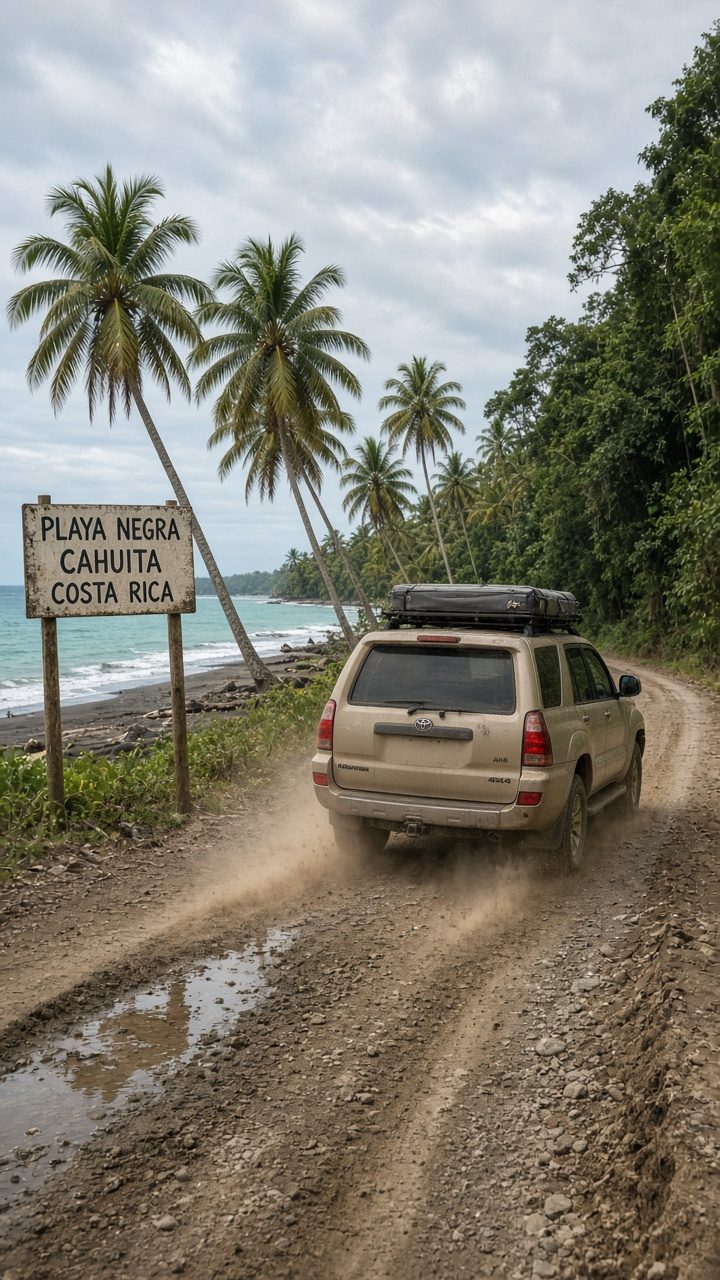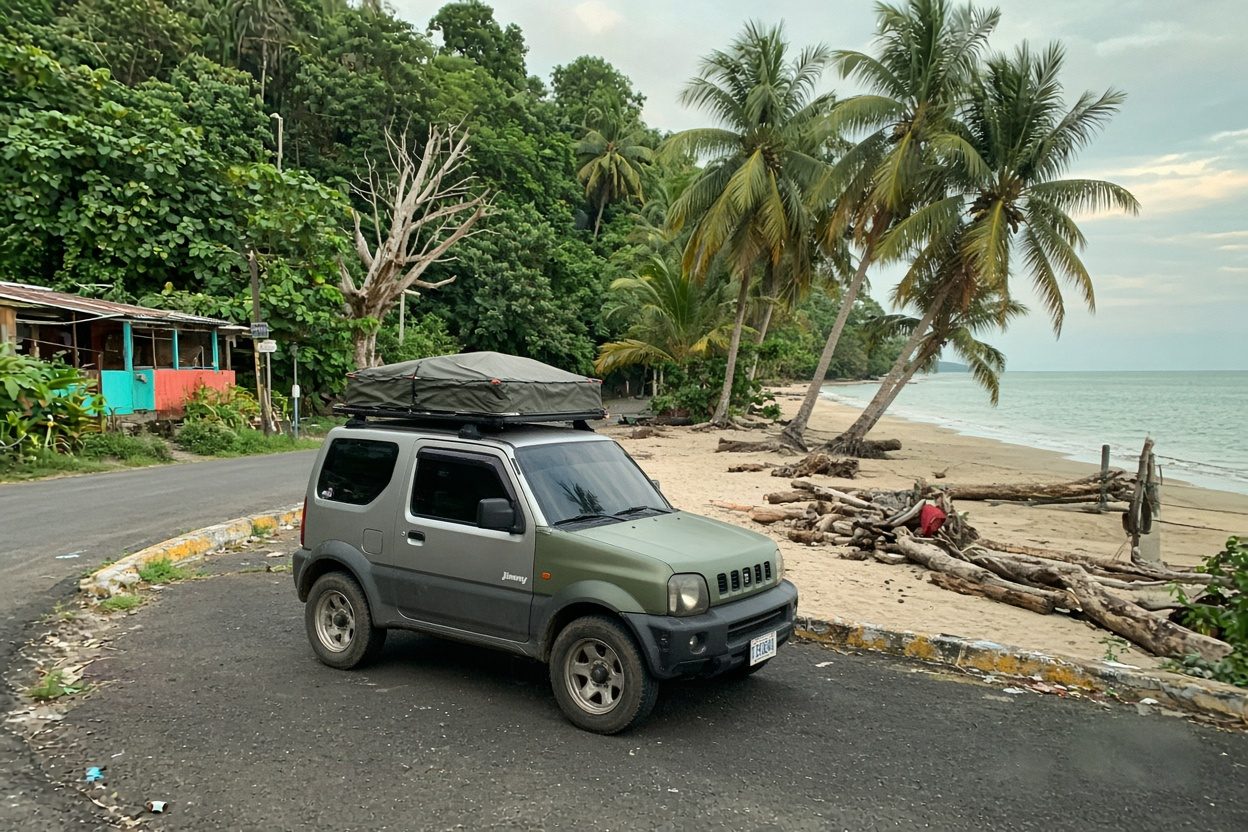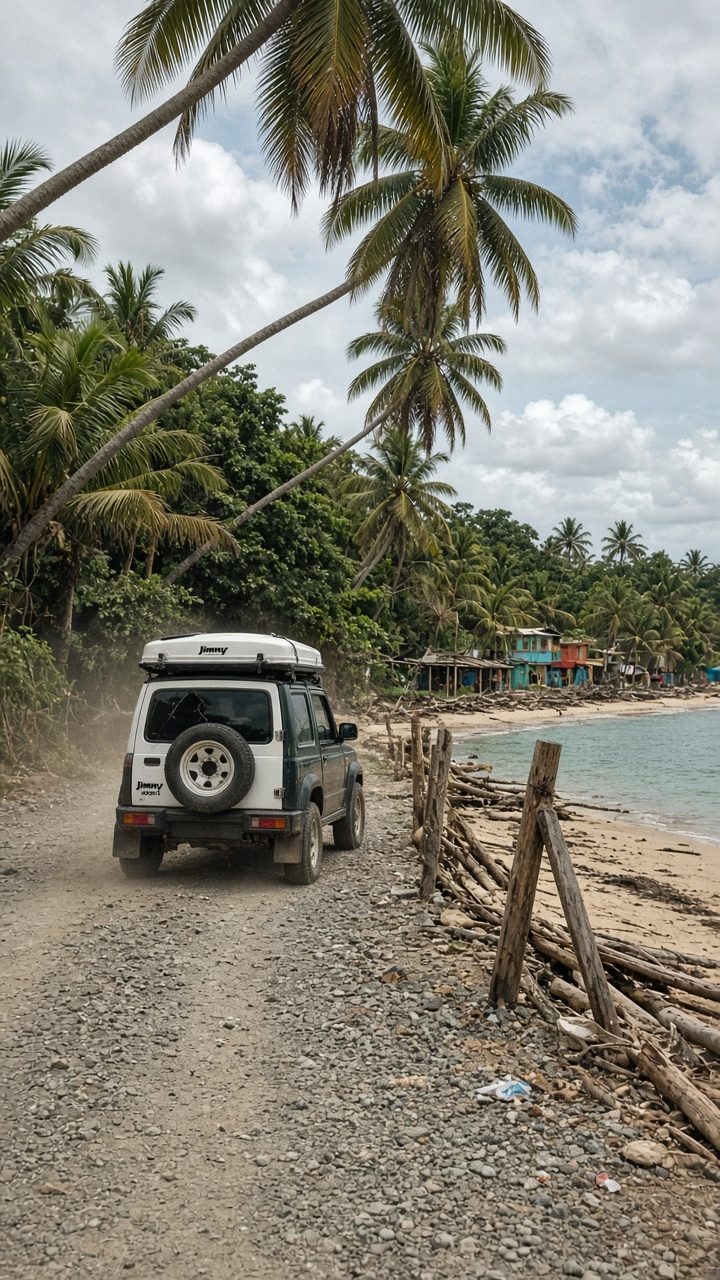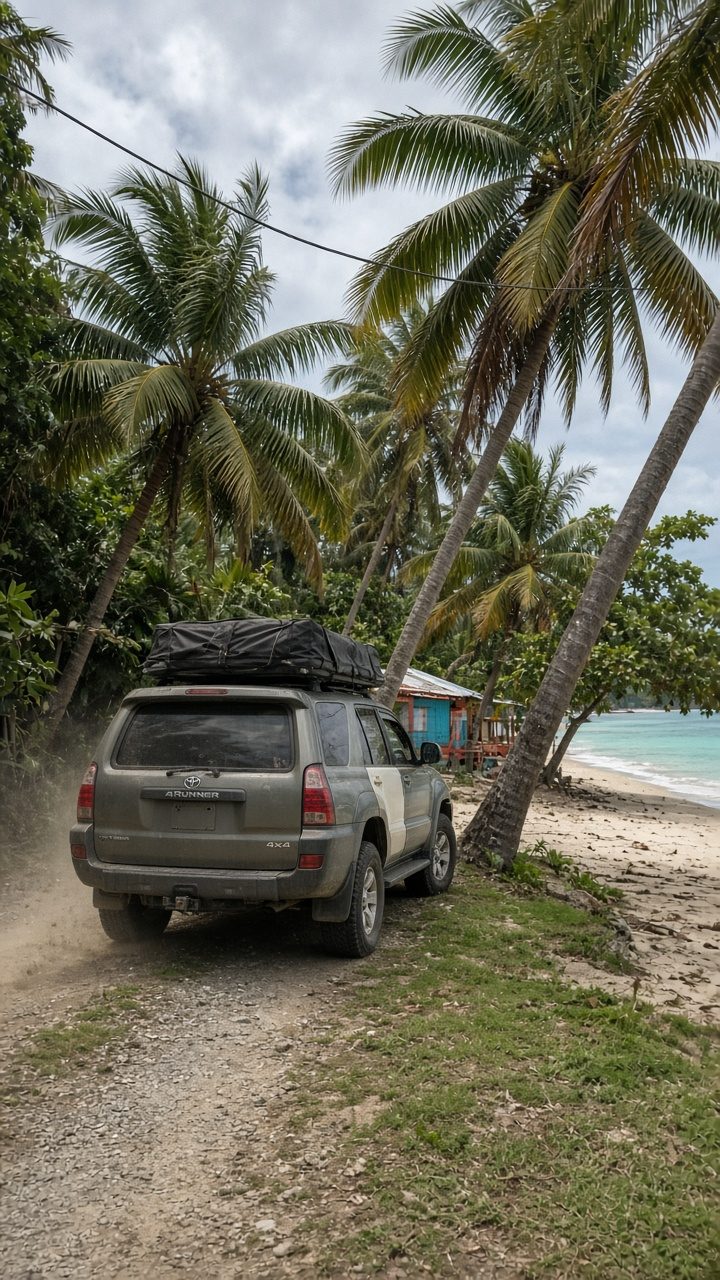
Tortuguero is the Caribbean's great pilgrimage: a roadless village on a barrier of jungle and canal where, on the right dark night in the right months, a 300-pound green sea turtle hauls herself out of the surf to dig a nest in the sand she was born on. This is one of the most important green-turtle rookeries on Earth, and Costa Rica protects it fiercely. This five-day route gets you in for the nesting spectacle, then swings south to the reef-and-jungle coast so you leave with the whole Caribbean, not just the turtles.
The season is the whole point. Green-turtle nesting at Tortuguero officially runs July 1 to mid-October, with the peak in August and September (nesting can begin trickling in from late June, and hatchlings scramble through into November — plan around the Aug–Sep peak for the best odds). The other non-negotiable fact: there is no road to Tortuguero. You drive to the river landing at La Pavona, park the rig there, and take a boat in.
Day 1 — Route 32 to La Pavona, park the van, boat in
Drive: San José → La Pavona, ~3.5–4 hours via Route 32 (through Guápiles, then a secondary road to the La Pavona landing). Then a ~1–1.5 hour boat through the canals to Tortuguero village. Road notes: Route 32 over the Braulio Carrillo mountains is a daylight-only drive — fog, rain, and landslide closures. Aim to reach La Pavona for a morning or early-afternoon boat: public lanchas run on a set schedule and the last public boat leaves around 4:30 PM, so don't dawdle. Your rig stays parked at La Pavona (paid, guarded lots) — you cannot drive to the village.
Arrive in Tortuguero by afternoon, settle into the village (no cars, just footpaths and canals), and get your bearings. Book your night turtle walk and morning canal tour now through a licensed operator.
Eat: village sodas — Caribbean rice and beans, fresh fish. Sleep: Tortuguero village lodging (the van is at La Pavona) — book ahead in nesting season.
Day 2 — Canal tour + night turtle walk
Drive: none — everything is by boat or on foot.
At dawn, take a canal tour by boat or kayak through the national park's waterways — this is one of the best wildlife-watching trips in the country: caimans, river otters, three species of monkey, sloths, toucans, and a dizzying bird list, all from the water. Rest through the heat of the day.
After dark comes the reason you came: the guided night turtle walk. These are strictly regulated to protect the animals — you go only with a licensed guide, in small groups, no white lights, no photos on the beach. When it works, you watch a green turtle excavate her nest and lay in near-total darkness. It is patient, quiet, and unforgettable. It is also wild nature — sightings are likely in peak season but never guaranteed.
Eat: dinner in the village before the walk. Sleep: Tortuguero village.
Day 3 — Boat back, drive south to Cahuita
Drive: boat Tortuguero → La Pavona (~1–1.5 hrs, morning departure), retrieve the rig, then drive to Cahuita, roughly 3–3.5 hours down the coast through Limón.
Catch a morning boat out, collect the van, and trade the roadless north for the reef coast of the south. By evening you're in Cahuita, a different Caribbean — Afro-Caribbean village, coral reef, and a jungle trail that walks with sloths.
Eat: Cahuita — Soda Kawe or a local soda. Sleep: Cahuita beach camping.
Day 4 — Cahuita National Park
Drive: none — walk into the park from town.
Spend the day in Cahuita National Park: the flat shoreline trail from the Kelly Creek entrance (by donation) is thick with sloths, howler and white-faced monkeys, and eyelash pit vipers — hire an ICT-certified guide at the gate to actually find them. If the sea is calm and clear, add a licensed guided reef snorkel by boat over Costa Rica's largest coral reef.
Eat: big Caribbean plate in Cahuita. Sleep: Cahuita beach.
Day 5 — Daylight drive out
Drive: Cahuita → San José, ~4–4.5 hours; leave mid-morning for daylight on Route 32.
Signature stops — why go
- Tortuguero night turtle walk — witnessing a green turtle nest in one of the world's key rookeries; the trip's headline, Aug–Sep peak.
- Tortuguero canals — dawn boat safari through pristine jungle waterways; caimans, otters, monkeys, birds.
- Cahuita National Park — sloth-heavy jungle trail plus the country's largest reef, all in one free park.
Where to camp & stay (named)
- Tortuguero village lodging (van parked at La Pavona) — book ahead in nesting season; the village fills up.
- Cahuita beach camping for the southern nights.
Logistics & road reality
- The van stays at La Pavona. Use a paid, guarded parking lot; take only what you need to the village. This is the single biggest logistical quirk of the trip.
- Catch a morning/midday boat. Last public lancha out of La Pavona is around 4:30 PM — a late Route 32 crossing can strand you overnight at the landing.
- Night turtle walks are licensed-guide-only and tightly controlled — no independent beach access at night, no lights, no photos. Book through the village's official system.
- Route 32 daylight only, weather-checked, both directions.
- A mid 4x4 camper is the right tier — you'll want the range and comfort for the longer transits, even though the van sleeps at La Pavona for two nights.
Insider tips
- Go in August–September for the peak — nesting odds are highest and it overlaps the coast's driest, sunniest weeks.
- Book turtle walk + canal tour on arrival day. Slots are capped for conservation and fill fast in season.
- Pack a small dry bag for the village and leave the bulk of your gear locked in the van at La Pavona.
- Respect the dark. No flash, no white flashlight on the nesting beach — it disorients turtles and hatchlings, and guides will end the walk over it.
- Add the reef in Cahuita only if the sea is calm — Caribbean visibility is best Sept–Oct, right in turtle season.
Reserve your rig
Tortuguero's roadless quirk is exactly why a self-sufficient camper shines: drive to La Pavona, lock up, boat in for the turtles, then have your own base waiting for the reef coast south. Reserve a mid 4x4 camper, target the Aug–Sep nesting peak, and plan every Route 32 leg for daylight. Book your rig and time the rookery.
Before you go
Do you need a 4x4?
gravel sections — 2WD ok in dry season
Best window to fly
Jul–Oct green-turtle nesting (peak Aug–Sep)
Offline first
Download your route and offline maps before you leave the lot — signal drops on the best stretches.
Golden rule
Never drive at night — plan arrivals before dark, and use Waze like the locals do.
VerifiedCR · No counter surprises
What a Costa Rica rental actually costs
The number one thing that rattles first-timers is the price jumping at the counter. Here is the honest math, before you get there.
- Advertised daily rate$12–40 / day
- What the booking sites show. It is real — but it is not the whole price. Nobody pays only this.
- Mandatory liability (TPL / SLI)+$15–25 / day
- Required by Costa Rican law on every rental. Cannot be waived. This is the line the cheap ads leave off — it roughly doubles the sticker price. Budget for it.
- Collision damage (CDW)waivable
- Often $20–40/day — but you can usually decline it if your credit card includes rental coverage (Amex, Visa Signature, Chase Sapphire and others). Call your card, ask for a coverage letter, and bring it printed.
- Security hold on your card$1,000–2,500
- A hold, not a charge — released after you return the car clean. Some agencies hold more. Make sure your card has the headroom before you fly.
The verified-rig promise: when you reserve through VerifiedCR, the rig is inspection-checked and the operator is vetted — the price you are quoted is the price you pay. No mystery line items at pickup.