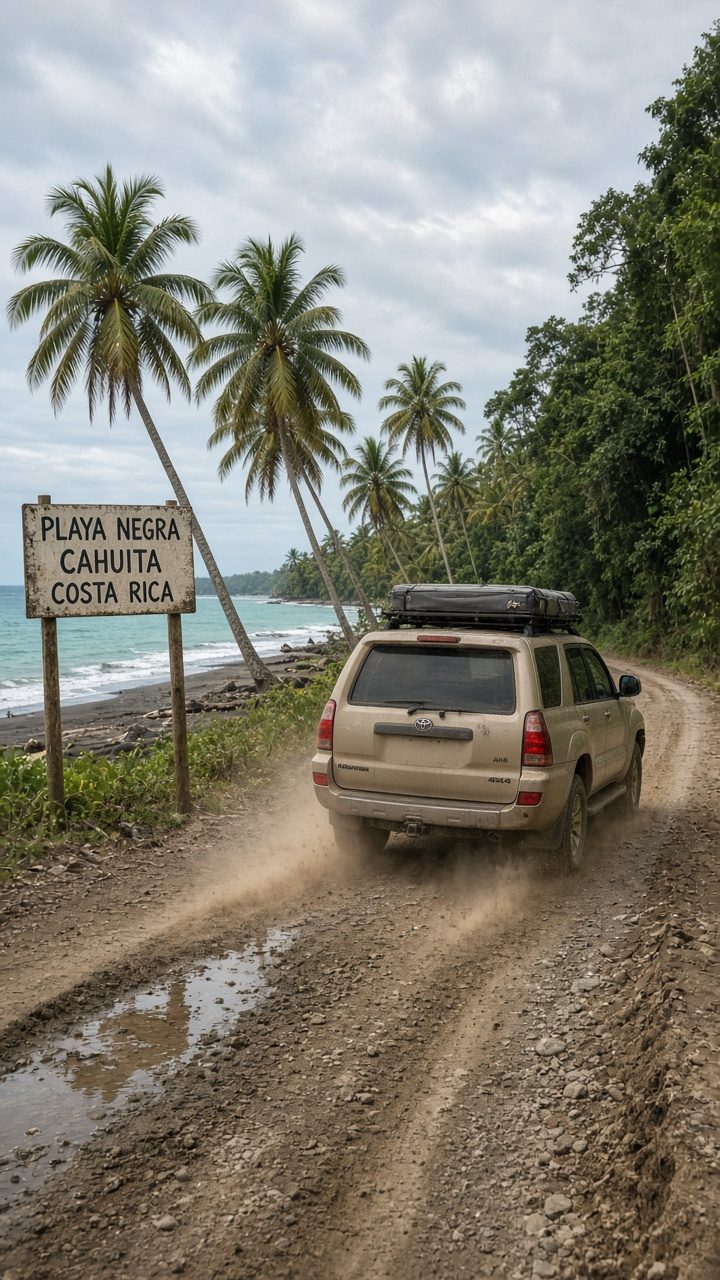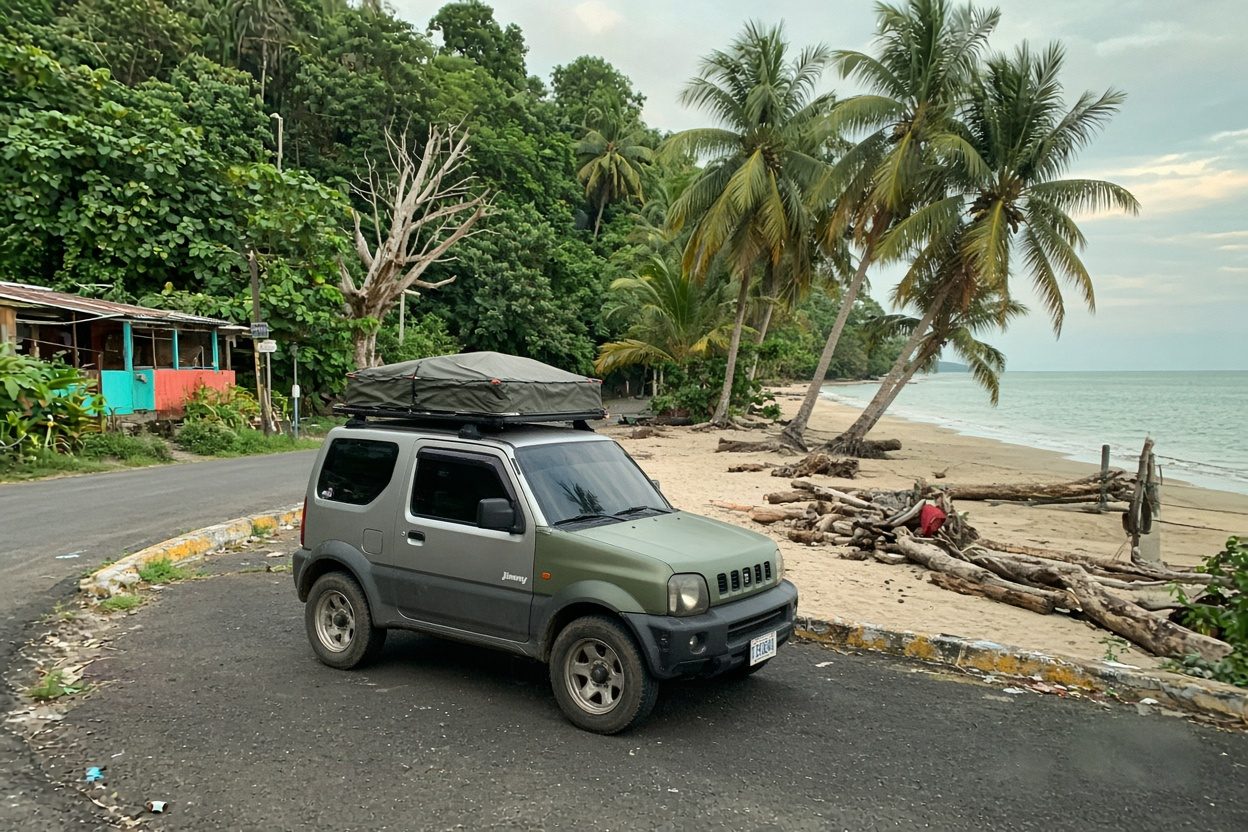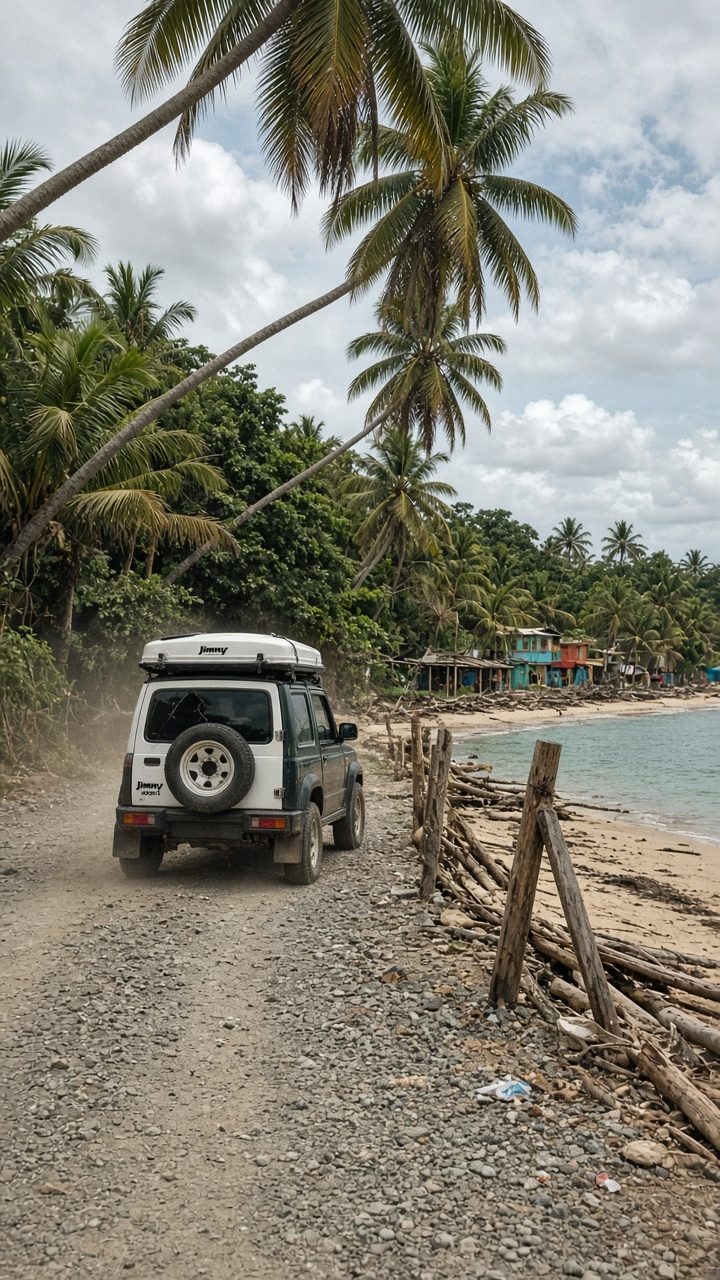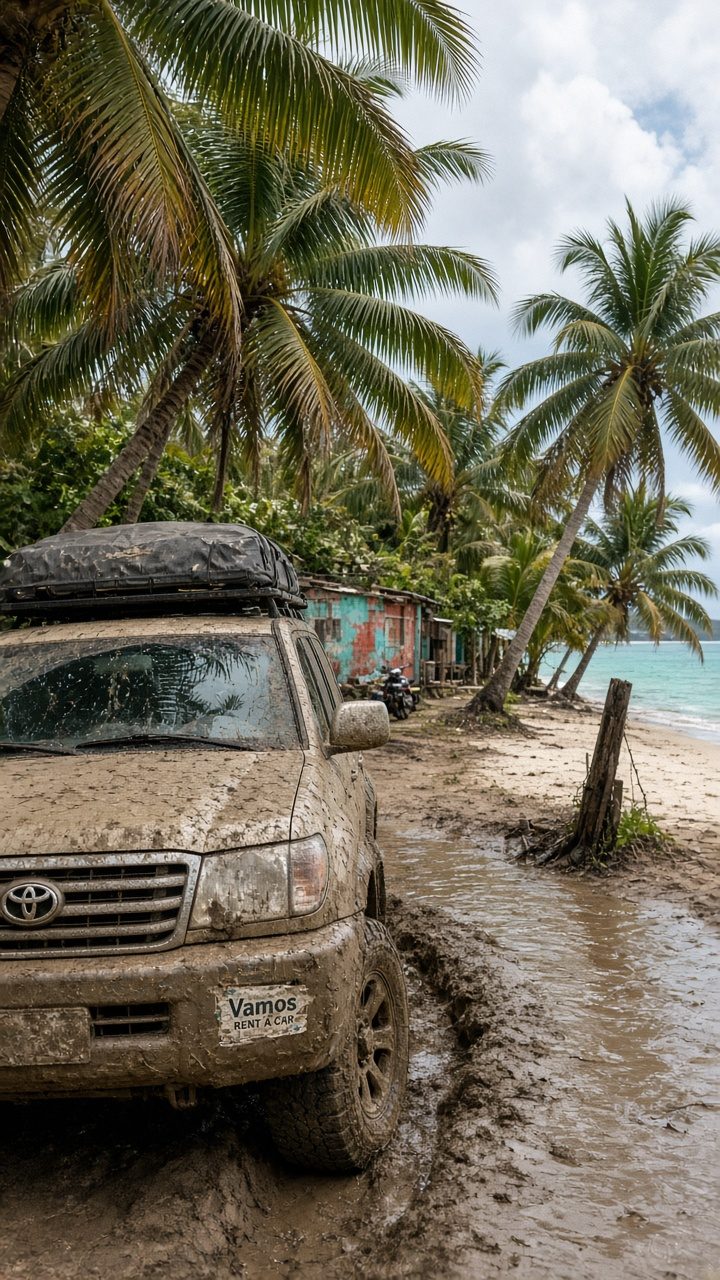
Two coasts, one rig, fourteen days. This is the trip that ends the argument about whether Costa Rica's Pacific beach breaks or its Caribbean reef is the "real" surf: you get both, in the only season that reliably lines them up. From late December through April the Pacific runs its dry-season groundswell while northeast trades feed the shallow coral at Salsa Brava — the rare window when a single road trip can score sand and slab.
The spine of this safari is Guanacaste's beach breaks (Witch's Rock, Tamarindo, Guiones), a Paquera ferry hop to the wilder south end of Nicoya, then a transit across the Central Valley to Puerto Viejo's Caribbean reef. It is a driving trip — you will cross the country — so the vehicle matters. Bring a mid 4x4 with proper board racks; if you want to sleep inside Santa Rosa's dry forest, a Land Cruiser with a rooftop tent earns its keep.
Rate it 🟡 overall, with two honest 🔴 caveats: Route 32 over the Braulio Carrillo pass is steep, foggy, and landslide-prone, and Salsa Brava is a heavy, shallow reef for experienced surfers only. Plan around both and this is one of the most complete surf itineraries in Central America.
Day-by-Day
Days 1–2 — Santa Rosa & Witch's Rock (Playa Naranjo)
Drive: Liberia (LIR) to Santa Rosa National Park HQ is ~35–45 km / under an hour on paved Route 1. Stops: the historic La Casona hacienda and the dry-forest trails. The catch is the wave: Playa Naranjo (Witch's Rock) sits at the end of a rough interior park track with seasonal river crossings that are frequently closed and 4x4-only even when open — 🔴 verify with SINAC/rangers before committing the rig. The reliable score is by boat: Witch's Rock Surf Camp in Tamarindo runs daily boat tours to Witch's Rock and Ollie's Point, so many crews base in Tamarindo (below) and boat up. Sleep: rooftop-tent camping inside Santa Rosa requires a ranger reservation; otherwise base in Tamarindo from night one and day-trip.
Days 3–4 — Tamarindo & Playa Grande
Drive: Santa Rosa back to Tamarindo is ~1.5–2 hrs, all paved. Tamarindo is the logistics hub of Guanacaste surf: consistent beach break, every board you could rent, and the boat departures for Witch's Rock/Ollie's Point. Surf: Tamarindo's river-mouth break for warm-ups; Playa Grande just north (inside Las Baulas National Marine Park) for a more powerful, less crowded wall — mind the estuary and turtle-nesting rules. Eat/Sleep: Tamarindo has the full range from surf hostels to boutique hotels; Witch's Rock Surf Camp is the classic beachfront base with coaching and 300+ rental boards.
Days 5–6 — Nosara & Playa Guiones
Drive: Tamarindo to Nosara is ~2–2.5 hrs. The main road is now mostly paved but with rough, potholed final stretches — higher clearance is recommended and 4x4 is smart in the wet 🟡 (verify locally). Surf: Playa Guiones is the most dependable, all-tide beach break in the country — perfect for logging hours between the marquee sessions. Nosara is a wellness town, so recovery (yoga, smoothies, massage) is easy to find. Sleep: Guiones has surf lodges and monthly-style rentals close to the sand.
Day 7 — Nicoya South via the Paquera Ferry to Santa Teresa
Drive + ferry: From Nosara/Sámara, head down-peninsula toward Playa Naranjo/Paquera. The workhorse crossing is the Puntarenas–Paquera ferry (Naviera Tambor), ~70-minute crossing, with daily departures around 4:00, 6:30, 9:00, 12:00, 3:00, 6:00, 8:00 and 10:00 (🟡 confirm the current schedule the day before — times shift seasonally). Note: if you stay peninsula-side you can also reach Santa Teresa on interior roads, but the ferry is the classic surf-trip move if looping through Puntarenas. Surf: Santa Teresa and Mal País are world-class beach breaks with dawn glass. Sleep: Santa Teresa surf camps and beach hotels.
Days 8–9 — The Spine Transit
Drive: This is the connective haul from the Nicoya/Central Pacific side across the Central Valley toward the Caribbean. Break it into two days rather than one marathon; overnight around the Central Valley or Turrialba/Sarapiquí to stage the Route 32 crossing for early daylight. Fuel up fully — you are leaving surf-town density.
Days 10–13 — The Caribbean: Salsa Brava, Cahuita, Manzanillo
Drive: The final push is Route 32 through Braulio Carrillo — steep, foggy, landslide-prone, and 🔴 daylight-only; check for closures before you roll (the pass shuts for hours after slides). Then south to Puerto Viejo. Surf: Salsa Brava is the coast's heaviest wave — a shallow, powerful coral reef best Dec–March on NE swell, 🔴 experts only, reef booties recommended. Cocles nearby offers a beach-break alternative (watch the rips). Down-days at Punta Uva (calm swimming) and a Cahuita session at Playa Negra. Sleep: Puerto Viejo in-town or the classic Rockin' J's hostel; Punta Uva beachfront for the quiet nights.
Day 14 — Return
Drive Route 32 back to San José (daylight), returning the rig. Build a buffer for pass closures.
Signature Stops (Why Go)
- Witch's Rock / Ollie's Point — the Endless Summer II points, best reached by boat from Tamarindo.
- Playa Guiones, Nosara — the metronome beach break that keeps your arms warm all trip.
- Santa Teresa / Mal País — arguably the best consistent beach break in the country.
- Salsa Brava, Puerto Viejo — Costa Rica's premier reef slab, and the reason this is a two-coast trip.
Where to Camp / Stay (Named)
- Tamarindo: Witch's Rock Surf Camp (beachfront, coaching, rentals + boats).
- Nosara: Guiones surf lodges near the beach.
- Santa Teresa: surf camps and beach hotels.
- Puerto Viejo: Rockin' J's (budget), in-town hotels, Punta Uva beachfront for calm nights.
- Santa Rosa NP: rooftop-tent camping by ranger reservation only (verify).
Logistics & Road Reality
- 🟢 Guanacaste roads (Route 1, Tamarindo, Playa Grande) are mostly paved and easy.
- 🟡 Tamarindo–Nosara is largely paved but potholed; higher clearance/4x4 advised in the wet.
- 🟡 Paquera ferry: ~70 min; arrive early on holiday weekends; confirm the day-of schedule.
- 🔴 Route 32 (Braulio Carrillo): daylight-only, fog and landslides; check closures before transiting.
- 🔴 Salsa Brava: shallow coral, advanced only; reef booties. Cocles has strong rips.
- Fuel: top off before the Nosara stretch and before the spine transit.
- Safety: petty theft is the real Caribbean risk — lock the rig, hide boards and valuables. Corridor violence is network-internal, not tourist-facing.
Insider Tips
- Base in Tamarindo, boat to Witch's Rock. The interior 4x4 track into Playa Naranjo is romantic but unreliable — the boat scores you more waves for less risk.
- Split the spine transit. Two half-days beats one 8-hour slog, and it lets you hit Route 32 in fresh morning light.
- Time Salsa Brava to the NE swell. Dec–March is the window; check a reef-specific forecast and go on the mid-to-high tide.
- Carry a spare leash, wax, and a ding-repair kit. You are days from a good surf shop once you cross to the Caribbean.
- Rack discipline. Lock boards to the racks at every stop; Caribbean theft targets gear left on cars.
Reserve Your Rig
This is a racks-and-range trip: a mid 4x4 (or a Land Cruiser with rooftop tent for the Santa Rosa nights) with board racks, spare fuel capacity, and offline maps. VerifiedCR outfits overland rigs built for exactly this two-coast run — board racks, recovery gear, and route support included. Reserve your rig and we'll pre-load the ferry timing, Route 32 closure checks, and a swell-flex plan so you're chasing waves, not logistics.
Before you go
Do you need a 4x4?
seasonal river ford — 4x4 advised
Best window to fly
Dec–Apr (Pacific dry + NE-trade swell on the Caribbean)
Offline first
Download your route and offline maps before you leave the lot — signal drops on the best stretches.
Golden rule
Never drive at night — plan arrivals before dark, and use Waze like the locals do.
VerifiedCR · No counter surprises
What a Costa Rica rental actually costs
The number one thing that rattles first-timers is the price jumping at the counter. Here is the honest math, before you get there.
- Advertised daily rate$12–40 / day
- What the booking sites show. It is real — but it is not the whole price. Nobody pays only this.
- Mandatory liability (TPL / SLI)+$15–25 / day
- Required by Costa Rican law on every rental. Cannot be waived. This is the line the cheap ads leave off — it roughly doubles the sticker price. Budget for it.
- Collision damage (CDW)waivable
- Often $20–40/day — but you can usually decline it if your credit card includes rental coverage (Amex, Visa Signature, Chase Sapphire and others). Call your card, ask for a coverage letter, and bring it printed.
- Security hold on your card$1,000–2,500
- A hold, not a charge — released after you return the car clean. Some agencies hold more. Make sure your card has the headroom before you fly.
The verified-rig promise: when you reserve through VerifiedCR, the rig is inspection-checked and the operator is vetted — the price you are quoted is the price you pay. No mystery line items at pickup.