Costa Rica is one of very few countries where you can surf two oceans in one road trip — and this 14-day traverse does exactly that, from the sand-and-point breaks of Santa Teresa on the Pacific to the heavy coral reef of Salsa Brava and the beach breaks of Cocles on the Caribbean. It's a study in contrast: the Pacific is consistent, warm, and forgiving of variety; the Caribbean is fickle, shallow, and — when it turns on in the dry months — genuinely world-class and genuinely dangerous.
The intensity grades 🟡→🔴 as you cross the country. The Pacific leg and the highway crossing are moderate; the Caribbean finish involves reef hazard and the daylight-only transit of Route 32. A mid 4x4 with board racks is the right tool, and if you can arrange a one-way vehicle drop, you'll save yourself a long backtrack. The single best window for both coasts to cooperate is February–March, when the Caribbean enters its short dry, swell-friendly season and the Pacific is still clean.
This is a mileage trip — you'll drive across the whole country — so it's built around multi-day bases rather than nightly moves, with the swell briefing driving where you linger.
Day-by-day
Days 1–4 — Santa Teresa (Pacific base). Reach Santa Teresa via the Puntarenas → Paquera ferry (departures roughly every 2–3 hours; confirm the current schedule — recent sailings from Puntarenas run 4:00, 6:30, 9:00, 12:00, 3:00, 6:00, 8:00, 10:00, crossing ~70 min) then ~1.5–2 hr of mixed pavement and dirt down the peninsula. Santa Teresa and neighbouring Playa Carmen / Mal País deliver a long, consistent sand-bottom beach break with defined peaks — beginner-friendly on the inside, powerful and hollow on a bigger swell. Four days lets you surf multiple tides, rest, and settle into the town's surf-and-yoga rhythm. Sleep in a Santa Teresa surf camp or beachfront cabina.
Days 5–6 — Santa Teresa → toward Central (ferry back + eastward drive). Ferry back to the mainland and drive east toward the Central Valley, breaking the mileage with a night en route (Puntarenas coast or the highlands). This is a transit-and-reset segment — no surf, but the country's dramatic elevation change from sea to cloud forest is a trip in itself.
Days 7–8 — San José crossing + descent to the Caribbean. Cross through or around San José and stage for Route 32 over the Braulio Carrillo mountains to the Caribbean lowlands. 🔴 Rte 32 is daylight-only — it fogs, it's steep, it has heavy truck traffic and landslide history; start early and never drive it at night. Overnight near Guápiles/Siquirres or push through to the coast in the afternoon.
Days 9–11 — Puerto Viejo / Cocles (Caribbean base). SJO → Puerto Viejo is ~4–4.5 hr via Rte 32, all told. Base in Puerto Viejo de Talamanca. This is the heart of Caribbean surf: Salsa Brava, the country's heaviest, shallowest reef break, fires on a dry-season swell for experts only; Playa Cocles, just south, offers a powerful beach break with more room for intermediates. Three days gives you the patience the Caribbean demands. Sleep in-town or at a Cocles/Playa Chiquita beachfront lodge.
Day 12 — Manzanillo / Punta Uva (down-day + softer surf). Drive the coast south to Punta Uva and Manzanillo — calmer, swimmable coves and the Gandoca-Manzanillo refuge — for a wildlife-and-recovery day, with a mellow beach-break option if the reef is too much. This stretch is the antidote to Salsa Brava.
Days 13–14 — Return via Route 32. A final dawn session, then the daylight run back over Rte 32 to San José for your flight or vehicle drop. Give the mountain crossing a generous buffer and, again, only drive it in daylight.
Signature stops (why go)
- Santa Teresa / Playa Carmen — long, consistent Pacific beach break; the whole spectrum from inside runners to hollow peaks.
- Salsa Brava (Puerto Viejo) — Costa Rica's heaviest reef wave; a rite of passage for experts and a spectator sport for everyone else.
- Playa Cocles — the powerful, more accessible Caribbean beach break next door.
- Punta Uva / Manzanillo — the swimmable, wildlife-rich reset at the end of the coast.
Where to camp / stay
Santa Teresa is dense with surf camps, hostels and beachfront cabinas — book ahead in Feb–Mar peak. Puerto Viejo has budget hostels with board storage in town, and quieter beachfront lodges strung south through Cocles, Playa Chiquita and Punta Uva. For transit nights, use the Puntarenas coast and Guápiles/Siquirres. Confirm current operators locally.
Logistics & road reality
- Ferry: The Puntarenas→Paquera ferry gates Santa Teresa access both directions — arrive early for a vehicle spot; the schedule changes seasonally, so verify before each crossing.
- Roads 🔴: Route 32 (SJO↔Caribbean) is daylight-only — fog, trucks, landslide risk. The Santa Teresa peninsula roads are part-dirt (🟡).
- One-way logistics: A one-way vehicle drop (pick up near the Pacific/Nicoya, drop near San José or the Caribbean) removes a long backtrack — arrange in advance.
- Season: Feb–Mar is the rare window when the Caribbean is in its dry, swell-favorable spell and the Pacific is still clean. The Caribbean is fickle year-round; don't expect Salsa Brava on demand.
- Safety: Petty theft is the real everyday risk on the Caribbean — never leave gear in the rig. Rips at Cocles are strong and have caused drownings.
Surf guidance (variety, intermediate→expert)
- Santa Teresa: Sand bottom, works most tides and swells; mid-tide often best. Suits intermediates, with expert-level days on bigger SW swell.
- Salsa Brava: Experts only. Shallow live coral, powerful and fast; best on a dry-season (Dec–Mar, sweet spot Feb–Mar) NE/E swell. Reef booties and a helmet-level of respect — the bottom is unforgiving.
- Cocles: Powerful beach break with strong rips; intermediate-plus. Fires on the same Caribbean swells as Salsa Brava.
- Boards: A shortboard/step-up for the Caribbean reef days, plus a versatile board for Santa Teresa; add reef booties and a first-aid kit for coral cuts.
- Two-coast reality: The Pacific is your reliable surf; the Caribbean is the wild card. Plan to always get waves on the Pacific and maybe score the reef.
Insider tips
- Get a coast-swap swell briefing before you leave. The two oceans run on different swell engines; knowing which coast is "on" for your dates tells you where to linger.
- Only drive Rte 32 in daylight — every time. It's the most dangerous road on the itinerary, full stop.
- Book the Paquera ferry buffer. Vehicle spots fill; miss a sailing and you lose hours.
- Reef booties and first-aid for the Caribbean. Coral cuts infect fast in the tropics; treat them immediately.
- Theft-proof the rig on the Caribbean. Leave nothing visible, ever — it's the coast's defining nuisance.
Reserve your rig
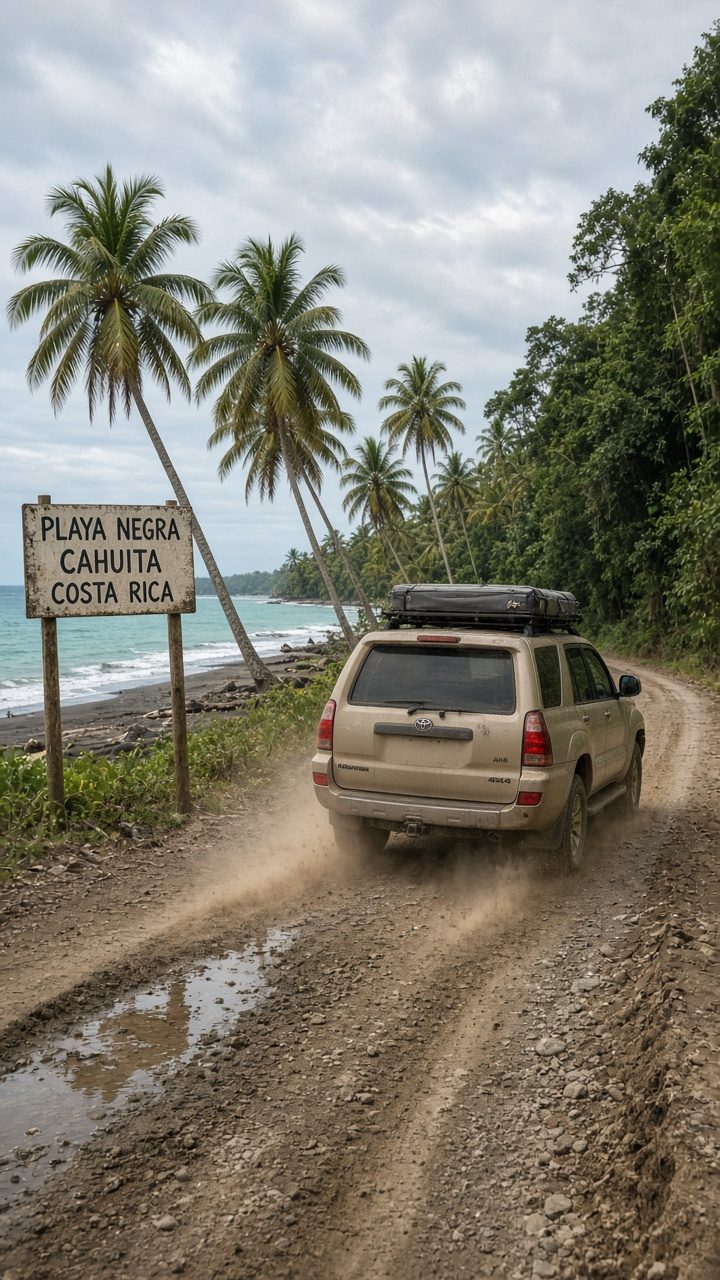
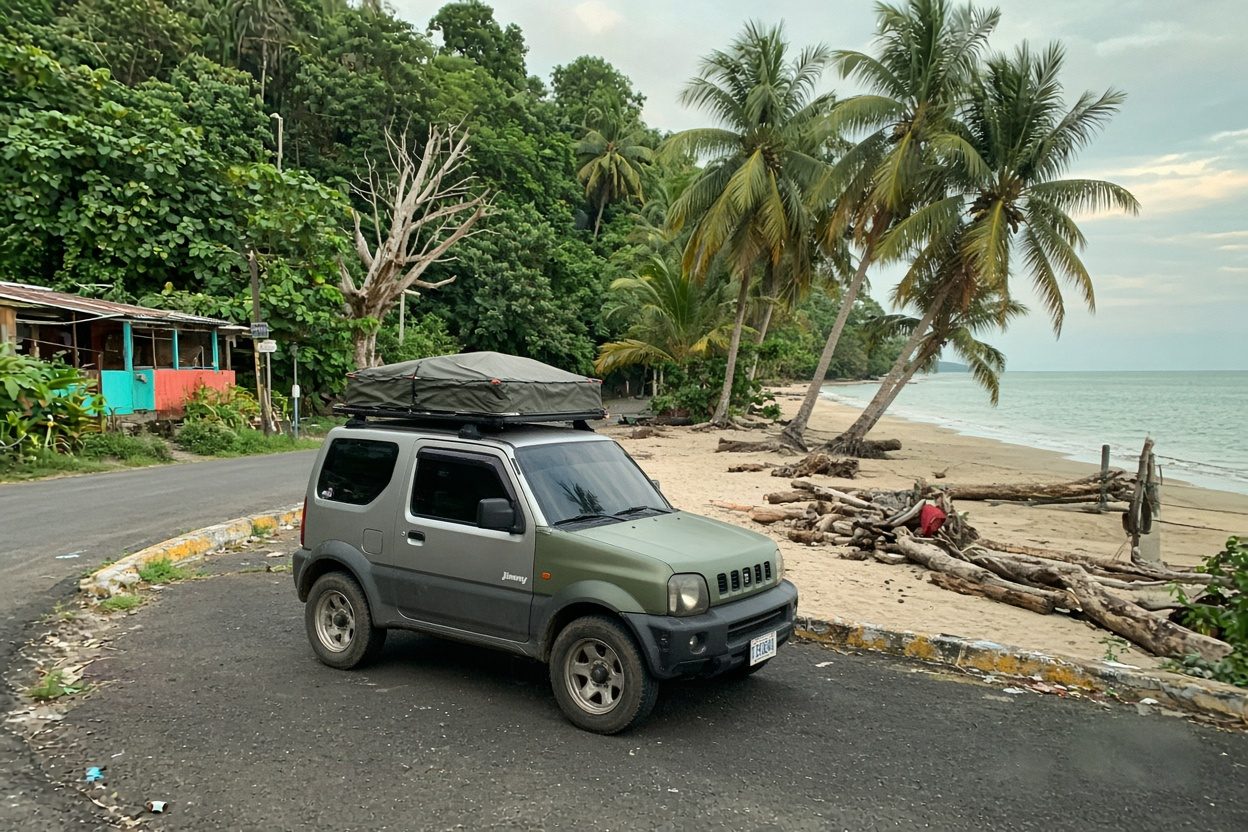
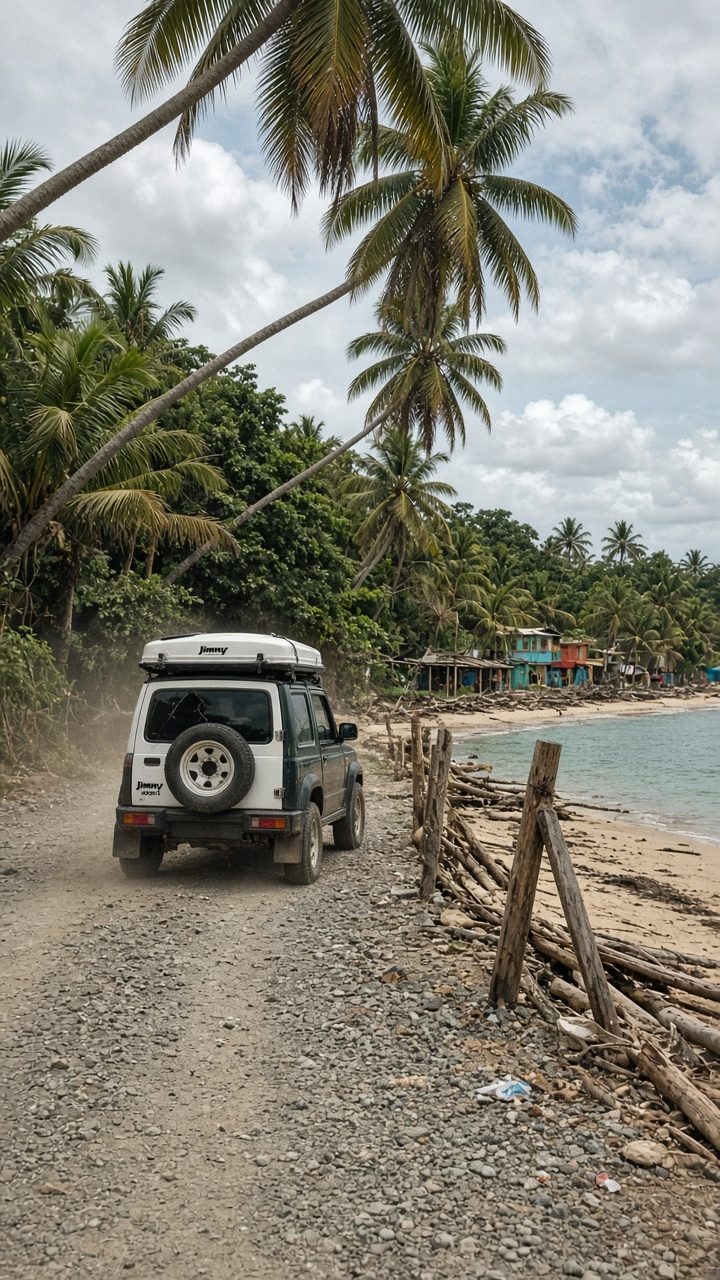
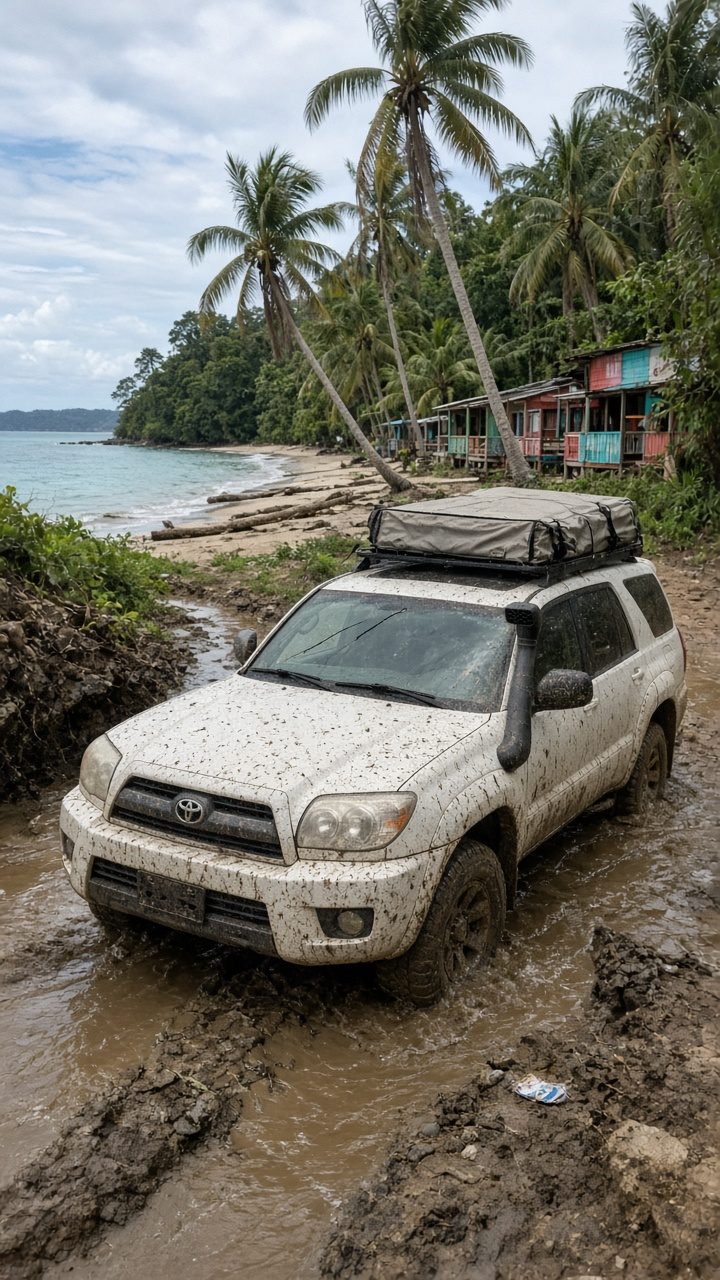
Two oceans, one country, one two-week arc — this trip needs a capable, board-ready 4x4 and smart logistics. Reserve your VerifiedCR mid 4x4 with board racks, and ask about a one-way drop so you don't backtrack the whole country. We'll add reef booties and a first-aid kit, and brief you on the coast-swap swell forecast so you point the rig at whichever ocean is firing.
Before you go
Do you need a 4x4?
4x4 required
Best window to fly
Feb–Mar (rare sweet spot with both coasts favorable)
Offline first
Download your route and offline maps before you leave the lot — signal drops on the best stretches.
Golden rule
Never drive at night — plan arrivals before dark, and use Waze like the locals do.
VerifiedCR · No counter surprises
What a Costa Rica rental actually costs
The number one thing that rattles first-timers is the price jumping at the counter. Here is the honest math, before you get there.
- Advertised daily rate$12–40 / day
- What the booking sites show. It is real — but it is not the whole price. Nobody pays only this.
- Mandatory liability (TPL / SLI)+$15–25 / day
- Required by Costa Rican law on every rental. Cannot be waived. This is the line the cheap ads leave off — it roughly doubles the sticker price. Budget for it.
- Collision damage (CDW)waivable
- Often $20–40/day — but you can usually decline it if your credit card includes rental coverage (Amex, Visa Signature, Chase Sapphire and others). Call your card, ask for a coverage letter, and bring it printed.
- Security hold on your card$1,000–2,500
- A hold, not a charge — released after you return the car clean. Some agencies hold more. Make sure your card has the headroom before you fly.
The verified-rig promise: when you reserve through VerifiedCR, the rig is inspection-checked and the operator is vetted — the price you are quoted is the price you pay. No mystery line items at pickup.