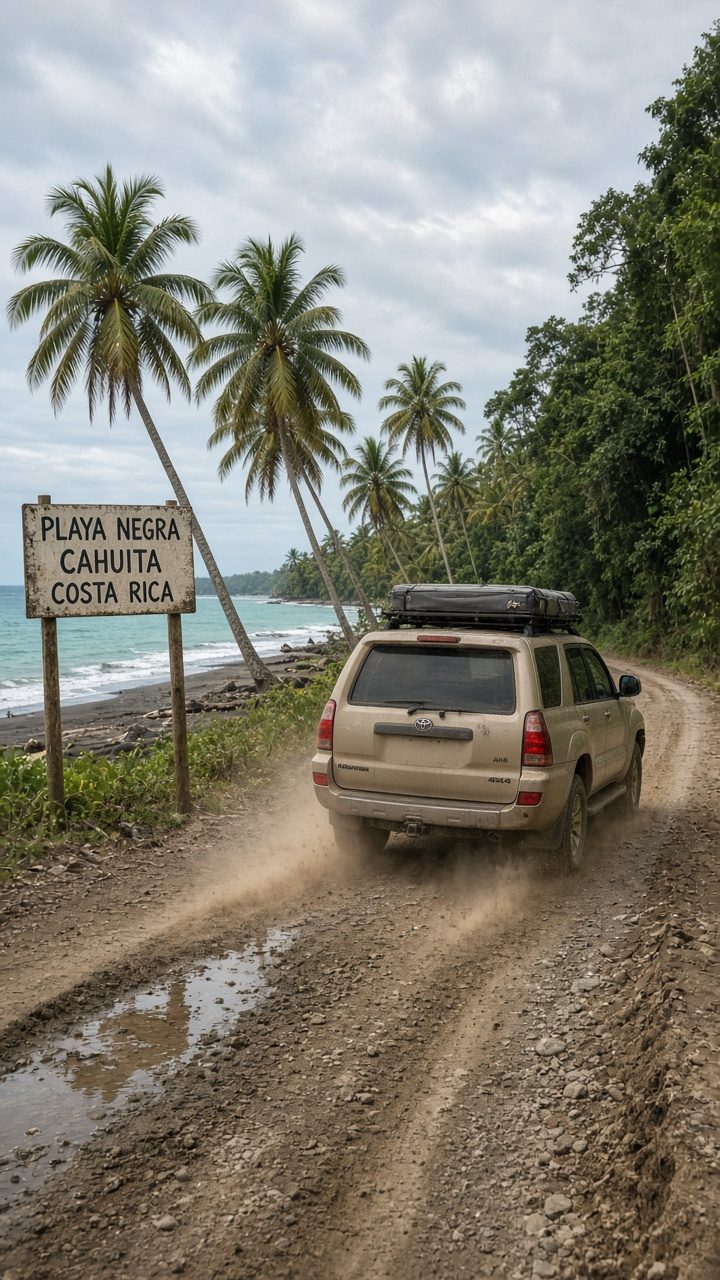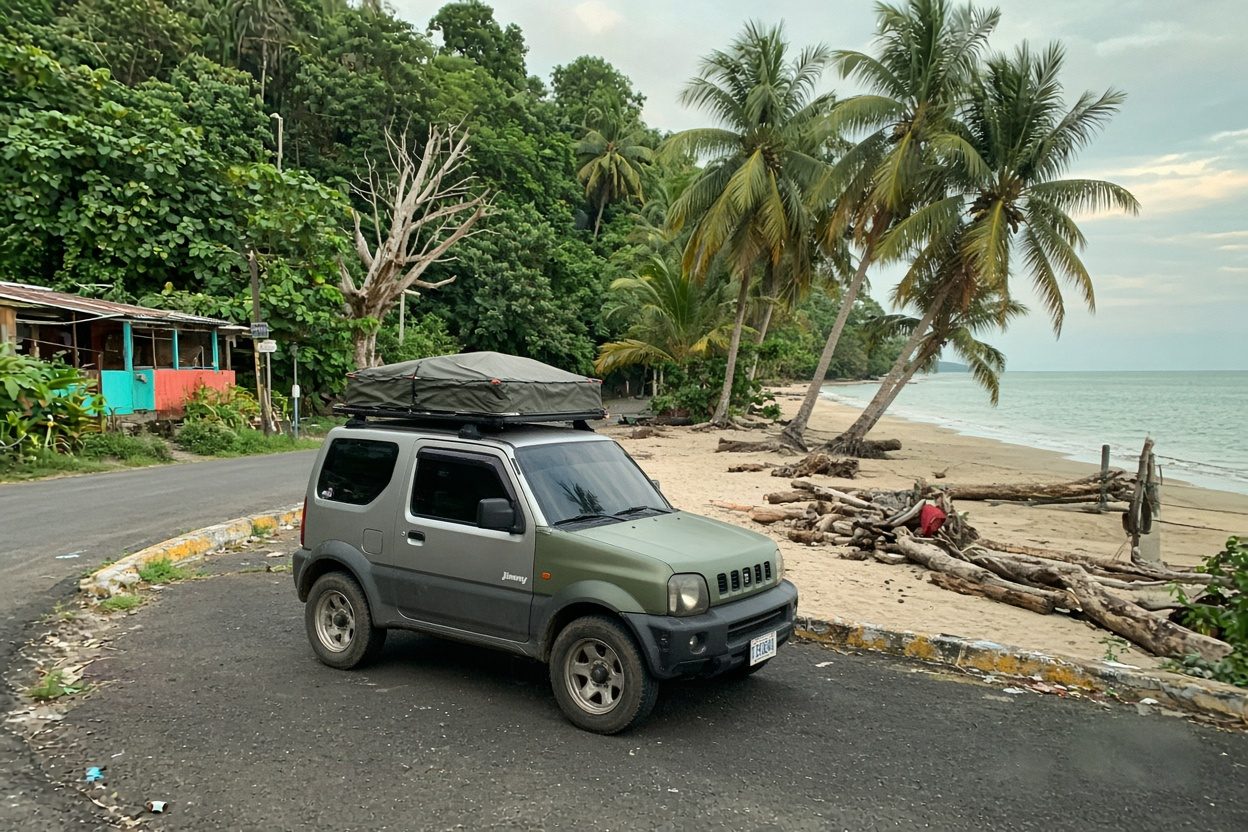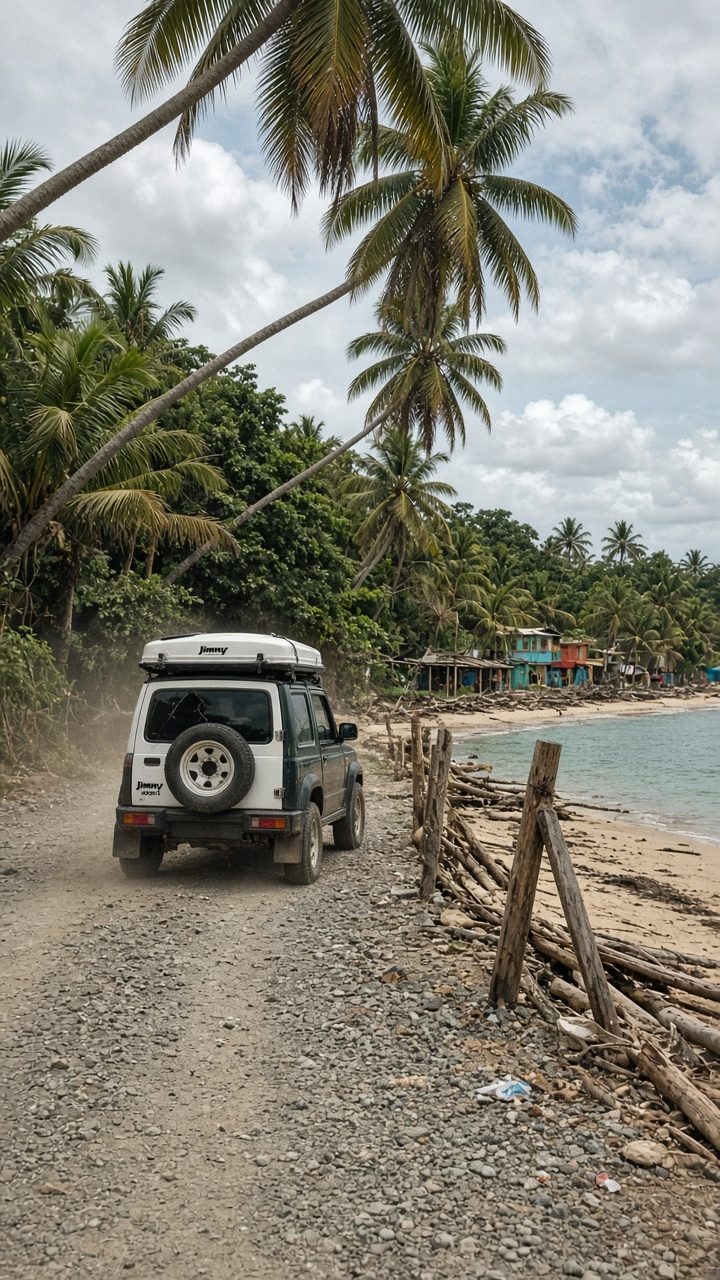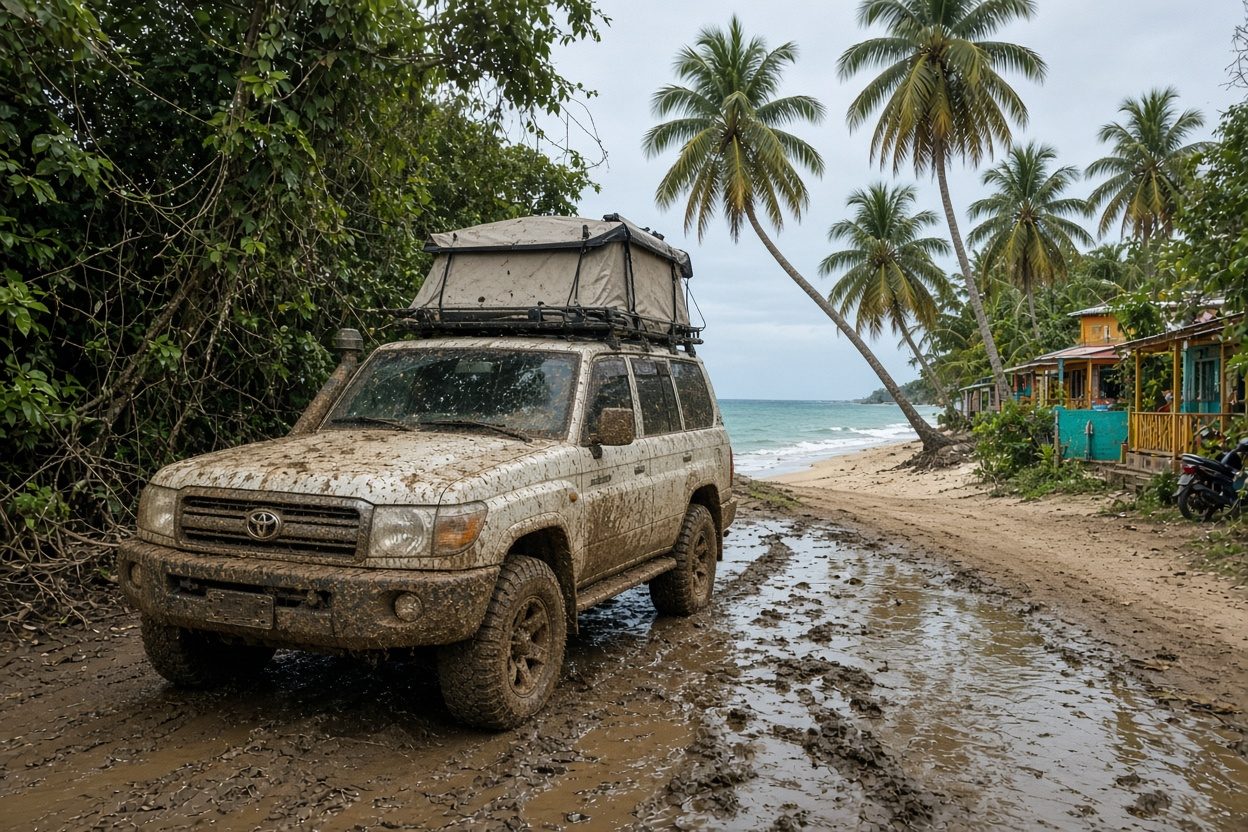
Three weeks is the amount of time it takes to stop rushing. This is the trip for the traveler who has the calendar to do Costa Rica the way it deserves — all five regions, coast to coast to peninsula to peak, with room to sit still on a beach or in a cloud forest instead of ticking it and moving on. You'll ride two ferries, hire a Corcovado guide, cross a river or two, and sleep everywhere from a resort pool deck to a rooftop tent under the Osa canopy.
The circuit runs clockwise-ish: land in Guanacaste, work down the Nicoya Peninsula and across the Paquera ferry, climb the volcano-and-cloud spine, drop to the wild South Pacific and the Osa, then swing back over the mountains to finish on the Caribbean. It is long, but no single day is brutal — the hardest driving is concentrated in the Osa, where you'll want the Land Cruiser's clearance and traction.
Timing matters over 21 days. January–March is the sweet spot: Guanacaste and the Osa are at their driest and most passable, the mountains are clear, and by the time you reach the Caribbean you're in its secondary dry-ish window. The Osa's roads are worst September–November, so a dry-season run keeps the peninsula's tide-gated crossings and gravel from becoming the trip's bottleneck.
Day-by-day
Days 1–4 — Guanacaste (Rincón, Tamarindo, Nosara). From Liberia (LIR): a volcano-adventure day at Rincón de la Vieja (Las Pailas mud pots, Río Negro hot springs, ~1–1.5 h from LIR), then down the Gold Coast to Tamarindo (paved) and Nosara (the last hour into Nosara is dirt). Surf, yoga, and the Blue-Zone pace. Sleep: coast hotels + Nosara retreat.
Days 5–7 — Nicoya south + Santa Teresa (Paquera ferry). Work down the peninsula — Sámara, then the run to Santa Teresa. The interior Nicoya roads have unpaved sections and seasonal river crossings; 4x4 recommended, worst in rain. Base in Santa Teresa / Mal País for surf and Cabo Blanco Absolute Reserve. Exit via the Puntarenas–Paquera ferry (Naviera Tambor, ~70–75 min crossing; reserve a vehicle slot ahead — departures are frequent but sell out in high season; verify the day's schedule). Sleep: Santa Teresa surf camps / rooftop tent.
Days 8–10 — Arenal + Monteverde + Río Celeste. From the mainland ferry side, climb to La Fortuna for the volcano, bridges and hot springs; do the Jeep-Boat-Jeep across Lake Arenal (~30-min boat, ~3–3.5 h total) to Monteverde cloud forest; and side-trip to Río Celeste in Tenorio. ⚠️ Verify Río Celeste: base-of-waterfall stairs closed since mid-2025, and SINAC has flagged a longer closure starting ~March 2026 — check live status and keep a Bijagua sloth tour as backup. Sleep: El Castillo, Monteverde, Bijagua.
Days 11–13 — Dominical / Uvita (South Pacific gateway). Descend to the Costanera coast — Dominical and Uvita (Marino Ballena, the Whale's Tail sandbar at low tide, Nauyaca Falls, Ojochal's food). Paved, no fords; this is the "soft" South Pacific before the Osa turns feral. Sleep: Costa Ballena cabinas.
Days 14–16 — Osa (Drake Bay / Corcovado). The wild heart of the trip. Drive to Drake Bay via Rincón — the road is bridged now, but the last ~30 km are gravel and go impassable after heavy rain (4x4, and check conditions locally). ⚠️ Drake Bay has no ATM and limited fuel — carry cash and top off first. Then Corcovado National Park: a guide is mandatory, entry requires an advance SINAC permit (~$18/person/day), and the Sirena quota is strictly enforced — book the guide and permit well ahead. Sleep: Drake cabinas / campsites; rooftop tent.
Days 17–18 — Spine back. Climb out of the South Pacific over the mountains toward the Central Valley — a full transit day plus a buffer, staging for the Caribbean. Sleep: highlands or Central Valley waypoint.
Days 19–21 — Caribbean (Tortuguero + Puerto Viejo). Run Route 32 in daylight to the coast (🔴 landslide-prone, periodic closures — check status). Park at La Pavona and boat into Tortuguero for the canals, then finish south at Puerto Viejo / Cahuita / Punta Uva for reef, sloths and Afro-Caribbean food before returning to SJO. Sleep: Tortuguero village; south-Caribbean beachfront.
Signature stops (why go)
- Rincón de la Vieja — mud pots, hot springs and a volcano hike to open the trip.
- Paquera ferry + Santa Teresa — the peninsula's wild south end, reached by boat.
- Jeep-Boat-Jeep to Monteverde — the country's most scenic shortcut.
- Corcovado — the "most biologically intense place on Earth"; tapirs, scarlet macaws, jaguar sign.
- Tortuguero — boat-only canals and nesting turtles to close on water.
Where to camp / stay (named areas)
- Rincón / Tamarindo / Nosara — Guanacaste range.
- Santa Teresa / Mal País — Nicoya south (via Paquera ferry).
- La Fortuna, Monteverde, Bijagua — the spine.
- Dominical / Uvita then Drake Bay — South Pacific into the Osa.
- La Pavona → Tortuguero, then Puerto Viejo / Cahuita / Punta Uva — the Caribbean finish.
Logistics & road reality
- Ferries: 🟢 Puntarenas–Paquera (Naviera Tambor), ~70–75 min; reserve a vehicle slot in high season and verify the day's departures (schedules shift seasonally).
- Osa: 🔴 Drake Bay's last gravel stretch and any tide-gated coastal crossings can flip from passable to impassable within hours of rain. No ATM in Drake; limited fuel — carry cash and top off in Chacarita/Rincón.
- Corcovado permits: guide mandatory, SINAC permit ~$18/pp/day, Sirena quota strict — book weeks ahead.
- Route 32: 🔴 daylight-only, landslide-prone, periodic MOPT closures — check status the morning you cross.
- Season: 🟢 Jan–Mar keeps the Osa and both coasts at their most drivable; avoid Sept–Nov for this route (Osa roads at their worst).
- Fuel: longest gaps are the Nicoya south run and the Osa — fill at every reliable station.
Insider tips
- Book Corcovado first, then plan around it. The guide-plus-permit and Sirena quota are the hardest reservation on the whole trip — lock the Osa dates before anything else.
- Reserve the Paquera ferry vehicle slot in high season; foot passengers walk on, but cars can be turned away when full.
- Carry serious cash into the Osa. Drake Bay is off the ATM grid — budget for guides, fuel and lodging in colones and dollars.
- Keep two flex days across 21 days — one for Route 32, one for Osa weather. You'll likely use both.
- Verify Río Celeste before routing to it (see Day 8–10); if it's closed for reconstruction, swap in more Monteverde or a Bijagua sloth day.
Reserve your rig
This is the trip the Land Cruiser was built for — ferry decks, gravel into Drake Bay, and three weeks of living out of a rooftop tent between resorts and rainforest lodges. Reserve your VerifiedCR Land Cruiser + rooftop tent, and we'll bundle the two ferry crossings, the Corcovado guide-and-permit booking, and a long-term rate for the full 21 days.
Before you go
Do you need a 4x4?
seasonal river ford — 4x4 advised
Best window to fly
Jan–Mar (driest, best road access to the Osa and both coasts)
Offline first
Download your route and offline maps before you leave the lot — signal drops on the best stretches.
Golden rule
Never drive at night — plan arrivals before dark, and use Waze like the locals do.
VerifiedCR · No counter surprises
What a Costa Rica rental actually costs
The number one thing that rattles first-timers is the price jumping at the counter. Here is the honest math, before you get there.
- Advertised daily rate$12–40 / day
- What the booking sites show. It is real — but it is not the whole price. Nobody pays only this.
- Mandatory liability (TPL / SLI)+$15–25 / day
- Required by Costa Rican law on every rental. Cannot be waived. This is the line the cheap ads leave off — it roughly doubles the sticker price. Budget for it.
- Collision damage (CDW)waivable
- Often $20–40/day — but you can usually decline it if your credit card includes rental coverage (Amex, Visa Signature, Chase Sapphire and others). Call your card, ask for a coverage letter, and bring it printed.
- Security hold on your card$1,000–2,500
- A hold, not a charge — released after you return the car clean. Some agencies hold more. Make sure your card has the headroom before you fly.
The verified-rig promise: when you reserve through VerifiedCR, the rig is inspection-checked and the operator is vetted — the price you are quoted is the price you pay. No mystery line items at pickup.