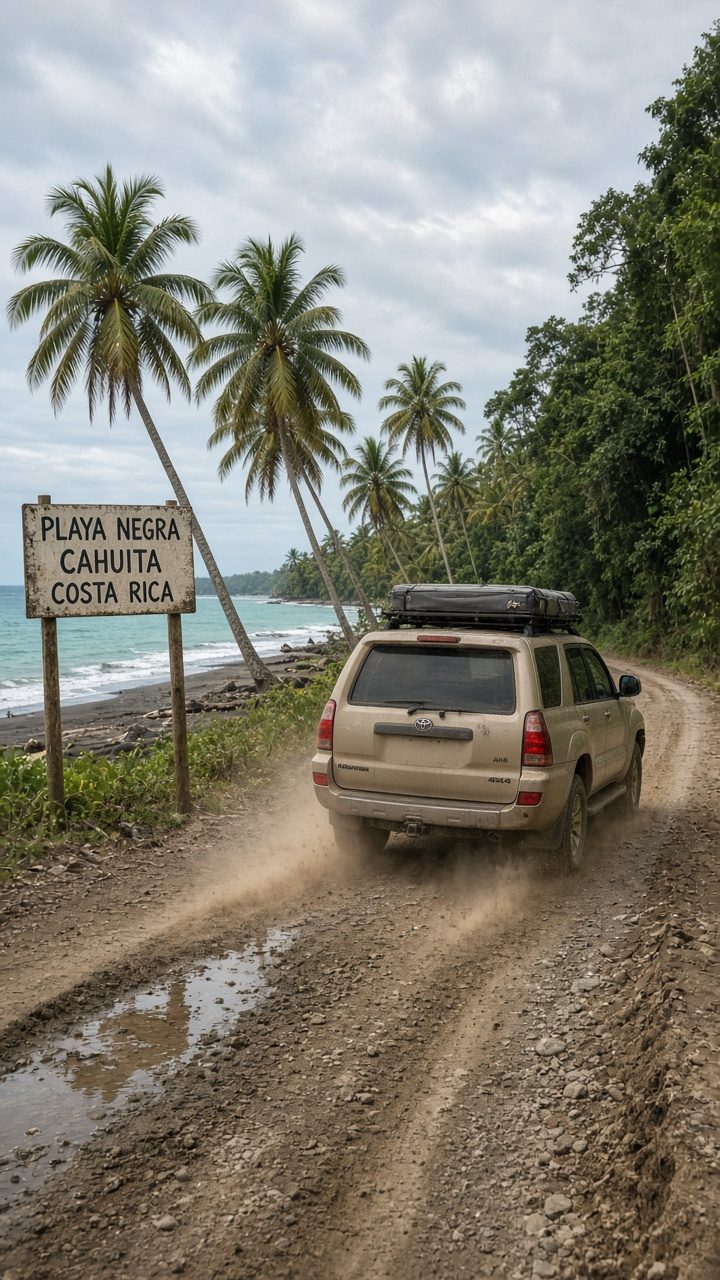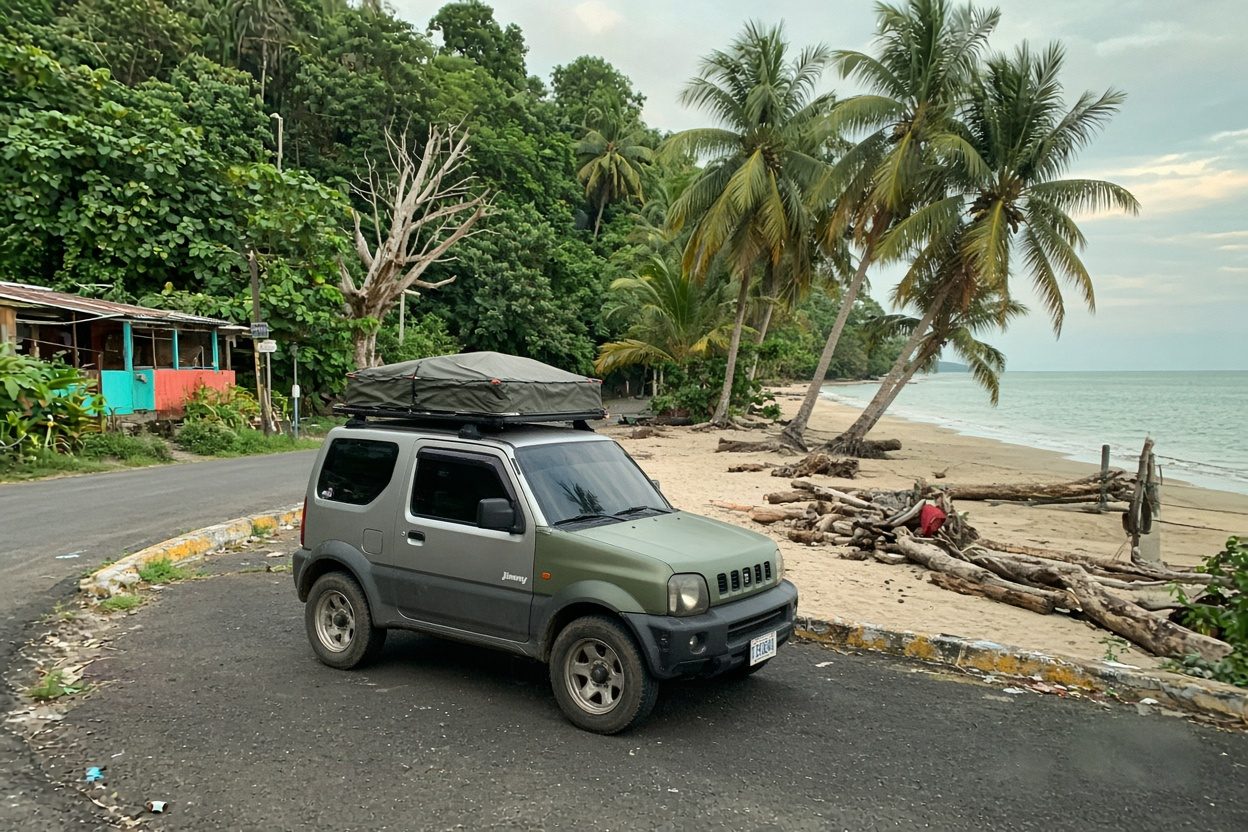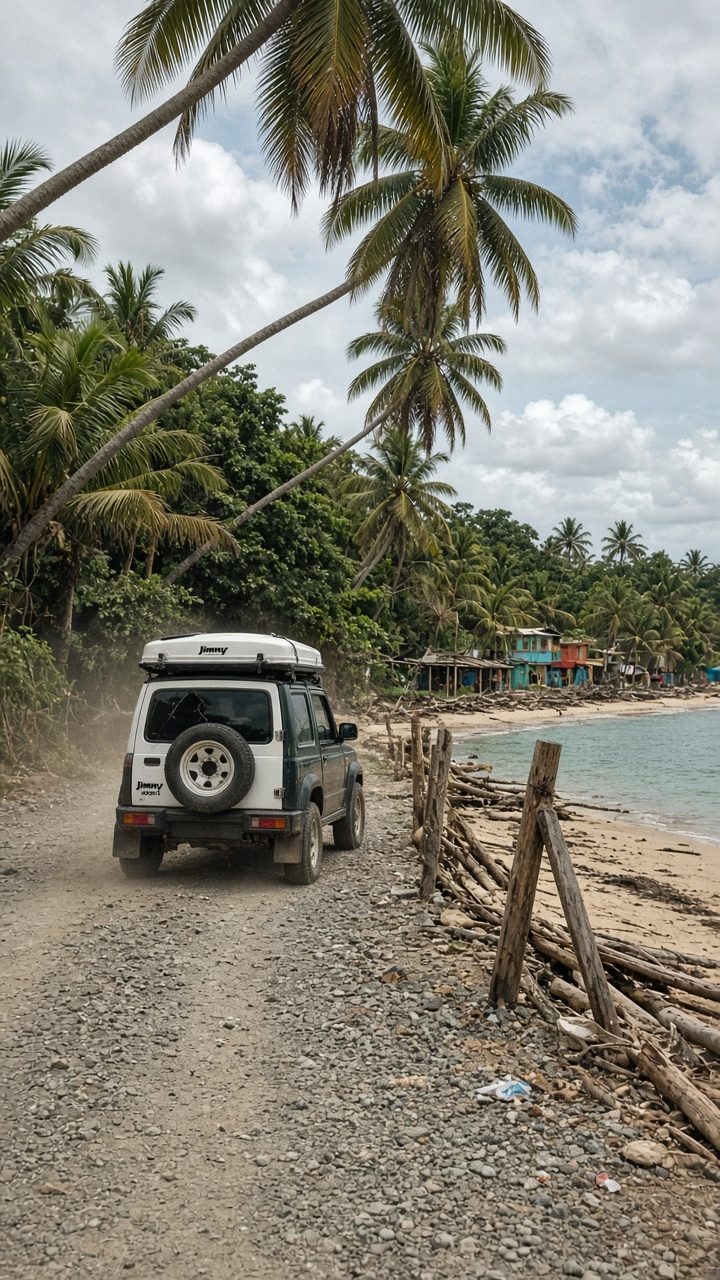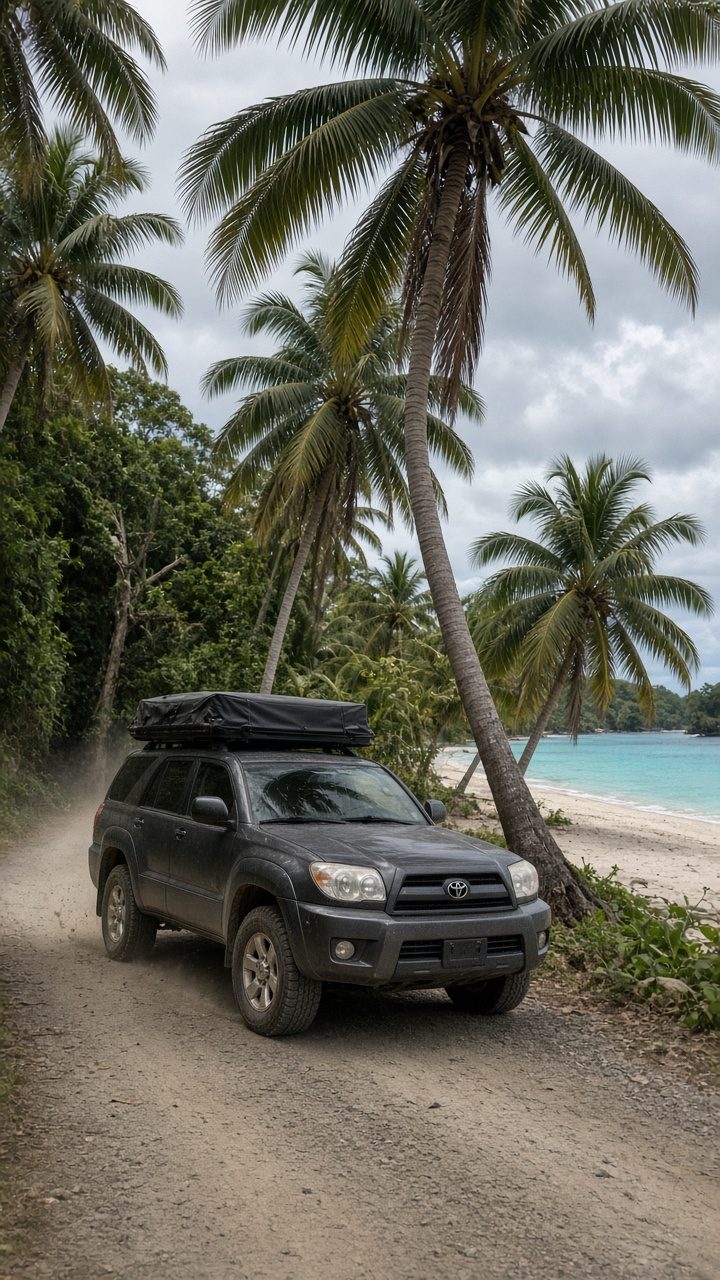
Very few countries let you swim in two oceans on the same road trip without flying. Costa Rica does — it's barely 300 km ocean to ocean — and this fourteen-day line drawn across the waist of the country is the most satisfying way to do it. You start on the golden, dependable sand of Guanacaste, climb into volcano-and-cloud country, drop through the rainforest lowlands to the boat-only canals of Tortuguero, and finish reggae-slow on the Afro-Caribbean coast near the Panama border.
The trick to this trip is timing. The Pacific and the Caribbean run on opposite weather clocks. The one window when both coasts tend to behave is the short February–March dry-both-coasts spell — dry Guanacaste, dry Caribbean, and the mountains at their clearest. The other viable play is the September–October Caribbean inversion, when the Caribbean is at its sunniest exactly as the Pacific is drowning; that flips the trip's logic (short Pacific tail, long Caribbean stay). Pick your window before you pick your dates.
Reserve a mid 4x4. Most of this route is paved, but two things demand a capable vehicle and a clear head: the mountain crossing to the Caribbean on Route 32, which is landslide-prone and should be driven in daylight only, and the general rule that the Caribbean's back roads and Tortuguero's approach turn to soup after rain.
Day-by-day
Days 1–3 — Guanacaste (Tamarindo / Playa Grande). Fly into Liberia (LIR) and settle straight onto the coast — Tamarindo is about 1–1.5 hours on paved road. Base here for surf lessons and sunsets; day-trip to Playa Grande for the wide, quiet beach and (Oct–Feb) leatherback nesting in Las Baulas National Marine Park — a licensed night guide is required in season. Sleep: Tamarindo / Playa Grande hotels; book direct.
Days 4–5 — Arenal. Drive inland to La Fortuna, roughly 3.5–4 hours via Cañas and the lake road, paved the whole way. Two nights at the volcano: the 1968 lava trail and crater views, the Mistico Hanging Bridges, the La Fortuna Waterfall, and a hot-springs soak (Tabacón, or the free Río Tabacón). Sleep: La Fortuna / El Castillo lodges.
Day 6 — Río Celeste (Tenorio). A 1.5–2 hour drive to Bijagua for the turquoise river in Tenorio Volcano National Park. ⚠️ Verify before you go: the lower stairs to the waterfall observation deck have been closed since mid-2025 for storm-damage repairs, and SINAC has signaled a longer park closure beginning around March 2026 — check the SINAC reservation site for live status, and have a Bijagua sloth tour as your backup. There is no cell signal at the trailhead. Sleep: Bijagua eco-lodges.
Day 7 — Sarapiquí. Cross the northern lowlands to Puerto Viejo de Sarapiquí, about 3 hours on paved road, staging yourself for the Caribbean side. Chocolate at Tirimbina, a gentle river float, or a La Selva wildlife walk. Sleep: Sarapiquí riverside lodges (confirm availability directly).
Days 8–9 — Tortuguero (park at La Pavona). Drive to the La Pavona boat launch, leave the rig in the covered lot (~$8–10/day), and take the public lancha 1–1.5 hours through the canals to Tortuguero village (there is no road in; public boat runs a few dollars per person). Two nights for canal wildlife tours, and — in green-turtle season (roughly Jul–Oct) — a licensed night nesting walk. Sleep: Tortuguero village lodges/cabinas (no vehicle needed on the island).
Days 10–13 — South Caribbean (Puerto Viejo, Cahuita, Punta Uva, Manzanillo). Boat back to La Pavona, collect the rig, and drive down the coast — daylight only — to the Puerto Viejo / Cahuita stretch (about 3–4 hours depending on Route 32 conditions). Four nights to actually live here: Cahuita National Park's flat sloth trail and reef snorkel, Punta Uva's calm turquoise swimming, Manzanillo and the Gandoca-Manzanillo refuge, and Bribri cacao and rondón in town. Sleep: Cahuita beach camps, Puerto Viejo in-town, or quiet Punta Uva beachfront.
Day 14 — Route 32 back to San José. The mountain descent through Braulio Carrillo, about 4–4.5 hours to SJO. 🔴 Drive it in daylight, check status that morning, and never push through fog or heavy rain on this road.
Signature stops (why go)
- Playa Grande / Las Baulas — wide empty Pacific sand and, in season, nesting leatherbacks.
- Arenal + Río Celeste — the volcano and the turquoise river, back to back (Río Celeste status permitting).
- Tortuguero — a village and national park you can only reach by boat; canals, caimans, and turtles.
- Punta Uva & Manzanillo — the calmest, clearest swimming water on the Caribbean side.
Where to camp / stay (named areas)
- Tamarindo / Playa Grande — Pacific base, surf and turtle nesting.
- La Fortuna / El Castillo and Bijagua — volcano and Río Celeste.
- La Pavona → Tortuguero village — park the rig at La Pavona; sleep in the village.
- Cahuita, Puerto Viejo, Punta Uva — the south Caribbean string.
Logistics & road reality
- Route 32 (the Caribbean crossing): 🔴 Landslide-prone through the Zurquí / Braulio Carrillo section, with periodic MOPT closures (it was fully shut for inspection in August 2026). Drive it in daylight only, check conditions the morning of, and keep a flex day.
- Tortuguero: 🟢 Simple once you know the drill — park at La Pavona, take the public boat, leave the vehicle behind. The village is walkable; you don't need the rig there.
- Fuel: fill up before the La Pavona run and before Route 32 — stations thin out on both approaches.
- Season: 🟢 Feb–Mar is the rare dry-both-coasts sweet spot. 🟢 Sept–Oct flips it — Caribbean at its driest while the Pacific floods (shorten the Pacific opening if you travel then).
- Río Celeste permit/closure: reserve on SINAC; ⚠️ verify the park is even open (see Day 6).
Insider tips
- Chase the February–March window if you can — it's the only time the two coasts are reliably dry at once, and the whole trip gets easier.
- Treat Route 32 as the trip's one hard constraint. Build a flex day around it and never drive it tired or after dark.
- Pack light for Tortuguero — you're leaving the vehicle at La Pavona and boating in with a duffel, not the whole kit.
- Carry cash for the south Caribbean. ATMs exist in Puerto Viejo but are unreliable; many sodas and cabinas are cash-only.
- Lock the rig on the Caribbean side. Petty theft, not violence, is the real risk in the tourist strip — don't leave gear visible.
Reserve your rig
Two coasts, two weather systems, one mountain road that demands respect — this is a trip that rewards the right vehicle and a route planned around season and Route 32 status. Reserve your VerifiedCR mid 4x4, and we'll set you up with the La Pavona parking arrangement, live Route 32 guidance, and a Río Celeste backup plan baked in.
Before you go
Do you need a 4x4?
gravel sections — 2WD ok in dry season
Best window to fly
Feb–Mar (the rare dry-both-coasts window); also workable Sept–Oct for the Caribbean side
Offline first
Download your route and offline maps before you leave the lot — signal drops on the best stretches.
Golden rule
Never drive at night — plan arrivals before dark, and use Waze like the locals do.
VerifiedCR · No counter surprises
What a Costa Rica rental actually costs
The number one thing that rattles first-timers is the price jumping at the counter. Here is the honest math, before you get there.
- Advertised daily rate$12–40 / day
- What the booking sites show. It is real — but it is not the whole price. Nobody pays only this.
- Mandatory liability (TPL / SLI)+$15–25 / day
- Required by Costa Rican law on every rental. Cannot be waived. This is the line the cheap ads leave off — it roughly doubles the sticker price. Budget for it.
- Collision damage (CDW)waivable
- Often $20–40/day — but you can usually decline it if your credit card includes rental coverage (Amex, Visa Signature, Chase Sapphire and others). Call your card, ask for a coverage letter, and bring it printed.
- Security hold on your card$1,000–2,500
- A hold, not a charge — released after you return the car clean. Some agencies hold more. Make sure your card has the headroom before you fly.
The verified-rig promise: when you reserve through VerifiedCR, the rig is inspection-checked and the operator is vetted — the price you are quoted is the price you pay. No mystery line items at pickup.