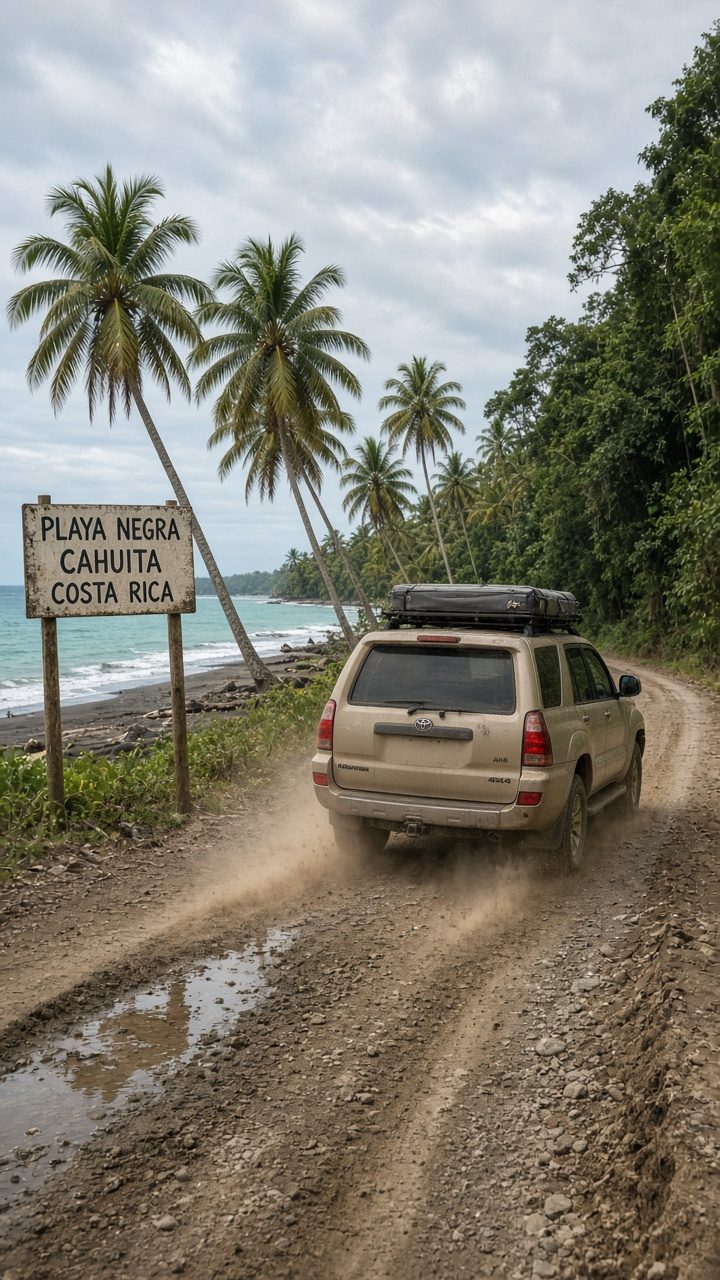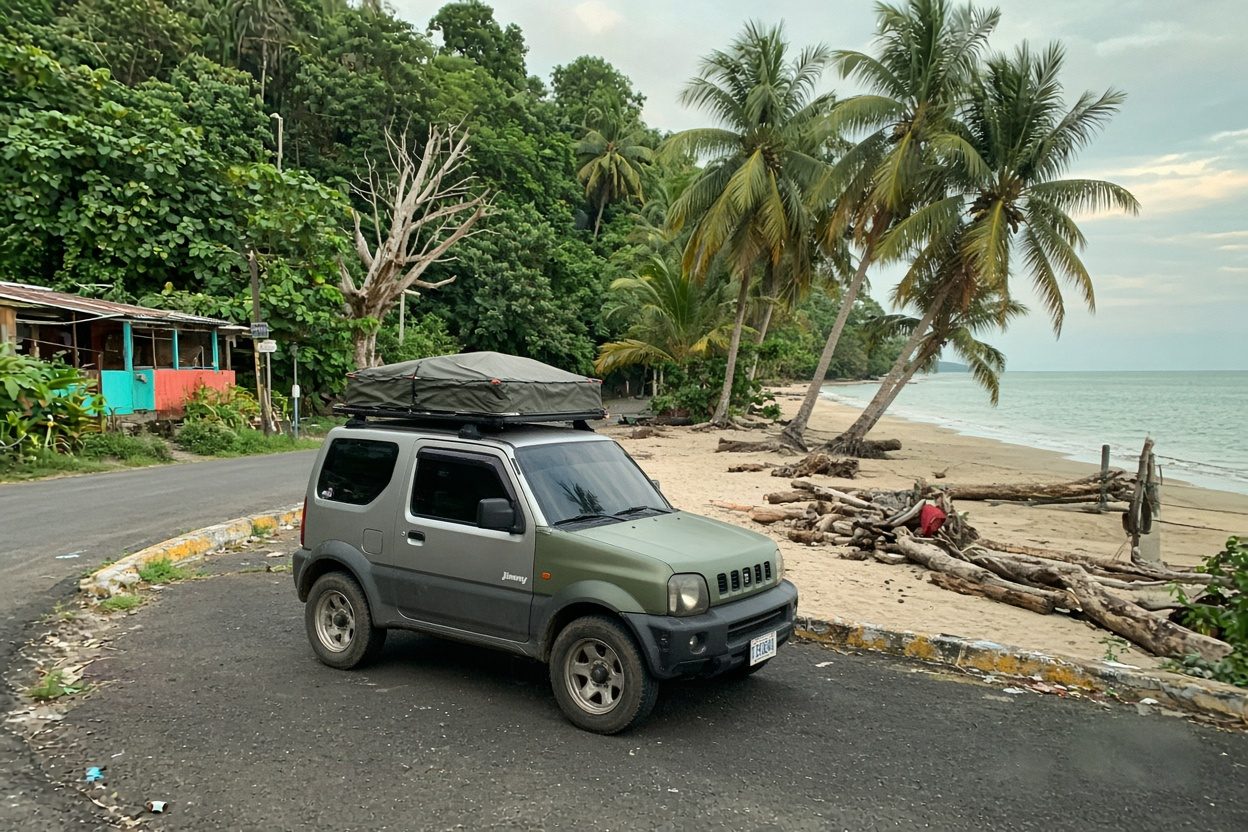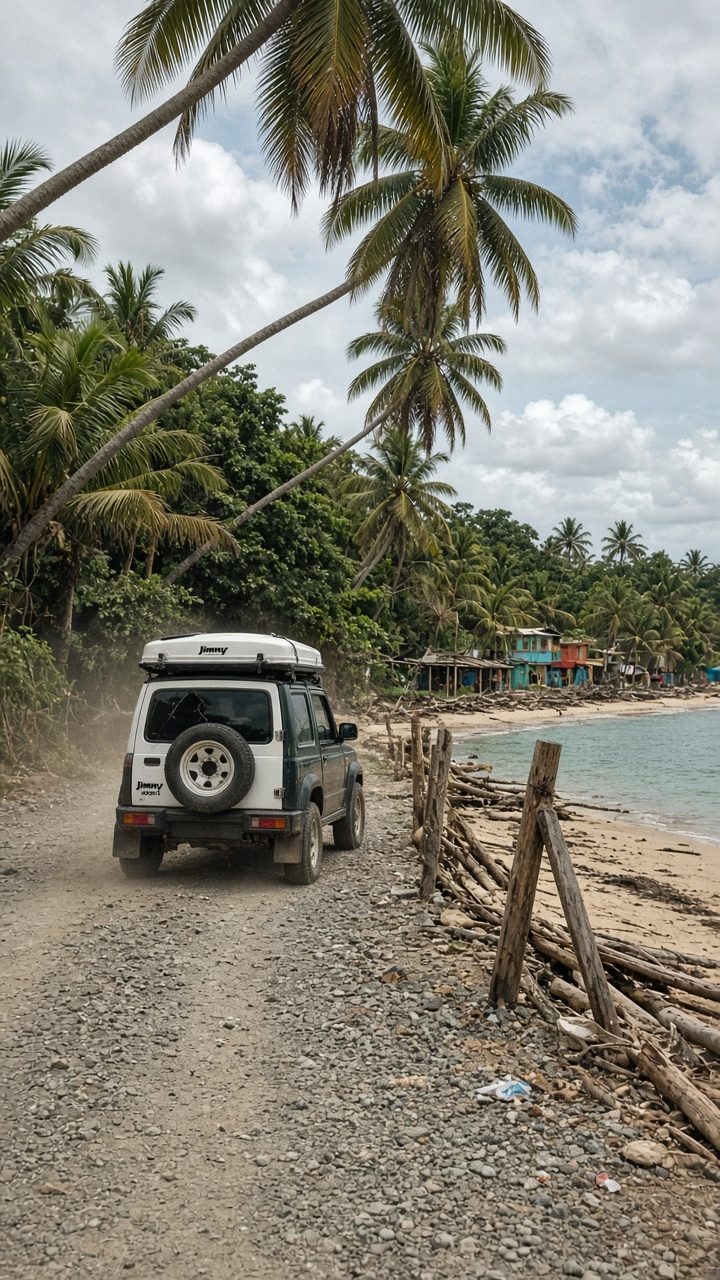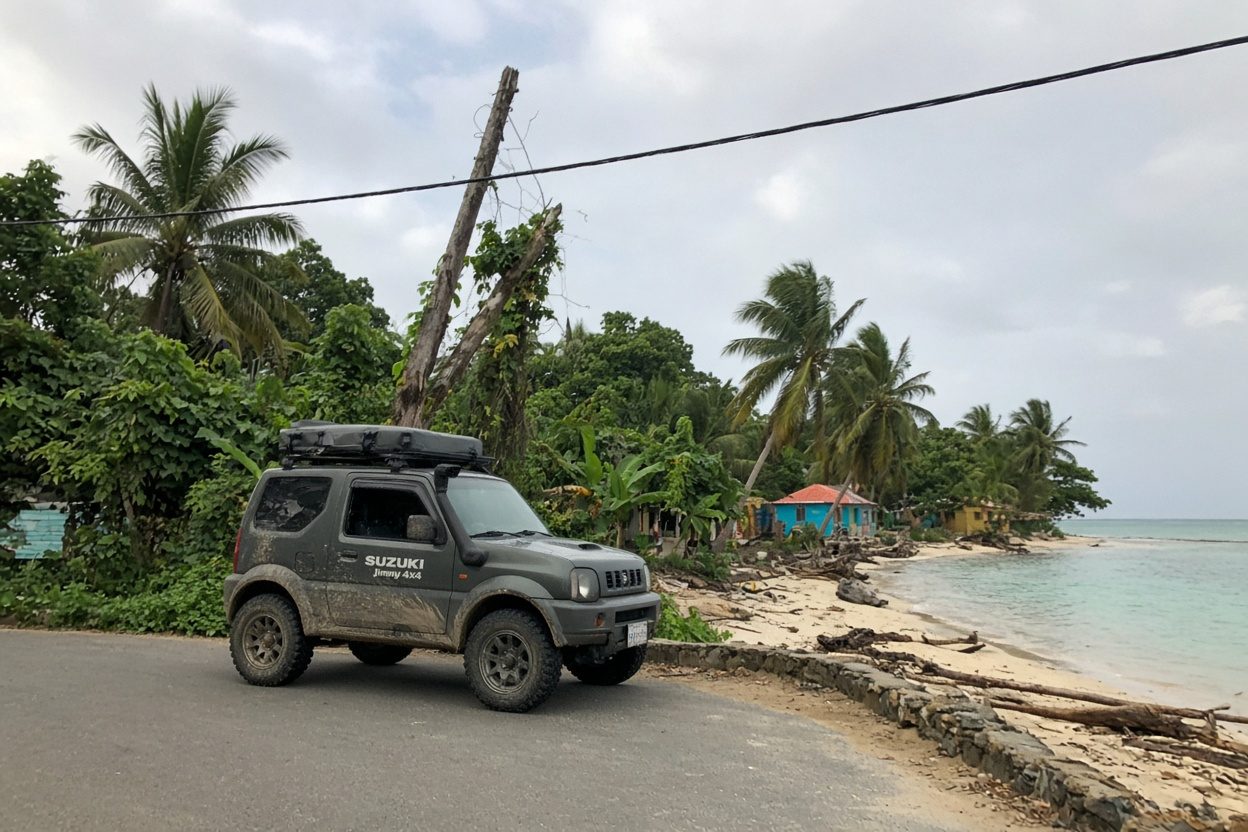
Everyone snorkels the Pacific. Almost no one tells you that Costa Rica's largest living coral reef sits off a sleepy Afro-Caribbean village called Cahuita — protected inside a free national park, fringing a jungle trail crawling with sloths, and clearest in the exact months the rest of the country is underwater. This four-day route is for the traveler who would rather swim over 35 species of coral with a licensed guide than fight for fin-space at a Pacific hotspot.
The reef off Cahuita National Park covers roughly 600 acres and shelters over 100 species of fish alongside rays, sea turtles, and the corals themselves. The catch — and the reason it stays uncrowded — is that visibility on the Caribbean is fickle. The reef clears up best in September–October and again in February–March, and snorkel boats simply do not run when there's swell in the water. Plan for the clear window, and build in a flex day so a rough morning doesn't sink the whole trip.
Day 1 — Daylight run to Cahuita
Drive: San José → Cahuita, ~200 km / roughly 4–4.5 hours via Route 32. Road notes: Route 32 crosses the Braulio Carrillo range through the Zurquí tunnel and drops to the lowlands at Guápiles. Fog, hard rain, and landslide closures are all possible — run it in daylight and check conditions before leaving. Below Limón the road flattens out completely.
Arrive in Cahuita by early afternoon. It is deliberately quieter than Puerto Viejo — the town many long-term residents choose precisely because it isn't a party. Settle in, walk into the national park's Kelly Creek entrance for a first taste (the river on the right often has a sloth or a Jesus Christ lizard within the first hundred meters), and eat where the locals do.
Eat: Soda Kawe or El Rincón del Amor in town — coconut rice and beans, fresh fish. Sleep: Cahuita beach camping / a beachfront campsite near the Kelly Creek entrance.
Day 2 — Cahuita National Park trail + guided reef snorkel
Drive: none — walk from town into the park.
Cahuita is one of the rare places where the wildlife trail and the reef are the same trip. Start early at the Kelly Creek entrance (entry is by donation here; the alternative Puerto Vargas sector charges $5 for foreigners and has a car park). The main trail runs about 8 km one-way — it is not a loop — following the shore under the canopy; most people walk out toward Punta Cahuita and back. Sloths, howler and white-faced monkeys, caimans, and eyelash pit vipers are all regulars. Hire an ICT-certified guide at the entrance — the wildlife is genuinely hard to spot untrained, and a good guide turns an empty forest into a full one.
For the reef itself you must go with a licensed guide by boat — you cannot bring your own gear into the park and snorkel independently inside the protected zone. The boat runs out to the reef off Punta Cahuita; expect turtles, rays, and coral gardens when the water is clear. If the sea is rough, the boats don't run — this is where your flex day earns its keep.
Eat: pack water and snacks (no plastics allowed in the park); big Caribbean plate in town after. Sleep: Cahuita beach.
Day 3 — Playa Negra & a second reef shot
Drive: minimal — Cahuita's Playa Negra is walkable/short drive.
Use the morning as your reef insurance: if yesterday's boat got weathered off, this is your second window. If you already scored the reef, spend the day on Playa Negra, Cahuita's black-sand beach north of town — good for a mellow swim and near-shore snorkel when calm, quieter than anything down in Puerto Viejo. In the afternoon, drive the 25 minutes down to Puerto Viejo for a change of scene, a food crawl, and a reggae night, then come back to your quiet Cahuita base.
Eat: Puerto Viejo food crawl — jerk chicken, patí, and rondón if a soda has it going. Sleep: Cahuita beach.
Day 4 — Slow morning, daylight drive out
Drive: Cahuita → San José, ~4–4.5 hours; leave mid-morning to clear Route 32 in daylight.
One last slow snorkel or beach walk, then aim the rig west while the mountain highway is still bright.
Signature stops — why go
- Cahuita's coral reef — the largest living reef in Costa Rica, 600 acres, 35+ coral species, best visibility Sept–Oct.
- Cahuita National Park trail — a flat shoreline jungle walk that rivals Manuel Antonio for sloths and monkeys, minus the crowds.
- Playa Negra (Cahuita) — quiet black-sand swim and backup snorkel.
Where to camp & stay (named)
- Cahuita beach camping near the Kelly Creek entrance — walk straight into the park each morning.
- Cahuita town has small lodges (Hotel El Encanto, Atlántida Lodge) if you want a roof for a night — verify current rates.
Logistics & road reality
- Snorkel boats are swell-dependent. Build a flex day; never bank your only reef window on day one.
- The reef requires a licensed guide and a boat — independent gear is not allowed inside the park. Budget for the guided tour (guided reef trips commonly run from around $35–60; confirm at booking).
- Park hours: roughly 8 AM–4 PM, with Punta Cahuita closing earlier (around 2 PM) and last entry near 3:30 PM. Verify current hours locally.
- A compact 4x4 camper is plenty; the coast road is paved and easy.
Insider tips
- Book the reef boat for a calm-forecast morning, not for convenience. Water clarity and swell decide everything.
- Enter at Kelly Creek by donation to save the Puerto Vargas fee — but Puerto Vargas has the reliable car park if you're worried about the rig.
- Bring reef-safe sunscreen and a dry bag; leave the single-use plastics — the park enforces the no-plastic rule.
- A guide pays for itself. The difference between "we saw a beach" and "we saw six sloths and two vipers" is the guide's trained eye.
- Time the trip to Sept–Oct or Feb–Mar for the clearest water — and the driest weather on this coast.
Reserve your rig
The clearest water on Costa Rica's largest reef lines up with the country's rainiest weeks everywhere else — so the smart move is a self-contained camper you can point east on a clear-forecast window. Reserve a compact 4x4 camper, plan your Route 32 legs for daylight, and give yourself a flex day for the boat. Book your rig and snorkel the reef less snorkeled.
Before you go
Do you need a 4x4?
paved all the way — 2WD ok
Best window to fly
Sept–Oct & Feb–Mar (clearest water)
Offline first
Download your route and offline maps before you leave the lot — signal drops on the best stretches.
Golden rule
Never drive at night — plan arrivals before dark, and use Waze like the locals do.
VerifiedCR · No counter surprises
What a Costa Rica rental actually costs
The number one thing that rattles first-timers is the price jumping at the counter. Here is the honest math, before you get there.
- Advertised daily rate$12–40 / day
- What the booking sites show. It is real — but it is not the whole price. Nobody pays only this.
- Mandatory liability (TPL / SLI)+$15–25 / day
- Required by Costa Rican law on every rental. Cannot be waived. This is the line the cheap ads leave off — it roughly doubles the sticker price. Budget for it.
- Collision damage (CDW)waivable
- Often $20–40/day — but you can usually decline it if your credit card includes rental coverage (Amex, Visa Signature, Chase Sapphire and others). Call your card, ask for a coverage letter, and bring it printed.
- Security hold on your card$1,000–2,500
- A hold, not a charge — released after you return the car clean. Some agencies hold more. Make sure your card has the headroom before you fly.
The verified-rig promise: when you reserve through VerifiedCR, the rig is inspection-checked and the operator is vetted — the price you are quoted is the price you pay. No mystery line items at pickup.