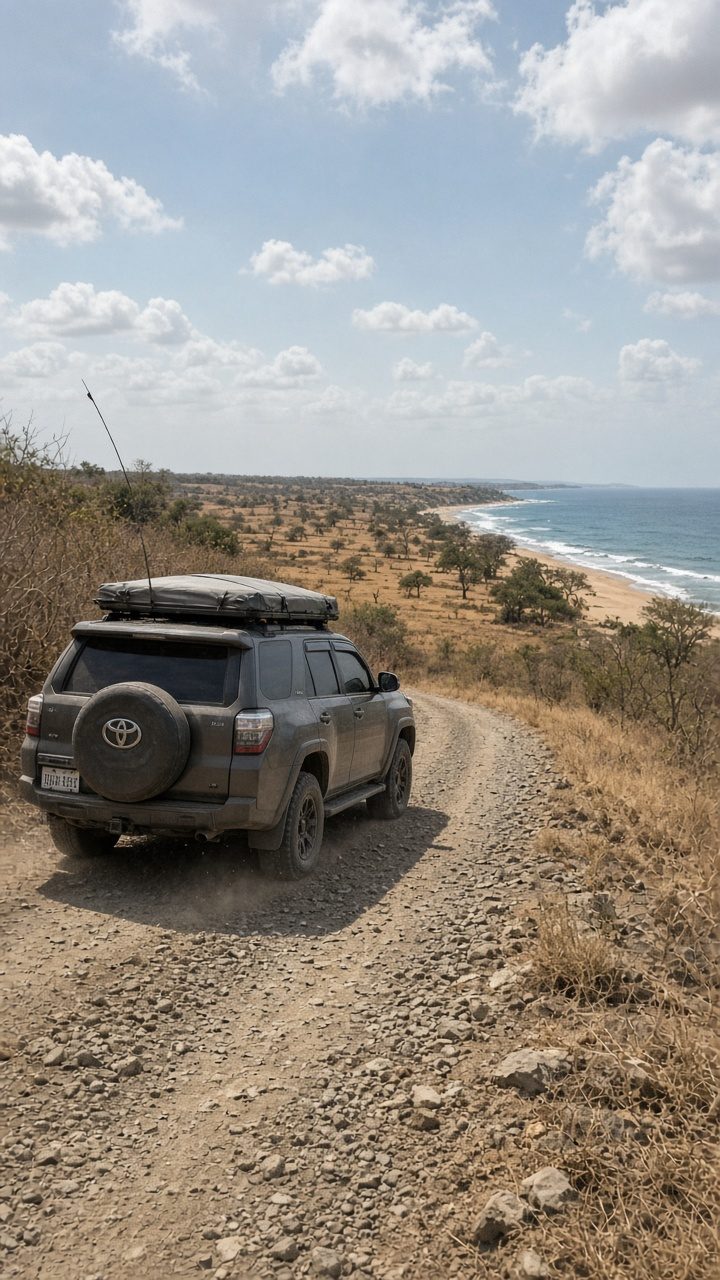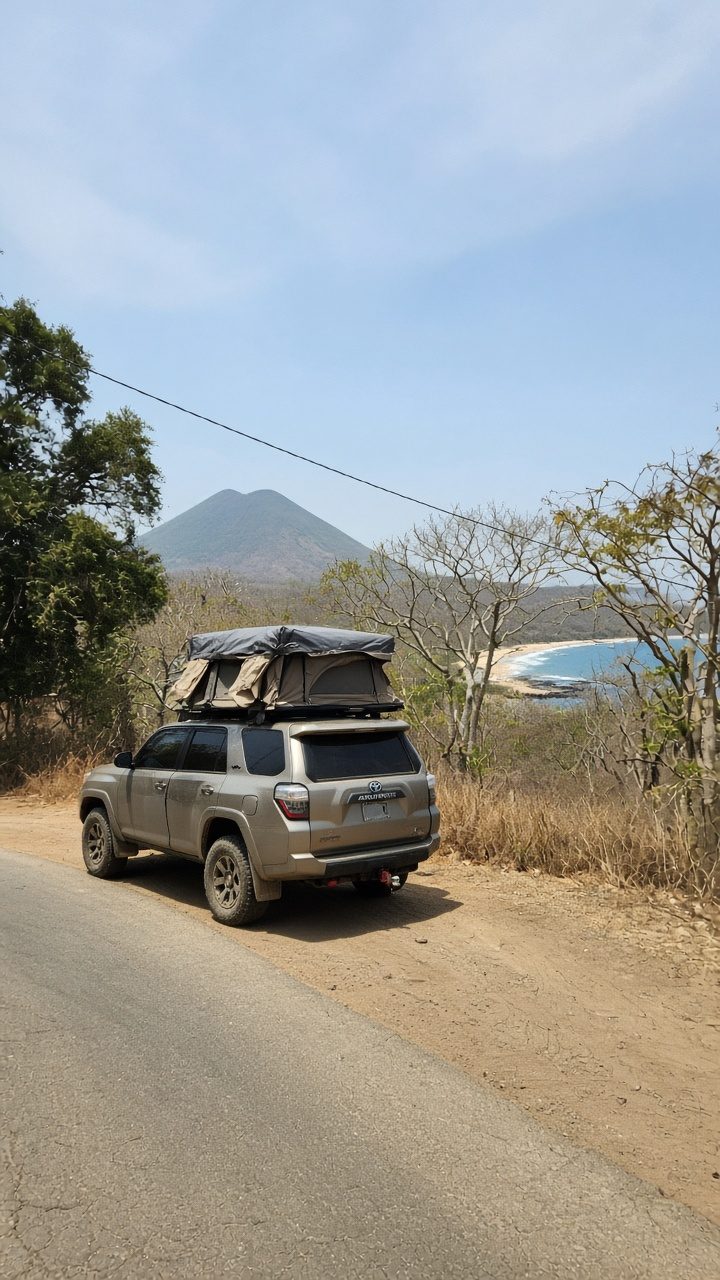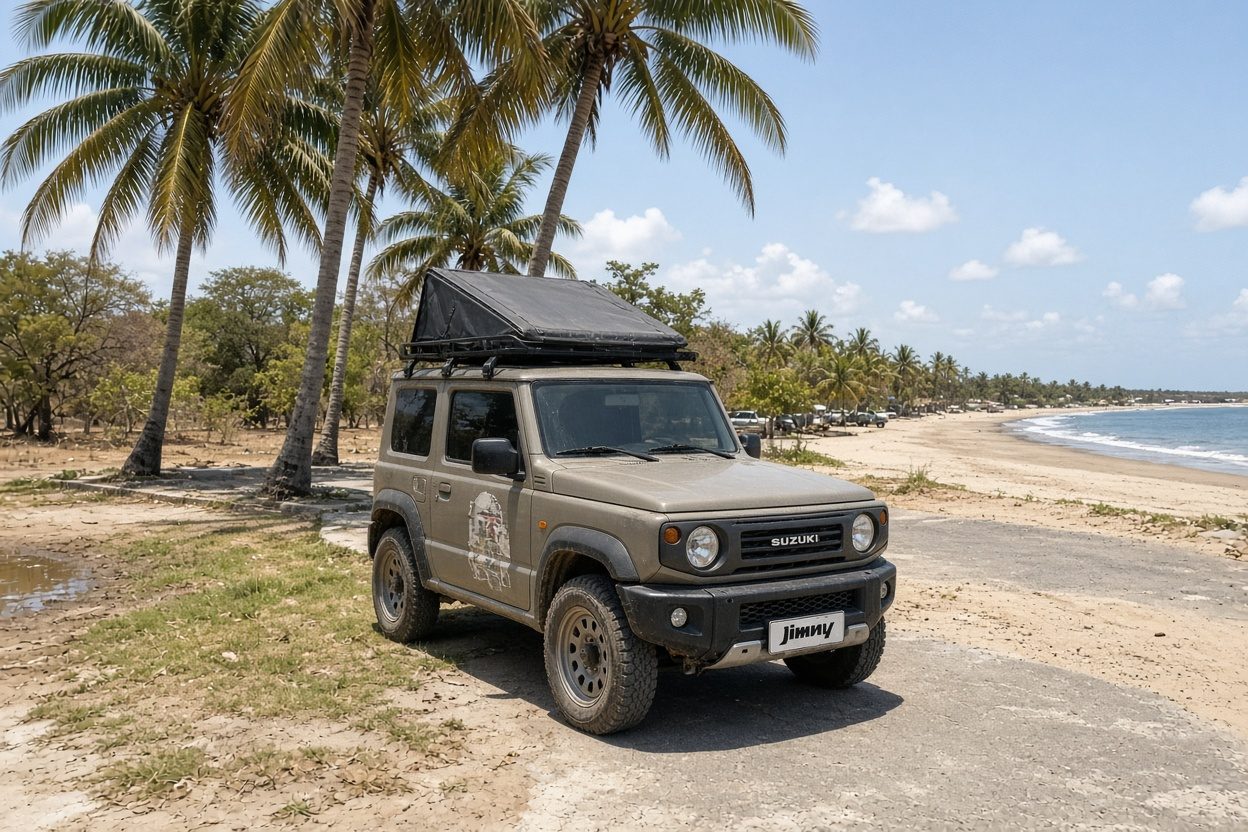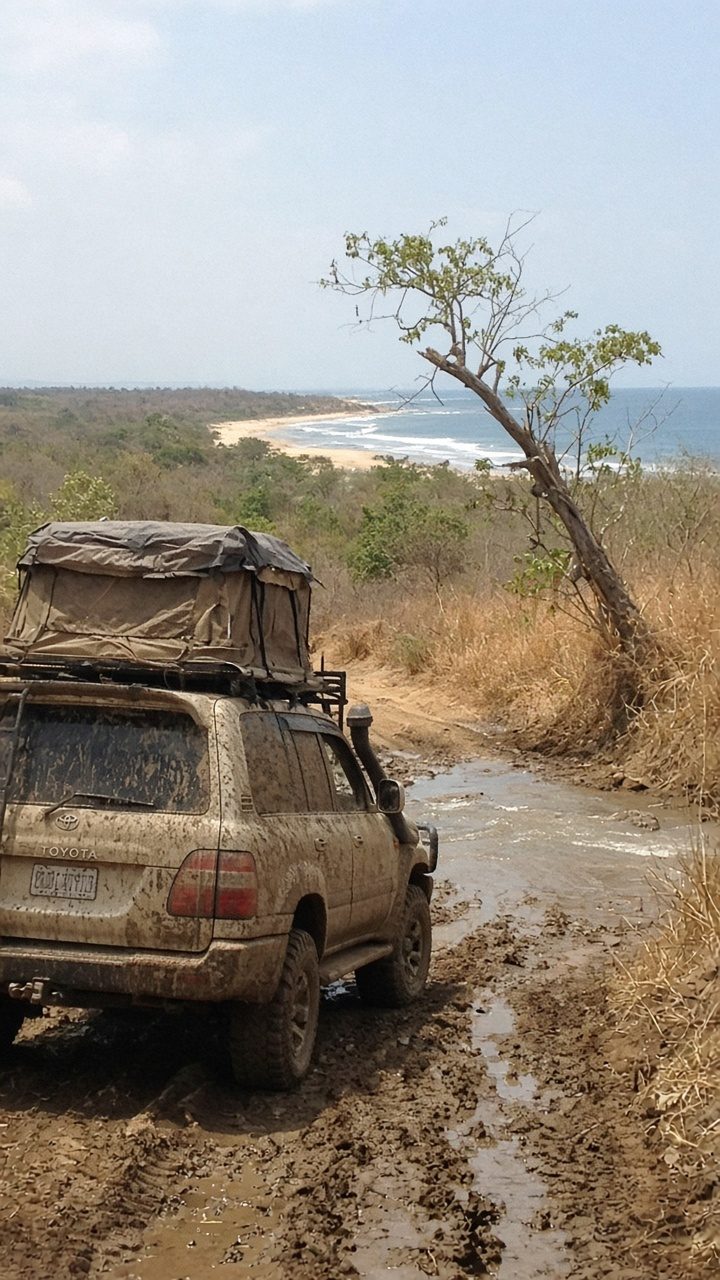
This is the whole zone, honestly driven, in ten days. Most Guanacaste itineraries pick a lane — luxury coast or remote surf or volcano adventure. This one refuses to choose. It starts on the geothermal flank of the Rincón de la Vieja volcano, drops into the wild dry forest of Santa Rosa, threads the manufactured luxury of the Gold Coast, then commits south down the increasingly raw Nicoya Peninsula to Nosara, Sámara and finally Santa Teresa — exiting not the way you came, but by ferry across the Gulf of Nicoya. It's a top-to-tail traverse that ends somewhere completely different from where it began, which is the entire point of overlanding.
Make no mistake: this is a red route. Not every day is hard, but the trip as a whole strings together dry-forest tracks, long fuel gaps, dusty peninsula back-roads and a ferry crossing, and it only works in the dry season (December–April) — several of these tracks are impassable in the wet. It demands a Land Cruiser with a rooftop tent: the self-sufficiency to camp in Santa Rosa and at remote beaches, the clearance for the rough bits, and the range to bridge the peninsula's two infamous fuel gaps. This is for experienced, flexible overlanders who read the road, not the brochure.
The reward is range no single-basecamp trip can touch: you'll stand at a bubbling mud pot, sleep in a national park, dive a marina reef, walk a pink-shell beach, catch a dawn wave at Guiones, and finish among the bohemian surf camps of the deep south — all under your own wheels.
Day by Day
Day 1 — Liberia (LIR) → Rincón de la Vieja / Guachipelín. Provision fully in Liberia (this is your best supermarket and last cheap fuel for a while), then run ~40 km / ~1 hour northeast to the Rincón sector — paved to Curubandé, then gravel through the Hacienda Guachipelín gate. Afternoon: soak in the Río Negro hot springs and, if time allows, a first taste of the canyon adventure park. Camp on the lodge grounds (confirm rooftop-tent/overnight policy directly).
Day 2 — Rincón NP → Santa Rosa National Park. Early hike in the Las Pailas sector (open Tue–Sun 8:00–3:00, closed Mondays; buy SINAC tickets online in advance, ~$16.95, credit card only) — do the mud-pots loop or the La Cangreja waterfall (enter before noon). Then backtrack toward Liberia and run northwest on the Interamericana ~35–40 km to Santa Rosa National Park (part of the ACG). Visit historic La Casona hacienda and the dry-forest trails. Camp at the park's designated campground near the administration area (reserve with the ranger station ahead — spots and water are limited).
Day 3 — Santa Rosa → Bahía Junquillal. Continue north/northwest toward Cuajiniquil and the Bahía Junquillal wildlife refuge — a calm, protected bay with a rustic ranger-run campground, a world away from the resort coast. (If you're a hardcore 4x4 crew, the legendary track down to Playa Naranjo / Witch's Rock branches off Santa Rosa, but it's 4x4-only, river-dependent and requires a ranger reservation — verify conditions locally and treat it as an optional detour, not a given.) Camp at Junquillal.
Day 4 — Junquillal → Papagayo / Playas del Coco. Drop back south to the Gold Coast, roughly 1.5–2 hours, and shift gears entirely: into the manicured Gulf of Papagayo and the lively marina town of Playas del Coco. Reprovision, refuel, and enjoy real restaurants — the Coco strip has sodas and seafood. Camp or use a campground/hotel around Hermosa/Coco (formal beach camping is limited here — arrange in advance).
Day 5 — Coco → Flamingo + Playa Conchal. A short, scenic coastal-hinterland drive south (~45 min–1 hour) to Marina Flamingo — Central America's marquee marina — and the crushed-shell Playa Conchal, reached via Brasilito (note Conchal itself has no paved road in; it's a short sand/4x4 access or a walk from Brasilito). Snorkel, walk the pink beach, and eat in Brasilito or Flamingo. Overnight around Brasilito/Potrero.
Day 6 — → Tamarindo & Playa Grande. Continue south to Tamarindo (~45 min), the peninsula's surf-town hub, with a side trip to Playa Grande across the estuary (drive around via Huacas — the estuary mouth is not a shortcut). In leatherback season (Oct–Feb, so a shoulder-of-dry bonus) Las Baulas hosts night nesting tours. Surf, resupply, and enjoy a town night. Overnight Tamarindo area.
Day 7 — Tamarindo → Nosara. The first serious peninsula leg: ~60–70 km but 2–2.5 hours on slow, partly-unpaved inland roads through Santa Cruz. Fill the tank in Tamarindo — this is the Tamarindo–Nosara fuel gap — and do not attempt the coastal river-crossing shortcuts. Arrive at Playa Guiones for a dawn-patrol-ready base. Camp/stay near Guiones.
Day 8 — Nosara → Sámara. A dawn surf at Guiones, then an easy ~30 km / ~45 min–1 hour hop south to Sámara — a genuinely calm, family-friendly bay that's one of the peninsula's most relaxed stops. Swim, snorkel out to Isla Chora, and camp at one of Sámara's beach campgrounds.
Day 9 — Sámara → Santa Teresa via the Paquera ferry. The big transit day. Fuel up in Sámara — the Sámara–Santa Teresa gap is the second fuel trap. The realistic path to the deep south is inland and long: drive toward Paquera (budget several hours on mixed roads) to catch the Paquera–Puntarenas ferry system; for the Santa Teresa direction you'll route via Paquera and the Cóbano road. (Verify the current ferry timetable and direction locally — the crossing runs multiple times daily and takes about an hour, with cars around $28; allow ~1.5 hours for ticketing, queue and boarding.) End in Santa Teresa / Mal País — bohemian surf-camp country and a taste of the Cabo Blanco reserve fringe. Camp/surf-camp in Santa Teresa.
Day 10 — Santa Teresa → ferry → out. A final dawn surf, then the Paquera → Puntarenas ferry back across the gulf (~1 hour crossing) and onward. From Puntarenas it's highway back toward LIR/SJO — plan the ferry time backward from your flight and buffer generously.
Signature Stops
- Río Negro Hot Springs & Rincón de la Vieja — Thermal river pools and a live volcano's mud pots to open the trip.
- Santa Rosa National Park & La Casona — Costa Rica's iconic dry forest and a restored historic hacienda; sleep inside a national park.
- Bahía Junquillal — A quiet, protected bay with rustic camping — the anti-resort.
- Marina Flamingo & Playa Conchal — A megayacht marina beside a beach made of crushed shells.
- Playa Guiones & Sámara — The peninsula's best all-round surf and its calmest family bay, back to back.
- Santa Teresa / Cabo Blanco fringe — Bohemian surf town at the wild south end, edging the country's oldest protected reserve.
Where to Camp / Stay
- N1: Hacienda Guachipelín grounds (confirm rooftop-tent policy). N2: Santa Rosa NP campground (ranger reservation). N3: Bahía Junquillal refuge campground. N4: Coco/Hermosa campground or hotel (arrange ahead). N5: Brasilito/Potrero. N6: Tamarindo area. N7: Nosara/Guiones. N8: Sámara beach campground. N9: Santa Teresa surf camp.
Logistics & Road Reality
- Tag: 🔴 through-land overall — dry-forest tracks, long fuel gaps, dusty peninsula roads and a ferry. Gold Coast segments (D4–D6) are 🟢 paved relief in the middle.
- Season: Dry season only (Dec–Apr). Wet-season tracks (Santa Rosa spurs, peninsula back-roads) become impassable.
- Fuel — the two traps: Tank up before Tamarindo→Nosara and before Sámara→Santa Teresa. Carry a jerry can. Liberia and Coco are your reliable fill-ups; the peninsula south of Nosara is thin.
- Ferry: Paquera–Puntarenas runs multiple daily crossings (~1 hr; car ~$28); verify the live schedule and route to/from Santa Teresa locally and allow ~1.5 hrs for the whole boarding process.
- Do NOT attempt coastal river-crossing shortcuts between beach towns — go inland via Santa Cruz/Nicoya. Playa Naranjo/Witch's Rock is 4x4-only and river-dependent — verify with rangers.
- Permits: SINAC tickets online for Rincón and Santa Rosa; camping reservations with ranger stations.
- Connectivity: Patchy on the volcano flank, in Santa Rosa and on peninsula back-roads — download offline maps; carry a local SIM.
- Safety: Lock the rig, don't leave gear visible, respect tide and river levels, drive the rough bits in daylight only.
Insider Tips
- Plan Day 2's hike around the Monday closure — the park is shut Mondays, and it's your only shot at Rincón on this route.
- Book Santa Rosa and Junquillal camping with the ranger stations in advance; both have limited space and water — arrive self-sufficient.
- Treat the two fuel gaps as hard rules, not suggestions; a jerry can turns a stressful transit into a non-event.
- Reverse-engineer Days 9–10 from the ferry timetable and your flight — the boat is the one fixed clock on the whole trip.
- The Gold Coast middle (Coco→Flamingo→Tamarindo) is where to reprovision, do laundry and sleep in a real bed before the raw south — use it.
Reserve Your Rig
This trip is the reason the Land Cruiser + rooftop tent exists: range for the fuel gaps, clearance for the dry-forest tracks, and self-sufficient camping from Santa Rosa to Santa Teresa. Add full outfitting (jerry can, recovery gear, offline-GPX pack), surf racks, and let us handle your ferry booking and SINAC camping permits so the only thing you manage is the drive.
Before you go
Do you need a 4x4?
4x4 required
Best window to fly
Dec–Apr (dry season only)
Offline first
Download your route and offline maps before you leave the lot — signal drops on the best stretches.
Golden rule
Never drive at night — plan arrivals before dark, and use Waze like the locals do.
VerifiedCR · No counter surprises
What a Costa Rica rental actually costs
The number one thing that rattles first-timers is the price jumping at the counter. Here is the honest math, before you get there.
- Advertised daily rate$12–40 / day
- What the booking sites show. It is real — but it is not the whole price. Nobody pays only this.
- Mandatory liability (TPL / SLI)+$15–25 / day
- Required by Costa Rican law on every rental. Cannot be waived. This is the line the cheap ads leave off — it roughly doubles the sticker price. Budget for it.
- Collision damage (CDW)waivable
- Often $20–40/day — but you can usually decline it if your credit card includes rental coverage (Amex, Visa Signature, Chase Sapphire and others). Call your card, ask for a coverage letter, and bring it printed.
- Security hold on your card$1,000–2,500
- A hold, not a charge — released after you return the car clean. Some agencies hold more. Make sure your card has the headroom before you fly.
The verified-rig promise: when you reserve through VerifiedCR, the rig is inspection-checked and the operator is vetted — the price you are quoted is the price you pay. No mystery line items at pickup.