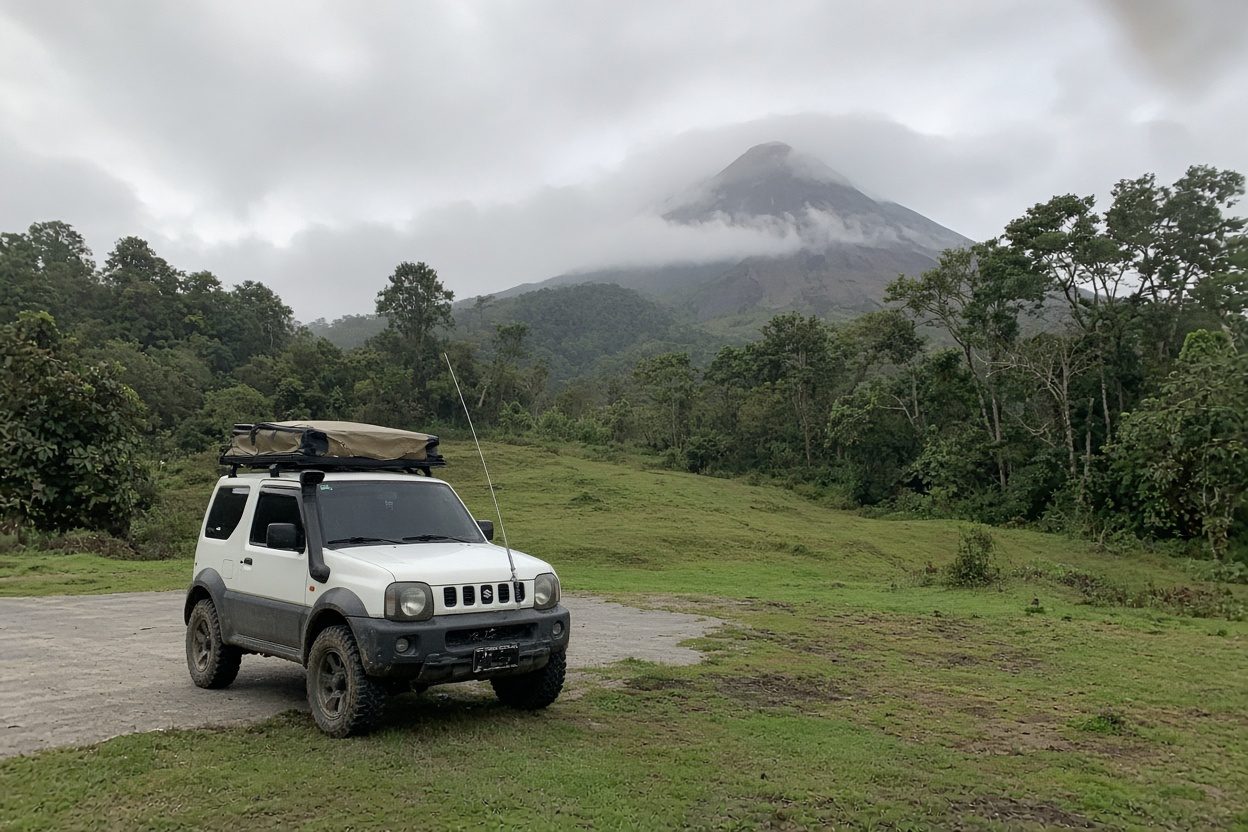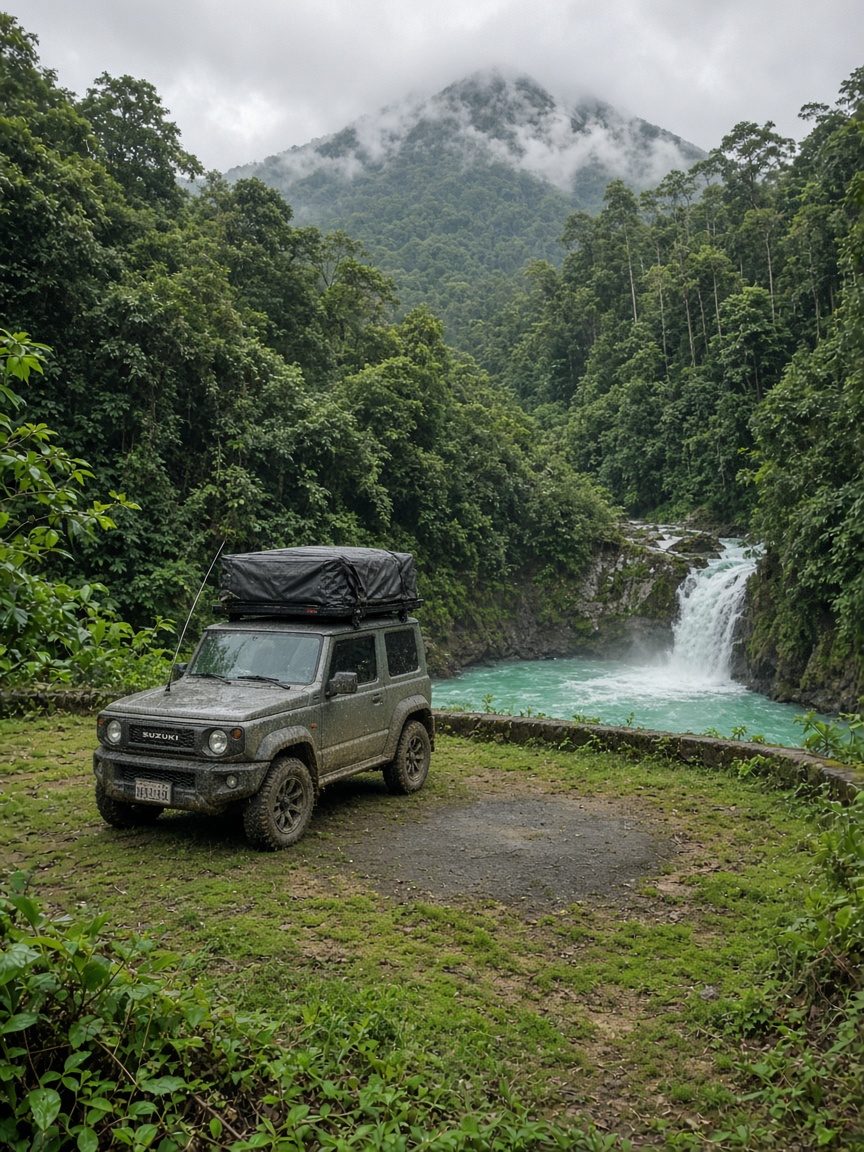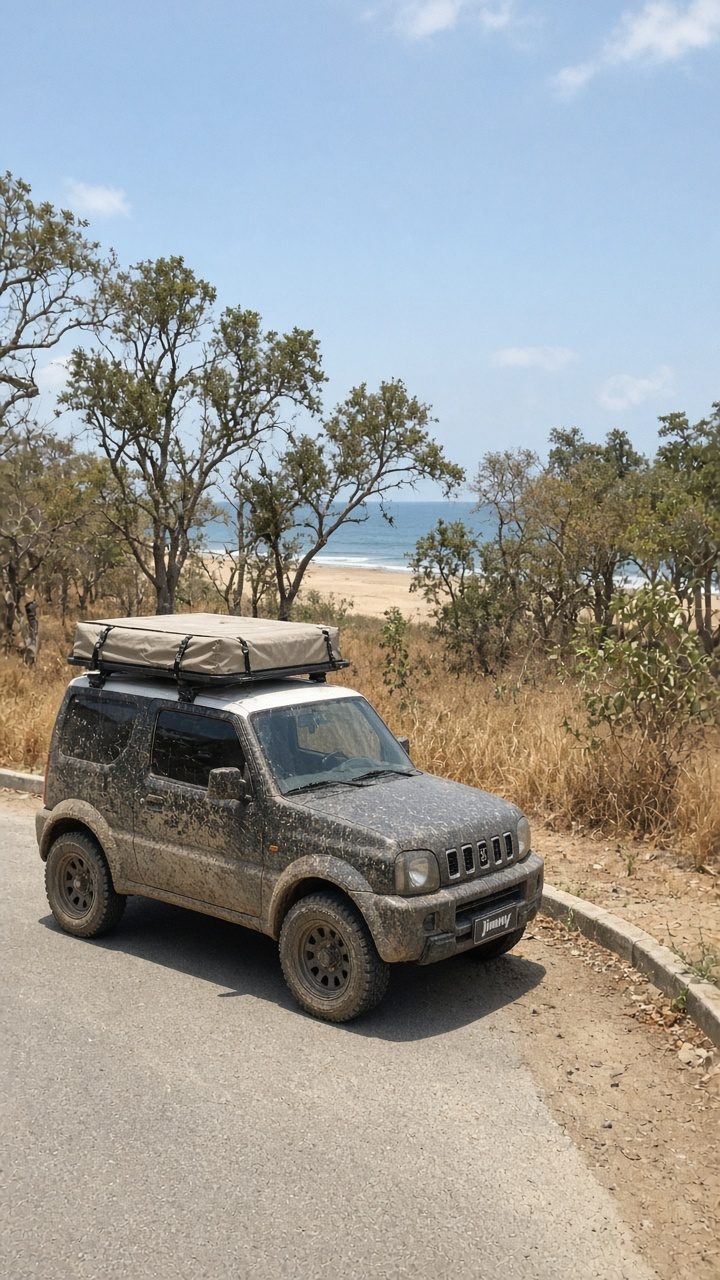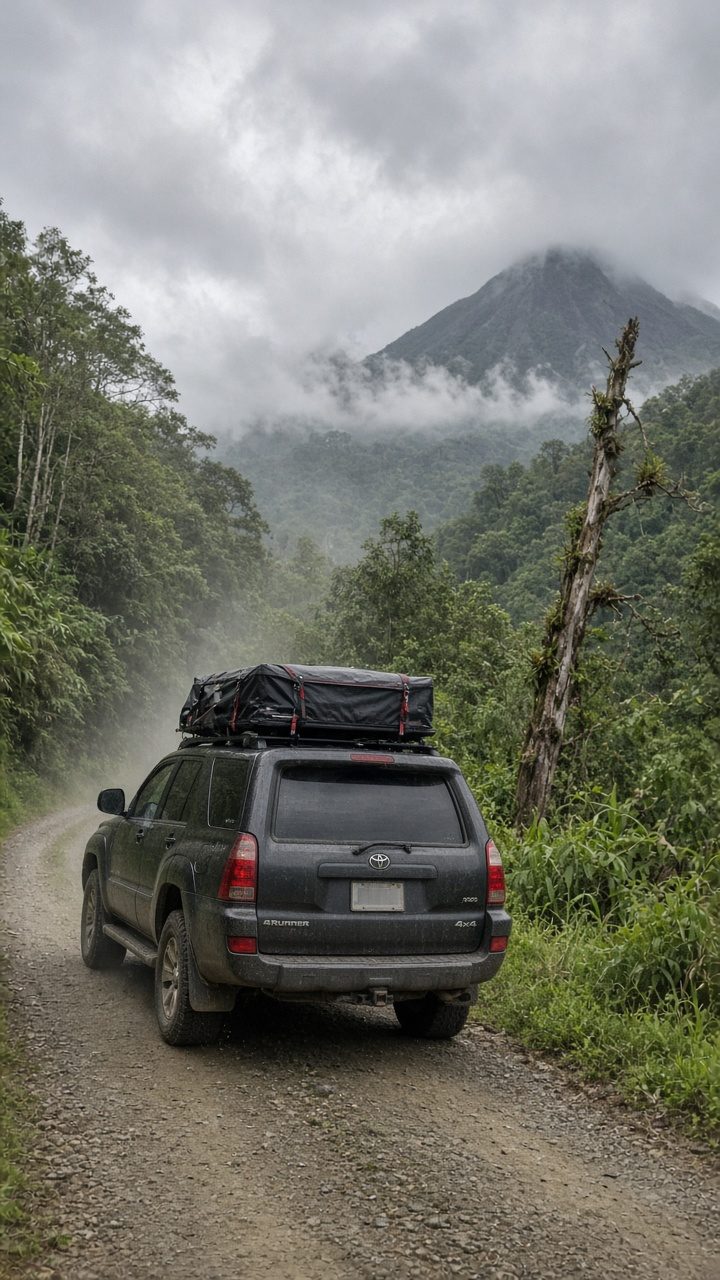
Most Costa Rica itineraries sprint. This one settles. For a photographer — especially a digital nomad who wants reliable wifi and a comfortable base between shoots — the Arenal region is the ideal place to stay put for ten days and go deep: a perfect volcano cone for golden-hour and reflection frames, waterfalls in every direction, sloths and birds within a short dawn drive, and the extraordinary Caño Negro wetlands a couple of hours north. You unpack once, learn the light, and work each subject in its best conditions instead of chasing the whole country.
The trip is 🟡 — the roads are mostly good, but you'll do day-trips on gravel to waterfalls and wetlands, and a mid-size 4x4 earns its keep on the Bajos del Toro and Caño Negro approaches. La Fortuna itself has strong connectivity and cafés, so it works as a live-and-shoot basecamp for a remote worker.
One planning flag drives days five: Tenorio/Río Celeste is closed for restoration from March 2026 through the 2026–2027 window (and its waterfall-base stairs have been shut since mid-2025). Verify the reopening before you build a day around it; a strong substitute — the deep, mossy Bajos del Toro canyons — is folded into the plan below.
Day-by-Day (single La Fortuna base)
Days 1–2 — Settle in La Fortuna (SJO to La Fortuna ~120 km, ~3–3.5 hr, paved). Collect the rig, drive up, and set up your base — pick a stay with fast wifi and a volcano view if you can. Scout locations, confirm which parks need SINAC reservations, and shoot a first blue-hour of the cone from town. Establish your work-and-shoot rhythm.
Day 3 — Arenal sunrise reflections (short drives around Lake Arenal, paved + some gravel). Pre-dawn to the lake's still water for mirror reflections of the volcano; the El Castillo side and the dam road offer classic compositions. Golden hour on the cone, then edit and work through midday. Return for blue hour if clouds cooperate.
Day 4 — Sloths & birds at dawn (short local drives). Hit a sloth-and-bird reserve near La Fortuna at first light when animals are active and light is soft — bring the long lens and a naturalist guide with a scope to find and frame subjects. Toucans, motmots, and sloths are the reliable gets. Afternoon: process and back up.
Day 5 — Río Celeste or Bajos del Toro (⚠️ verify Tenorio; ~2 hr each way). ⚠️ If Tenorio has reopened, the turquoise river shoots best under overcast light (the blue reads truest without harsh sun) — SINAC ticket required, no signal in the park, and the waterfall-base stairs may still be closed. If it's still shut, spend the day at Bajos del Toro instead: the Catarata del Toro and the Blue Falls (Las Gemelas) are superb long-exposure subjects in a moss-draped canyon.
Day 6 — Bajos del Toro deep-dive (~2–2.5 hr, gravel finish, 4x4). Whether or not you used it as a substitute, Bajos del Toro rewards a full day: Catarata del Toro plunging into an old crater, and the Blue Falls' tiered turquoise pools. Overcast or early light and a tripod + ND filter are your friends here.
Days 7–8 — Caño Negro wetlands (approx. 90–110 km north via Los Chiles, ~2–2.5 hr, paved then gravel). The Caño Negro Wildlife Refuge is a bird-and-croc paradise; the dry season (Dec–Apr) concentrates wildlife as the water recedes. Shoot from a boat at dawn — herons, jacanas, roseate spoonbills, caimans, and monkeys along the banks. Consider an overnight near Los Chiles to catch two dawns rather than one.
Day 9 — Mistico hanging bridges, golden hour (short drive, paved + gravel). The canopy bridges at Mistico put you at treetop level for golden-hour forest layers and, with luck, birds and sloths from above. Late-afternoon light through the mist is the frame. Back to base for the last edit session.
Day 10 — Wrap and return to SJO (~3–3.5 hr, paved). A final blue-hour of the cone if you rise early, then the drive back to the Central Valley and vehicle return.
Signature Stops (why go)
- Lake Arenal reflections — the volcano mirrored in still pre-dawn water, the region's signature frame.
- Caño Negro wetlands — the best dry-season bird photography in the north, all from a boat.
- Bajos del Toro — canyon waterfalls (Catarata del Toro, Blue Falls) built for long exposures.
- Mistico hanging bridges — canopy-level golden-hour forest and wildlife-from-above.
Where to Camp / Stay (named)
- La Fortuna: a work-friendly base with fast wifi and, ideally, a volcano view — everything from budget cabinas to Volcán Arenal Ecological Park's volcano-view sites. Book a longer stay for a nomad discount.
- Los Chiles (optional): a night near Caño Negro to catch consecutive dawns on the water.
Logistics & Road Reality
- Fuel: 🟢 easy — La Fortuna is a good hub; top up before the Bajos del Toro and Caño Negro day-trips.
- 4x4: 🟡 needed for the gravel to Bajos del Toro and the Caño Negro approach; the main roads are paved.
- Permits: 🔴 SINAC reservations for Tenorio (closed for restoration — verify); check current rules for Arenal NP and reserves.
- Season: Dec–Apr for clear volcano mornings and concentrated Caño Negro wildlife; green season gives fuller waterfalls but cloudier cones.
- Connectivity: 🟢 strong in La Fortuna (good nomad base); 🔴 none inside Tenorio, patchy at Caño Negro.
- Safety: early starts mean driving gravel in low light — go slow; secure gear in the vehicle at trailheads.
Photography Guidance (light, weather, ethics)
Work each subject in its best light, which is the whole reason to base up: shoot the volcano at blue hour and sunrise (still-water reflections need calm, cool mornings); shoot turquoise water and waterfalls under overcast so the color reads true and you can drag the shutter with a tripod and ND filter; shoot wildlife at dawn on the wetlands and reserves when animals are active and light is soft. Carry a tripod, ND and polarizer filters, a long lens for birds and sloths, and a scope-equipped naturalist guide to find and frame subjects. Ethics matter: no baiting, no flash on nocturnal animals, keep distance, and let the guide set the approach.
Insider Tips
- Base with fast wifi — this is a live-and-shoot deep-dwell, not a road sprint; work midday, shoot the edges.
- Do Arenal reflections at dawn on a calm, clear morning — wind kills the mirror.
- Shoot waterfalls and Río Celeste under cloud, not sun; bring a tripod + ND filter.
- Overnight near Caño Negro to bank two dawns on the water.
- If Tenorio is closed, Bajos del Toro is the stronger long-exposure substitute anyway — don't skip it.
Reserve Your Rig
A mid-size 4x4 with real clearance turns La Fortuna into a launchpad — smooth on the highway, capable on the gravel to Bajos del Toro and Caño Negro. VerifiedCR outfits your photo base with a golden-hour/blue-hour GPS pack for the region, a scope-equipped naturalist-guide contact, and live park-status notes (including Tenorio's closure). Reserve your rig, settle into Arenal, and shoot the north the way it deserves.
Before you go
Do you need a 4x4?
gravel sections — 2WD ok in dry season
Best window to fly
Dec–Apr (dry, clear volcano mornings)
Offline first
Download your route and offline maps before you leave the lot — signal drops on the best stretches.
Golden rule
Never drive at night — plan arrivals before dark, and use Waze like the locals do.
VerifiedCR · No counter surprises
What a Costa Rica rental actually costs
The number one thing that rattles first-timers is the price jumping at the counter. Here is the honest math, before you get there.
- Advertised daily rate$12–40 / day
- What the booking sites show. It is real — but it is not the whole price. Nobody pays only this.
- Mandatory liability (TPL / SLI)+$15–25 / day
- Required by Costa Rican law on every rental. Cannot be waived. This is the line the cheap ads leave off — it roughly doubles the sticker price. Budget for it.
- Collision damage (CDW)waivable
- Often $20–40/day — but you can usually decline it if your credit card includes rental coverage (Amex, Visa Signature, Chase Sapphire and others). Call your card, ask for a coverage letter, and bring it printed.
- Security hold on your card$1,000–2,500
- A hold, not a charge — released after you return the car clean. Some agencies hold more. Make sure your card has the headroom before you fly.
The verified-rig promise: when you reserve through VerifiedCR, the rig is inspection-checked and the operator is vetted — the price you are quoted is the price you pay. No mystery line items at pickup.