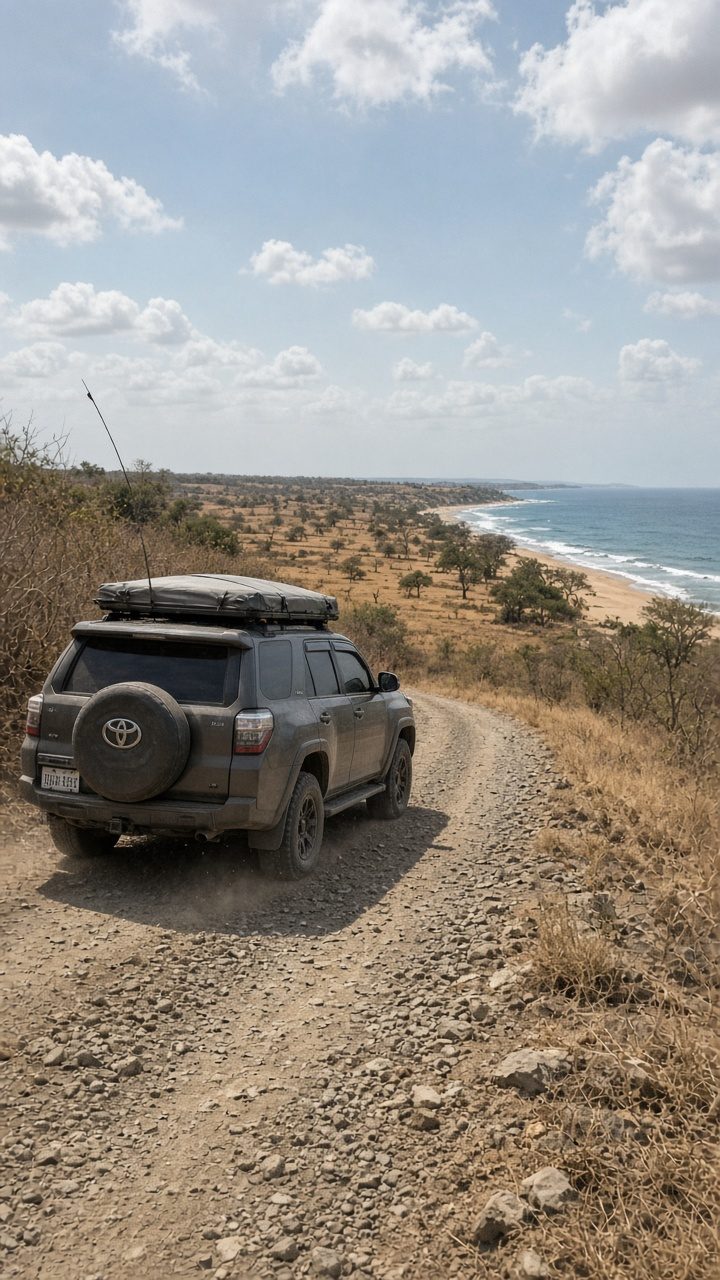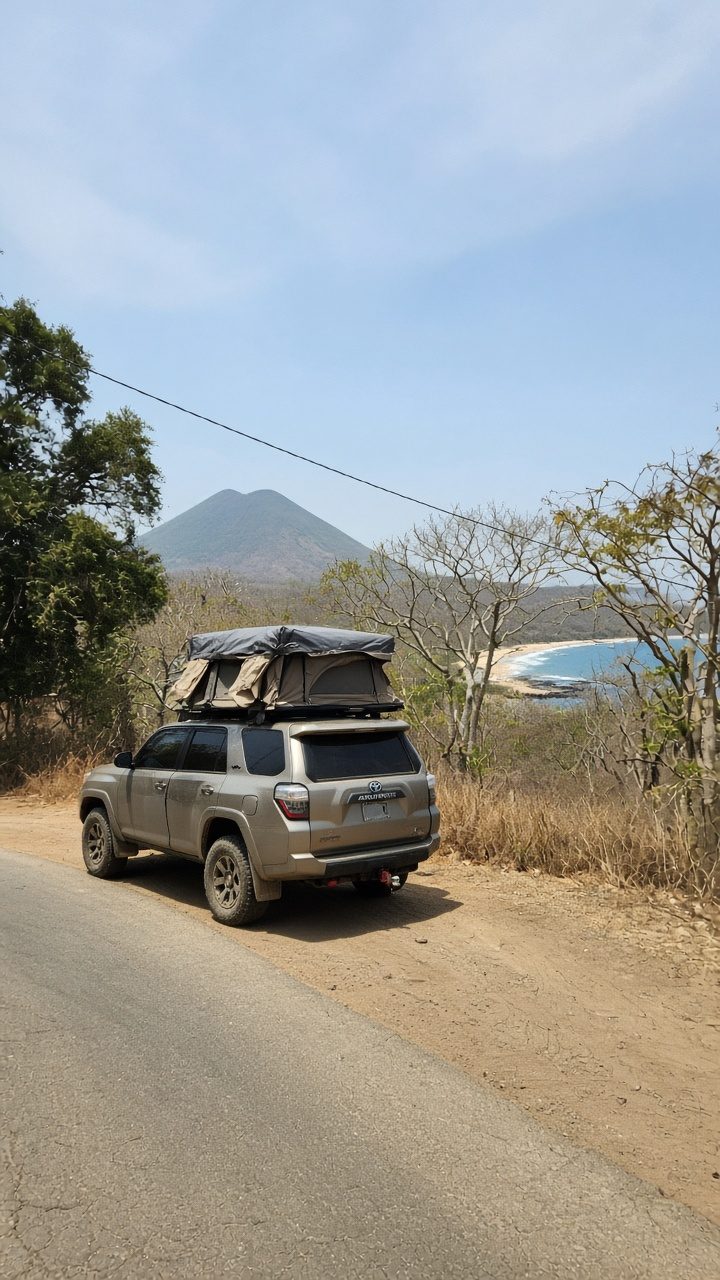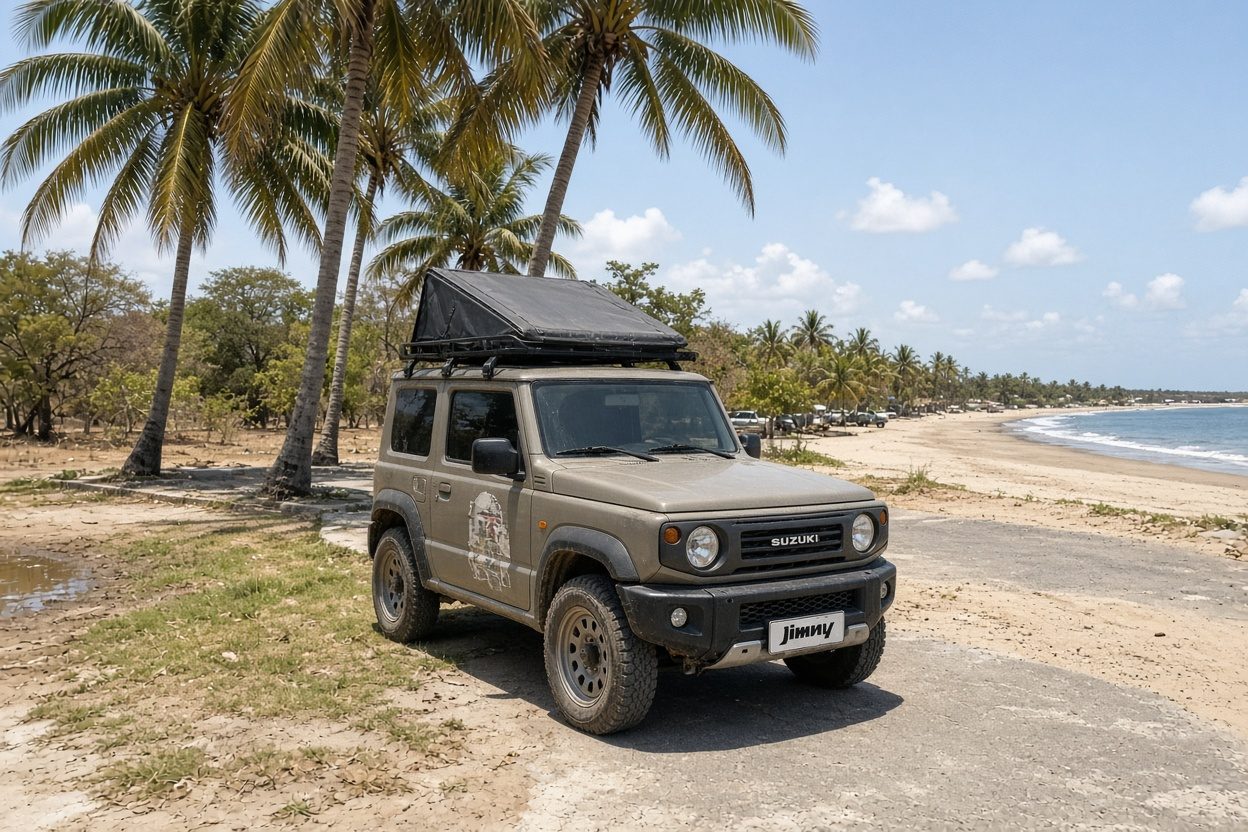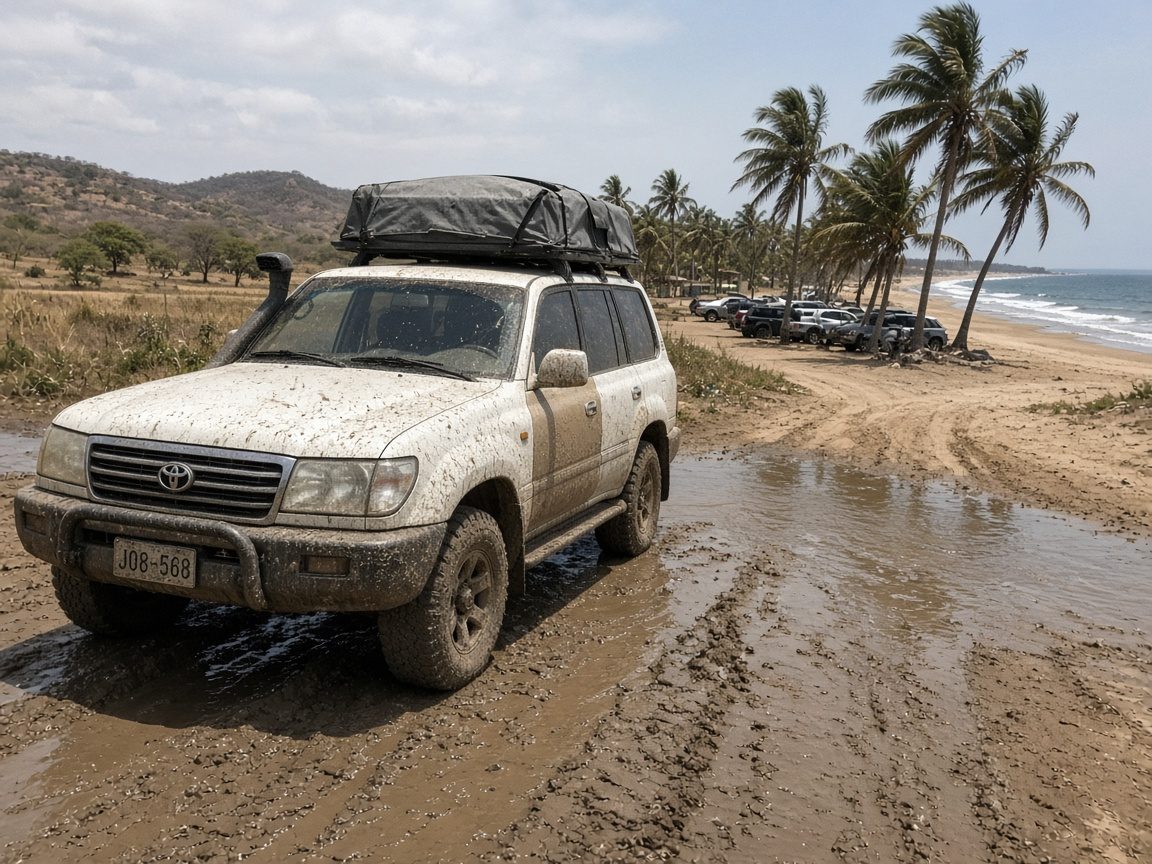
The southern tip of Nicoya is where Costa Rica's polish runs out and its personality begins. Santa Teresa is barefoot-luxe — matcha bowls and $400 surf villas on a road that's still dirt — and just beyond it lie the wild bookends most visitors never reach: Cabo Blanco, the country's very first protected reserve, and Montezuma, a hippie-era beach town stacked with tiered waterfalls. This six-day route is the stylish, adventurous way to finish a Guanacaste trip: you leave the manufactured Gold Coast behind, cross by ferry, and land somewhere that feels genuinely off the leash.
It's for design-minded couples who want the beach clubs and the sunset cocktails and the reserve hike and the tide pools — people happy to trade a paved approach for character. It earns its red rating on logistics, not danger: the trip hinges on the Paquera ferry, the Santa Teresa road is famously rough, and Cabo Blanco is closed two days a week, so timing is everything. A capable rig and a rooftop tent turn those constraints into the whole point.
Why this over the standard "fly to Tambor and taxi in"? Because with your own Land Cruiser you own the ferry schedule, you can chase Mal País tide pools at the right tide, and you can base yourself between Santa Teresa's scene and Montezuma's jungle instead of picking one. This is the peninsula's south end done properly.
Day by Day
Day 1 — Liberia (LIR) → Puntarenas → Paquera ferry → Santa Teresa (long transit 🔴). This is a full travel day: roughly 3 hours down to Puntarenas, then the car ferry across the Gulf of Nicoya to Paquera (about 70 minutes on the water), then another 1.5–2 hours of increasingly rough road down to Santa Teresa. Ferry note (verify current times before you leave): the Puntarenas→Paquera ferry, operated by Naviera Tambor, historically runs multiple daily departures (early morning through late evening); foot-passenger fares are a couple of dollars but the vehicle fare is separate and larger — confirm the exact car price, the day's schedule, and whether you can/should reserve online, because high-season and holiday sailings fill and the last boat is not something to gamble on. Eat: grab lunch in Puntarenas before boarding. Sleep: a Santa Teresa surf camp or boutique lodge (or your rooftop tent at a camp with facilities).
Day 2 — Santa Teresa surf + beach clubs (local roads 🟡). A slow, stylish day. Dawn surf at the beach breaks (consistent year-round), then coffee and a bowl in town, then an afternoon at a beach club as the famous Santa Teresa sunset builds. Eat (Jina-verified options): casual local eats at Soda Pura Vida; elevated dinners at Katana (Japanese), Somos, El Fogón/El Facón, La Cevichería, or a sundowner at Uma beach club; healthy bowls at Ani's Bowls. Sleep: Santa Teresa base again.
Day 3 — Santa Teresa → Cabo Blanco Absolute Nature Reserve via Cabuya (≈15 km / 40 min, rough 🔴). Drive south through Mal País and Cabuya to Costa Rica's founding reserve. Critical timing: Cabo Blanco is open Wednesday–Sunday, 8 AM–4 PM, and closed Monday and Tuesday — plan Day 3 to land on an open day or reshuffle the itinerary. Foreign entry is roughly $13.50 (pay on site). The signature Sendero Sueco runs about 4.2 km each way down to a wild beach at the tip; rangers advise starting by midday because you need ~4 hours round trip. Eat: picnic — bring it from Santa Teresa/Cabuya; there's no reliable food at the trailhead. Sleep: Santa Teresa or shift your base toward Montezuma/Cabuya.
Day 4 — Montezuma waterfalls + town (≈35 km / 1–1.5 hr from Santa Teresa, rough 🔴). Cross to the gulf side to bohemian Montezuma. The Montezuma waterfall is a three-tiered system reached by a ~20-minute riverside hike from town; there's no formal entrance fee (parking runs about $2–5). Read the trail signs — the upper tiers involve scrambling and the jumps have injured people, so treat the pools as swimming holes, not a cliff-jumping park. Wander the tiny town afterward. Eat: Montezuma's beachfront sodas and cafés do fresh fish and casados. Sleep: a Montezuma-area cabina or your rooftop tent.
Day 5 — Mal País tide pools + slow coast (local roads 🟡). Back to the Pacific side for a low-tide morning in the Mal País tide pools — check a tide chart and go at the lowest water for the best rock pools and the calmest exploring. Spend the rest of the day easing back into the Santa Teresa scene for a final sunset. Sleep: Santa Teresa/Mal País.
Day 6 — Santa Teresa → Paquera ferry → Liberia (long transit 🔴). Reverse the journey: rough road to Paquera, ferry to Puntarenas, Route 1/21 to Liberia. Book yourself onto an early ferry and pad the schedule generously — missing a sailing here can blow a flight.
Signature Stops
- Cabo Blanco Absolute Nature Reserve: Costa Rica's first protected area (est. 1963) and the seed of the whole national-park system — dense secondary forest, monkeys, and a wild end-of-the-peninsula beach via the Sendero Sueco. Closed Mon–Tue.
- Santa Teresa surf + beach clubs: Year-round beach breaks by day, one of the country's best sunset scenes by evening — barefoot luxury on a dirt road.
- Montezuma Waterfalls: A three-tiered jungle cascade a short walk from a countercultural beach town — swim the lower pools, skip the risky jumps.
- Mal País tide pools: Low-tide rock pools and quieter, wilder beaches than Santa Teresa proper — time them to the tide chart.
Where to Camp / Stay
- Nights 1–2, 5: Santa Teresa / Mal País surf camps and boutique lodges (rooftop tent works at camps with facilities).
- Night 3: Santa Teresa or a Cabuya cabina near the reserve.
- Night 4: Montezuma cabina or rooftop-tent site.
Logistics & Road Reality
- Vehicle: Land Cruiser + rooftop tent, genuinely warranted — the Santa Teresa/Mal País/Cabuya roads are rough, dusty in dry season, and the Cabo Blanco and Montezuma approaches are steep and rutted (🔴 through-land).
- The ferry is the whole game: Puntarenas↔Paquera, Naviera Tambor, ~70 min crossing, multiple daily sailings. Verify the live schedule and the separate vehicle fare before every leg; reserve where possible and never plan on the last boat.
- Cabo Blanco hours: Open Wed–Sun 8–4, closed Mon–Tue — build the trip around this or you'll drive to a locked gate.
- Fuel: Fill up in Puntarenas before the ferry and again in the Cóbano area (the main service hub for Santa Teresa/Montezuma). Don't count on a station in Santa Teresa itself.
- Season: Dec–Apr for firm dirt roads and reliable surf/sun; green season makes the approaches muddy and slow.
- Connectivity: Good in Santa Teresa and Montezuma towns; thin on the reserve roads. Safety is largely about the roads, the tides (respect the Mal País currents), and not jumping the Montezuma falls.
Insider Tips
- Pin your ferries first, plan everything else second — the sailing schedule dictates Day 1 and Day 6, so book those before you touch the middle.
- Never visit Cabo Blanco on a Monday or Tuesday. If your window is fixed, front-load Cabo Blanco to an open day and flex the beach days around it.
- Do Cabo Blanco's Sendero Sueco in the morning — you need four hours and rangers won't let you start too late.
- Check a tide chart for Mal País — the pools are only magic at low water.
- Air down and slow down on the dirt — the Santa Teresa/Cabuya roads chew tires; a Land Cruiser is comfort, not overkill.
Reserve Your Rig
This one calls for the Land Cruiser + rooftop tent — the ferry, the reserve road, and the Mal País tracks all reward clearance and a self-contained camp. Add our ferry-timing concierge (we'll pre-book your Paquera sailings and vehicle slot), a surf-coach add-on for Santa Teresa dawn patrols, and a tide-and-Cabo-Blanco briefing so you never hit a closed gate. Book the Land Cruiser and we'll hand you the ferry schedule and reserve calendar dialed in.
Before you go
Do you need a 4x4?
4x4 required
Best window to fly
Dec–Apr
Offline first
Download your route and offline maps before you leave the lot — signal drops on the best stretches.
Golden rule
Never drive at night — plan arrivals before dark, and use Waze like the locals do.
VerifiedCR · No counter surprises
What a Costa Rica rental actually costs
The number one thing that rattles first-timers is the price jumping at the counter. Here is the honest math, before you get there.
- Advertised daily rate$12–40 / day
- What the booking sites show. It is real — but it is not the whole price. Nobody pays only this.
- Mandatory liability (TPL / SLI)+$15–25 / day
- Required by Costa Rican law on every rental. Cannot be waived. This is the line the cheap ads leave off — it roughly doubles the sticker price. Budget for it.
- Collision damage (CDW)waivable
- Often $20–40/day — but you can usually decline it if your credit card includes rental coverage (Amex, Visa Signature, Chase Sapphire and others). Call your card, ask for a coverage letter, and bring it printed.
- Security hold on your card$1,000–2,500
- A hold, not a charge — released after you return the car clean. Some agencies hold more. Make sure your card has the headroom before you fly.
The verified-rig promise: when you reserve through VerifiedCR, the rig is inspection-checked and the operator is vetted — the price you are quoted is the price you pay. No mystery line items at pickup.