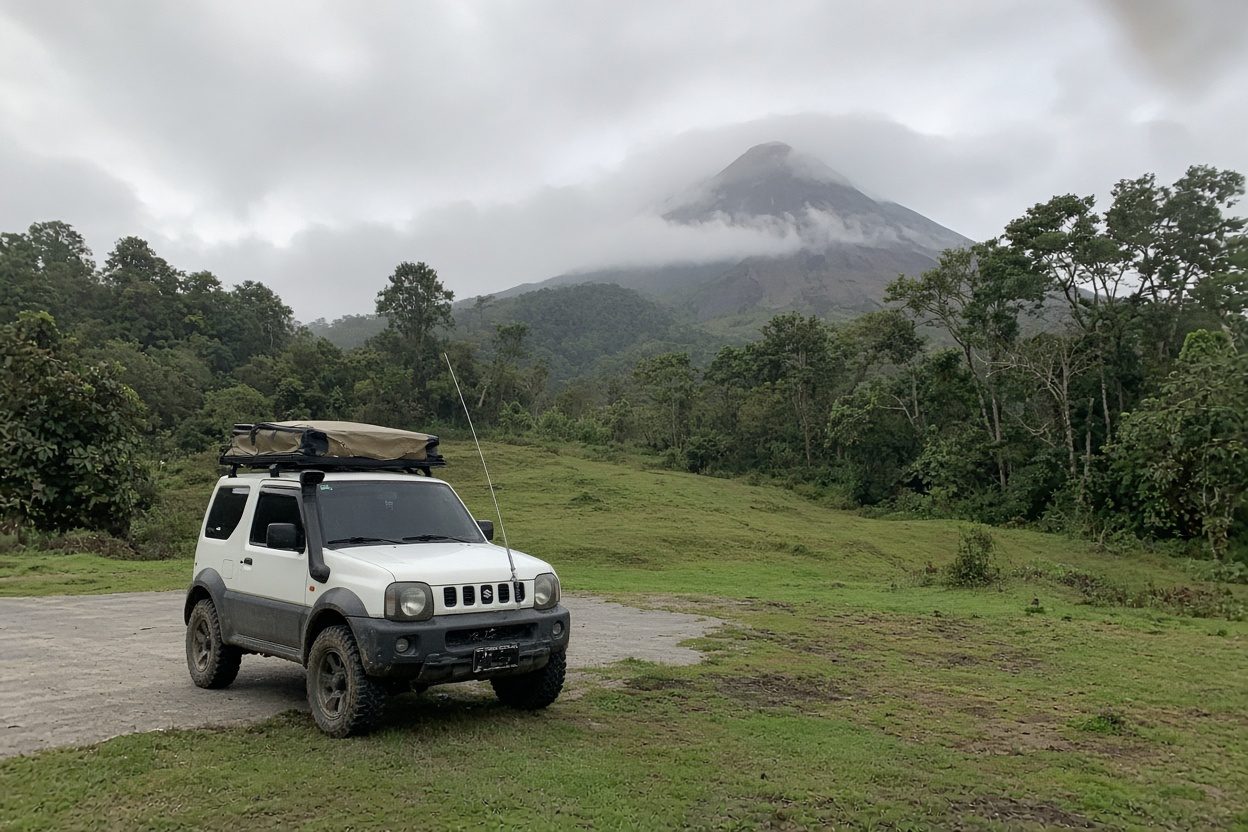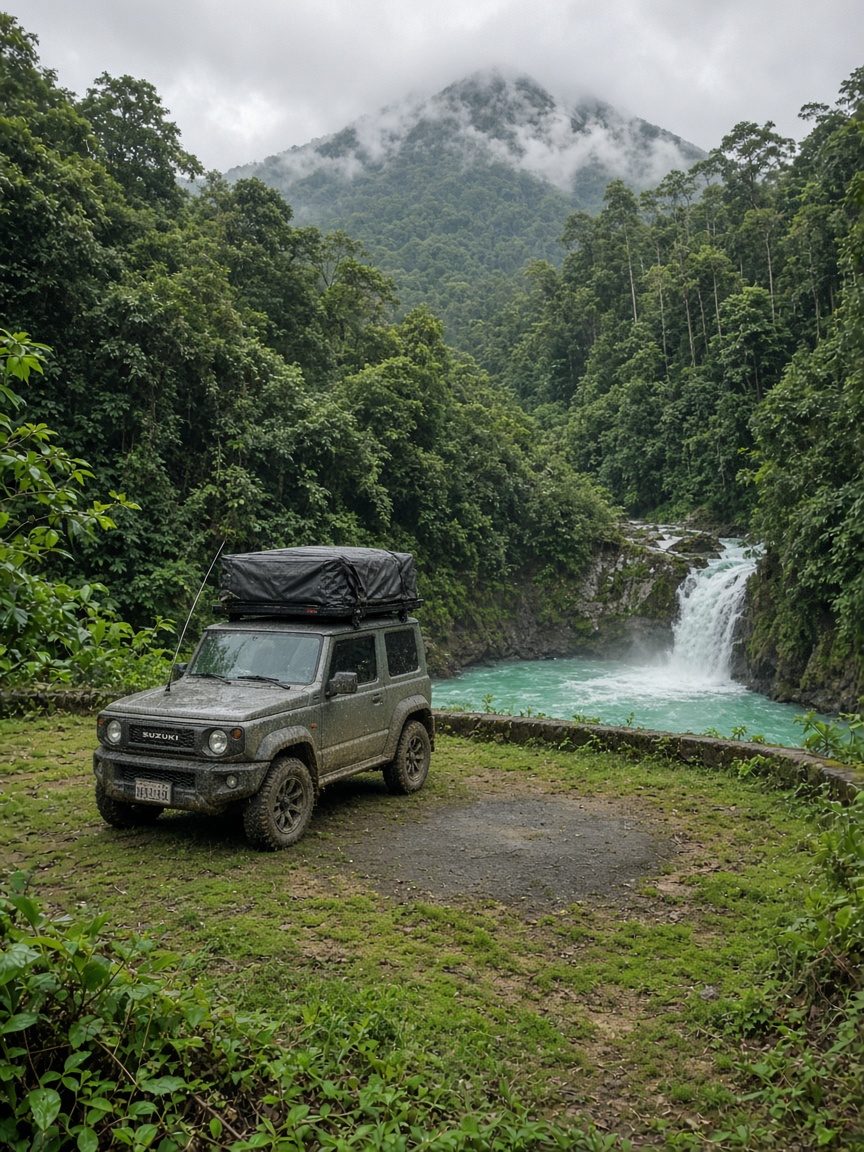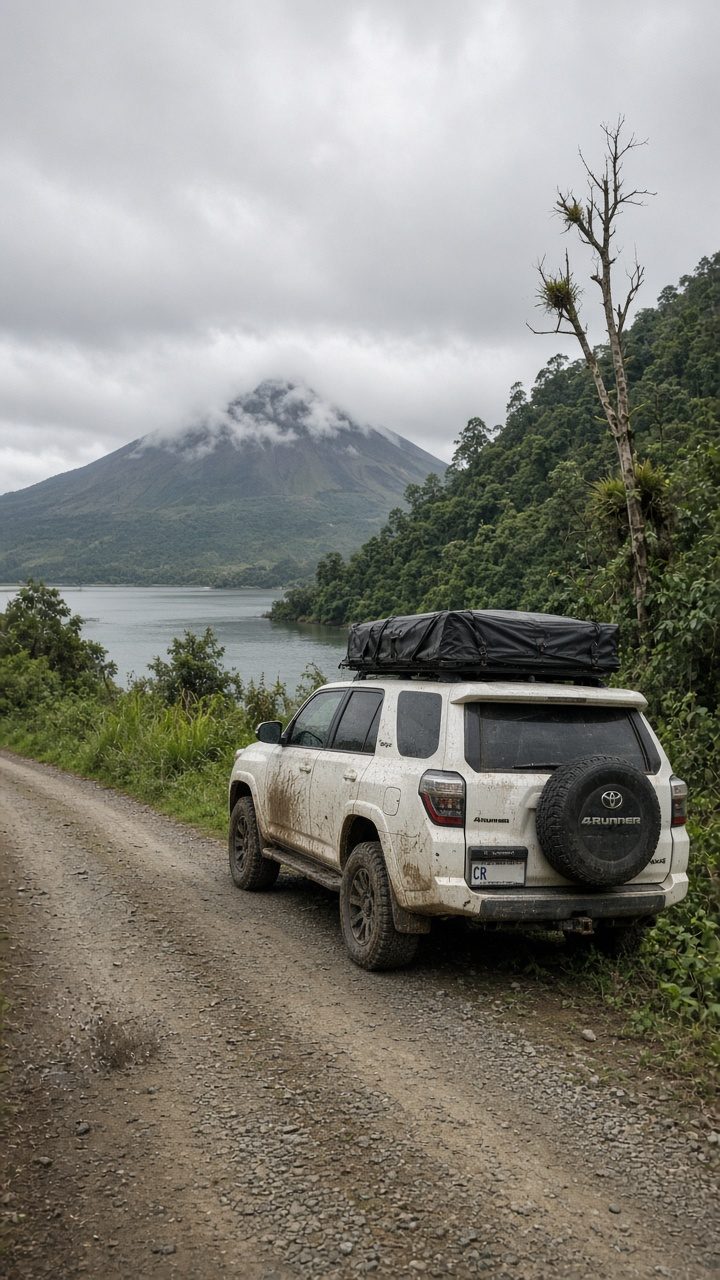
The side of Tenorio the tour buses skip
Most people experience Río Celeste as a rushed day trip from La Fortuna — three hours in, a fast hike, three hours back, done. This is the opposite: a slow, four-day base on the Bijagua side of Tenorio, the quiet farming town that guards the park's back door. You'll do the turquoise river properly, add the best sloth-spotting in the country, soak in geothermal mud, and finish at a swimmable Guanacaste waterfall — all at a repeat-visitor's unhurried pace, in green season when the falls run fullest and the trails are emptiest.
It's a 🟡 mixed trip: paved Rte 6 gets you to Bijagua, but the Tenorio ranger-station spur is gravel, and the park itself has no cell signal. Green season (roughly July, and August–October) is the deliberate choice — the wettest window, but also when Río Celeste hits its bluest and Bijagua's forests are dripping with life. A mid 4x4 handles the gravel spurs and wet grades.
Why it beats the generic version: this is the connoisseur's Tenorio. Instead of the crowded La Fortuna day trip, you sleep 20 minutes from the trailhead, arrive at opening before the buses, and fill the rest of the trip with the quiet local experiences — sloth reserves, a geothermal spa, a chocolate farm — that the day-trippers never have time for.
Day by day
Day 1 — Bijagua sloth tour (drive to Bijagua via Rte 6, paved 🟢). Arrive in Bijagua and go straight to a community sloth tour — the small family-run reserves around town (verify operator) are among the most reliable places in Costa Rica to see both two- and three-toed sloths, plus toucans, frogs and vipers on short, flat walks with a sharp-eyed local guide. A gentle, rain-friendly introduction to the zone. Base at La Aurora (book via costaricacampsites.com), your Río Celeste-side camp for the trip.
Day 2 — Río Celeste / Tenorio NP (🟡 gravel spur, 🔴 no signal). Set GPS to "Parque Nacional Volcán Tenorio," NOT "Río Celeste." Buy your SINAC ticket online in advance (non-resident $12; entry 8am–2pm, stay until 4pm) — there is NO cell signal in or near the park, so download the ticket and maps beforehand. Go at opening. The trail leads to the celeste-blue lagoon, the teñideros where two rivers merge and turn milky turquoise, and the waterfall. Honesty note: the waterfall-base observation stairs have been partially closed since a mid-2025 landslide — the fall is still visible from the upper platform (~250 steep stairs; verify current status). Flag: an unverified report suggests a possible full park closure starting ~March 2026 — check sinac.go.cr before planning around it. Green-season flow makes the water at its bluest and fullest. Second night at La Aurora.
Day 3 — Las Hornillas mud/steam + chocolate (drive ~1–1.5 hrs, paved + gravel 🟡). Shift to the geothermal flank of Volcán Miravalles. Las Hornillas (near the Bijagua/Guanacaste line) is a working geothermal field with bubbling mud pots, steam vents and warm mud you can slather on — a raw, active-earth spa experience (combos ~$30+, verify). Pair it with a small local chocolate/cacao farm tour in the area (verify). A tactile, low-hike day. Second night at La Aurora.
Day 4 — Llanos de Cortez on the way out (drive ~1–1.5 hrs, paved 🟢). Point toward Guanacaste and stop at Llanos de Cortez (near Bagaces): a wide curtain fall over a sandy swimming beach — the swimmable, sun-warmed counterpoint to the highland torrents. Foreigners pay $7 adult / $4 child, cash only. Then continue to your exit (LIR is close; SJO ~3.5 hrs).
Signature stops — why go
- Bijagua sloth tour — the most reliable sloth-spotting in Costa Rica, on easy flat walks with a local guide.
- Río Celeste (Tenorio) — the country's most famous turquoise river, at its bluest in green season, done at opening without the day-trip crowds.
- Las Hornillas — bubbling mud pots and steam vents; a raw geothermal spa most visitors never reach.
- Llanos de Cortez — a wide, swimmable curtain fall for a mellow, warm finale.
Where to camp / stay
- Nights 1, 2 & 3 — La Aurora (Bijagua / Río Celeste side). Book via costaricacampsites.com.
- Night 4 is a drive-out day — no camp needed unless you extend toward Guanacaste (verify).
Logistics & road reality
- Roads: 🟢 paved Rte 6 to Bijagua; 🟡 gravel spur to the Tenorio ranger station and the Las Hornillas approach; 🟢 paved to Llanos de Cortez.
- Fuel: Fuel up in Bijagua before the park and Las Hornillas days; rural stations are limited.
- 4x4: Mid 4x4 for the gravel spurs and slick green-season grades.
- Season: Green (Jul, Aug–Oct) is the point — bluest, fullest Río Celeste and quietest trails — but expect afternoon downpours and muddy paths. Hike in the morning.
- Permits/tickets: Río Celeste requires a SINAC online ticket in advance — no signal to buy it at the gate. Llanos de Cortez is cash-only.
- Connectivity: Zero cell signal at Río Celeste/Tenorio; decent in Bijagua town. Plan offline.
- Safety: Steep, muddy trails in the wet — proper footwear and a dry bag. At Las Hornillas, stay on marked paths; the ground is genuinely hot.
Insider tips
- Base in Bijagua, not La Fortuna — 20 minutes from the trailhead means you're on the trail at opening, before the day-trip buses arrive.
- Buy the Tenorio ticket and download offline maps in advance — no signal means no fixes at the gate.
- GPS trap: search "Parque Nacional Volcán Tenorio," not "Río Celeste."
- Green season is deliberate — bluest water, emptiest trails — but hike mornings and treat afternoons as washouts.
- Confirm the Río Celeste stair/closure status and the 2026 rumor on sinac.go.cr before you build the trip around the park.
Reserve your rig
Río Celeste done slowly and quietly, from a base the day-trippers never use — plus sloths, geothermal mud and a swimmable finale. A mid 4x4 gets you onto the gravel spurs and the wet green-season roads, and onto the trail at opening. Reserve your 4x4 and Bijagua camp now.
Before you go
Do you need a 4x4?
gravel sections — 2WD ok in dry season
Best window to fly
Green season (Jul & Aug–Oct) — fullest flow, quietest trails
Offline first
Download your route and offline maps before you leave the lot — signal drops on the best stretches.
Golden rule
Never drive at night — plan arrivals before dark, and use Waze like the locals do.
VerifiedCR · No counter surprises
What a Costa Rica rental actually costs
The number one thing that rattles first-timers is the price jumping at the counter. Here is the honest math, before you get there.
- Advertised daily rate$12–40 / day
- What the booking sites show. It is real — but it is not the whole price. Nobody pays only this.
- Mandatory liability (TPL / SLI)+$15–25 / day
- Required by Costa Rican law on every rental. Cannot be waived. This is the line the cheap ads leave off — it roughly doubles the sticker price. Budget for it.
- Collision damage (CDW)waivable
- Often $20–40/day — but you can usually decline it if your credit card includes rental coverage (Amex, Visa Signature, Chase Sapphire and others). Call your card, ask for a coverage letter, and bring it printed.
- Security hold on your card$1,000–2,500
- A hold, not a charge — released after you return the car clean. Some agencies hold more. Make sure your card has the headroom before you fly.
The verified-rig promise: when you reserve through VerifiedCR, the rig is inspection-checked and the operator is vetted — the price you are quoted is the price you pay. No mystery line items at pickup.