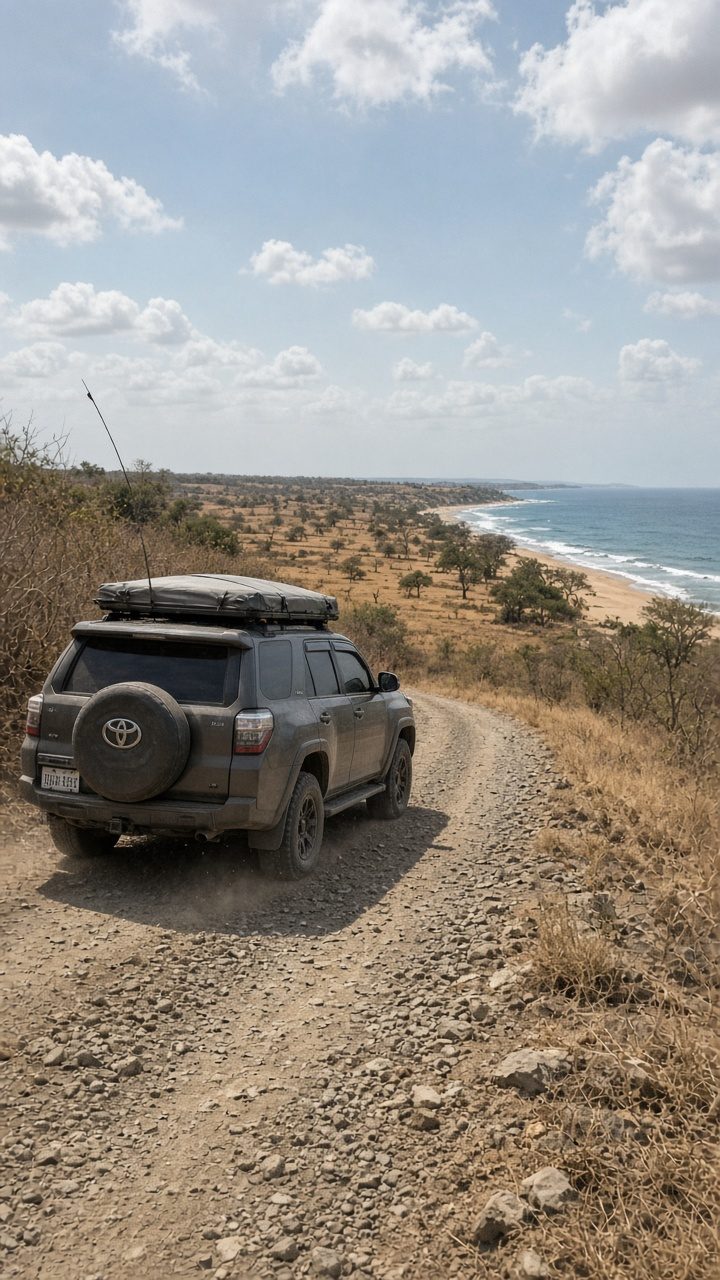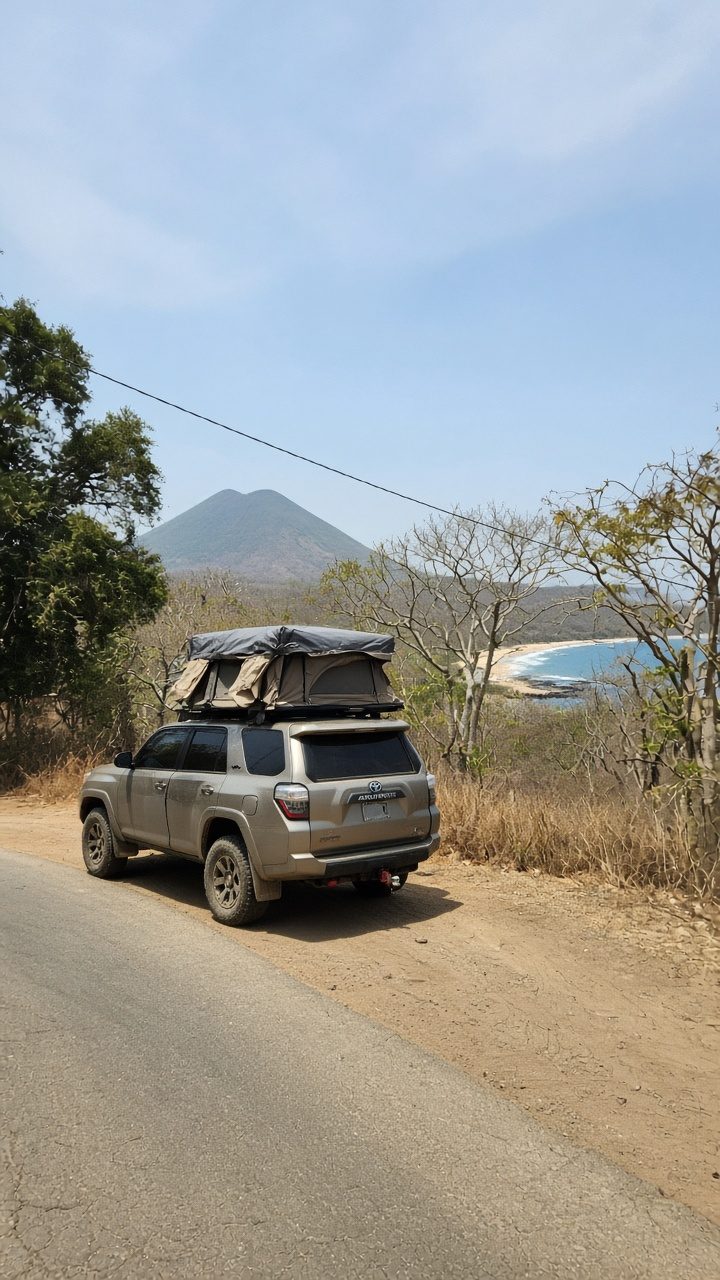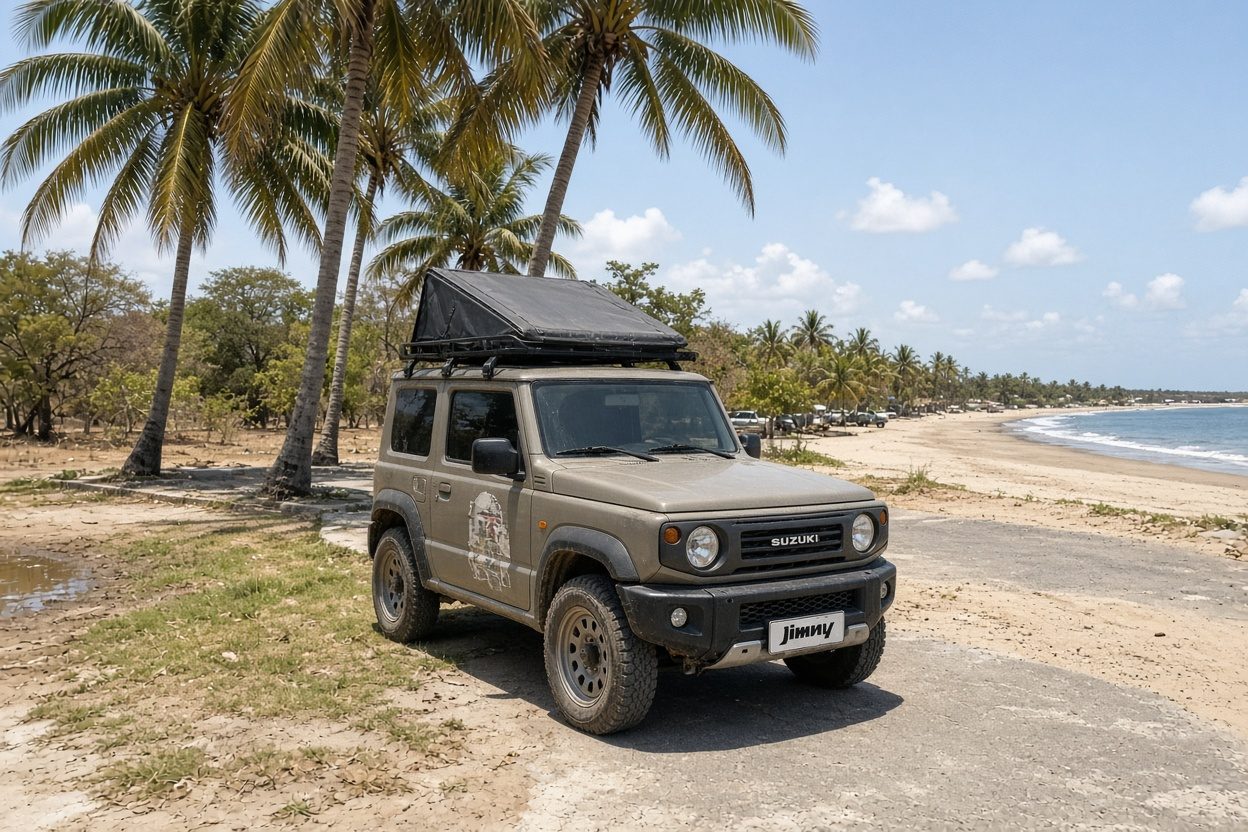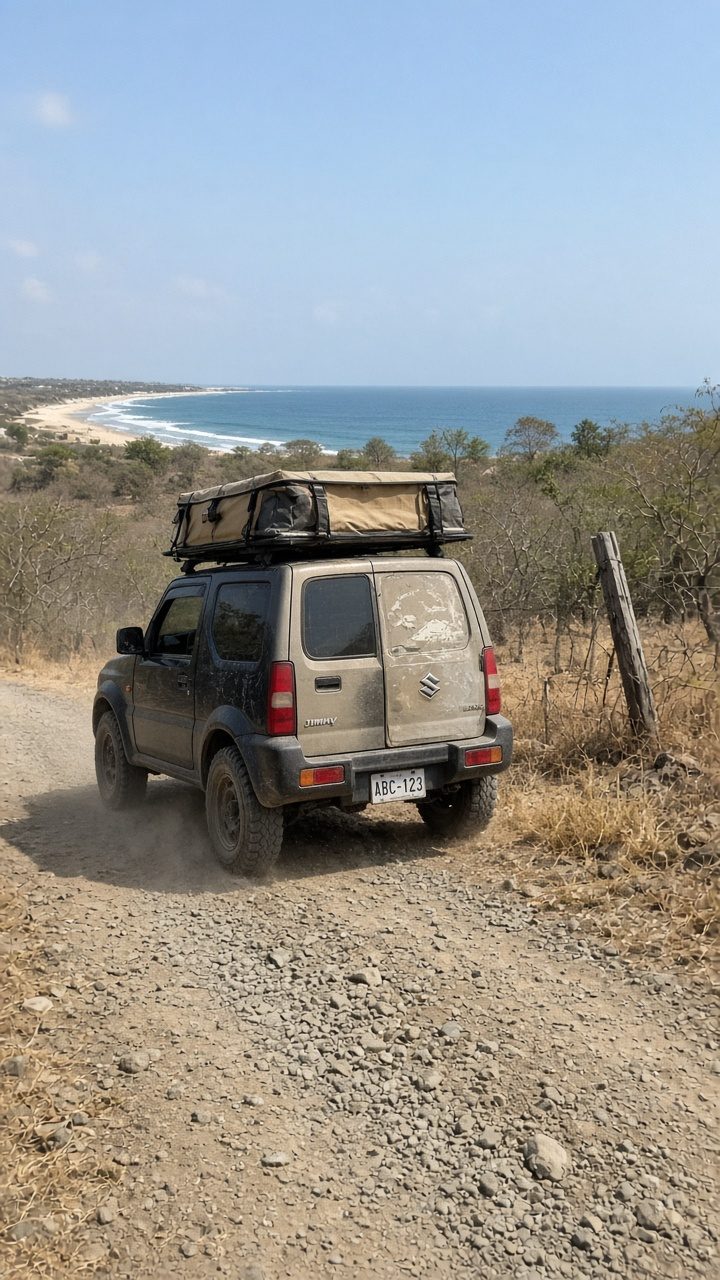
This is Guanacaste for people who'd rather spend on fuel and fish tacos than on a resort. Seven days, a self-contained compact 4x4 camper, a propane burner, and a loose plan to chase the cheapest good beach night you can find between Playas del Coco and Nosara. You cook your own breakfast on a tailgate, you time your driving around the two real fuel gaps on the peninsula, and you sleep where the sunset happens to land you — a paid beach camp one night, a hidden cove the next.
It's built for budget van-lifers and surf-curious road-trippers who understand the trade: no concierge, no chef, but total freedom and a nightly cost that can drop under what a single resort cocktail runs. The route stays on Nicoya's manageable middle — paved where it matters, dirt where the good beaches hide — which is why it's rated amber rather than green. You will drive some washboard, and the last stretch into Nosara is dirt in any season.
The honest version beats the Instagram version because it tells you the truth: where the fuel actually runs out, which beach camps are legal and which are locals-tolerated with zero facilities, and where to fill your water tank. Get those three things right and this is one of the best-value weeks in Costa Rica.
Day by Day
Day 1 — Liberia (LIR) → Playa Hermosa (≈40 km / 45 min, paved 🟢). Pick up the camper, stock up hard in Liberia (the big supermarkets here are your cheapest of the trip), and drop down to Playa Hermosa for an easy first night — calm water, an easy shakedown of your camp systems. Eat: grab groceries in Liberia; cook on the beach. Sleep: a Hermosa-area campground or beach lot with facilities to top off water and power on night one.
Day 2 — Hermosa → Playas del Coco (≈10 km / 20 min, paved 🟢). A short hop to Coco, the peninsula's most walkable, cheapest-provisioning beach town. Refill water, do laundry, and use the reliable wifi and grocery stores before you head into thinner country. Coco's tide pools and the town marina strip make for a lazy, low-cost day. Eat: the sodas along the main drag do honest casados far cheaper than the beachfront tourist spots. Sleep: a Coco-area campground or hostel lot.
Day 3 — Coco → Playa Minas camp (≈45 km / 1.25 hr, last stretch rough dirt 🟡). Head south past Brasilito toward the hidden Playa Minas, a beautiful undeveloped cove reached by a rough dirt road that ends in a small parking area behind the beach. This is a wild camp — zero facilities, no water, no toilets, no store — so arrive fully self-contained. Flag: Playa Minas is an important sea-turtle nesting beach; locals do camp here but there are no formal facilities and access/camping is informal and can be restricted in nesting season — verify current legality and turtle-season rules locally before you set up, and never drive on the sand or disturb nests. Sleep: self-contained at Playa Minas (or retreat to a Brasilito/Conchal-area paid camp if access is closed).
Day 4 — Playa Minas → Sámara (≈90 km / 2–2.5 hr, mostly paved 🟢). Cut back inland and run south via Nicoya to Sámara, the friendliest budget beach town on the coast — a safe, swimmable bay, cheap eats, and actual campgrounds. This is a resupply and reset day. Eat: Sámara has genuine sodas a block off the beach for casados and gallo pinto at local prices. Sleep: a Sámara beach campground (several established, low-cost sites with showers and shade).
Day 5 — Sámara → Playa Barrigona / Buena Vista (≈15–25 km, paved then dirt 🟡). Day-trip or overnight toward Playa Barrigona, the stunning white-sand beach between Sámara and Nosara. Navigation note verified by locals: from Sámara, do not try the coastal river-crossing shortcut — head toward the gas station at the big Y-fork and take the inland approach. This is also your last reliable fuel before the Sámara–Nosara gap, so fill the tank and any jerry cans here. Sleep: back at Sámara's campground, or a Barrigona-area pull-off if legal and self-contained.
Day 6 — Sámara → Nosara (≈35 km / 1–1.5 hr, last hour dirt 🟡). The run to Nosara is short but the final stretch is unpaved washboard in any season — take it slow. Nosara (Playa Guiones) is more upscale than Sámara, but you can still surf beginner peaks for free and camp affordably at the edge of town. Eat: self-cater; Nosara's restaurants skew pricey, so this is a cook-your-own night. Sleep: a Guiones/Nosara-area campground (fewer budget options here — book ahead in high season). Fuel reminder: there is no full-service fuel deep in Nosara for a camper — you should have topped off in Sámara.
Day 7 — Nosara → Liberia (≈120 km / 2.5–3 hr, dirt then paved 🟢). Dirt out to the paved network, then Route 21 north to Liberia for the rig return. Leave a generous buffer — the Nosara dirt is slow and you don't want to run the Sámara–Nosara gap on fumes in reverse.
Signature Stops
- Playas del Coco: The cheapest, best-stocked provisioning town on the route — water, laundry, wifi, groceries. Use it hard.
- Playa Minas: A genuinely wild, undeveloped nesting cove — no facilities, no crowds, big reward for a self-sufficient camper. Respect turtle season.
- Sámara: The van-lifer's home base — safe swimming bay, real campgrounds, honest sodas, and the last dependable fuel before Nosara.
- Playa Barrigona: Postcard white sand between Sámara and Nosara; reach it via the gas-station fork, never the river ford.
Where to Camp / Stay
- Night 1: Hermosa-area campground (top off water/power).
- Night 2: Coco campground/hostel lot (resupply hub).
- Night 3: Playa Minas wild camp (self-contained; verify legality/turtle season).
- Nights 4–5: Established Sámara beach campground (showers, shade).
- Night 6: Nosara/Guiones campground (book ahead).
Logistics & Road Reality
- Vehicle: Compact self-contained 4x4 camper is ideal — small enough for the tight dirt tracks, capable enough for Playa Minas and the Nosara approach.
- The two fuel truths: (1) The Sámara–Nosara gap is the one that catches people — fill up at the Sámara gas station (the Y-fork station on the way to Barrigona) before pushing on. (2) Provision food and water in Liberia and Coco where it's cheapest; interior pulperías are limited and pricier.
- Roads: 🟢 paved on the Liberia–Coco–Nicoya–Sámara spine; 🟡 dirt washboard to Playa Minas, Barrigona, and the last hour into Nosara. Avoid all coastal river-crossing shortcuts — they strand rentals every dry season and are genuinely dangerous when water is up.
- Season: Dec–Apr only for comfortable camping and passable dirt; green season turns the Playa Minas and Nosara tracks to mud.
- Camping legality: Costa Rica has no blanket "wild camping" right. Beach camps like Playa Minas are informal and locals-tolerated at best; nesting beaches may be off-limits in season. Always ask locally and use established paid campgrounds when in doubt.
- Connectivity: Good in Coco, Sámara, Nosara town; thin in between. Download offline maps.
Insider Tips
- Buy your whole trip's staples in Liberia — it's 20–40% cheaper than the beach-town minisúpers.
- Fill the tank in Sámara, every time, before Barrigona or Nosara. It's the single mistake that ends good weeks.
- Skip the river fords. The "shortcut" between Sámara and Barrigona/Nosara crosses tidal rivers — take the inland gas-station route.
- At Playa Minas, leave no trace and give nests a wide berth — informal access survives only because campers behave.
- Nosara is the priciest link — plan it as a cook-your-own night and save the splurge for a Sámara fish dinner.
Reserve Your Rig
This loop is built for our compact self-contained 4x4 camper — nimble on the dirt, everything you need to cook and sleep off-grid. Add the propane + water-refill kit, a budget surf-rental board, and our offline route pack (marked fuel stops and the flagged river fords to avoid). Book the compact camper and we'll load the Sámara-fuel-gap reminder and the Playa Minas turtle-season note before you roll.
Before you go
Do you need a 4x4?
seasonal river ford — 4x4 advised
Best window to fly
Dec–Apr
Offline first
Download your route and offline maps before you leave the lot — signal drops on the best stretches.
Golden rule
Never drive at night — plan arrivals before dark, and use Waze like the locals do.
VerifiedCR · No counter surprises
What a Costa Rica rental actually costs
The number one thing that rattles first-timers is the price jumping at the counter. Here is the honest math, before you get there.
- Advertised daily rate$12–40 / day
- What the booking sites show. It is real — but it is not the whole price. Nobody pays only this.
- Mandatory liability (TPL / SLI)+$15–25 / day
- Required by Costa Rican law on every rental. Cannot be waived. This is the line the cheap ads leave off — it roughly doubles the sticker price. Budget for it.
- Collision damage (CDW)waivable
- Often $20–40/day — but you can usually decline it if your credit card includes rental coverage (Amex, Visa Signature, Chase Sapphire and others). Call your card, ask for a coverage letter, and bring it printed.
- Security hold on your card$1,000–2,500
- A hold, not a charge — released after you return the car clean. Some agencies hold more. Make sure your card has the headroom before you fly.
The verified-rig promise: when you reserve through VerifiedCR, the rig is inspection-checked and the operator is vetted — the price you are quoted is the price you pay. No mystery line items at pickup.