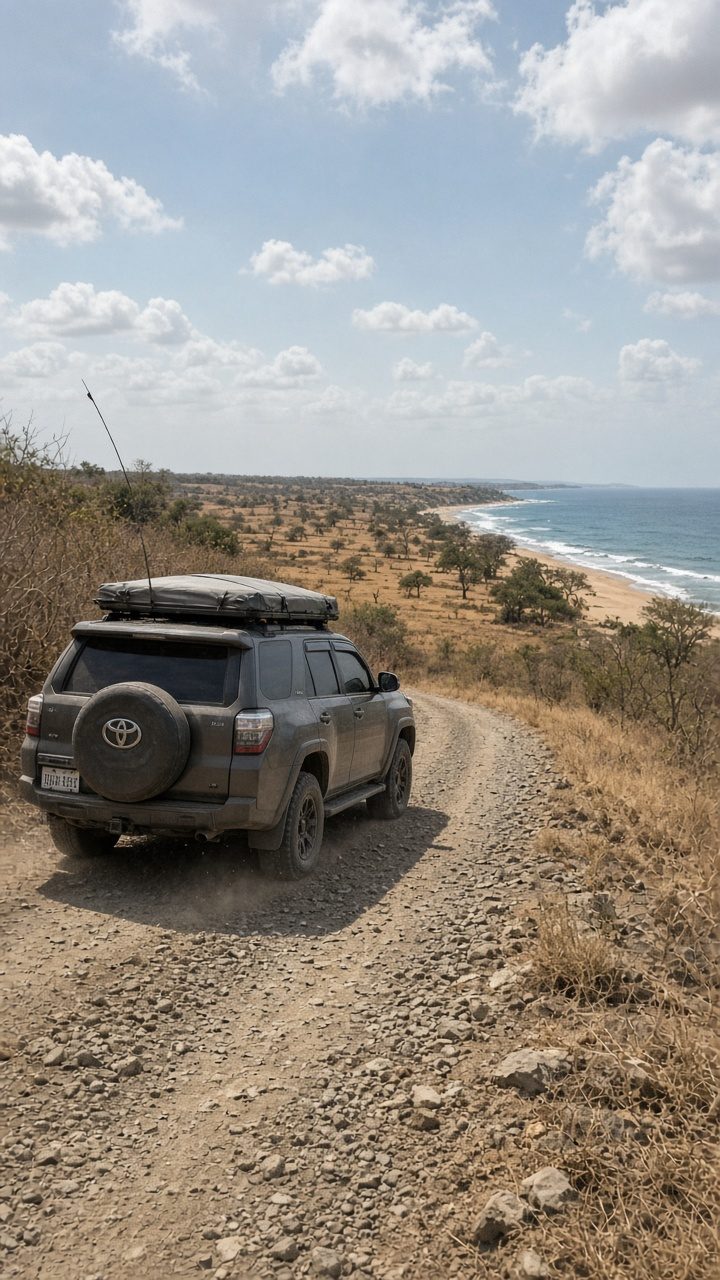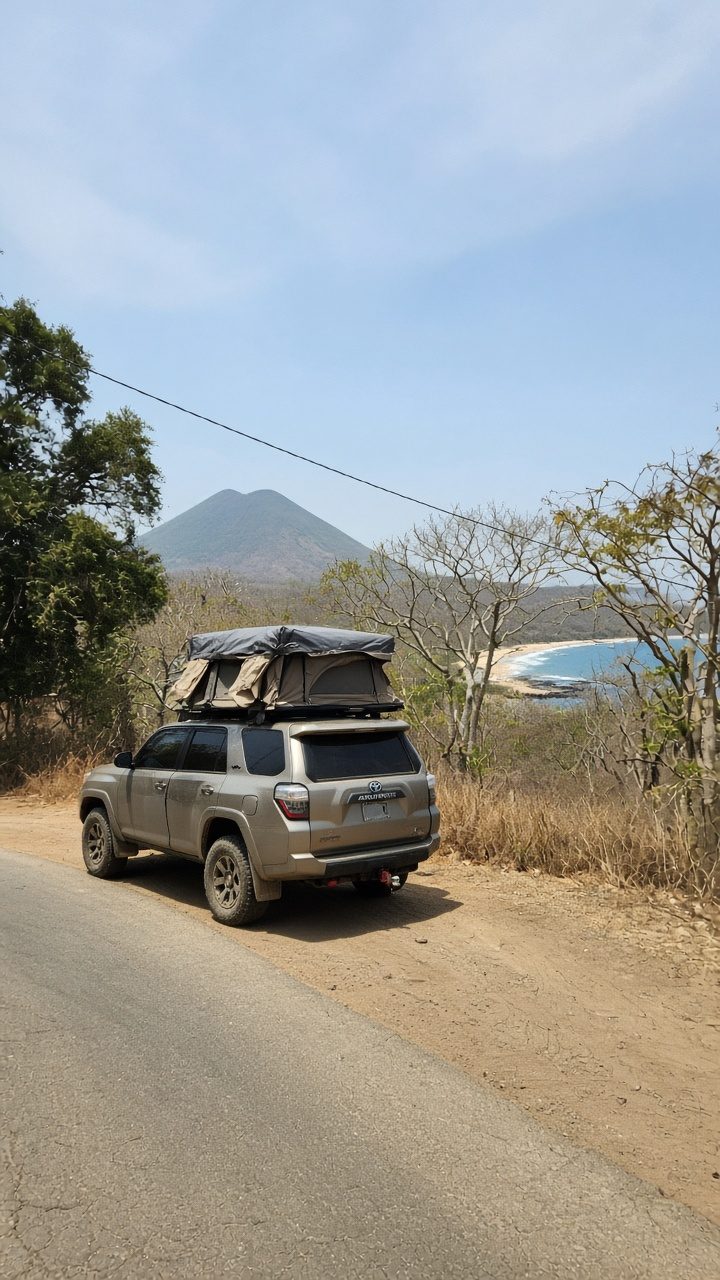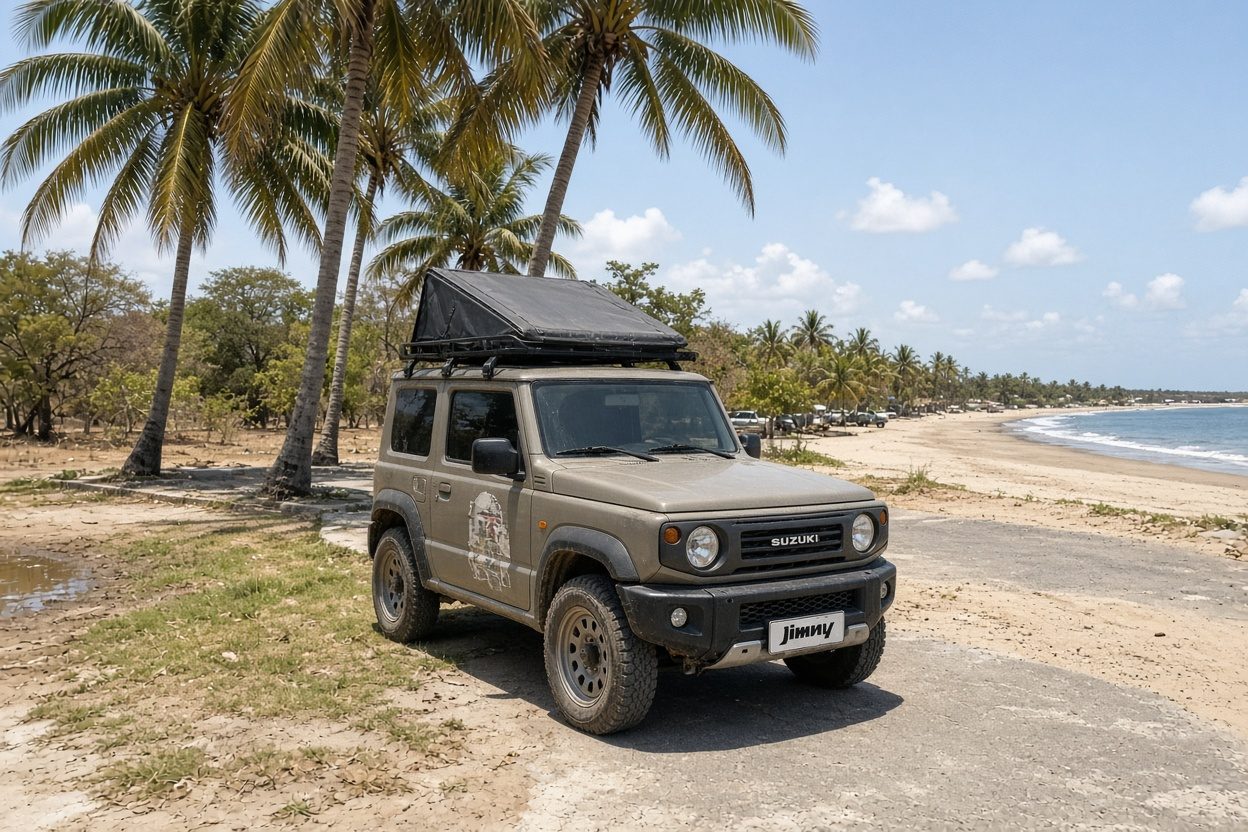
The Nicoya Peninsula is the best budget overlanding coast in Costa Rica: a chain of surf beaches strung along a mix of paved highway and rough dirt, with enough cheap campsites, cooking-friendly sodas, and water refills to live comfortably on very little. This ten-day loop runs from Liberia down the peninsula's whole length — Coco and Hermosa, Sámara and Carrillo, Nosara and Guiones, and finally the bohemian surf town of Santa Teresa at the wild south end.
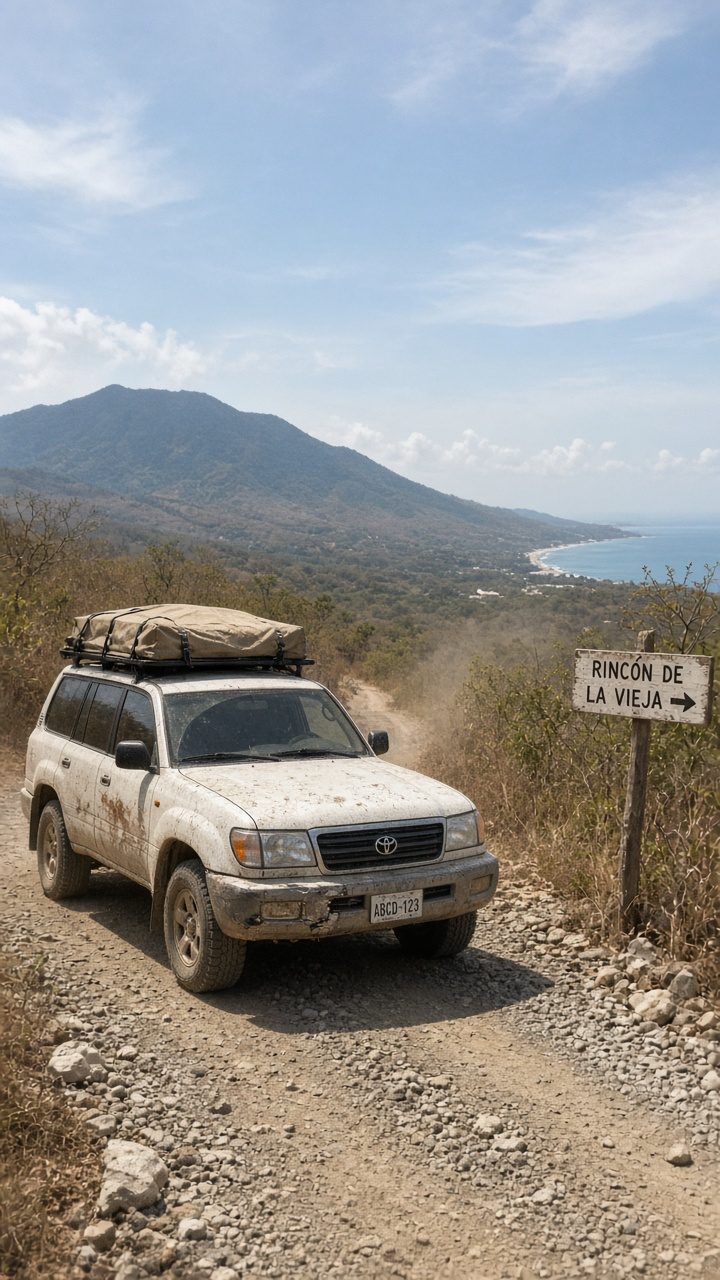
The loop is 🟡, mostly for the dirt. The northern beaches sit off paved roads, but the further south you go the rougher it gets, and the run to Santa Teresa involves either dry-season-only coastal river fords or a ferry detour. That's why the recommended rig is a self-contained Land Cruiser with a rooftop tent — clearance for the fords, range for the fuel gaps, and everything you need to sleep and cook without paying for a room.
Van-life here rewards planning over spending. Free and cheap spots exist, but the good ones are verified on iOverlander, not guessed at, and a few "free beach camping" spots come with real theft risk and murky legality. This guide keeps you on safe, sensible sites and flags the ones to approach with caution.
Day-by-Day
Day 1 — LIR stock-up (short drives, paved). Land, collect the rig, and provision in Liberia — the biggest, cheapest supermarket you'll see for a while, plus water jugs, propane check, and cash. Camp the first night near Playa Hermosa or Coco to shake down the setup.
Days 2–3 — Coco & Hermosa cheap camps (approx. 30–40 min between beaches, paved). Base on the northern Gulf beaches. Coco has the cheapest eats and the easiest resupply; Hermosa and Panamá are calmer for swimming. Cook your own on the tailgate, snorkel the coves, and use the town wifi at a soda. Verified budget campsites and low-cost cabinas cluster near both towns.
Days 4–5 — South to Sámara (approx. 110–130 km from the north beaches, ~2.5–3 hr, paved via Nicoya town). The paved run to Sámara is easy. Sámara is a van-lifer's favorite: a calm swimmable bay, cheap sodas, and campgrounds a short walk from the sand. Day-trip to palm-lined Playa Carrillo. Refill water and dump greywater responsibly at a campground here — services thin out south of this point.
Days 6–7 — Nosara/Guiones (approx. 30–45 km, ~1–1.5 hr; last stretch dirt, 4x4). Take the inland route (never the coastal shortcut). Guiones is the surf classroom of the coast — beach break, sandy bottom, cheap board rentals. Camp at a budget site near the beach path. Nosara is pricier for food, so cook and shop at the local sodas and the town supermarket.
Days 8–9 — South to Santa Teresa (⚠️ dry-season coastal fords, 4x4 essential — or ferry detour). This is the crux. In the dry season (Dec–Apr), experienced overlanders drive the coastal route south via Playa Coyote and Manzanillo, crossing several unbridged rivers — passable only at low water and only in the dry months; verify each crossing locally before committing, and never enter a river you can't read. The safer alternative is to exit the peninsula and take the Puntarenas–Paquera ferry (70 min, car ~$25, roughly every 2–3 hours from 4 a.m.) into the southern peninsula. Either way, base in Santa Teresa/Mal País for two nights of surf and sunset. Camp at a budget surf-camp site — and ⚠️ beach camping around Santa Teresa carries a real theft risk and uncertain legality; use a paid, gated campsite and never leave gear in an open tent.
Day 10 — Return to LIR. From Santa Teresa the reliable exit is the Paquera ferry to Puntarenas, then the highway north to Liberia (a full travel day, ~5–6 hr total including the crossing). If you came down the coastal fords and conditions hold, you can retrace the peninsula, but the ferry is the dependable option.
Signature Stops (why go)
- Coco/Hermosa — cheapest resupply and easy northern swimming to start the loop.
- Sámara & Carrillo — the calm-bay budget base with the best campgrounds and water refills.
- Guiones (Nosara) — the friendliest, cheapest place on the coast to learn or log surf.
- Santa Teresa/Mal País — the bohemian south end: world-class surf, sunset fire circles, and the loop's payoff.
Where to Camp / Stay (named)
- Use iOverlander as your primary source — filter for recent reviews on safety, water, and access. Verified budget campgrounds and surf-camp sites exist in Coco, Sámara, Guiones and Santa Teresa.
- Sámara is the best mid-loop hub for water refill, greywater dump, and laundry.
- ⚠️ Treat any "free beach camping" report near Santa Teresa with caution — theft is common and legality is unclear; a cheap gated site is worth it.
Logistics & Road Reality
- Fuel: 🔴 the peninsula has real gaps — fill up in Nicoya town before Sámara, and top off again before the Nosara/Santa Teresa leg. Don't gamble on the southern stations.
- 4x4: 🔴 essential for the Nosara dirt and, especially, the coastal fords to Santa Teresa; the northern spine is paved.
- Season: Dec–Apr only for the coastal river route — in the green season the fords are impassable and you must use the ferry.
- Ferry: Puntarenas–Paquera, ~70 min, car ~$25, several sailings daily — the reliable way in/out of the southern peninsula.
- Connectivity: 🟢 towns have signal; 🔴 dead zones on the dirt between beaches.
- Safety: theft is the real van-life risk here, worst around Santa Teresa — lock up, camp at gated sites, and never leave valuables visible.
Van-Life Guidance (cheap camps, water, propane)
Live off the peninsula's rhythm: cook your own (sodas are for treats and wifi), refill water and dump greywater at proper campgrounds — Sámara is your best mid-loop service stop — and check propane before you leave Liberia. Budget the fuel gaps as hard constraints, not suggestions. Use iOverlander for every overnight and read the recent reviews for theft and access notes. Free is not always safe; a $10–15 gated site with a locked gate, a shower, and water is the smart shoestring choice, especially in the south.
Insider Tips
- Provision heavily in Liberia — it's the cheapest, best-stocked supermarket on the whole loop.
- Treat fuel and water as the two things you never run low on; refill both in Nicoya town and Sámara.
- Only attempt the coastal fords to Santa Teresa in the dry season, and scout each crossing on foot first.
- When in doubt, take the Paquera ferry — it's cheap, reliable, and removes the risky fords entirely.
- Around Santa Teresa, pay for a gated site; theft from open camps is the coast's worst-kept secret.
Reserve Your Rig
This loop is exactly what a self-contained Land Cruiser with a rooftop tent is built for — clearance for the fords, range for the fuel gaps, and a full sleep-and-cook setup so you spend on waves, not walls. VerifiedCR outfits you with an iOverlander-verified safe-spot list for the Nicoya coast, a water-refill/dump finder, a soda map, and offline routing for the dirt sections and river crossings. Reserve your rig and run the peninsula on a shoestring.
Before you go
Do you need a 4x4?
seasonal river ford — 4x4 advised
Best window to fly
Dec–Apr (dry — coastal fords passable)
Offline first
Download your route and offline maps before you leave the lot — signal drops on the best stretches.
Golden rule
Never drive at night — plan arrivals before dark, and use Waze like the locals do.
VerifiedCR · No counter surprises
What a Costa Rica rental actually costs
The number one thing that rattles first-timers is the price jumping at the counter. Here is the honest math, before you get there.
- Advertised daily rate$12–40 / day
- What the booking sites show. It is real — but it is not the whole price. Nobody pays only this.
- Mandatory liability (TPL / SLI)+$15–25 / day
- Required by Costa Rican law on every rental. Cannot be waived. This is the line the cheap ads leave off — it roughly doubles the sticker price. Budget for it.
- Collision damage (CDW)waivable
- Often $20–40/day — but you can usually decline it if your credit card includes rental coverage (Amex, Visa Signature, Chase Sapphire and others). Call your card, ask for a coverage letter, and bring it printed.
- Security hold on your card$1,000–2,500
- A hold, not a charge — released after you return the car clean. Some agencies hold more. Make sure your card has the headroom before you fly.
The verified-rig promise: when you reserve through VerifiedCR, the rig is inspection-checked and the operator is vetted — the price you are quoted is the price you pay. No mystery line items at pickup.