Chase the light, not the checklist
A photographer's itinerary is organized around one variable everyone else ignores: light. This eight-day circuit is sequenced so you're standing in front of each subject at its best hour — a volcanic crater at opening before gas and cloud swallow it, waterfalls in the flat overcast that lets you drag the shutter, a volcano at blue hour from a lakeside perch, and the country's most famous turquoise river when the sun angle turns it electric. You'll shoot craters, canyon falls, twin blue pools, a glowing cone and a milky-blue river — five signature subjects, each timed.
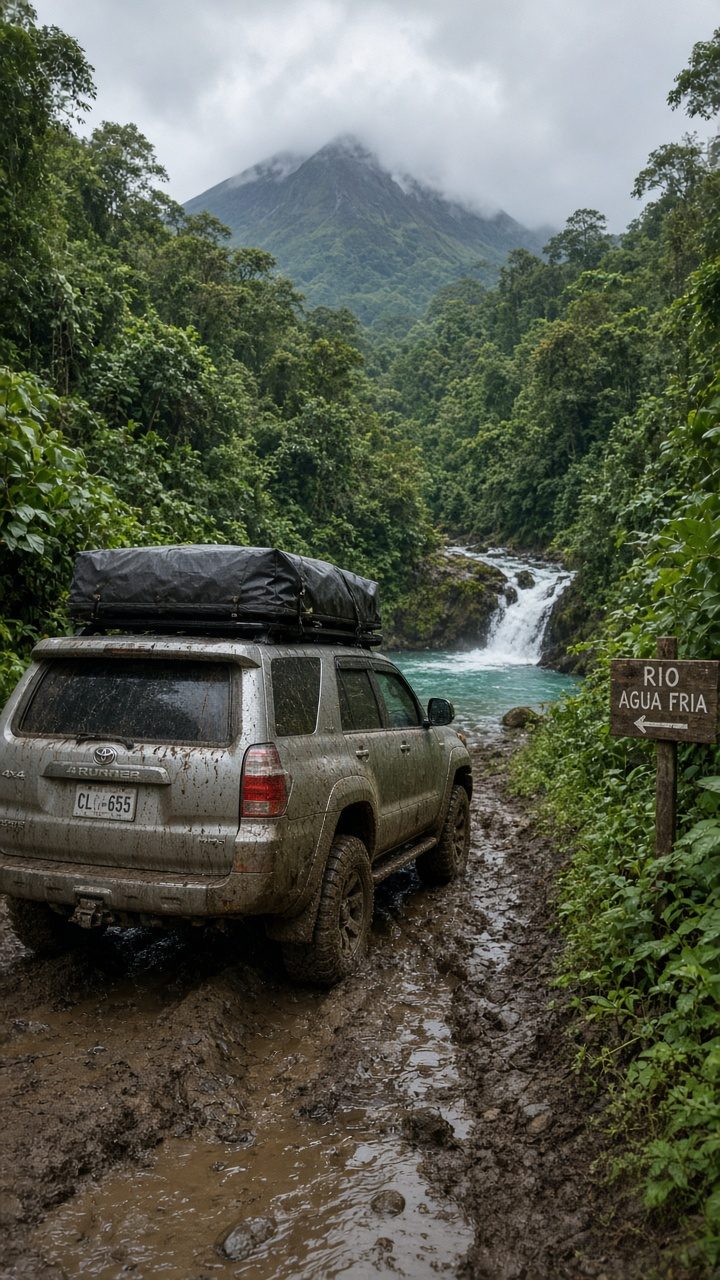
This is honestly 🔴 through-land — not for river fords, but for the winding, foggy mountain gravel between Poás, Bajos del Toro and the Tenorio side, plus a headline park with no cell signal and a couple of timed, capacity-limited permits. It rewards a driver who's comfortable on slow highland roads in a capable mid 4x4 and who plans around weather windows.
Why it beats the generic version: tour buses arrive at these places mid-morning, in the worst light, with the biggest crowds. Driving your own rig and sleeping at trailheads, you can be at the Poás gate the instant it opens and at El Castillo for blue hour — the two shots that separate a photographer's take from a snapshot.
Day by day
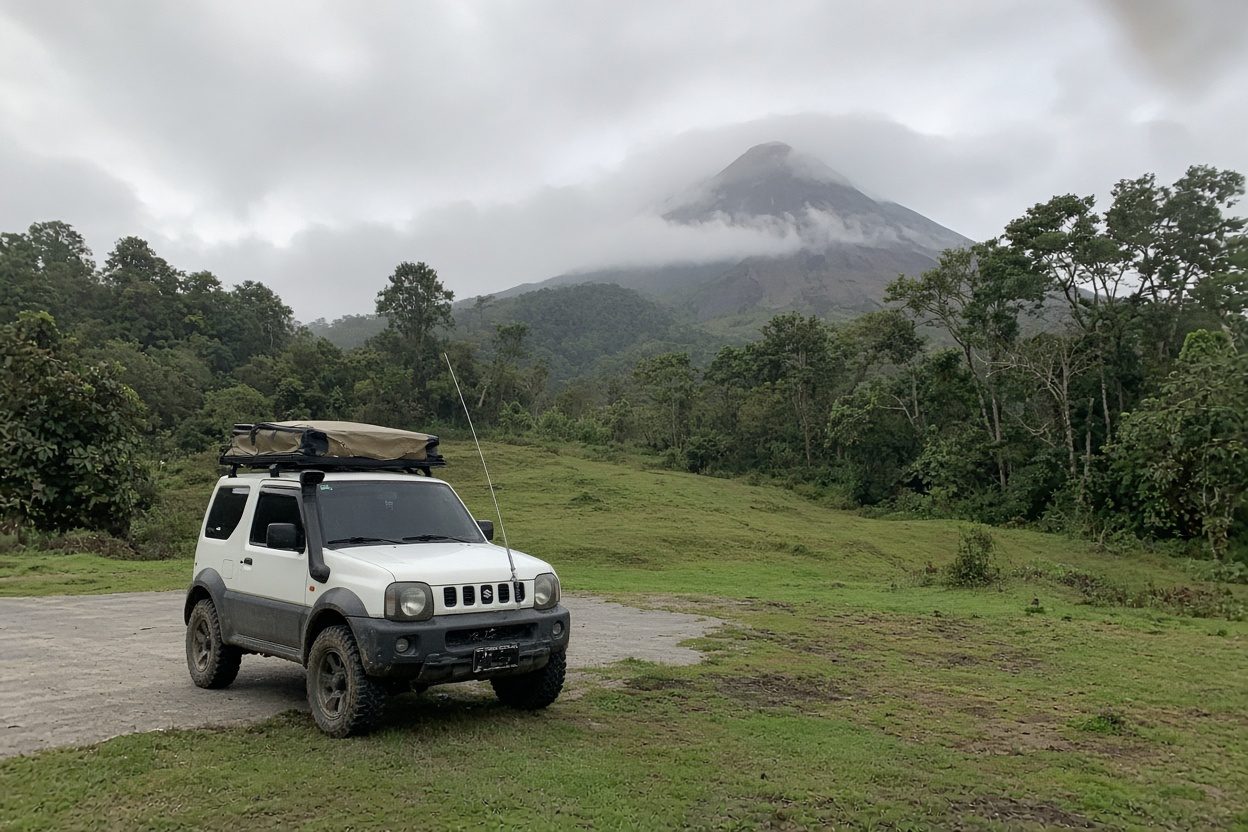
Day 1 — Poás crater at opening (drive ~1–1.5 hrs from SJO, paved 🟢). Poás Volcano National Park reopened in July 2025 with strict safety measures. You MUST buy a timed SINAC ticket online in advance (sinac.go.cr) — capacity is tightly capped (around 56 per slot reported) and there's no buying at the gate. Book the first slot: the park opens at 8am, and the massive acid crater lake is only reliably clear before mid-morning cloud and gas roll in (~$15 non-resident, verify). It's an active volcano — visits can be suspended on gas/activity, so have a backup plan. Descend afterward toward Bajos del Toro.
Day 2 — Catarata del Toro long-exposure (winding mountain 🟡). Catarata del Toro (~$14) plunges ~90 m into an old crater — a steep ~360-step descent to the base and a superb long-exposure subject, best in the flat light of overcast or green-season flow. Bring a tripod and ND filters. Base at Rancho Los Girasoles (costaricacampsites.com), your Bajos del Toro camp.
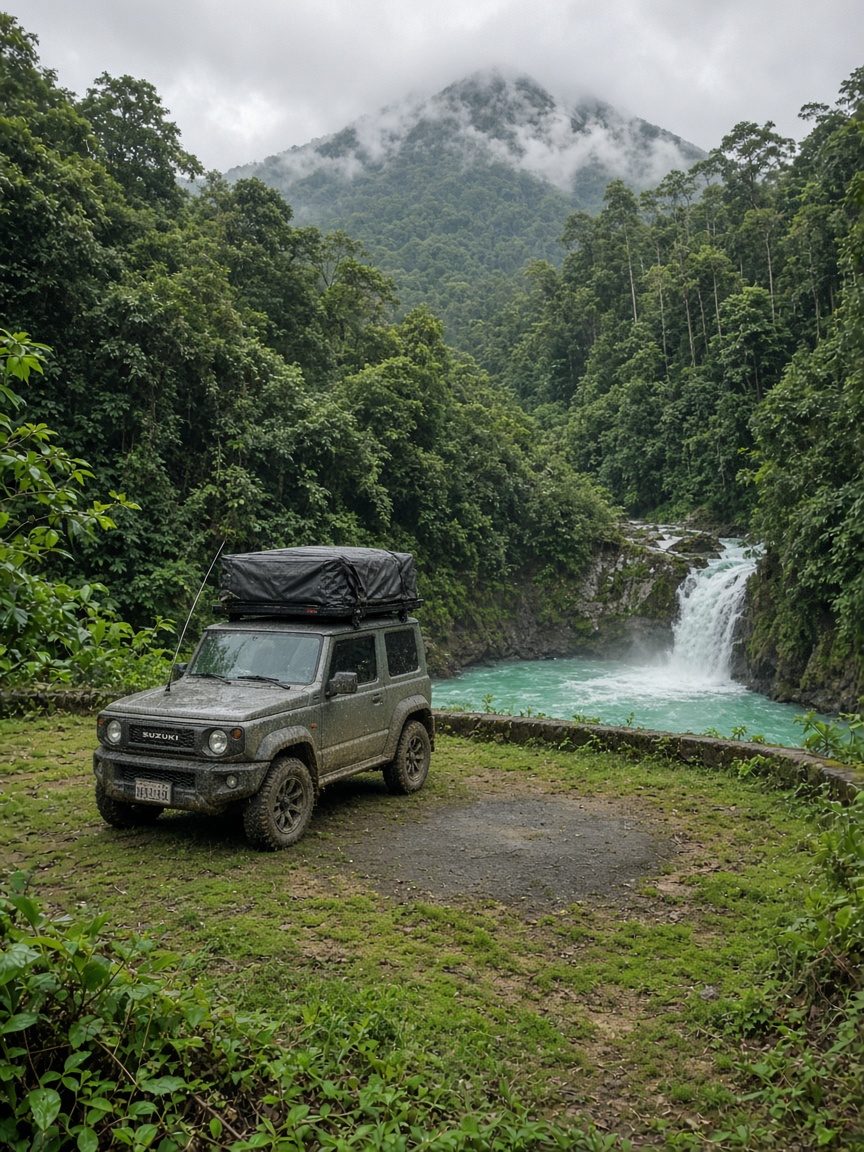
Day 3 — Las Gemelas / Blue Falls (gravel spurs 🟡). The Blue Falls of Costa Rica (Las Gemelas) — vivid twin blue pools and multiple cascades at a nearby trailhead ($20 adult / $10 kids; combo with del Toro ~$25). Steep and muddy; the electric-blue water is the payoff, best photographed in soft light with a polarizer. Second night at Rancho Los Girasoles.
Day 4 — To Arenal, El Castillo blue-hour (drive ~2.5–3 hrs, 🔴 mountain then paved). Reposition northwest to Arenal. Arrive by late afternoon and set up at Camping y Mirador El Castillo (~$8–10/person; rough gravel access; costaricacampsites.com) — its perch over Lake Arenal and the volcano is a blue-hour and night-sky location, with the cone reflected in the lake on still evenings.
Day 5 — Hanging-bridges fog (short paved drives 🟢). Shoot the Mistico Arenal Hanging Bridges (self-guided ~$38, verify) at opening, when morning fog drifts through the canopy and the high suspension spans vanish into mist — the region's most atmospheric forest frames. Second night at El Castillo.
Day 6 — Transit to Bijagua (drive ~2 hrs, paved 🟢 + gravel spur). Move to the Tenorio side. Stock up on cash, water and fuel in Bijagua — tomorrow's park has no services and no signal. Overnight at La Aurora (costaricacampsites.com).
Day 7 — Río Celeste / Tenorio NP (🔴 no signal, gravel). Set GPS to "Parque Nacional Volcán Tenorio," not "Río Celeste." Buy the SINAC ticket online in advance (non-resident $12; entry 8am–2pm) — there is NO cell signal at the park, so download tickets and maps first. Shoot the milky-turquoise lagoon and the teñideros where the color is born; the blue reads most electric with the sun higher and a polarizer to cut glare. Honesty note: the waterfall-base observation stairs have been partially closed since a mid-2025 landslide — the fall is still visible from the upper platform (~250 steep stairs; verify current status). Flag: an unverified report suggests a possible full closure ~March 2026 — check sinac.go.cr before finalizing. Second night at La Aurora.
Day 8 — Out. Drive to your exit (SJO or LIR), reviewing a card full of light you actually planned for.
Signature stops — why go
- Poás crater at opening — a vast acid crater lake, clear only in the first hour; a timed-permit shot.
- Catarata del Toro — a ~90m crater plunge; the route's premier long-exposure subject.
- Blue Falls / Las Gemelas — surreal electric-blue pools; a polarizer's dream.
- El Castillo blue hour — the volcano reflected in Lake Arenal at dusk and after dark.
- Río Celeste (Tenorio) — the country's most famous turquoise water and its teñideros.
Where to camp / stay
- Nights 2 & 3 — Rancho Los Girasoles (Bajos del Toro). costaricacampsites.com. (Night 1: a Poás-area or Bajos-del-Toro-transit stay; verify.)
- Nights 4 & 5 — Camping y Mirador El Castillo (~$8–10/person; rough gravel; blue-hour perch). costaricacampsites.com.
- Nights 6 & 7 — La Aurora (Bijagua / Río Celeste side). costaricacampsites.com.
Logistics & road reality
- Roads: 🔴 the foggy Poás→Bajos del Toro connector and the reposition to Arenal (paving + gravel, slow, daylight-only); 🟡 gravel spurs at Bajos del Toro and El Castillo; 🟢 paved on the Arenal and Bijagua stretches. Tenorio ranger-station spur is gravel.
- Fuel: Fill up before the mountain connectors and again in Bijagua; highland fuel is sparse.
- 4x4: Mid 4x4 for the gravel spurs and wet mountain grades.
- Season: Dry-season mornings give the clearest craters; green season gives the fullest, lushest falls. You can't have both — prioritize by which subject matters more, and always shoot craters at opening.
- Permits/tickets: Poás and Río Celeste both require SINAC online tickets bought in advance (timed, capacity-limited, no signal to buy at Tenorio). Buy early.
- Connectivity: Zero signal at Río Celeste/Tenorio; patchy in the highlands. Plan offline.
- Safety: Steep, wet trails; active volcanoes that can suspend entry. Tripod on the stairs demands care. Don't shoot off-trail in an active park with no signal.
Insider tips
- Book Poás's first slot the moment tickets open — capacity is tiny and the crater is only clear in the first hour.
- Bring a tripod, ND filters and a polarizer — the falls want long exposures; the blue water wants a polarizer to cut glare.
- Craters = dry-season dawn; falls = green-season overcast. Sequence your trip to the subject you care about most.
- El Castillo is your blue-hour and astro location — stay put at dusk instead of chasing another stop.
- Buy the Tenorio ticket and download offline maps before Bijagua — no signal means no fixes at the gate.
Reserve your rig
Five signature subjects, each timed to its best light — craters at opening, falls in soft flow, a volcano at blue hour, a turquoise river at its bluest. A capable mid 4x4 puts you at the gate before the buses and at the perch before dusk. Reserve your 4x4 and photo circuit now, and shoot the light you planned for.
Before you go
Do you need a 4x4?
seasonal river ford — 4x4 advised
Best window to fly
Dry-season AM clarity for craters; green for lush, full-flow falls
Offline first
Download your route and offline maps before you leave the lot — signal drops on the best stretches.
Golden rule
Never drive at night — plan arrivals before dark, and use Waze like the locals do.
VerifiedCR · No counter surprises
What a Costa Rica rental actually costs
The number one thing that rattles first-timers is the price jumping at the counter. Here is the honest math, before you get there.
- Advertised daily rate$12–40 / day
- What the booking sites show. It is real — but it is not the whole price. Nobody pays only this.
- Mandatory liability (TPL / SLI)+$15–25 / day
- Required by Costa Rican law on every rental. Cannot be waived. This is the line the cheap ads leave off — it roughly doubles the sticker price. Budget for it.
- Collision damage (CDW)waivable
- Often $20–40/day — but you can usually decline it if your credit card includes rental coverage (Amex, Visa Signature, Chase Sapphire and others). Call your card, ask for a coverage letter, and bring it printed.
- Security hold on your card$1,000–2,500
- A hold, not a charge — released after you return the car clean. Some agencies hold more. Make sure your card has the headroom before you fly.
The verified-rig promise: when you reserve through VerifiedCR, the rig is inspection-checked and the operator is vetted — the price you are quoted is the price you pay. No mystery line items at pickup.