The vibe
This is the trip that separates the overlanders from the beach-hoppers. Santa Rosa is Costa Rica's oldest national park and the largest surviving tract of tropical dry forest in Central America — a landscape of gnarled, leaf-dropping trees, coatis at dawn, and a coastline so hard to reach it stays empty even in high season. At the end of the worst road in Guanacaste sits Playa Naranjo and its offshore monolith, Roca Bruja — Witch's Rock — a wave and a place made famous by The Endless Summer II and still guarded by the drive itself.
It's for people who understand that the reward here is the difficulty: a genuine rooftop-tent, dry-forest, self-sufficient expedition a short hop from an international airport. You get history (the 1856 Battle of Santa Rosa at La Casona), you get raw dry-forest wildlife, you get a surf-legend beach, and you finish at one of the country's prettiest and safest campgrounds at Bahía Junquillal.
Why it beats "book a boat to Witch's Rock from Tamarindo": anyone can pay for a panga. Driving there — tide-timed, crocodile-lagoon-crossed, ranger-permitted — is the badge. But read the road reality below before you commit: this is a real 4x4 objective, not a scenic detour.
Day by day
Day 1 — LIR → Santa Rosa HQ / La Casona (~40 km, ~40 min, paved). Provision fully in Liberia — fuel, water, food, ice — because there is nothing past the highway. Drive north on the Interamericana (Hwy 1) to the Santa Rosa entrance, then 7 km down a nicely paved park road (any vehicle) to the ranger station. Present your advance reservation (see logistics — this is required through the Guanacaste Conservation Area), pay the fee, and spend the afternoon on foot: La Casona museum and the 1856 battle site, the monument steps and lookout behind it, and the flat, wheelchair-accessible Sendero Indio Desnudo through the dry forest. Watch for coatis, magpie jays and, if you're lucky, an anteater in the cool of morning. Stay: the Santa Rosa Sector campground near the ranger station (basic; reserved in advance).
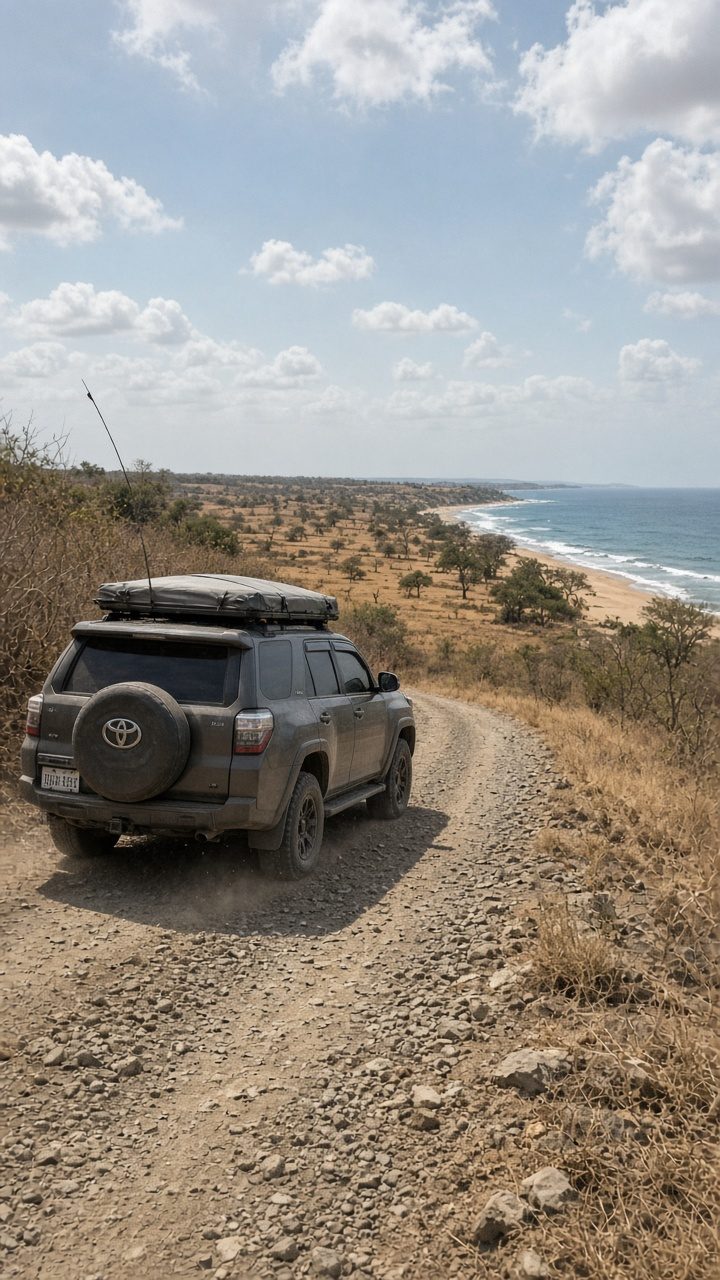
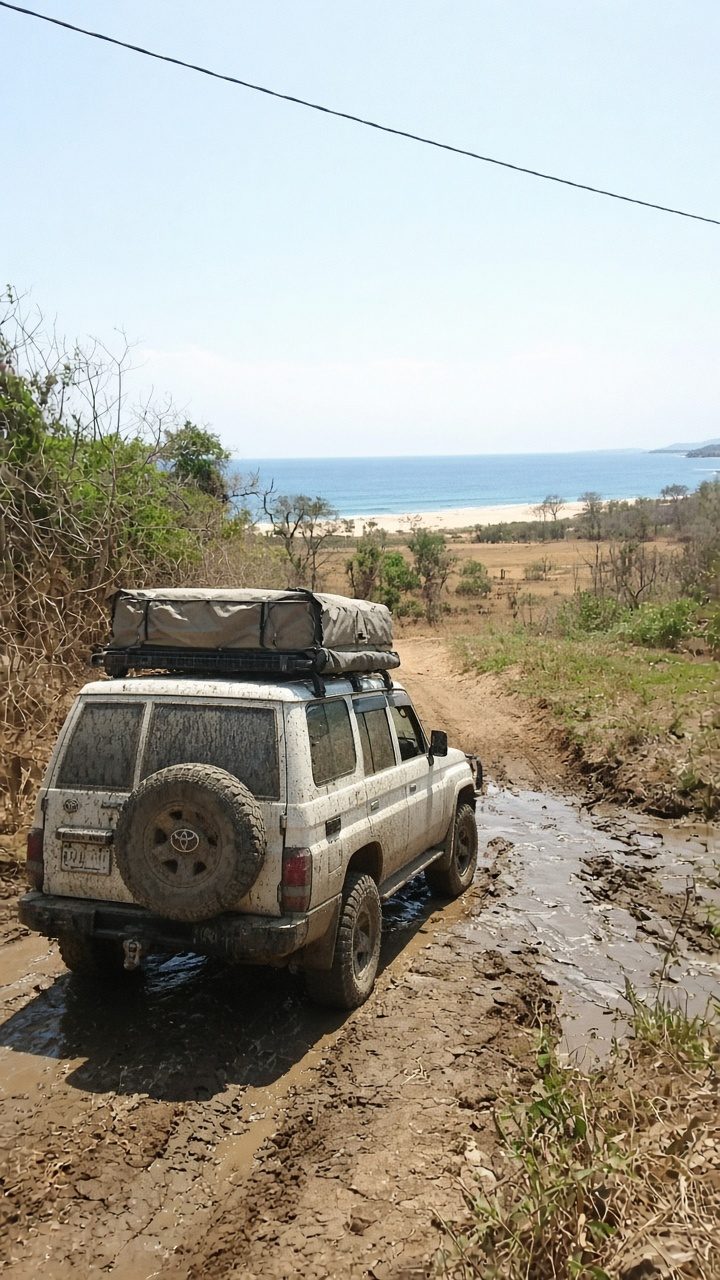
Day 2 — 4x4 to Playa Naranjo / Witch's Rock (12 km, plan 2–4 hrs EACH WAY). The main event and the hard truth. The road from the ranger station to the coast is 12 km of serious rocks and deep ruts — travelers report 1.5 hours just to reach the km-4 lookout, and most of a day to run the whole thing round-trip. You need a true off-road 4x4 with high clearance and low range (a Land Cruiser, not a soft crossover), and you should not attempt it at all outside the dry season. Reaching Playa Naranjo, the Naranjo campground sits near the beach with basic toilets and showers. Surfers reach the Witch's Rock lineup via Sendero Aceituno, which crosses a lagoon/river that has crocodiles — treat that crossing with total respect and cross only where and when locals/rangers advise. Camp on the beach (reserved), or, if the road or your nerve says no, drive the accessible half-day trails (Sendero Los Patos, Mirador Valle Naranjo, which itself gives you the classic distant view of Witch's Rock) and sleep back at HQ. Stay: Naranjo campground, or Santa Rosa HQ campground.
Day 3 — Playa Naranjo → Bahía Junquillal (~1.5–2 hrs total: brutal 12 km back out, then ~50 km paved north). Grind back up the access road early (mornings are cooler and you want a tide buffer, not an afternoon-heat crawl), rejoin the Interamericana, and drive north toward La Cruz and the turnoff to Cuajiniquil for the Bahía Junquillal National Wildlife Refuge. This is the payoff for the previous day's suffering: a sheltered, tree-shaded bay with an organized, well-run campground — parking, showers, toilets, grills, picnic shelters — widely rated one of the safest and prettiest places to camp in Costa Rica. Swim, cook at your site, and sleep to the sound of the surf. Stay: Bahía Junquillal campground (reserved directly with Aso Junquillal — see logistics).
Day 4 — Bahía Junquillal → LIR (~1.5–2 hrs, paved). Slow morning swim, break camp, and the easy paved return south to Liberia. Buffer time for the airport.
Signature stops
- Playa Naranjo / Witch's Rock (Roca Bruja): A surf-legend beach and monolith at the end of Guanacaste's hardest drive — earned, not bought.
- La Casona & the Battle of Santa Rosa: The 1856 stand against William Walker's filibusters, in a restored ranch-house museum — Costa Rica's founding-myth ground.
- Santa Rosa dry forest: The largest protected tropical dry forest in the region; unique deciduous wildlife and birdlife you won't see on the rainforest circuits.
- Bahía Junquillal: A calm, safe, beautifully kept ACG campground — the reward-night you'll remember as fondly as the adventure.
Where to camp
- Nights 1 (and 2 if you bail on the road): Santa Rosa Sector campground near the ranger station — basic facilities, book in advance.
- Night 2 (if you make the coast): Playa Naranjo campground — beachfront, basic toilets/showers, reserved.
- Night 3: Bahía Junquillal (Cuajiniquil, La Cruz) — organized campground, showers, grills, kayak rental; reserve directly.
Logistics & road reality
- 🔴 This is through-land, not overland. The Santa Rosa HQ road (7 km) is paved and easy; the 12 km from HQ to Playa Naranjo is a genuine off-road objective — rocks, ruts, slow going, a full day round-trip. Land Cruiser + low range only.
- ⚠️ Dry season ONLY (Dec–Apr). Locals and guidebooks are unanimous that the Naranjo road becomes impassable in the rains (roughly June–November). The crocodile lagoon crossing on Sendero Aceituno is a real hazard — verify current conditions and the safe crossing point with rangers on the day; do not improvise. Verify locally.
- 🔑 Reservations are required. Santa Rosa admission and camping must be booked in advance through the Guanacaste Conservation Area (ACG) — reservaciones.acguanacaste.ac.cr. Park hours are Wed–Sun, roughly 8:00–15:30; camping is priced per day and includes admission. Verify current fees, open days and any road/beach closures before you go.
- Bahía Junquillal is managed by Aso Junquillal and booked directly (WhatsApp +506 6231 5191 / +506 6133 0349, junquillallacruz.com); open Wed–Mon ~8:00–18:00, cash or card.
- Fuel & supplies: Fill up and provision completely in Liberia — there is no fuel, water or food inside Santa Rosa. Carry extra water; dry-forest temps hit the 90s–100s °F and the trails are shadeless.
- Connectivity: Patchy to none inside the park and on the Naranjo road. Carry offline maps and, ideally, a satellite messenger.
- Safety: Heat and the road are the real dangers here, not crime. Travel with recovery gear, tell someone your plan, and give yourself a hard tide/daylight turnaround time.
Insider tips
- Have a Plan B built in: if the Naranjo road or the river crossing looks wrong, the Mirador Valle Naranjo trail gives you a legit photo of Witch's Rock from above with none of the risk. No shame in it.
- Go early on the rough road — cooler temperatures, better wildlife, and margin for the return before the afternoon heat and any tide/river changes.
- Book Santa Rosa well ahead in high season; the reservation system is not optional and rangers do turn people away.
- Bring far more water than feels reasonable — dry forest in the dry season is brutally hot and shadeless, and there's no resupply.
- Treat the crocodile lagoon as a hard no unless a ranger or local confirms the crossing that day — surfers do it, but people who improvise get hurt.
Reserve your rig
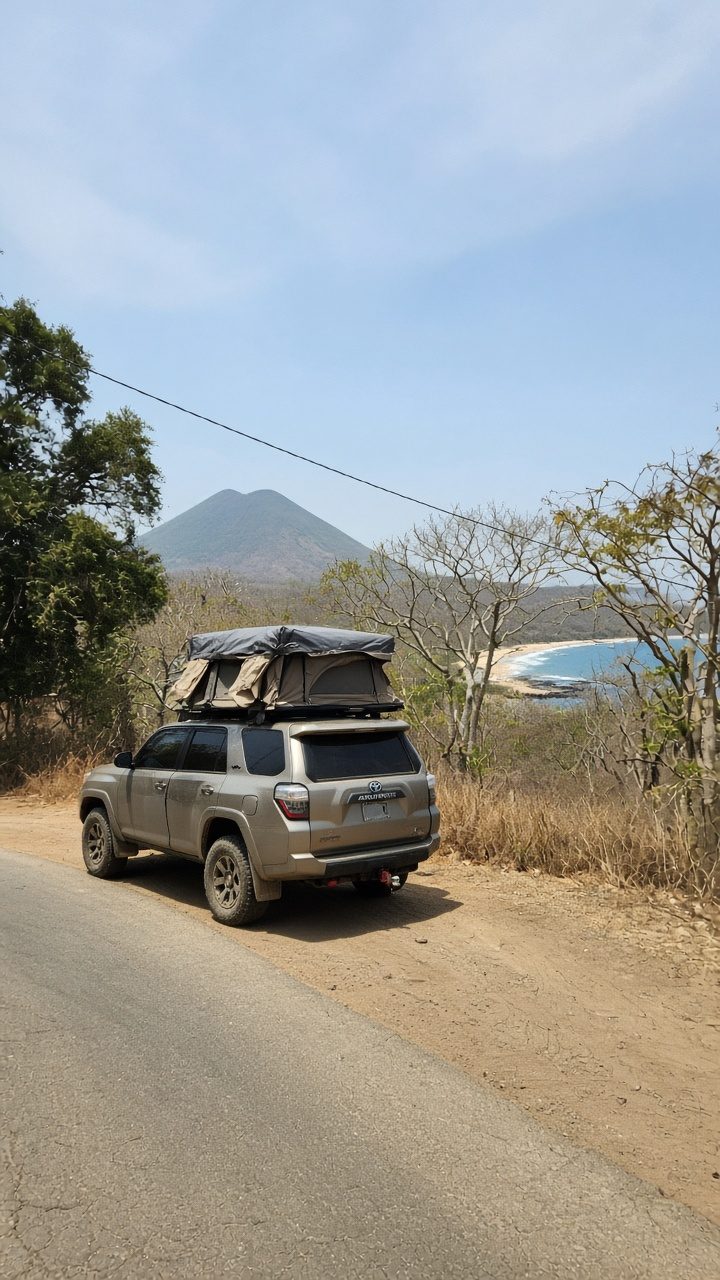
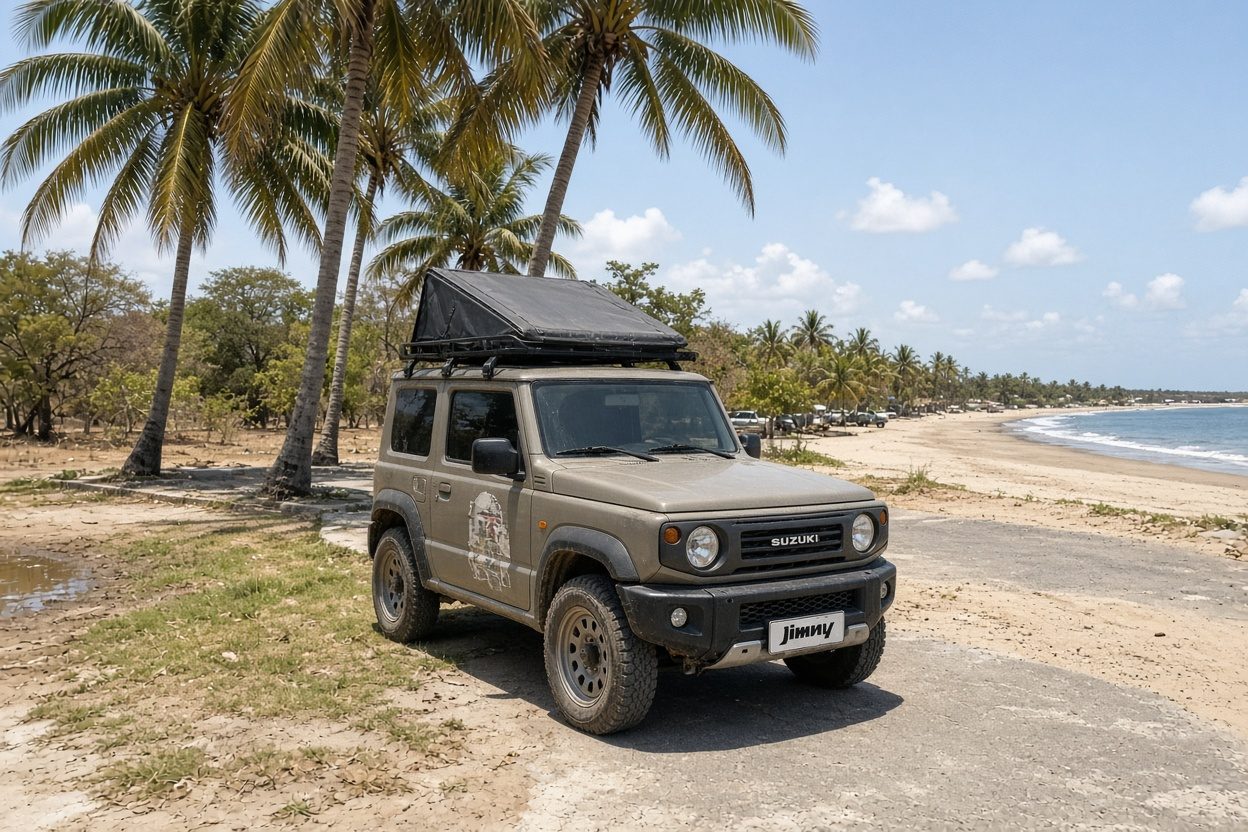
This route demands the Land Cruiser tier with a rooftop tent — real low-range 4x4, high clearance, and full self-sufficiency, because there is no lodging, fuel or food past the highway. Add recovery gear (traction boards, a rated strap), a satellite messenger, extra water/jerry cans, and offline-map + tide-consult support. Book only for the December–April window — and let us handle the ACG reservation so you don't arrive to a locked gate.
Before you go
Do you need a 4x4?
seasonal river ford — 4x4 advised
Best window to fly
Dec–Apr ONLY (wet-season tracks are impassable)
Offline first
Download your route and offline maps before you leave the lot — signal drops on the best stretches.
Golden rule
Never drive at night — plan arrivals before dark, and use Waze like the locals do.
VerifiedCR · No counter surprises
What a Costa Rica rental actually costs
The number one thing that rattles first-timers is the price jumping at the counter. Here is the honest math, before you get there.
- Advertised daily rate$12–40 / day
- What the booking sites show. It is real — but it is not the whole price. Nobody pays only this.
- Mandatory liability (TPL / SLI)+$15–25 / day
- Required by Costa Rican law on every rental. Cannot be waived. This is the line the cheap ads leave off — it roughly doubles the sticker price. Budget for it.
- Collision damage (CDW)waivable
- Often $20–40/day — but you can usually decline it if your credit card includes rental coverage (Amex, Visa Signature, Chase Sapphire and others). Call your card, ask for a coverage letter, and bring it printed.
- Security hold on your card$1,000–2,500
- A hold, not a charge — released after you return the car clean. Some agencies hold more. Make sure your card has the headroom before you fly.
The verified-rig promise: when you reserve through VerifiedCR, the rig is inspection-checked and the operator is vetted — the price you are quoted is the price you pay. No mystery line items at pickup.