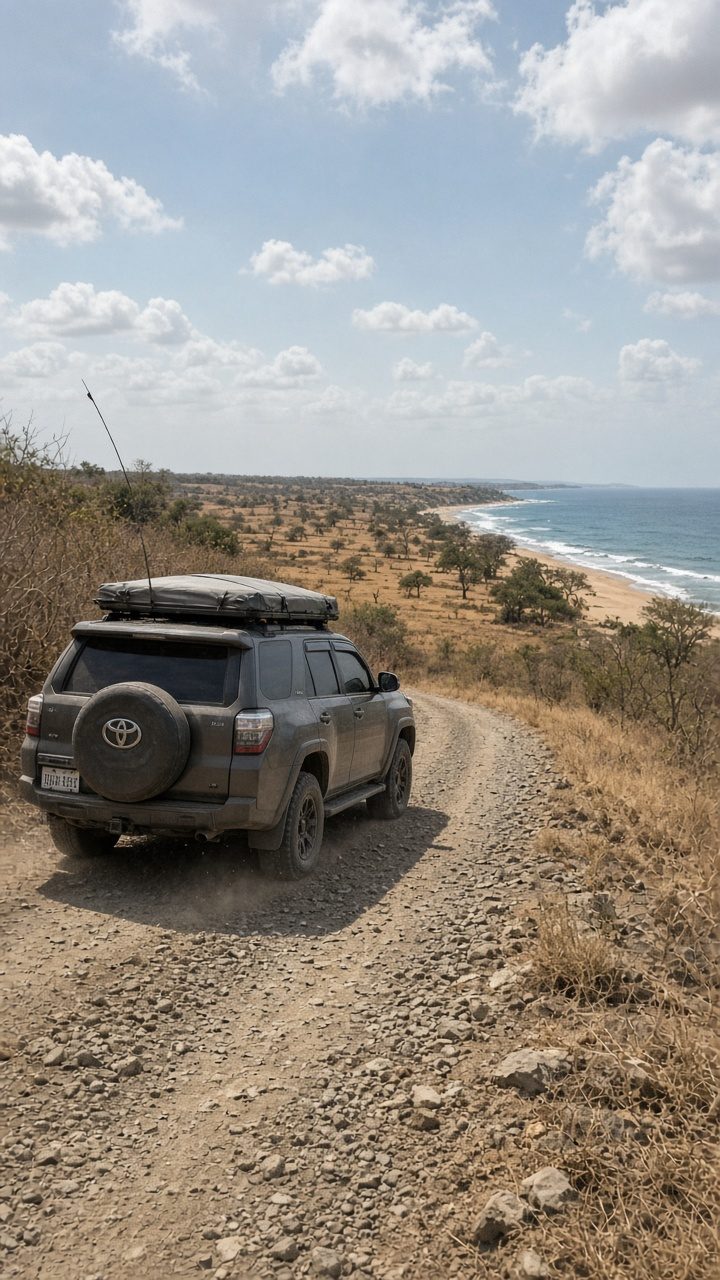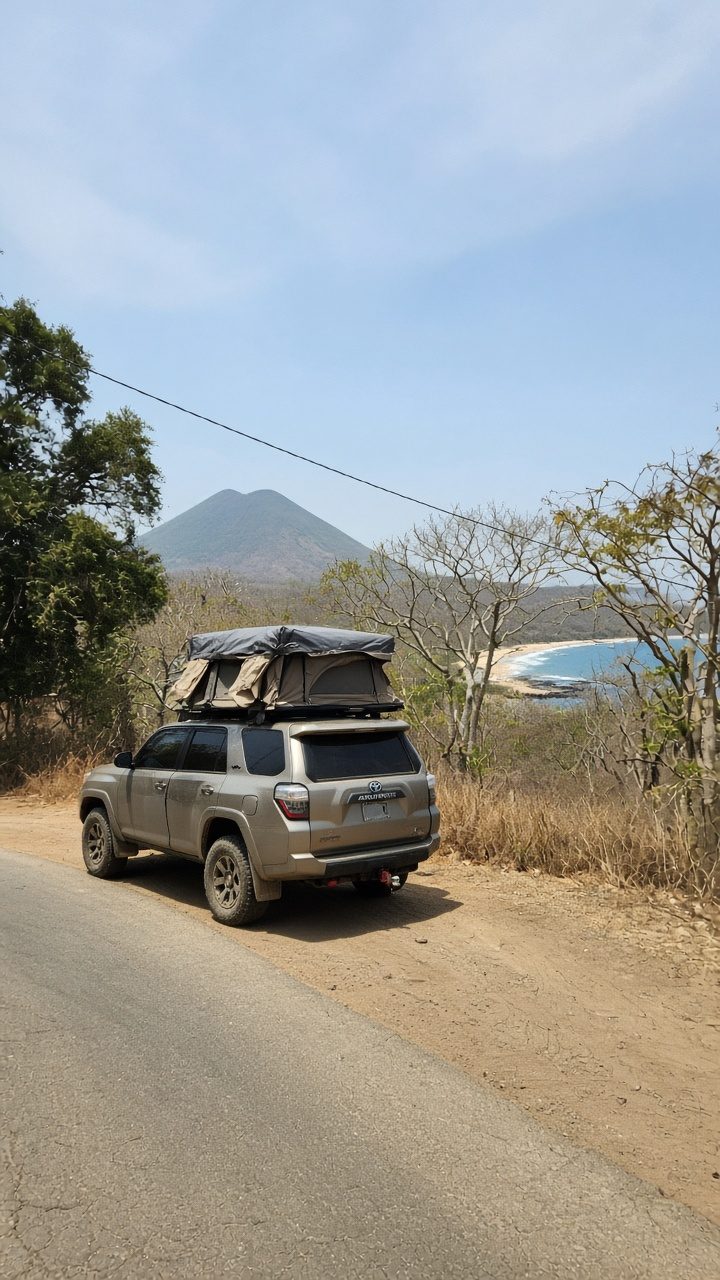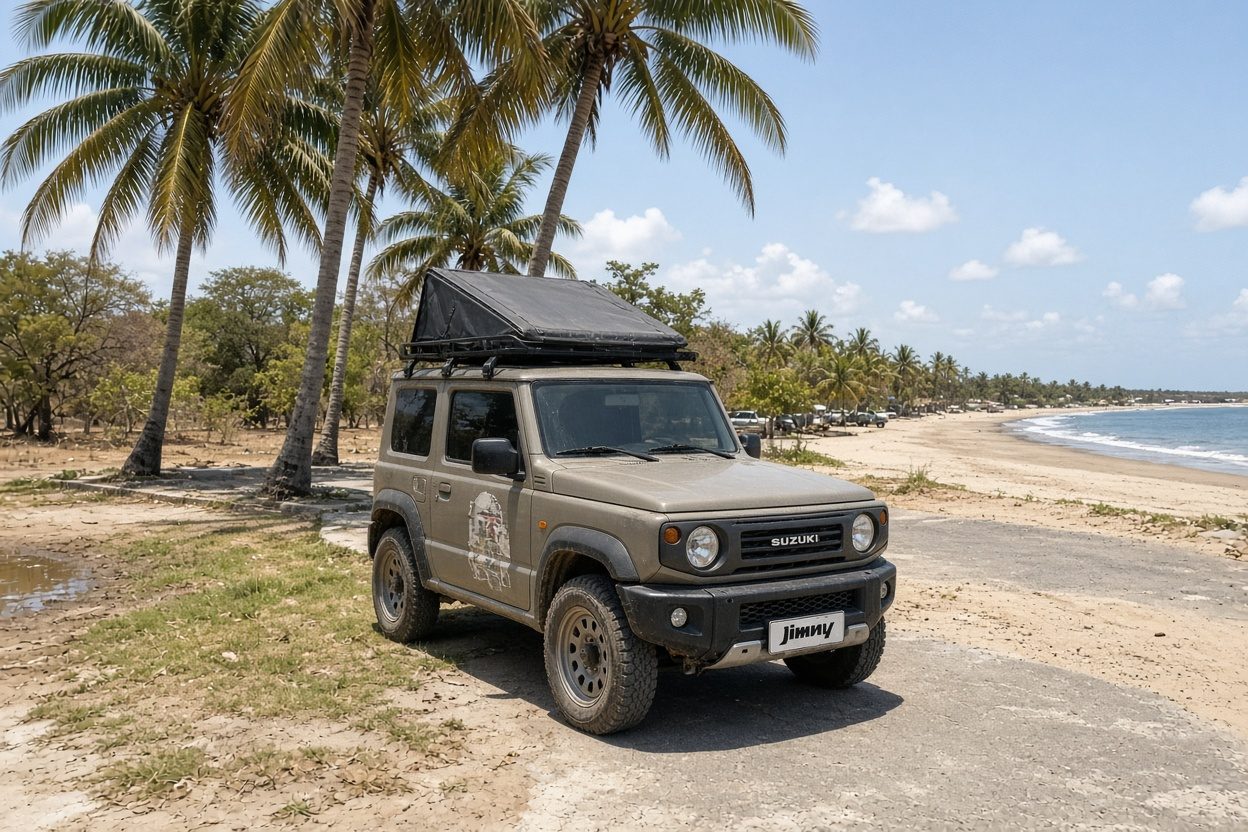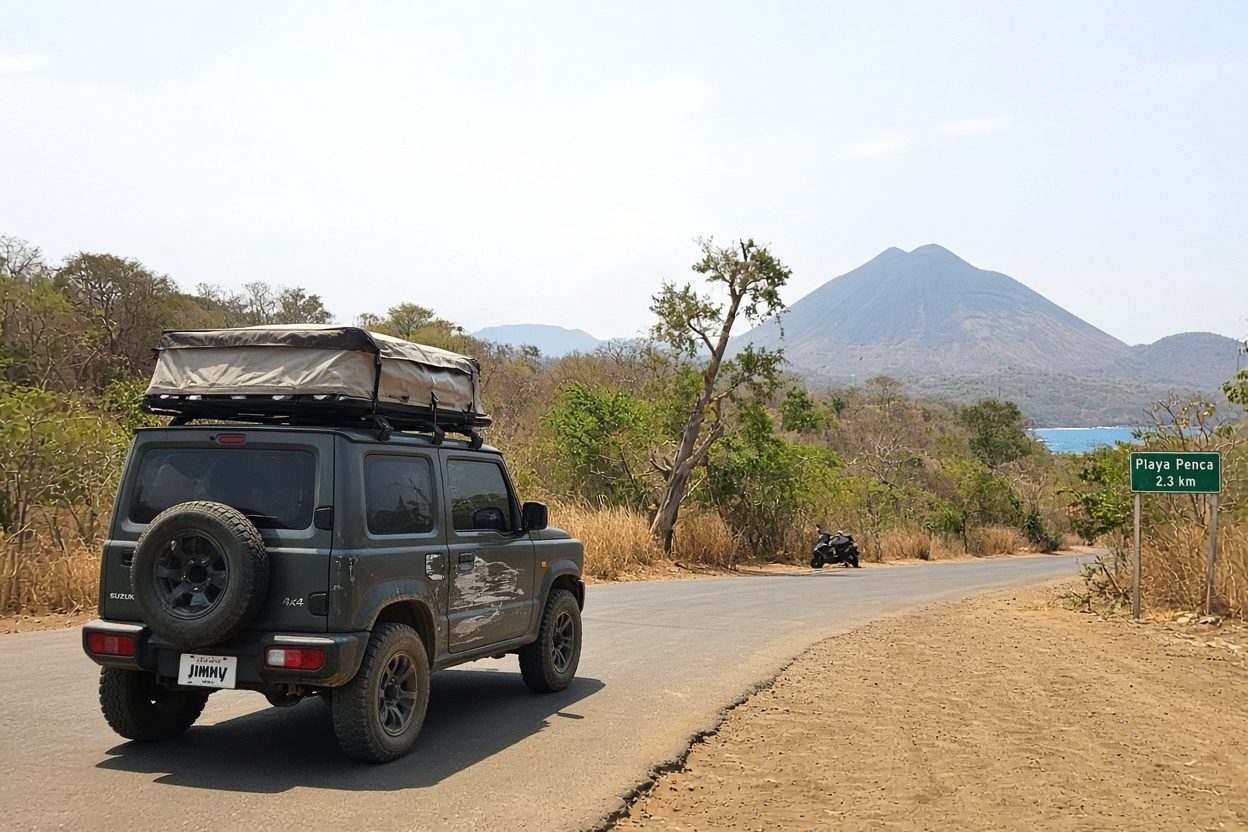
The vibe
Guanacaste's North Pacific is one of the most reliable sport-fishing coasts in the Americas, and the beauty of it for a road-tripper is that you don't need a boat of your own or a week-long liveaboard. You base ashore, drive between the two great launch points — Marina Flamingo and Playas del Coco / the Gulf of Papagayo — and fish a different water each day: blue-water offshore for sailfish, marlin, tuna and dorado; rocky inshore structure for roosterfish, snapper and jacks.
This circuit is for anglers who want serious rod time but also a comfortable bed, a cold beer at the dock, and someone else cleaning the boat. It's paved the whole way and short on driving, so your energy goes into 4:30 a.m. wake-ups and long fights, not navigation.
Why it beats booking a single charter from a resort: you fish two distinct fisheries out of two marinas, you can chase whatever's biting that week, and you finish with the option of the region's crown jewel — the Bat Islands (Islas Murciélago), ~30 miles offshore, for either bull-shark diving or big-fish grounds, depending on your season and your appetite.
Day by day
Day 1 — LIR → Playa Flamingo (~70 km, ~1 hr 15 min, paved). Land at Liberia, drive out to the Flamingo area on good roads, and get your bearings at Marina Flamingo — Central America's first full-service marina and the region's offshore hub. Meet your captain, confirm the next morning's departure and target species, and rig your gear. Sunset from the marina headland, dinner in town. Stay: a Flamingo-area hotel within a few minutes of the marina so your pre-dawn start is painless.
Day 2 — Offshore charter out of Flamingo (on the water 6–9 hrs). The big day. Boats run west into blue water for sailfish, marlin, yellowfin tuna, wahoo and dorado; a full day gets you to the productive offshore banks. In the December–April dry season you'll typically get calm mornings and steady sailfish; the true billfish peak in the North Pacific runs roughly August through mid-November (green season) — so if numbers are your goal and you can tolerate afternoon rain, time it then. Reputable Flamingo operators list half-days from around US$950 and full-days higher. Back to the dock in the afternoon, arrange a catch-and-cook if the restaurant partner allows it, and rest.
Day 3 — Flamingo → Playas del Coco, inshore day (~45 km, ~1 hr, paved). Reposition south to Coco, the region's liveliest fishing town. Fish inshore and near-shore today — the rocky points and pinnacles off Coco and Ocotal are roosterfish and cubera-snapper country, plus jacks and mackerel on lighter tackle. Inshore trips are shorter (half-days are plenty), cheaper, and a good change of pace for the arms. Afternoon in Coco: tackle shops, a walk on the beach, and a proper town dinner. Stay: Coco or nearby Playa Hermosa.
Day 4 — Gulf of Papagayo charter (from Coco/Papagayo, half or full day). The Gulf of Papagayo mixes protected inshore structure with quick access to offshore water, so it's a flexible day — chase billfish if the bite is on, or work the coastline for roosters and snapper. This is also your decision point for the marquee add-on: from December–April the seas are easy for the long run to the Bat Islands; if you're a diver more than an angler, the Bat Islands bull-shark dive season runs roughly mid-May to early November (strongest June–October), which is the opposite of the calm dry window — so pick your day accordingly. Stay: Coco/Hermosa.
Day 5 — Coco → LIR (~45 min–1 hr, paved). Easy morning, optional last inshore half-day if your flight is late, then the short paved drive back to Liberia. Ship or pack any frozen fillets your catch-and-cook partner vacuum-sealed.
Signature stops
- Marina Flamingo: The North Pacific's offshore launch pad — full-service dock, deep-water access, and the region's densest fleet of billfish boats.
- Gulf of Papagayo: Sheltered water with fast offshore access; the flexible fishery where you can pivot inshore or blue-water in a single day.
- Bat Islands (Islas Murciélago): ~30 miles offshore from Coco, inside Santa Rosa National Park's marine sector — legendary big-fish grounds and, in season, bull-shark diving.
- Coco / Ocotal inshore reefs: Roosterfish and cubera snapper on light tackle right off the rocks — the arm-burning counterpoint to a day of trolling.
Where to stay
- Night 1–2, Flamingo: a hotel within minutes of Marina Flamingo for early departures.
- Nights 3–4, Playas del Coco / Playa Hermosa: in-town Coco for nightlife and tackle access, or quieter Hermosa 15 minutes away.
Logistics & road reality
- 🟢 Overland/paved throughout. No fords or ferries; a compact 4x4 is ample. You're paying for reliability and clearance on marina/hotel lanes, not off-road need.
- Fuel: No issues — Liberia, the Flamingo–Brasilito corridor, and Coco all have stations. Top off before early charter mornings.
- Seasons that matter: Sailfish are strong much of the year with calm seas Dec–Apr; billfish (marlin/sail) peak roughly Aug–mid-Nov; roosterfish inshore are year-round. Bat Islands bull-shark diving is mid-May–early Nov (peak Jun–Oct) — do not book it expecting the dry-season calm.
- Booking: Reserve charters in advance; Marina Flamingo boats and Coco operators fill in high season. Confirm whether the operator supports catch-and-cook and whether billfish are strictly release (they generally are — Costa Rica requires release of sailfish and marlin).
- Connectivity & safety: Good signal and services ashore. On the water, motion-sickness prep and sun protection are your real concerns; the offshore and Bat Islands runs are long and open.
Insider tips
- Sailfish and marlin are catch-and-release in Costa Rica — go for the fight and the photo, and let the crew keep dorado/tuna/wahoo for dinner.
- Split your money smartly: one full offshore day out of Flamingo, then cheaper inshore half-days out of Coco. You'll fish more variety for the same budget than booking two full offshore days.
- Book the earliest departure you can — the bite and the seas are both best at first light; afternoons in green season bring wind and squalls.
- Ask about the Bat Islands run only if your dates fit — the long crossing needs a settled sea; captains will (and should) cancel it in swell.
- Keep a soft cooler and vacuum-seal request ready so your dorado and tuna make it home as fillets, not a sad hotel-fridge afterthought.
Reserve your rig
A compact 4x4 is all you need here — it swallows rod tubes and tackle bags, handles the paved marina runs with ease, and keeps rental cost down so more of your budget goes to the boat. Add a large cooler for fillets, rod-transport padding, and an early-checkout/late-return arrangement to match pre-dawn charter departures. Reserve well ahead for the Dec–Apr and Aug–Nov fishing peaks.
Before you go
Do you need a 4x4?
paved all the way — 2WD ok
Best window to fly
Dec–Apr (sailfish + easy seas); billfish peak Aug–mid-Nov
Offline first
Download your route and offline maps before you leave the lot — signal drops on the best stretches.
Golden rule
Never drive at night — plan arrivals before dark, and use Waze like the locals do.
VerifiedCR · No counter surprises
What a Costa Rica rental actually costs
The number one thing that rattles first-timers is the price jumping at the counter. Here is the honest math, before you get there.
- Advertised daily rate$12–40 / day
- What the booking sites show. It is real — but it is not the whole price. Nobody pays only this.
- Mandatory liability (TPL / SLI)+$15–25 / day
- Required by Costa Rican law on every rental. Cannot be waived. This is the line the cheap ads leave off — it roughly doubles the sticker price. Budget for it.
- Collision damage (CDW)waivable
- Often $20–40/day — but you can usually decline it if your credit card includes rental coverage (Amex, Visa Signature, Chase Sapphire and others). Call your card, ask for a coverage letter, and bring it printed.
- Security hold on your card$1,000–2,500
- A hold, not a charge — released after you return the car clean. Some agencies hold more. Make sure your card has the headroom before you fly.
The verified-rig promise: when you reserve through VerifiedCR, the rig is inspection-checked and the operator is vetted — the price you are quoted is the price you pay. No mystery line items at pickup.