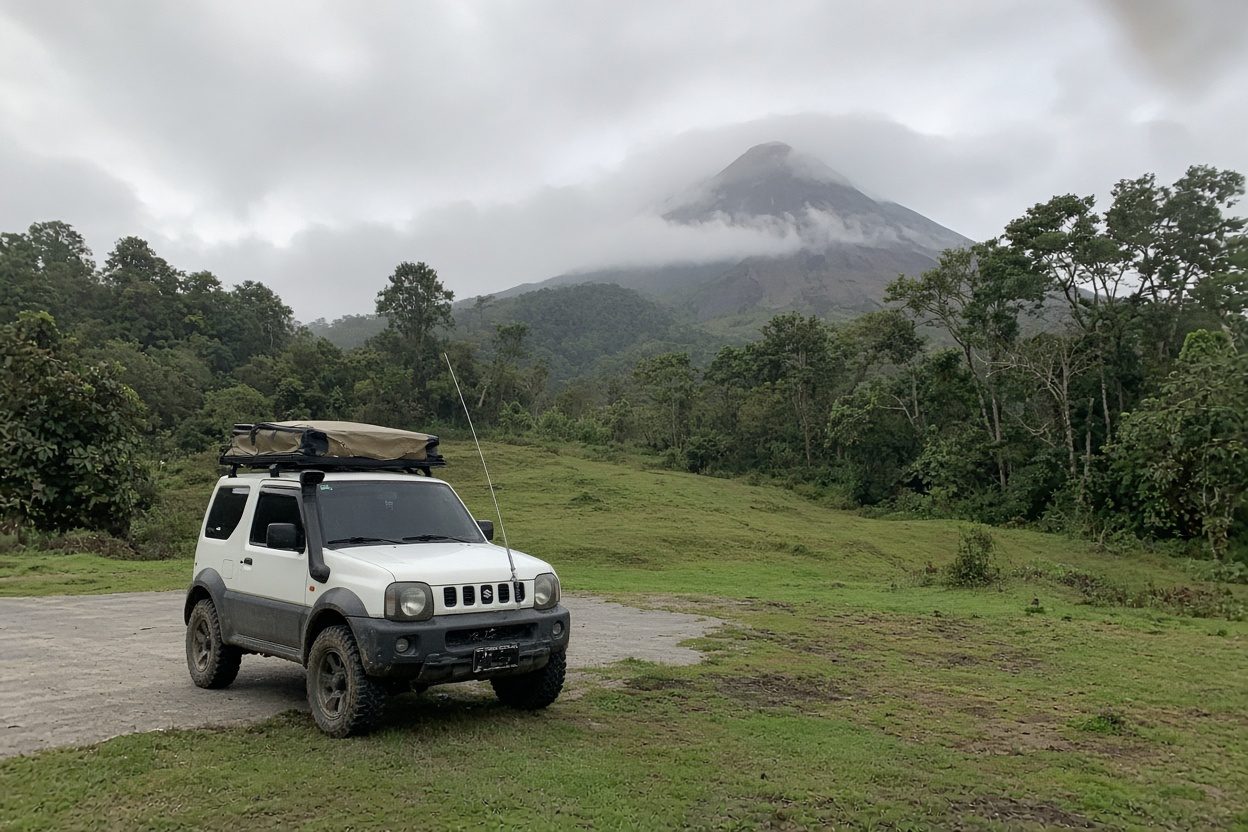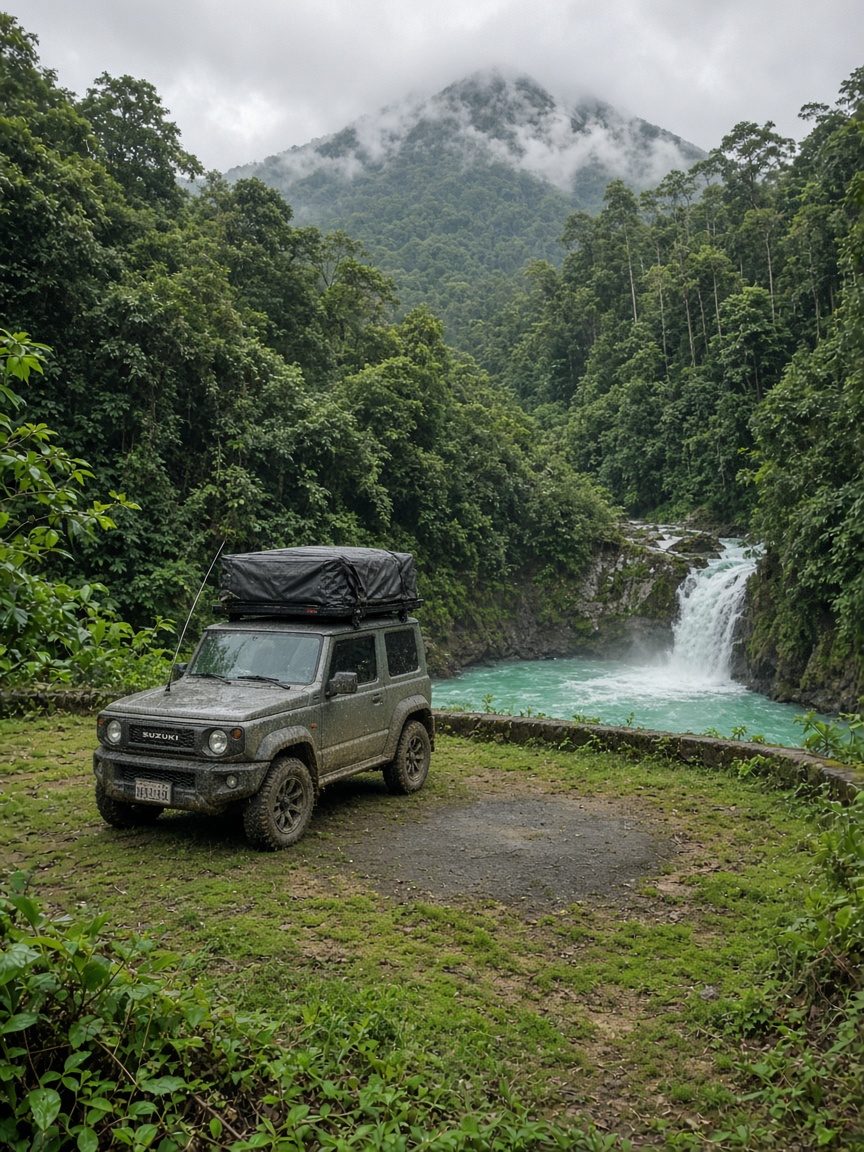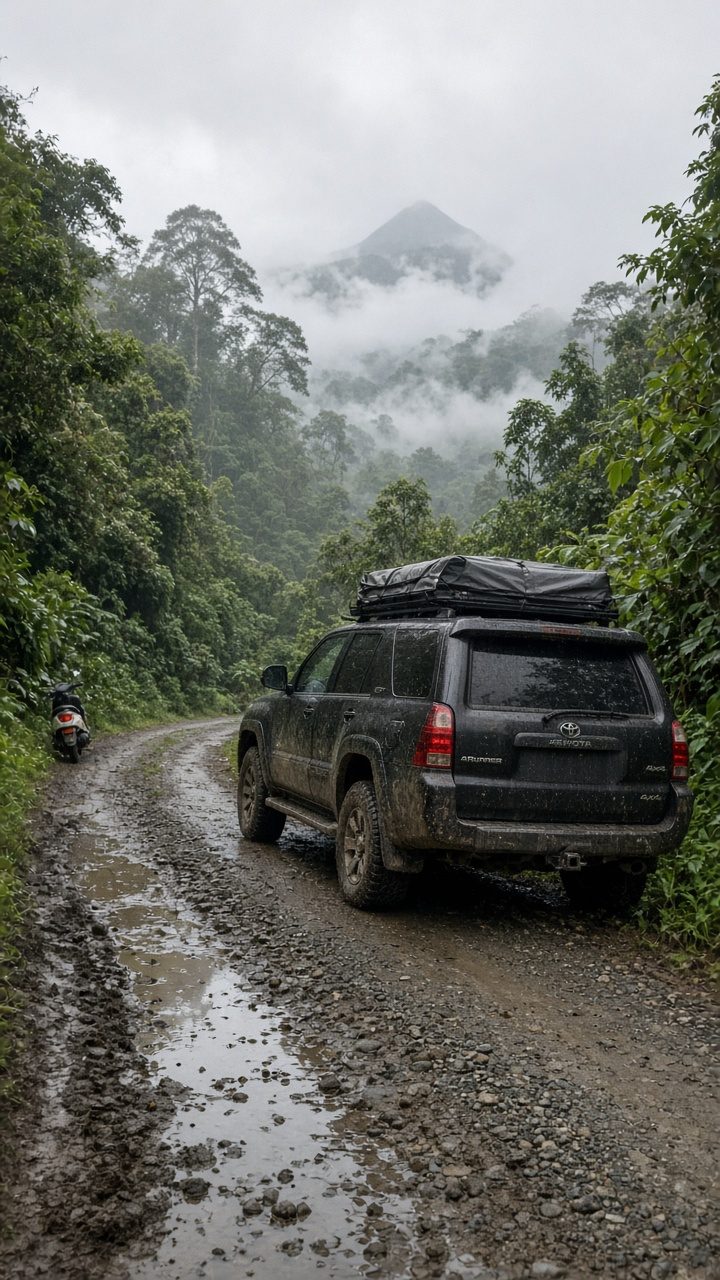
Three habitats, one unhurried arc
Serious birders don't chase a checklist across the country in a blur — they work habitats. This traverse is built around that logic, dropping through three distinct life zones in sequence: the wind-scoured Monteverde cloud forest (quetzals, hummingbirds, cloud-forest endemics), the Arenal foothills (a transition zone of foothill and mid-elevation species), and the humid Sarapiquí lowland rainforest (toucans, tanagers, antbirds, raptors). Eight days lets you hit each at dawn, when the forest is loudest, without rushing.
It's a 🟡 mixed trip — a paved spine with gravel camp spurs and one lake crossing. The pace is deliberately gentle: dawn walks, midday rest, and short repositioning drives. A mid 4x4 handles the cloud-forest access roads and the Arenal gravel, and gives you room for a scope and gear.
Why it beats the generic version: birding lodges sell you a single property and its trails. This traverse pairs the quiet reserves locals favor — Curi-Cancha over the crowded big names — with the research stations that hold the richest lowland lists (La Selva), and moves you between them on your own dawn schedule rather than a group's. You also get the honest note most itineraries bury: Sarapiquí has no confirmed partner campground, so that leg is lodge-based.
Day by day
Day 1 — Monteverde: arrive and settle (drive from SJO/LIR, 🟡 rough final climb). Reach Santa Elena — the last stretch up is rough and winding (4x4 pays off, worse in rain). Check into the Higuerón rooftop-tent site (costaricacampsites.com). Scout Curi-Cancha Reserve entrance and hours for tomorrow's dawn, and settle into the cool air.
Day 2 — Curi-Cancha + Bosque Eterno dawn birding. Be at Curi-Cancha Reserve (~$18–20, verify) at opening — it's quieter than the famous reserves and consistently excellent for resplendent quetzals (peak breeding ~Feb–May), bellbirds and mixed flocks. In the afternoon, walk part of the adjacent Bosque Eterno de los Niños (Children's Eternal Rainforest) for a second habitat slice. Second night at Higuerón.
Day 3 — Bat Jungle + Santa Elena (rest and low-key). A gentler day: the Bat Jungle in Santa Elena town is a small, well-done guided museum (good for a rainy morning), and the town's hummingbird gardens are worth an hour with a scope. Optional Santa Elena Reserve or a guided night walk. Third night at Higuerón.
Day 4 — Jeep-Boat-Jeep to Arenal (🟡 transfer, ~3 hrs total). Cross Lake Arenal on the Jeep-Boat-Jeep (shared ~$40–45/person; 30-min boat crossing) — the crossing itself is good for waterbirds and raptors. Arrange your rig's route around the lake with the operator in advance (verify). Arrive Arenal, check into Camping y Mirador El Castillo ($8–10/person; rough gravel access; best volcano view). costaricacampsites.com.
Day 5 — Arenal NP trails (short paved drives 🟢). Bird the Arenal Volcano National Park (SINAC, ~$15 non-resident) — flat forest and old-lava trails through a foothill transition zone with a different cast than the cloud forest: motmots, trogons, oropendolas, and volcano-flank specialties. The El Castillo area's feeders and forest edges are productive too. Second night at El Castillo.
Day 6 — Reposition to Sarapiquí (drive ~1.5–2 hrs west then north, paved 🟢). A travel day down into the humid lowlands. Base near Puerto Viejo de Sarapiquí — no confirmed partner camp here, so book an eco-lodge such as Selva Verde or the Tirimbina lodge, both with private birding trails (verify).
Day 7 — La Selva + Selva Verde (short drives 🟢). Dawn at La Selva Biological Station (OTS/Tropical Studies): one of the most bird-rich lowland sites in the country, with guided walks (~$55/adult non-resident; walks 8am & 1:30pm; book ahead) turning up great tinamous, toucans, manakins, antbirds and raptors on flat, easy paths. Afternoon on Selva Verde Lodge's private trails or a river-edge walk for a second lowland session. Final rainforest night in Sarapiquí.
Day 8 — Out. Easy paved return to SJO (~1.5–2 hrs) with a final lowland listing stop en route.
Signature stops — why go
- Curi-Cancha Reserve — the quiet quetzal reserve; better birding, fewer people than the famous names.
- Bosque Eterno de los Niños — a large, wild cloud-forest tract adjacent to Curi-Cancha.
- Arenal Volcano NP — foothill/transition-zone species you won't get in the cloud forest.
- La Selva Biological Station — arguably the richest, most accessible lowland-rainforest bird list on the route.
- Selva Verde Lodge trails — private lowland trails for a second unhurried session.
Where to camp / stay
- Nights 1, 2 & 3 — Higuerón rooftop-tent site (Monteverde side). costaricacampsites.com.
- Nights 4 & 5 — Camping y Mirador El Castillo (~$8–10/person; rough gravel; best volcano view). costaricacampsites.com.
- Nights 6 & 7 — Sarapiquí eco-lodge (Selva Verde / Tirimbina; no confirmed partner camp — verify).
Logistics & road reality
- Roads: 🟡 rough Santa Elena climb and El Castillo gravel; 🟢 paved on the Arenal–Sarapiquí spine. The Jeep-Boat-Jeep replaces the slow lake drive-around.
- Fuel: Limited Monteverde fuel — arrive with a decent tank; stations in La Fortuna and Puerto Viejo de Sarapiquí.
- 4x4: Mid 4x4 for cloud-forest and camp access; also good for scope/gear space.
- Season: Dec–Apr overall; quetzal breeding peaks ~Feb–May. Cloud forest is cold, wet and windy year-round — layer up.
- Permits/tickets: No permits, but book La Selva walks ahead (fixed times) and reserve the Jeep-Boat-Jeep in high season.
- Connectivity: Good in towns; patchy on cloud-forest and lowland trails and the lake crossing.
- Safety: Very safe region; the main hazard is the foggy Santa Elena road (daylight only). Lowland heat and insects in Sarapiquí — repellent and hydration.
Insider tips
- Curi-Cancha at opening beats the famous reserves for quetzals and quiet — hire a local guide with a scope for the best hit rate.
- Work dawns, rest midday. Each habitat is loudest at first light; save driving and museums for the flat afternoon.
- Time it for Feb–May if quetzals are the target (breeding season, most reliable sightings).
- The lake crossing is a birding bonus — keep binoculars handy for waterbirds and raptors.
- Sarapiquí is lodge-based, not camp-based — book Selva Verde or Tirimbina early for their private trails.
Reserve your rig
Cloud forest to foothill to lowland rainforest, worked habitat by habitat at your own dawn pace. A mid 4x4 reaches the quiet reserves and research stations that hold the richest lists — and carries the scope. Reserve your 4x4 and birding traverse now.
Before you go
Do you need a 4x4?
gravel sections — 2WD ok in dry season
Best window to fly
Dec–Apr (quetzal breeding ~Feb–May)
Offline first
Download your route and offline maps before you leave the lot — signal drops on the best stretches.
Golden rule
Never drive at night — plan arrivals before dark, and use Waze like the locals do.
VerifiedCR · No counter surprises
What a Costa Rica rental actually costs
The number one thing that rattles first-timers is the price jumping at the counter. Here is the honest math, before you get there.
- Advertised daily rate$12–40 / day
- What the booking sites show. It is real — but it is not the whole price. Nobody pays only this.
- Mandatory liability (TPL / SLI)+$15–25 / day
- Required by Costa Rican law on every rental. Cannot be waived. This is the line the cheap ads leave off — it roughly doubles the sticker price. Budget for it.
- Collision damage (CDW)waivable
- Often $20–40/day — but you can usually decline it if your credit card includes rental coverage (Amex, Visa Signature, Chase Sapphire and others). Call your card, ask for a coverage letter, and bring it printed.
- Security hold on your card$1,000–2,500
- A hold, not a charge — released after you return the car clean. Some agencies hold more. Make sure your card has the headroom before you fly.
The verified-rig promise: when you reserve through VerifiedCR, the rig is inspection-checked and the operator is vetted — the price you are quoted is the price you pay. No mystery line items at pickup.