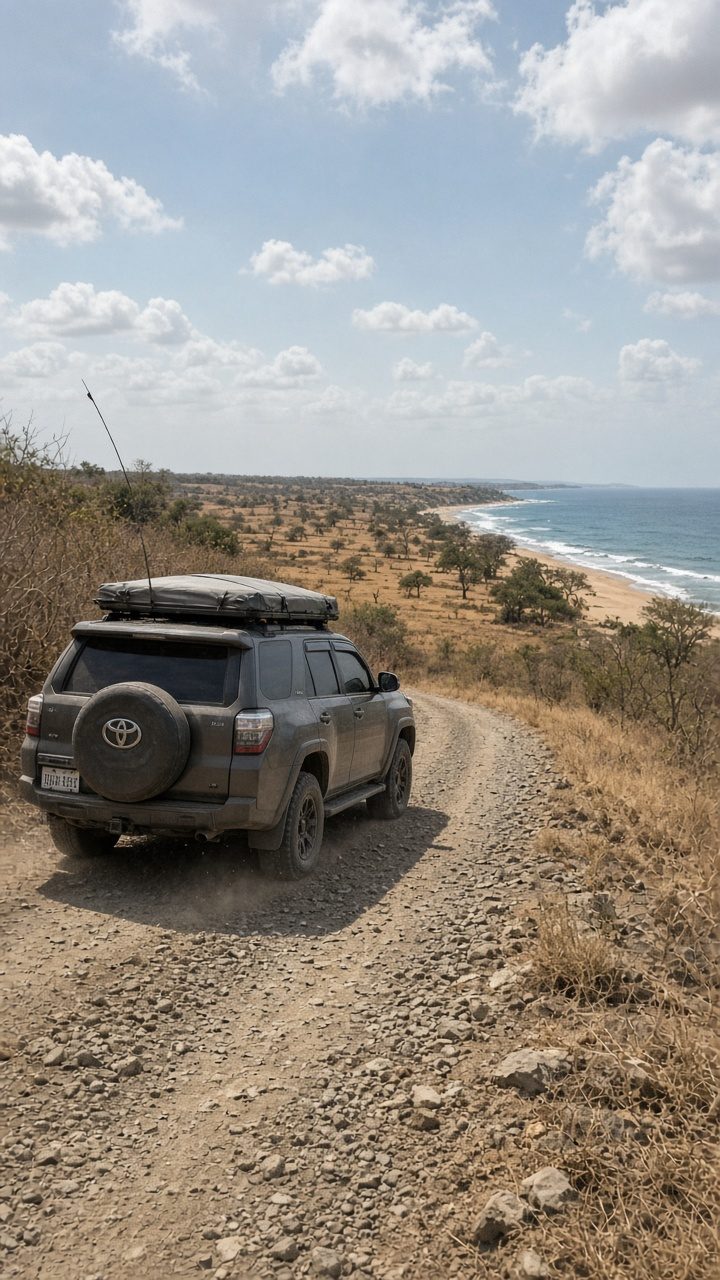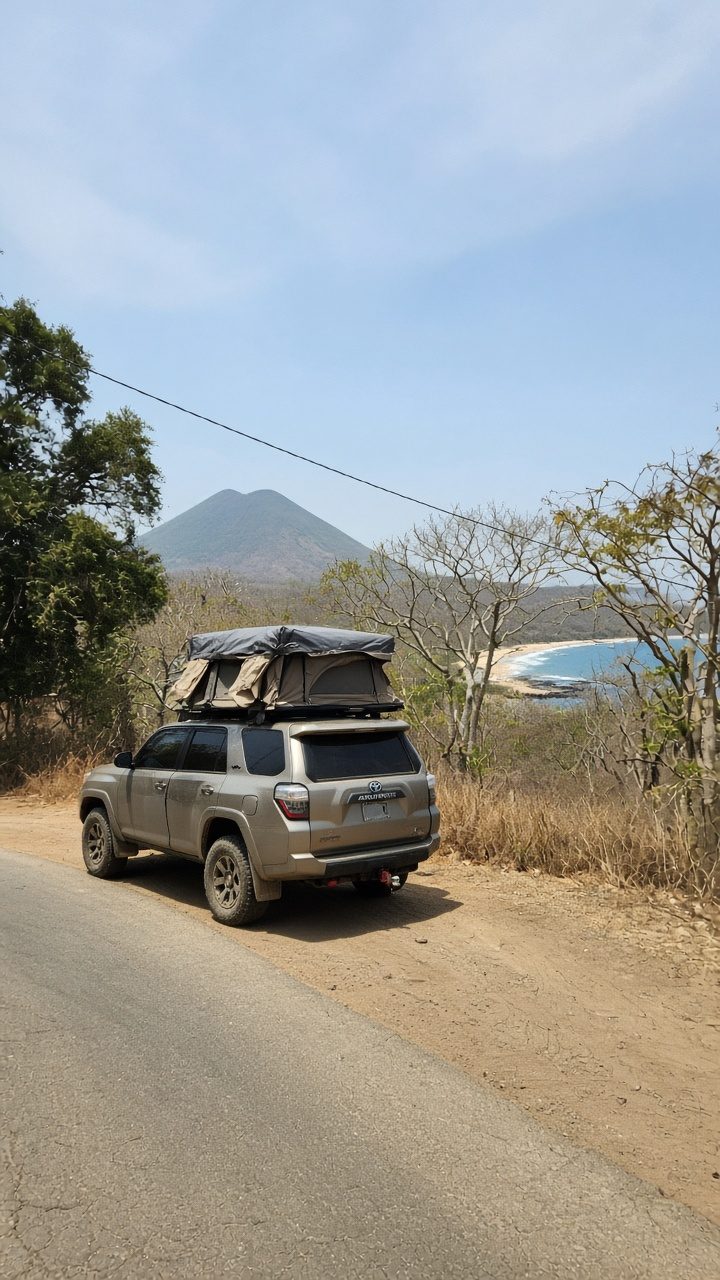
The Río Celeste is the photograph that sells Costa Rica — a river the color of blue curaçao, born where two clear streams collide and a mineral haze paints the water sky-blue. It lives inside Tenorio Volcano National Park, above the quiet farming town of Bijagua de Upala, in a fold of mountains on the Alajuela–Guanacaste line. This three-day run from San José gives the river the time it deserves: a night in Bijagua to sleep close to the gate, a full morning on the trail, and an afternoon in one of the best low-key wildlife valleys in the country, where two-fingered sloths hang in roadside trees and the birdlife spans two oceans' worth of species.
Treat this as a three-day trip even though the catalog lists it as 2–3 — Bijagua's weather is fickle, and a spare morning is your insurance against a milky river. Two hard truths shape the plan. First, the trail is a straight there-and-back with a real climb of steps, and 🟡 the lower staircase and observation platform at the waterfall have been closed since mid-2025 after a landslide — you can still see the fall from partway down, but not stand at its base. Second — and this is the big one — 🔴 there are reports that Tenorio/Río Celeste is closed for rehabilitation beginning 03/15/2026, with the SINAC system blocking ticket sales for the closure window. Verify current park status and ticket availability on the official SINAC site before you commit to this trip. If the park is closed, Bijagua's sloth tours, hot springs, and free river pool still make a worthy weekend.
Day 1 — San José to Bijagua
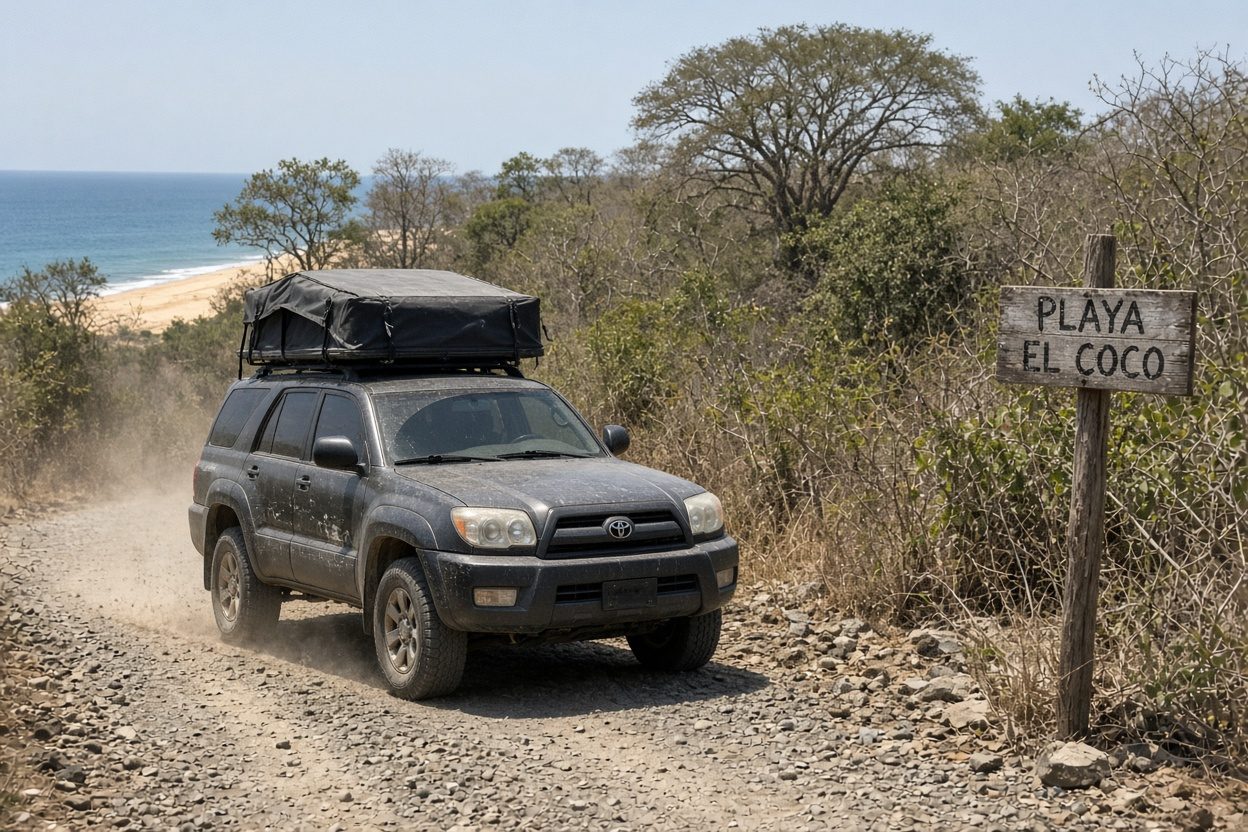
It is roughly 173 km and about 3.5 hours from SJO to the Bijagua/Tenorio area, or ~95 km / 1.5 hours if you're coming from Liberia (LIR) instead. The route runs the Pan-American toward Cañas, then climbs a curvy, narrow, unlit mountain road up to Bijagua — paved, but with a couple of tight one-lane bridges and slick concrete sections when wet, so 🟡 a mid 4x4 and daylight driving are the sensible call. Arrive in the afternoon, check into a Bijagua lodge, and take a guided sloth-and-frog walk on private reserve trails near town — the valley is famous for reliable sloth sightings and a big cast of birds funnelling through this low continental-divide pass. Sleep: Tenorio Lodge, Rio Celeste Hideaway (upscale, with private river access), or Casita Celeste / Bijagua cabinas for mid-range; book direct.
Day 2 — Tenorio NP and Río Celeste
Be at the El Pilón (main) entrance early; the park runs 8 a.m. to 4 p.m., last entry ~1:45 p.m., with entries staged in timed groups and a daily visitor cap. Have your SINAC ticket purchased online in advance (about $12 per adult, children under 12 free) — they do not reliably sell at the door, and slots sell out in high season. The trail is about 6–7 km round trip on concrete-and-dirt through primary rainforest: a suspension bridge (watch for white-faced monkeys), then the 253-step descent toward the waterfall (currently only partway open — verify), the Laguna Azul, the bubbling Borbollones hot vents, and the Teñideros, where you actually watch the two rivers merge and turn blue. No swimming is allowed inside the park, and single-use plastics and drones are banned. Afterward, cool off at the free public "Río Celeste Danta" pool about 1 km past the gate (small parking fee), or over lunch at a riverside spot like Cabinas Piuri with private river access. Sleep: second night in Bijagua.
Day 3 — Slow morning, return
Use the spare morning as a weather buffer: if yesterday's river ran milky after rain, hike back in for a second attempt, or do a shorter Heliconias hanging-bridges walk / dawn birding session. Then drive out, with an optional stop at Llanos de Cortés waterfall (a wide, swimmable curtain near Bagaces) as you rejoin the highway toward SJO or LIR. Budget ~3.5 hours back to San José. 🟢 on the highway once you're off the Bijagua mountain road.
Signature stops (why go)
- Río Celeste waterfall & Teñideros — the bluest water in Costa Rica and the actual spot where the color is born.
- Bijagua sloth valley — among the most dependable sloth-and-bird viewing in the country, on quiet private reserves.
- Free Río Celeste "Danta" pool — a legal, no-ticket spot to actually swim in the blue water, just outside the park.
Where to camp / stay
- Rio Celeste Hideaway Hotel — luxury bungalows with the park's only private in-park river access.
- Tenorio Lodge — long-standing birder favorite with volcano views over Bijagua.
- Bijagua cabinas / Casita Celeste — mid-range, family-run, close to the gate.
- 🟡 Bookable campervan/rooftop-tent sites are thin in this valley — verify a legal site before relying on camping.
Logistics & road reality
- Drive: SJO ~3.5 h (LIR ~1.5 h). Highway is easy; the Bijagua mountain approach is narrow, curvy, unlit — drive it in daylight. 🟡
- Reservations: SINAC timed tickets required, bought online in advance — no guaranteed door sales; daily cap; timed entry groups. 🔴 Verify the park is open at all — reports of a rehabilitation closure starting 03/15/2026.
- Waterfall access: 🔴 lower stairs/observation platform closed since mid-2025 (landslide); partial view only until repaired — verify.
- Connectivity: 🔴 no cell signal at the park (Kolbi) — download offline maps and your ticket barcode before you climb.
- Safety: don't leave valuables in the car at trailhead lots (locally run, not park-owned); wear closed-toe shoes — mud and steps.
Insider tips
- Buy SINAC tickets the moment you have dates and screenshot the barcode — signal dies before the gate.
- Stay two nights in Bijagua; a single-day dash risks arriving on a milky-river morning after overnight rain.
- The bluest water is Feb–Apr; after big storms (Oct–Jan) the river can temporarily lose its color.
- Bring closed-toe shoes, rain gear, and mosquito repellent — the trail is humid, buggy, and slick.
- To actually swim, skip the (illegal-in-park) river and use the free Danta pool past the entrance.
Reserve your rig
The road to Bijagua is where a mid 4x4 earns its keep — high clearance for the slick concrete grades, comfort for the highway haul. Reserve your rig with VerifiedCR and we'll check live SINAC status for your dates (this park's closures move fast), pre-book your timed entry, and load offline maps so you're not hunting for signal on a mountain that has none.
Before you go
Do you need a 4x4?
gravel sections — 2WD ok in dry season
Best window to fly
Feb–Apr (bluest, driest); river can go milky after heavy storms Oct–Jan
Offline first
Download your route and offline maps before you leave the lot — signal drops on the best stretches.
Golden rule
Never drive at night — plan arrivals before dark, and use Waze like the locals do.
VerifiedCR · No counter surprises
What a Costa Rica rental actually costs
The number one thing that rattles first-timers is the price jumping at the counter. Here is the honest math, before you get there.
- Advertised daily rate$12–40 / day
- What the booking sites show. It is real — but it is not the whole price. Nobody pays only this.
- Mandatory liability (TPL / SLI)+$15–25 / day
- Required by Costa Rican law on every rental. Cannot be waived. This is the line the cheap ads leave off — it roughly doubles the sticker price. Budget for it.
- Collision damage (CDW)waivable
- Often $20–40/day — but you can usually decline it if your credit card includes rental coverage (Amex, Visa Signature, Chase Sapphire and others). Call your card, ask for a coverage letter, and bring it printed.
- Security hold on your card$1,000–2,500
- A hold, not a charge — released after you return the car clean. Some agencies hold more. Make sure your card has the headroom before you fly.
The verified-rig promise: when you reserve through VerifiedCR, the rig is inspection-checked and the operator is vetted — the price you are quoted is the price you pay. No mystery line items at pickup.