Costa Rica's central highlands hold the country's most photogenic waterfalls inside a tight, drivable loop — no bush-bashing, no dawn expeditions, just a string of postcard cascades linked by paved mountain roads. This six-day route strings together the marquee falls of the Central Valley and the northern lowlands: the crater plunge of Catarata del Toro, the sky-blue tiers of the Blue Falls of Costa Rica, the classic La Fortuna Waterfall, and the surreal turquoise of Río Celeste inside Tenorio Volcano National Park. It's the loop we recommend first to travelers who want the icons without a machete.
Because the whole route sits in the central and northern zones, drives are short and the road surface is mostly good tarmac. A compact or mid-size 4x4 is plenty — you want the clearance and traction for a few steep, slick mountain grades around Bajos del Toro and Bijagua, not for river fords. Run this loop in the dry season (December–April) for clearer roads, better light, and safer stairs, and accept the tradeoff: flow is lower than in the green months. Even at dry-season volume these falls perform.
Two planning gates decide your week. First, Río Celeste requires advance timed tickets from SINAC (the national parks authority) — there are no walk-up sales guaranteed, and the park has no cell signal, so buy tickets and download offline maps before you leave pavement. Second, since a mid-2025 landslide the stairway to the Río Celeste waterfall base has been closed/partially closed — you still see the falls from the upper platform (verify current status on the park's official Facebook page before you go).
Day-by-Day
Day 1 — SJO → Bajos del Toro (~65 km, ~2 hr, 🟢 paved but steep & winding). Collect the rig at the airport and climb into the cloud forest. The road up to Bajos del Toro is fully paved, no 4x4 required for the approach, but it's a steep, twisting mountain grade with limited visibility — take it slow. Bajos is a tiny cloud-forest town roughly halfway to Arenal, which is why it anchors this loop. Settle in, walk a short forest trail, and let the altitude cool you off. Sleep: El Silencio Lodge & Spa (book direct; upscale eco-lodge with private trails) or a budget cloud-forest cabina in town (verify locally).
Day 2 — Catarata del Toro + Blue Falls of Costa Rica (short local drives, 🟢). Two of Costa Rica's best falls sit minutes apart here. Catarata del Toro is a ~270-foot plunge into an extinct volcanic crater — the descent is a stair-and-switchback hike into the gorge, moderate but rewarding. Then cross to the Blue Falls of Costa Rica (also called Tesoro Escondido/Rainbow), a network of small, Río-Celeste-blue cascades and pools you can actually swim in; wear water shoes and budget a couple of hours. Both are private reserves with on-site entrance fees. Eat at a Bajos del Toro soda for a casado. Sleep: second night in Bajos del Toro.
Day 3 — Bajos del Toro → La Fortuna (~2–2.5 hr, 🟢 paved, mountainous — verify locally). Descend from the cloud forest toward the Arenal lowlands. Arrive in La Fortuna by early afternoon, drop bags, and hit the La Fortuna Waterfall ($18 adult entry; pay cash, card, or online). It's a steep ~500-step staircase down to the base pool — go late afternoon for softer light and thinner crowds. Cap the day in the thermal springs: splash out at Tabacón, Baldi, or EcoTermales, or find the free hot river ("El Chollín" / Río Tabacón) near the Tabacón bridge (verify access locally). Sleep: Arenal Observatory Lodge (volcano views) or a La Fortuna hotel/cabina (many options).
Day 4 — La Fortuna base day (short local drives, 🟢). Keep the rig parked or roam the Arenal area — the hanging bridges, the lake, or a second, quieter thermal soak. This buffer day is deliberate: it gives you a weather hedge before Río Celeste, whose color washes out after heavy storms. Sleep: second night in La Fortuna.
Day 5 — La Fortuna → Río Celeste / Tenorio (~1.5 hr, 🔴 narrow, curvy, slick when wet). Leave by ~7 AM to hit your SINAC time slot (aim for a 9 AM entry). The approach from Bijagua is paved but narrow, curvy, with a couple of tiny bridges and concrete sections that get slippery — this is where your 4x4's clearance earns its keep. The park trail runs ~6–7 km round trip (~3 hrs); the waterfall spur is 1.5 km to the top of the 253-step staircase. Swimming is prohibited inside the park, but the free "Río Celeste Danta" public pool ~1 km past the entrance lets you get in the water. Eat at a soda by the park gate; grab a pipa fría (cold coconut) from the fruit stand. Sleep: Río Celeste Hideaway Hotel (private river access) or a Bijagua guesthouse (verify locally).
Day 6 — Río Celeste → SJO return (~3.5 hr, 🟢/🔴 mixed). Descend from Bijagua and run back toward San José, allowing daylight for the mountain sections. Fuel up before leaving Bijagua. Drop the rig with a memory card full of turquoise.
Signature Stops (Why Go)
- Catarata del Toro — a rare waterfall that drops into an extinct volcanic crater; the gorge descent is the drama.
- Blue Falls of Costa Rica — Río-Celeste blue you can actually swim in, with far fewer crowds than the national park.
- La Fortuna Waterfall — the classic, framed by rainforest at the foot of Arenal volcano.
- Río Celeste — the surreal sky-blue river where two clear streams meet and turn turquoise; the country's most iconic single image.
Where to Camp / Stay
- Bajos del Toro: El Silencio Lodge & Spa (upscale eco-lodge, book direct); budget cloud-forest cabinas in town (verify locally).
- La Fortuna: Arenal Observatory Lodge (volcano-front, book direct); wide range of hotels and cabinas in town; some organized campgrounds near the lake (verify locally).
- Bijagua / Río Celeste: Río Celeste Hideaway Hotel (luxury, private river access); Bijagua family-run cabinas closer to town for a cheaper base.
Logistics & Road Reality
- Fuel: Fill in San José, again in La Fortuna, and top off in Bijagua — highland stretches have real fuel gaps. 🔴
- 4x4: A compact/mid 4x4 handles the whole loop. The load-bearing needs are clearance and grip on the steep Bajos del Toro grades and the slick Bijagua–Tenorio road, not fording. 🟡
- Season: Dec–Apr = clearer roads, safer stairs, lower flow. 🟢 Green season (May–Nov) = fuller falls but muddy, slippery grades and washed-out Río Celeste color. 🔴
- SINAC permits: Río Celeste needs advance timed tickets (no guaranteed door sales; 40-minute entry slots; park 8 AM–4 PM, last entry ~1:45 PM). Buy online before you go.
- Connectivity: No cell signal at Tenorio — download offline maps; navigate to Parque Nacional Volcán Tenorio, not "Río Celeste." 🔴
- Safety: Don't leave valuables visible at trailhead lots (Río Celeste, La Fortuna). Parking lots are locally run, not park-secured.
Waterfall-Specific Guidance
- Flow vs. season: Dry-season (Dec–Apr) flow is lower but the water is clearer and the light is better for photography; the tradeoff is worth it for this loop's stairs and crowds. Río Celeste's blue can wash out grey after heavy storms — the Day 4 buffer is your hedge.
- Gear: Pack water shoes for Blue Falls' pools, a dry bag for camera kit on every stair descent, and a travel tripod for long-exposure silk-water shots (early morning or overcast light is ideal; harsh midday sun blows out white water).
- Swim safety: Swim only where sanctioned — Blue Falls pools and the free Río Celeste Danta pool, yes; inside Tenorio, no. Base pools below big falls can carry strong undertow; keep clear of the plunge zone.
- Light: Shoot La Fortuna and Catarata del Toro in the softer late-afternoon window; shoot Río Celeste as early as your slot allows, before tour buses arrive.
- Permit/closure gates: Confirm the Río Celeste waterfall-stair status (closed/partial since mid-2025) and any SINAC ticket-system maintenance windows before locking your dates.
Insider Tips
- Book your Río Celeste time slot for 9:00 AM and leave La Fortuna by 7 — you'll beat the buses and have the best chance at blue water.
- Carry cash in colones for parking (₡3,000-ish per lot) and small-town sodas; not every gate takes cards.
- Buy a prepaid SIM, but assume dead zones from Bajos del Toro through Tenorio — download Google Maps offline and screenshot your tickets.
- The free Río Celeste Danta pool is where you actually get in the turquoise water — pack a suit and towel in the rig.
- Single-use plastics are banned inside Tenorio — bring a refillable insulated bottle.
Reserve Your Rig
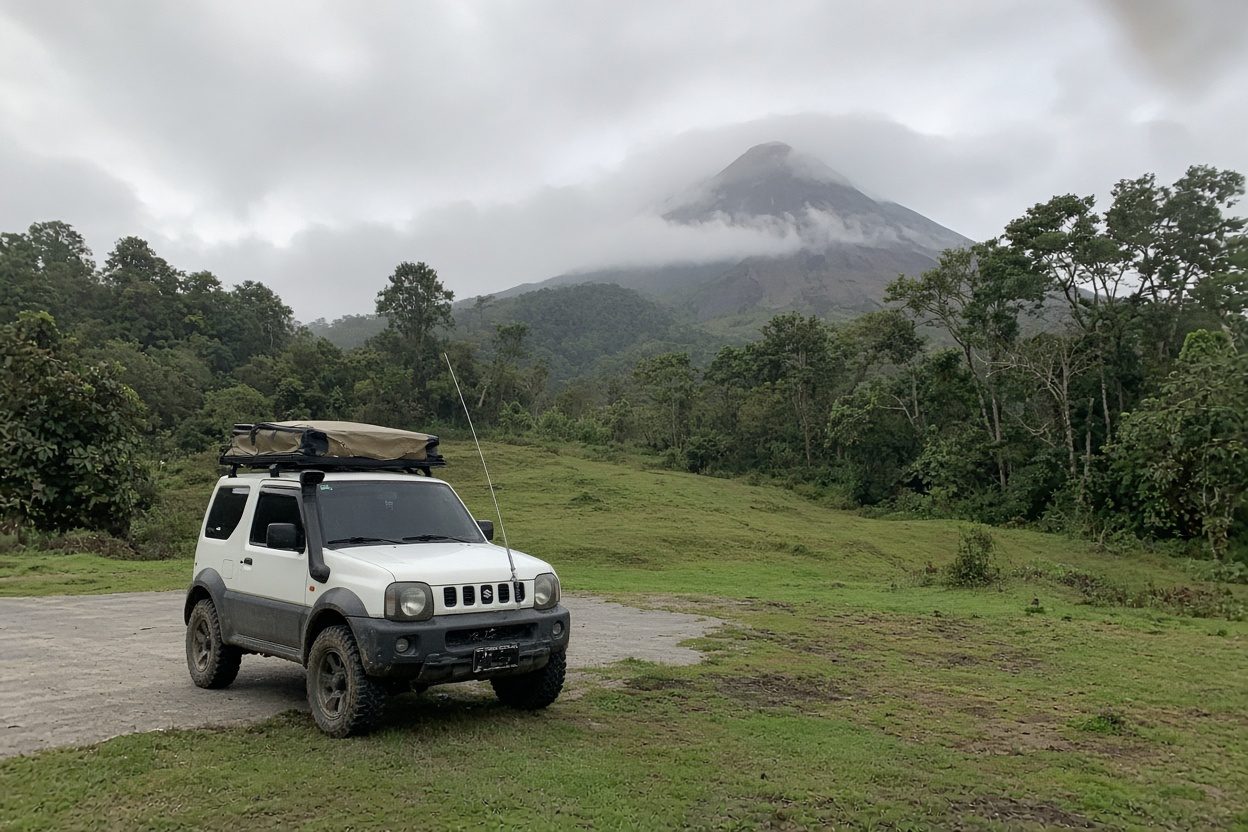
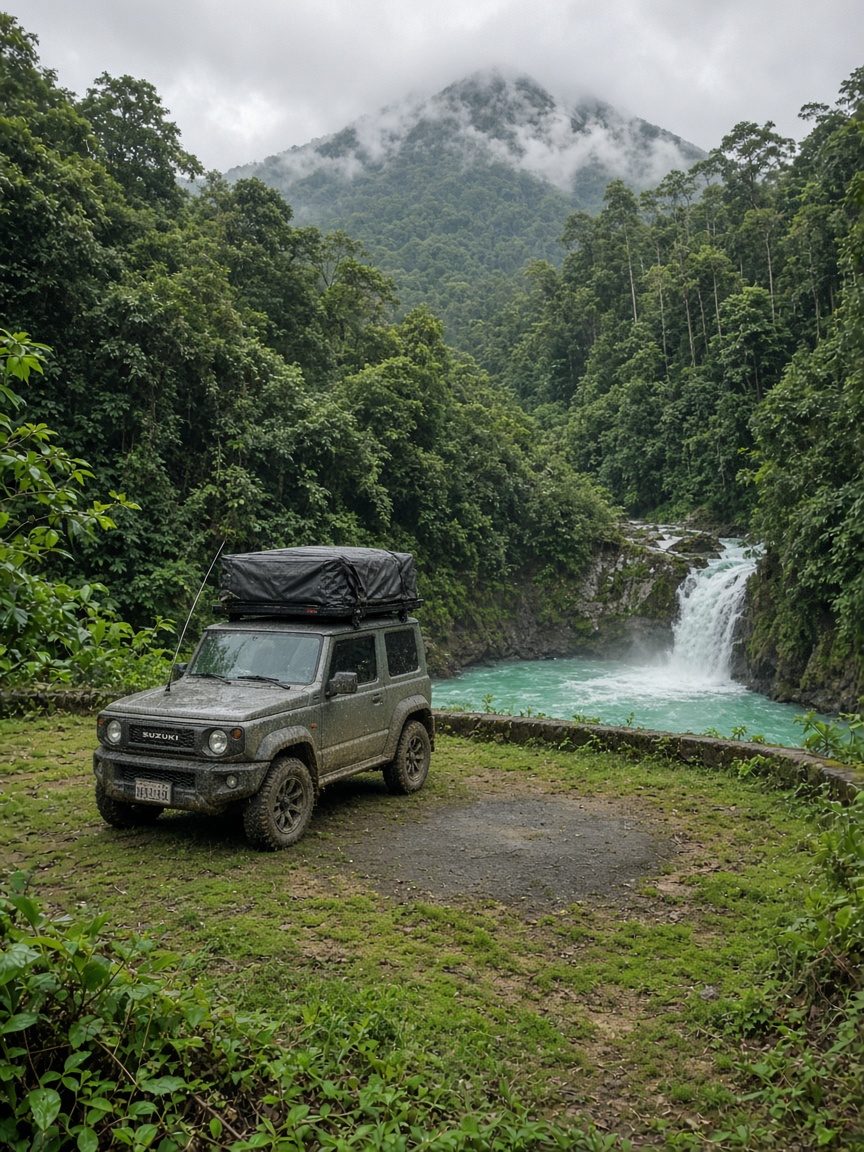
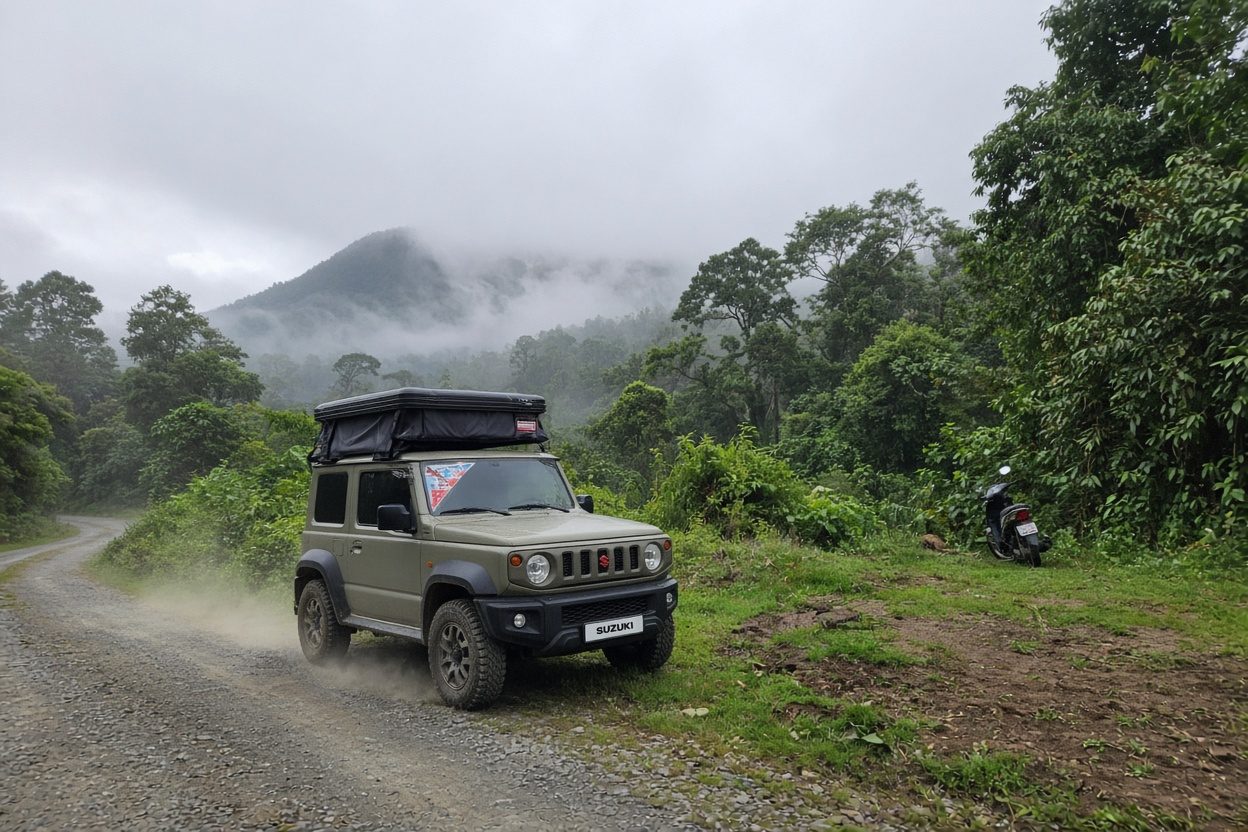
This loop is built for a nimble, sure-footed 4x4 — enough clearance for the mountain grades, small enough to park at every trailhead. Reserve your VerifiedCR / Carros506 4x4 for the Central Cascade Loop and roll from SJO straight into the cloud forest with offline maps loaded, dry bags packed, and your Río Celeste slot booked. Message us with your travel dates and we'll have the rig ready at the airport.
Before you go
Do you need a 4x4?
4x4 required
Best window to fly
Dec–Apr (dry season)
Offline first
Download your route and offline maps before you leave the lot — signal drops on the best stretches.
Golden rule
Never drive at night — plan arrivals before dark, and use Waze like the locals do.
VerifiedCR · No counter surprises
What a Costa Rica rental actually costs
The number one thing that rattles first-timers is the price jumping at the counter. Here is the honest math, before you get there.
- Advertised daily rate$12–40 / day
- What the booking sites show. It is real — but it is not the whole price. Nobody pays only this.
- Mandatory liability (TPL / SLI)+$15–25 / day
- Required by Costa Rican law on every rental. Cannot be waived. This is the line the cheap ads leave off — it roughly doubles the sticker price. Budget for it.
- Collision damage (CDW)waivable
- Often $20–40/day — but you can usually decline it if your credit card includes rental coverage (Amex, Visa Signature, Chase Sapphire and others). Call your card, ask for a coverage letter, and bring it printed.
- Security hold on your card$1,000–2,500
- A hold, not a charge — released after you return the car clean. Some agencies hold more. Make sure your card has the headroom before you fly.
The verified-rig promise: when you reserve through VerifiedCR, the rig is inspection-checked and the operator is vetted — the price you are quoted is the price you pay. No mystery line items at pickup.